Digital communication has become an essential part of everyday life. People use text to share ideas, promote businesses, create social media posts, write professional documents, and communicate with online audiences. As digital content continues to grow, the way information is presented has become just as important as the message itself.
Artificial intelligence (AI) is transforming how people create, edit, and format digital text. Modern online tools make it easier to change fonts, apply different text styles, improve readability, and create visually appealing content without requiring advanced design skills.
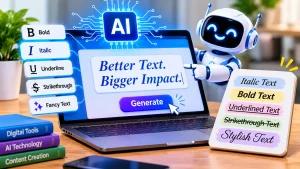
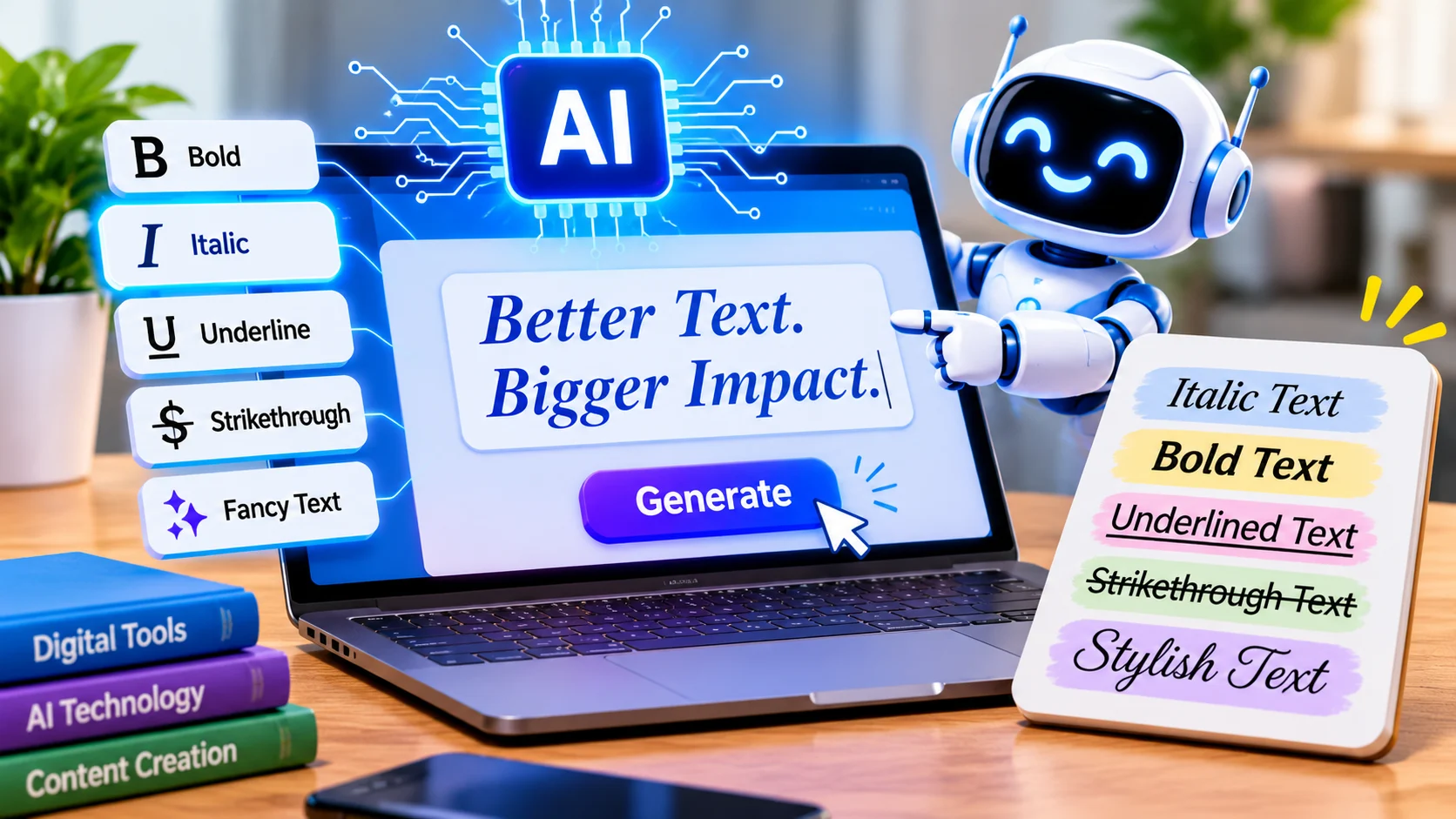
From automated formatting assistants to specialized typography tools, technology is making text customization faster and more accessible. For example, an italic text generator allows users to convert ordinary text into stylish italic characters that can be copied and used across supported digital platforms.
Let’s explore how AI and automation are transforming online text formatting tools and why they are becoming increasingly useful.
1. Making Text Formatting Faster and Easier
Traditional text formatting often requires users to work with complicated software settings or manually adjust font styles.
Changing font appearance, applying italics, modifying spacing, and creating different text effects can take time, especially when preparing content for multiple platforms.
Online text formatting tools simplify these tasks. Users can enter their text, select a preferred style, and generate formatted results within seconds.
AI-powered interfaces can make the process even more convenient by understanding user instructions and suggesting suitable formatting options.
This saves time for content creators, students, marketers, and professionals who regularly work with digital text.
2. Understanding the Role of AI in Text Formatting
Artificial intelligence is changing how people interact with digital writing tools.
Traditional formatting tools generally follow predefined instructions. For example, users select bold, italic, underline, or another available style.
AI-powered writing applications can go beyond these basic functions by understanding the context and purpose of the content.
They may suggest:
- Appropriate headings and subheadings.
- Consistent formatting styles.
- Improved paragraph structure.
- Better text readability.
- Suitable typography for different audiences.
- More effective content presentation.
These capabilities help users create organized and visually consistent content.
However, not every online text formatter uses AI. Many specialized tools rely on standard text-processing functions and Unicode characters to generate different text styles.
3. The Growing Popularity of Stylish Text Generators
Stylish text generators have become popular because people want their digital content to look more distinctive.
Social media users, content creators, and online communities frequently experiment with different text appearances to make their messages stand out.
An italic text generator is a useful example of this trend. It converts regular text into italic-style Unicode characters that users can copy and paste into supported applications.
These tools are particularly useful for:
- Social media captions.
- Instagram bios.
- WhatsApp messages.
- Creative usernames.
- Digital invitations.
- Online community posts.
Instead of installing additional fonts or editing software, users can generate customized text directly through a web browser.
4. Improving Social Media Communication
Social media platforms have created new opportunities for personal expression and digital branding.
However, standard text formatting options can sometimes be limited. Users may want to highlight specific words, emphasize important messages, or create a distinctive visual identity.
Online formatting tools provide additional styling possibilities.
For example, users can generate italic text for captions, create decorative headings, or use different Unicode styles to highlight particular phrases.
Businesses can also use text formatting to make promotional messages more organized and visually engaging.
When used appropriately, these styles can improve the presentation of digital content and help audiences identify important information.
However, excessive decorative formatting may reduce readability, particularly on smaller screens.
5. Making Professional Writing More Consistent
Text formatting is not limited to social media. It also plays an important role in professional communication.
Businesses, students, researchers, and content writers regularly prepare documents that require consistent formatting.
AI-powered writing assistants can help organize information, identify inconsistent styles, and suggest improvements to document structure.
For example, an AI tool may recommend using consistent heading levels, standard paragraph spacing, and appropriate emphasis throughout a report.
Specialized formatting tools can then help users apply specific text styles quickly.
This combination of intelligent writing assistance and automated formatting reduces repetitive work and improves document presentation.
6. Saving Time for Content Creators and Marketers
Content creators often publish across multiple platforms, each with different presentation requirements.
Preparing captions, promotional messages, blog headings, and short-form content can involve repeated formatting tasks.
Online text generators make these processes more efficient.
For instance, a creator can prepare a regular caption and use an italic text generator to create a visually different version for a social media profile.
Marketers can also experiment with formatting variations to see which presentation style communicates their message most effectively.
AI-powered tools may further assist by generating alternative text versions, suggesting suitable styles, and improving overall content structure.
These features allow professionals to focus more on content quality and audience engagement.
7. Understanding Unicode and Stylish Text
One important technology behind many online text generators is Unicode.
Unicode is a universal character encoding standard that supports text from different languages and writing systems.
Some stylish text generators use special Unicode characters that resemble bold, italic, script, or decorative lettering.
This makes it possible to copy styled text from one application and paste it into another without installing a separate font.
However, there is an important distinction between actual font formatting and Unicode-styled characters.
Traditional italic formatting changes how text appears through a font style. Unicode generators use different characters that resemble particular visual styles.
Because of this, some decorative characters may not display correctly on every device or platform. They can also create accessibility challenges for screen readers.
For important documents and accessibility-sensitive content, standard formatting options are generally preferable.
8. Improving Accessibility and User Experience
Modern online text formatting tools are designed to be simple and accessible.
Most tools require only a few basic steps:
- Enter or paste the original text.
- Select a preferred formatting style.
- Generate the formatted version.
- Copy the result.
- Paste it into the desired application.
This straightforward process makes text customization available to users without technical or graphic design experience.
Mobile-friendly interfaces also allow people to format text using smartphones and tablets.
AI can further improve accessibility by providing voice-based instructions, explaining formatting options, and helping users select suitable text styles.
Developers should also consider keyboard navigation, readable interfaces, and screen-reader compatibility when designing these tools.
9. Choosing the Right Online Text Formatting Tool
With many text formatting tools available, selecting the right option is important.
Users should consider several factors before choosing a platform.
Ease of Use: The interface should be simple and allow users to generate formatted text without unnecessary steps.
Style Variety: A useful tool should provide multiple formatting options, including italic, bold, and decorative text.
Compatibility: Generated characters should display correctly across the platforms where users intend to publish them.
Privacy: Users should understand how their entered text is processed and whether it is stored.
Accessibility: Formatting should not make content unnecessarily difficult for assistive technologies to interpret.
Choosing a reliable tool helps users create attractive digital content without sacrificing readability or convenience.
10. The Future of AI-Powered Text Formatting
The future of online text formatting will likely involve deeper integration with AI writing assistants, content management systems, and digital publishing platforms.
Users may increasingly be able to describe their formatting requirements in natural language instead of manually selecting individual styles.
For example, someone could ask an AI assistant to create a professional heading, emphasize important phrases, or prepare a social media caption with a particular visual appearance.
AI tools may also provide personalized formatting suggestions based on the platform, audience, and purpose of the content.
However, traditional formatting technologies will remain important. Unicode standards, font rendering, and established text-processing methods will continue to support the technical foundation of digital typography.
Combining these technologies will make text customization more flexible and efficient.
Conclusion
AI is transforming online text formatting tools by making digital writing more accessible, efficient, and customizable. From improving document structure to generating stylish social media captions, modern tools are helping users present information more effectively.
An italic text generator is a simple example of how specialized online tools make text customization easier. Users can transform ordinary words into italic-style characters and use them across supported digital platforms without installing additional software.
As artificial intelligence and automation continue to develop, text formatting tools will become more intelligent and user-friendly.
Ultimately, the goal is to make digital communication more organized, creative, and accessible while ensuring that readability and meaningful content remain the priority.

Naomi Wave is an emoji content enthusiast at EmojiSpotz.com, creating fresh and engaging content about emoji meanings, viral trends, and creative ways to express emotions online.