Cooking is a practical skill that combines creativity, technique, and accuracy. Whether someone is preparing a simple breakfast, baking a cake, or experimenting with a new recipe, measuring ingredients correctly plays an important role in achieving good results. However, recipes often use different measurement units. Some list ingredients in milliliters (ml), while others provide quantities in grams (g). This difference can make cooking confusing, especially when following recipes from different countries.
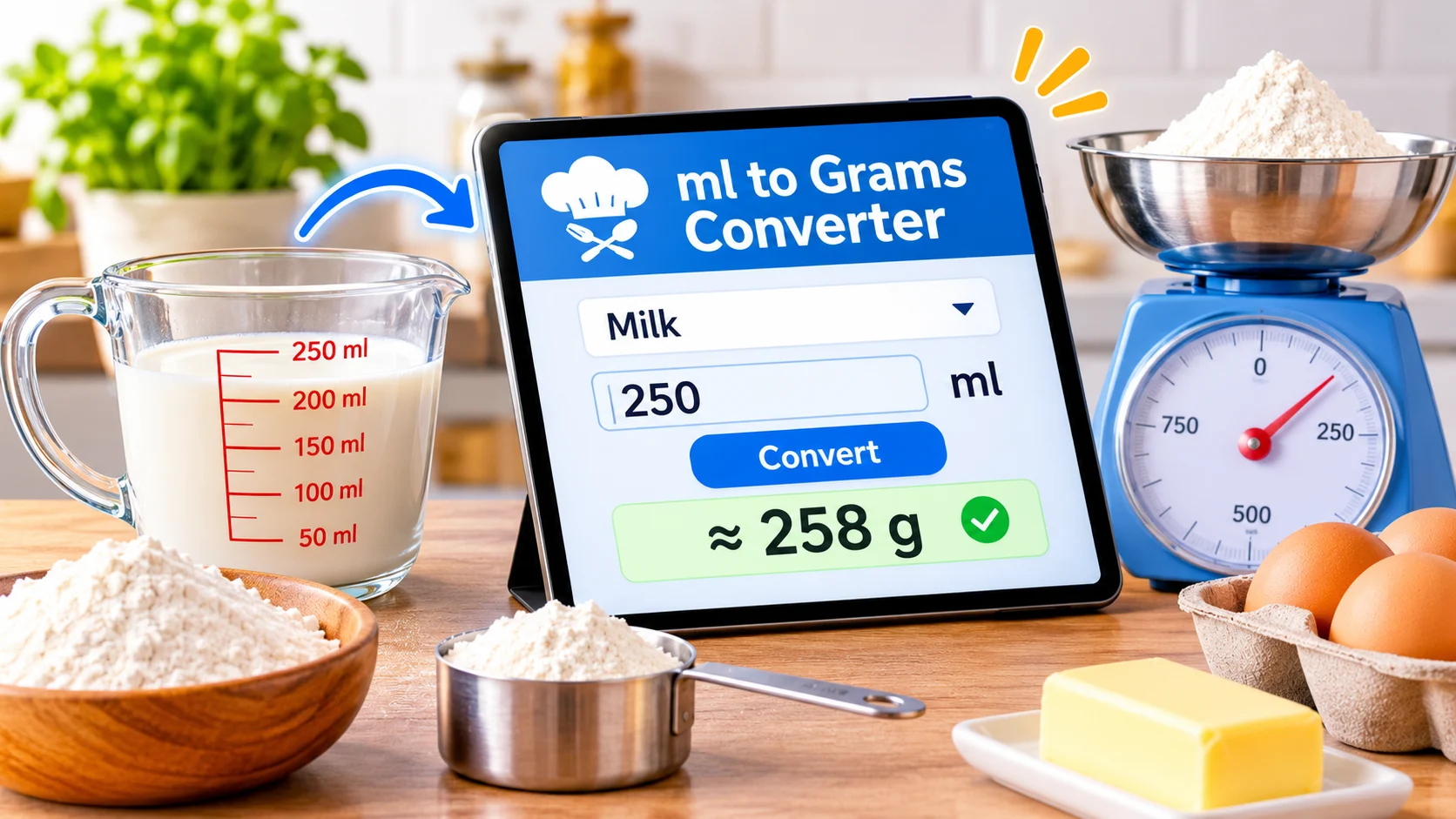
An ml to grams converter helps solve this problem by making it easier to convert volume measurements into weight measurements. Instead of searching for conversion charts or estimating ingredient quantities, home cooks can quickly calculate the weight they need. This saves time, reduces measurement errors, and makes recipes easier to follow.
Understanding the Difference Between Milliliters and Grams
Before using a conversion tool, it is useful to understand what milliliters and grams actually measure.
Milliliters are a unit of volume. They describe how much space a liquid or substance occupies. For example, a recipe may require 250 ml of milk or 100 ml of cooking oil.
Grams, on the other hand, measure weight. They indicate how heavy an ingredient is. A recipe might ask for 200 grams of flour or 150 grams of sugar.
Although these units are sometimes treated as interchangeable in everyday cooking, they measure different properties. The conversion depends on the ingredient’s density, which means that 100 ml of one ingredient may weigh more or less than 100 ml of another.
For example, 100 ml of water weighs approximately 100 grams, but the same volume of cooking oil weighs less. This is why ingredient-specific conversions are important.
Why Cooking Measurements Need Accuracy
Accurate measurements are particularly important in recipes where ingredient proportions affect texture, flavor, and consistency.
Baking is one of the clearest examples. A small difference in the amount of flour, liquid, or sugar can change how a cake rises or how cookies spread. Too much liquid may make a mixture runny, while too little can produce a dry result.
Even in everyday cooking, correct measurements can make a difference. Preparing sauces, soups, marinades, and desserts often requires a balanced combination of ingredients.
Using weight measurements can also improve consistency. A measuring cup filled loosely with flour may contain a different amount than one filled and packed tightly. Weighing ingredients helps reduce these variations.
An online conversion tool makes it easier to move between volume-based and weight-based recipes without relying on guesswork.
How an ML to Grams Converter Works
An ml to grams converter uses an ingredient’s density to calculate its approximate weight.
The basic formula is:
Weight (grams) = Volume (milliliters) × Density (grams per milliliter)
For example, water has a density of approximately 1 gram per milliliter. Therefore, 200 ml of water weighs around 200 grams.
Other ingredients have different densities. Cooking oil, honey, milk, and flour do not have identical weights when measured in the same volume.
A conversion tool simplifies this process. Users typically select an ingredient, enter the volume in milliliters, and receive an estimated weight in grams. Depending on the tool, it may support several common kitchen ingredients and different measurement quantities.
This makes conversions quicker and more convenient, particularly when working with recipes that use unfamiliar units.
Common Ingredient Conversions in the Kitchen
Different ingredients have different densities, so their volume-to-weight conversions can vary considerably.
Here are some approximate examples for common cooking ingredients:
| Ingredient | Volume | Approximate weight |
| Water | 100 ml | 100 g |
| Milk | 100 ml | 103 g |
| Cooking oil | 100 ml | 92 g |
| Honey | 100 ml | 142 g |
| All-purpose flour | 100 ml | 50–60 g |
| Granulated sugar | 100 ml | 80–85 g |
These values are estimates rather than universal measurements. Actual weights can vary depending on ingredient type, temperature, brand, moisture content, and how an ingredient is packed or measured.
For example, whole-wheat flour may have a different density from all-purpose flour. Similarly, different varieties of honey can vary slightly in consistency and density.
An ingredient-specific converter can help provide a more suitable estimate than a general conversion rule.
Benefits of Using an Online Conversion Tool
Online measurement converters offer several practical advantages for people who cook regularly.
1. Saves Time
Manually searching for ingredient conversion charts can interrupt the cooking process. An online tool provides a quicker way to calculate the required quantity.
Instead of comparing multiple tables, users can enter a measurement and get an approximate result in seconds.
2. Reduces Measurement Errors
Estimating ingredient weights can lead to inconsistent results. A converter uses the selected ingredient’s density to produce a more appropriate calculation.
This is especially useful when following recipes that require specific proportions.
3. Makes International Recipes Easier to Follow
Recipes from different regions may use different measurement systems. Some rely on milliliters and liters, while others use grams and kilograms.
A conversion tool helps users understand these measurements without needing to become familiar with every measurement system.
4. Supports Better Baking Results
Baking often requires more precise measurements than general cooking. Converting liquid quantities into grams can make it easier to compare ingredients and follow recipes that use weight-based measurements.
It also helps people use kitchen scales more effectively.
5. Improves Kitchen Convenience
A digital converter can be accessed through a phone, tablet, or computer. This means users can calculate measurements while preparing ingredients without keeping printed conversion charts nearby.
When Should You Convert Milliliters to Grams?
There are several situations where converting milliliters to grams can make cooking more straightforward.
When following baking recipes: Some recipes list liquids in milliliters but provide dry ingredients in grams. Converting measurements can help maintain a consistent weighing process.
When using a kitchen scale: A scale measures weight rather than volume. Converting liquid quantities into grams makes it easier to weigh ingredients directly.
When adjusting recipe portions: If a recipe needs to be doubled or reduced, accurate measurements help maintain the intended ingredient ratios.
When trying international recipes: A conversion tool can help when a recipe uses measurement units that differ from those commonly used in your kitchen.
When preparing sauces and liquids: Ingredients such as oil, milk, honey, and syrups have different densities. Using an appropriate conversion makes portioning easier.
Tips for Getting More Accurate Conversions
Although online converters simplify measurements, a few practices can help improve accuracy.
- Choose the correct ingredient: Always select the ingredient you are actually using because density varies between substances.
- Use a kitchen scale: Weighing ingredients directly is often the most reliable option when precision matters.
- Check ingredient variations: Different flour types, oils, and sweeteners may have different densities.
- Avoid assuming all liquids weigh the same: Water, milk, and oil have different weights for equal volumes.
- Follow recipe instructions: If a recipe specifically provides a weight measurement, use that value rather than replacing it with an approximate volume conversion.
These simple habits can help make everyday cooking more predictable and consistent.
The Role of Digital Tools in Modern Cooking
Digital tools have changed the way people approach everyday kitchen tasks. Online calculators, recipe platforms, and measurement converters make information easier to access and use.
Instead of relying entirely on printed charts or manual calculations, home cooks can find quick answers through simple online tools. These resources are particularly helpful for beginners who may not yet understand ingredient densities or measurement differences.
They also benefit experienced cooks who regularly experiment with recipes, adjust ingredient quantities, or prepare meals using different measurement systems.
As digital kitchen resources continue to improve, measurement conversions are becoming a more convenient part of meal preparation.
Conclusion
Accurate measurements are an important part of successful cooking. Understanding the difference between milliliters and grams helps prevent confusion when following recipes, especially when working with ingredients that have different densities.
An ml to grams converter makes this process easier by calculating approximate ingredient weights based on volume and density. It saves time, reduces guesswork, and supports more consistent cooking and baking results.
Whether someone is preparing a simple meal or following a detailed baking recipe, using the right measurement tools can make the entire process more convenient. Combined with a kitchen scale and careful ingredient selection, an online converter is a practical resource for anyone who wants to make cooking measurements simpler and more reliable.

Naomi Wave is an emoji content enthusiast at EmojiSpotz.com, creating fresh and engaging content about emoji meanings, viral trends, and creative ways to express emotions online.