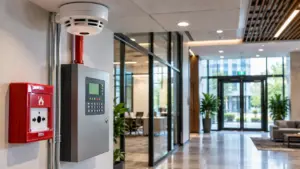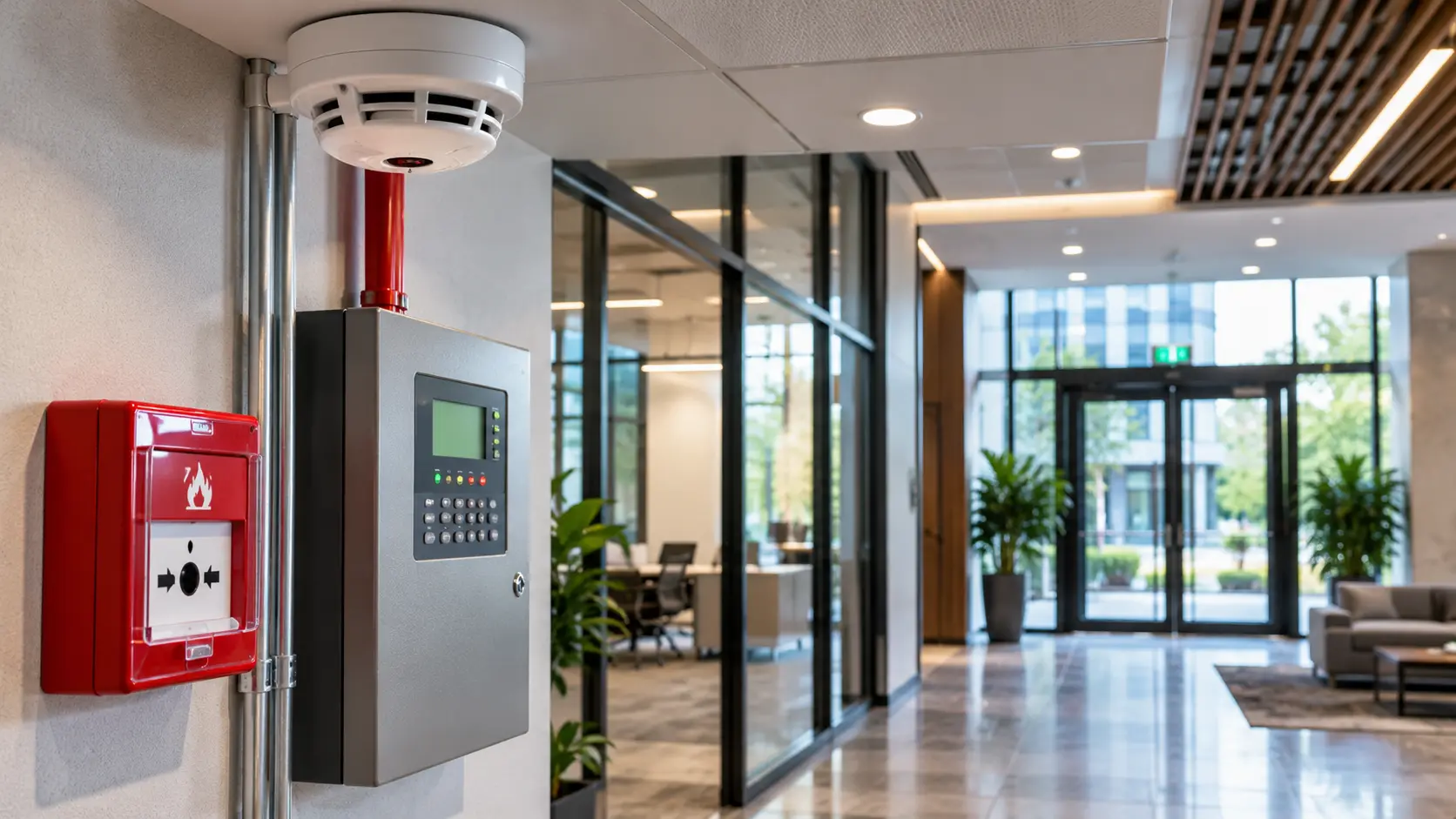
Commercial buildings face various fire-related risks, from electrical malfunctions and equipment failures to kitchen accidents and combustible materials. A fire can threaten lives, damage property, interrupt business operations, and create significant financial losses. For this reason, reliable fire detection and rapid emergency notification are essential parts of commercial building safety.
While fire alarms alert people inside a building, monitored systems can also transmit alarm signals to a professional monitoring facility. This additional layer of protection helps ensure that fire-related events receive attention even when a building is unoccupied.
Understanding how central station fire alarm monitoring works can help property owners, facility managers, and business operators make informed decisions about protecting their buildings, employees, customers, and assets.
1. Providing Continuous Fire Alarm Monitoring
Commercial buildings may remain empty overnight, during weekends, and on public holidays. If a fire starts during these periods, there may be nobody nearby to hear a local alarm or contact emergency responders.
Central station monitoring provides an additional layer of oversight by receiving signals from connected fire alarm systems. When an alarm or another monitored condition occurs, the monitoring facility follows established procedures to assess and communicate the event.
This service is particularly valuable for office buildings, retail stores, warehouses, healthcare facilities, and other commercial properties where a fire could cause serious consequences.
Continuous monitoring helps ensure that alarm signals can receive attention regardless of whether employees or building occupants are present.
2. Supporting Faster Emergency Response
Early notification is a critical factor in reducing the potential consequences of a fire. When a monitored fire alarm activates, the system transmits a signal to the central station through its configured communication pathway.
Monitoring personnel follow the applicable response procedures, which may include contacting emergency services, notifying designated building representatives, or carrying out other required actions.
The precise process depends on the system configuration, local regulations, and the monitoring provider’s procedures. Some systems also communicate directly with emergency services where permitted and configured.
Although monitoring cannot guarantee a specific response time, it can reduce delays associated with discovering an alarm and initiating the appropriate notification process.
Prompt communication gives emergency responders and building management an opportunity to address a developing incident sooner.
3. Protecting Employees, Customers, and Visitors
Life safety is the primary objective of a commercial fire protection system. Employees, customers, contractors, and visitors may not always recognize the signs of a developing fire or know how to respond appropriately.
Fire alarm systems provide warnings that help occupants begin evacuation procedures. When combined with professional monitoring, they add an external notification layer that supports the overall emergency response process.
Businesses should ensure that alarms are audible or otherwise accessible to occupants, evacuation routes remain clear, and emergency procedures are communicated regularly.
Monitoring is not a replacement for evacuation planning, fire drills, or properly maintained detection equipment. Instead, it complements these measures by helping ensure that alarm events are communicated according to established procedures.
Together, these precautions contribute to a safer environment for everyone who enters the building.
Clear communication also plays an important role in building safety. Employees and visitors should be able to recognize emergency warnings, understand evacuation instructions, and respond appropriately when an alarm activates. Digital communication can support general safety awareness, although it should never replace official emergency procedures. Resources covering everyday communication, such as EmojiSpotz, can provide additional insight into how visual symbols are interpreted in different contexts.
4. Reducing Property Damage and Business Disruption
A commercial fire can damage structural components, inventory, computers, machinery, documents, and other valuable assets. Even a relatively small incident may force a business to suspend operations while repairs and inspections take place.
A monitored fire alarm system can support earlier awareness of a fire-related event, potentially helping reduce the time between alarm activation and notification.
For example, a warehouse may contain valuable inventory and packaging materials that allow a fire to spread quickly. If an alarm activates outside operating hours, central station monitoring can help initiate the appropriate notification process even when the facility is empty.
Early notification does not guarantee that damage will be prevented, but it can be an important part of a broader strategy for reducing losses.
Businesses should combine monitoring with suitable detection devices, suppression systems where required, emergency planning, and routine maintenance.
5. Identifying System Trouble and Fault Conditions
Fire alarm protection depends on equipment functioning correctly. A disconnected communication line, power issue, damaged component, or other system fault may affect the reliability of an installation.
Many monitored systems can transmit trouble signals when certain problems occur. Depending on the equipment and configuration, the central station may receive information about communication failures, system faults, or other abnormal conditions.
These signals allow designated personnel to be notified so that the issue can be investigated and corrected.
It is important to understand that a trouble signal is different from a fire alarm. It indicates a potential system problem rather than necessarily confirming that a fire exists.
Regular inspections, testing, and maintenance remain essential because not every failure can be detected remotely. Building managers should establish clear procedures for addressing faults promptly and documenting corrective work.
6. Supporting Compliance With Fire Safety Requirements
Commercial fire protection requirements vary according to building use, occupancy, size, location, and applicable regulations. Certain properties may be required to use approved monitoring services or comply with specific alarm transmission and inspection standards.
Working with a qualified fire protection provider can help property managers understand which requirements apply to their facilities.
A central station monitoring arrangement may support compliance when it meets the relevant codes, approval criteria, and local authority requirements. However, simply subscribing to a monitoring service does not automatically make a building compliant.
Property owners should verify that their equipment, installation, communication methods, inspection schedules, and monitoring provider satisfy applicable requirements.
Maintaining accurate records of inspections, tests, faults, and repairs can also help demonstrate that the fire alarm system is being managed responsibly.
7. Improving Protection for Different Commercial Properties
Different commercial environments have different fire risks, which means monitoring arrangements should reflect the needs of each building.
Office buildings may need to protect employees, computers, meeting spaces, and critical business records. Retail properties may contain customer areas, storage rooms, and combustible packaging. Warehouses can hold large quantities of inventory, while healthcare facilities may require additional planning for occupants who need assistance during evacuation.
Central station monitoring can form part of the fire protection strategy for these environments, provided the system is designed and configured appropriately.
Before selecting a service, property managers should review building occupancy, existing detection equipment, communication reliability, emergency procedures, and applicable regulations.
A qualified fire safety professional can help determine the appropriate arrangement for a particular property.
8. Choosing a Reliable Monitoring Provider
The effectiveness of a monitored fire alarm system depends partly on the quality and reliability of the monitoring service.
Commercial property managers should evaluate providers carefully before making a decision. Important considerations include:
- Required approvals and certifications: Confirm that the provider meets applicable standards and local requirements.
- Monitoring procedures: Understand how alarm, trouble, and supervisory signals are handled.
- Communication reliability: Ask how the system transmits signals and what backup arrangements are available.
- Documentation: Confirm that event records and relevant reports are available.
- Maintenance coordination: Establish how faults and service issues are communicated.
- Clear responsibilities: Determine who receives notifications and who is responsible for follow-up actions.
Businesses should also verify whether the proposed service meets the requirements of their insurer, local authority, or building management agreement.
Selecting a qualified provider and establishing clear procedures can help maintain dependable protection over time.
Conclusion
Central station monitoring adds an important communication layer to commercial fire protection. By receiving alarm signals, following established notification procedures, and helping communicate system trouble conditions, it supports a more organized response to fire-related events.
For commercial property owners, central station fire alarm monitoring can help protect occupants, support property protection efforts, and contribute to business continuity when integrated into a comprehensive fire safety plan.
The strongest approach combines reliable monitoring with appropriate detection equipment, routine testing, professional maintenance, clear evacuation procedures, and compliance with applicable fire codes. These measures work together to improve preparedness and help commercial buildings respond more effectively when a fire emergency occurs.