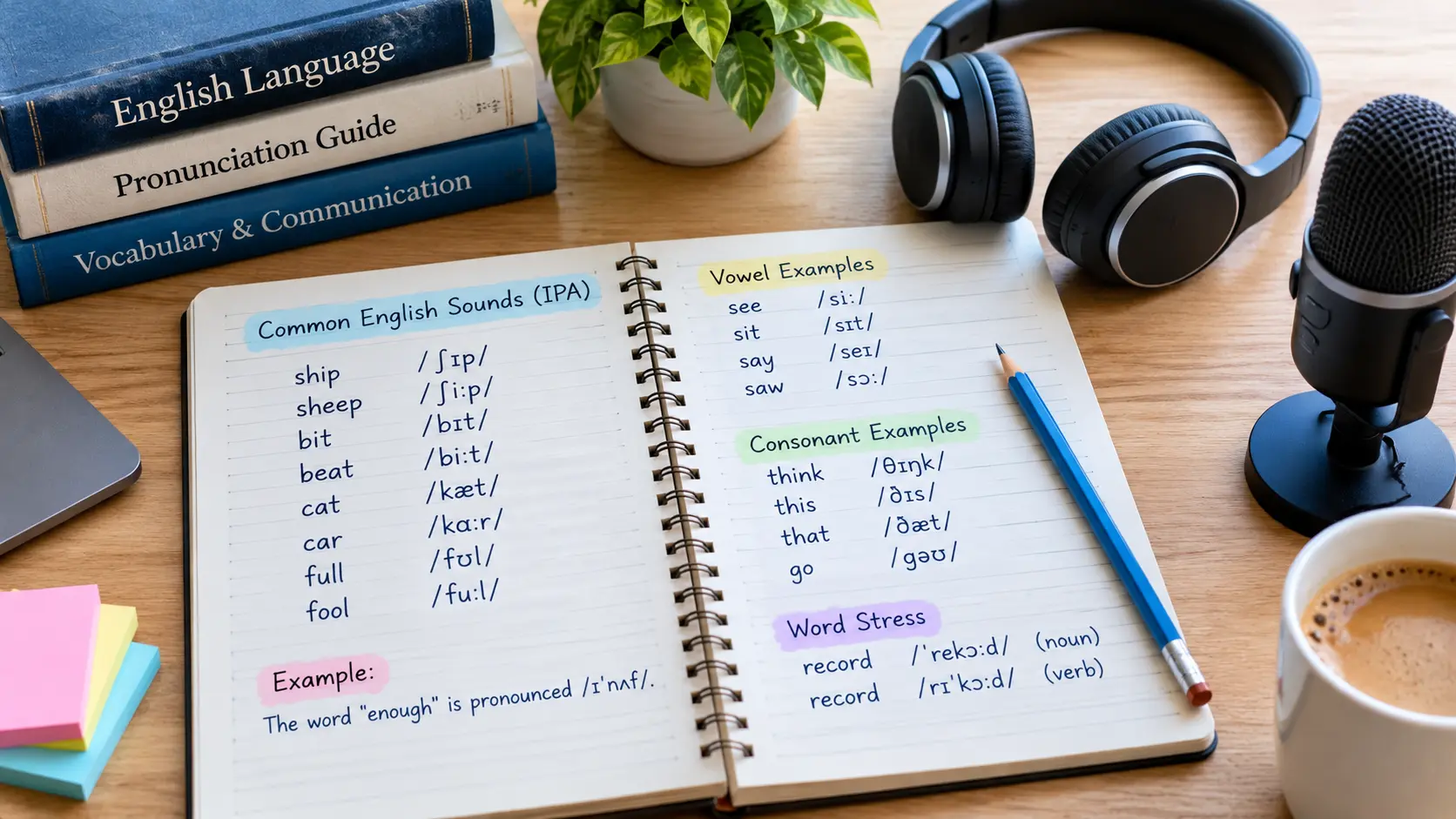
Learning English can be an exciting journey, but pronunciation often presents a significant challenge for learners. Many English words are not pronounced exactly as they are spelled, making it difficult to know how to say unfamiliar vocabulary correctly. Silent letters, confusing vowel combinations, and different pronunciation rules can leave even advanced learners uncertain. Fortunately, phonetic spelling offers a practical way to overcome these difficulties and develop clearer speaking skills.
Whether you are a beginner learning your first English words or an advanced learner refining your pronunciation, understanding phonetic spelling can make language learning more effective. This guide explains what phonetic spelling is, how it works, why it matters, and how you can use it to improve your English pronunciation.
What Is Phonetic Spelling?
Phonetic spelling is a way of representing the sounds of spoken language through written symbols. Instead of relying only on conventional spelling, it shows how a word is pronounced.
English spelling can be unpredictable. For example, the words “though,” “through,” and “rough” contain the same letter combination, but their pronunciations are different. Phonetic representations help learners identify these differences without guessing from the spelling alone.
One widely used system is the International Phonetic Alphabet (IPA). It assigns specific symbols to individual speech sounds, allowing readers to understand pronunciation more precisely. Many dictionaries include IPA transcriptions alongside definitions and audio recordings.
For English learners, phonetic spelling provides a bridge between reading and speaking. It helps connect written vocabulary with the sounds needed for effective communication.
Why Is English Pronunciation Difficult?
Before exploring the benefits of phonetic spelling, it is useful to understand why English pronunciation can be challenging.
Silent letters: Some English words contain letters that are not spoken. Examples include the “k” in “know,” the “w” in “write,” and the “b” in “debt.” Learners who pronounce every letter may struggle with these words.
Inconsistent spelling patterns: The same letters can represent different sounds. The “ea” combination, for example, sounds different in “bread,” “bead,” and “break.”
Unfamiliar sounds: English contains vowel and consonant sounds that may not exist in a learner’s native language. Distinguishing between words such as “ship” and “sheep” requires careful attention to vowel quality.
Word stress: English speakers emphasize particular syllables in multisyllabic words. Incorrect stress can make a word harder to recognize, even when its individual sounds are reasonably accurate.
Regional differences: British, American, Australian, and other English varieties sometimes use different pronunciations for the same word.
Phonetic spelling helps address these challenges by making pronunciation patterns more visible and easier to study.
How Phonetic Spelling Helps English Learners
1. It Makes Unfamiliar Words Easier to Pronounce
One of the greatest advantages of phonetic spelling is that it gives learners a clearer idea of how an unfamiliar word sounds.
For example, the word “enough” is represented as /ɪˈnʌf/ in the International Phonetic Alphabet. Although its conventional spelling may seem confusing, the transcription shows the sounds used in pronunciation.
This information reduces guesswork and helps learners approach unfamiliar vocabulary with greater confidence. Instead of trying to pronounce each written letter, they can focus on the sounds represented by the phonetic symbols.
2. It Improves Listening and Sound Recognition
Pronunciation and listening comprehension are closely connected. When learners understand individual English sounds, they can become better at recognizing those sounds in spoken conversations.
Phonetic spelling helps highlight differences between similar words. For instance, “thin” begins with a different consonant from “tin.” Recognizing the distinction helps learners understand why these words sound different and how their meanings change.
Practicing these contrasts can improve listening accuracy, especially when conversations involve unfamiliar vocabulary or fast speech.
3. It Builds Speaking Confidence
Many English learners hesitate to speak because they worry about mispronouncing words. This concern can make classroom discussions, professional presentations, interviews, and everyday conversations more stressful.
Phonetic spelling offers a useful reference when practicing difficult vocabulary. Learners can check a word’s transcription, listen to a reliable recording, and repeat it until they become more comfortable with its pronunciation.
With regular practice, this process can reduce uncertainty and encourage learners to use a wider range of vocabulary when speaking.
Clear pronunciation is only one part of effective communication. Learners also benefit from understanding how spoken and written messages express meaning in different situations. In digital conversations, even simple visual symbols can influence how a message is understood. For example, exploring the speech bubble emoji and its common uses can help learners see how communication cues work in everyday online interactions.
4. It Supports Vocabulary Development
Memorizing a word’s meaning is only one part of learning vocabulary. Learners also need to understand its pronunciation, spelling, and use in context.
Adding phonetic information to vocabulary notes helps connect these elements. For example, when learning a new word, you can record its definition, IPA transcription, and an example sentence.
This method makes revision more complete because you are learning how the word sounds as well as what it means.
5. It Encourages Independent Learning
Phonetic spelling allows English learners to practice without relying entirely on a teacher or another speaker.
Most reputable online dictionaries provide pronunciation information, and many include audio recordings. By combining these resources, learners can check unfamiliar words, compare written transcriptions with spoken examples, and practice independently.
As familiarity with IPA symbols increases, dictionary pronunciation guides become easier to understand. This skill can be especially valuable for learners studying English outside a classroom.
How to Use Phonetic Spelling Effectively
Understanding phonetic spelling is only the first step. Consistent practice is what turns pronunciation knowledge into a practical speaking skill.
Learn the most common IPA symbols first. Begin with frequently used English vowel and consonant sounds. Study a few symbols at a time and practice them in familiar words.
Use a reliable dictionary. Look up unfamiliar words and examine both their phonetic transcriptions and audio pronunciations. Choose a dictionary that identifies the English variety being used.
Listen and repeat. Listen to the recording carefully, then repeat the word aloud. Pay attention to vowel quality, consonant sounds, syllable count, and word stress.
Practice minimal pairs. Minimal pairs are words that differ by one sound, such as “bit” and “beat.” Practicing these words helps you recognize and produce distinctions that can change meaning.
Create a pronunciation notebook. Keep a list of difficult words with their meanings, phonetic transcriptions, and example sentences. Review the list regularly.
Record your voice. Recording yourself can reveal pronunciation difficulties that are difficult to notice while speaking. Compare your recording with a reliable model and focus on one improvement at a time.
Even 10 to 15 minutes of focused practice each day can help establish a consistent learning routine.
Common Mistakes to Avoid
Although phonetic spelling is helpful, learners should be aware of several common mistakes.
First, avoid relying exclusively on informal pronunciation guides that use familiar letters to represent unfamiliar sounds. These guides can be useful for beginners, but their accuracy may depend on the reader’s native language.
Second, remember that pronunciation varies across English-speaking regions. Choose a consistent pronunciation model for practice while remaining open to other widely accepted varieties.
Third, do not ignore stress and intonation. Correct individual sounds are important, but natural speech also depends on rhythm, emphasis, and the way words connect in sentences.
Finally, avoid studying pronunciation without listening. Phonetic symbols explain how words are represented, but audio recordings provide an important model of actual speech.
Conclusion
Phonetic spelling is a valuable resource for English learners who want to pronounce difficult words more accurately and communicate with greater confidence. By connecting written symbols with spoken sounds, it helps learners understand confusing spelling patterns, improve listening skills, develop vocabulary, and practice independently.
The most effective approach combines phonetic transcriptions with dictionary audio, repetition, minimal-pair exercises, and regular speaking practice. You do not need to master every IPA symbol immediately. Start with the words you find most difficult and gradually expand your knowledge.
With patience and consistent effort, phonetic spelling can become an essential part of your English-learning routine, helping you move toward clearer pronunciation and more confident communication.