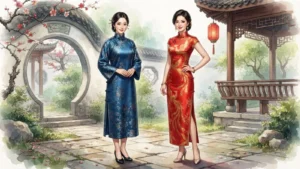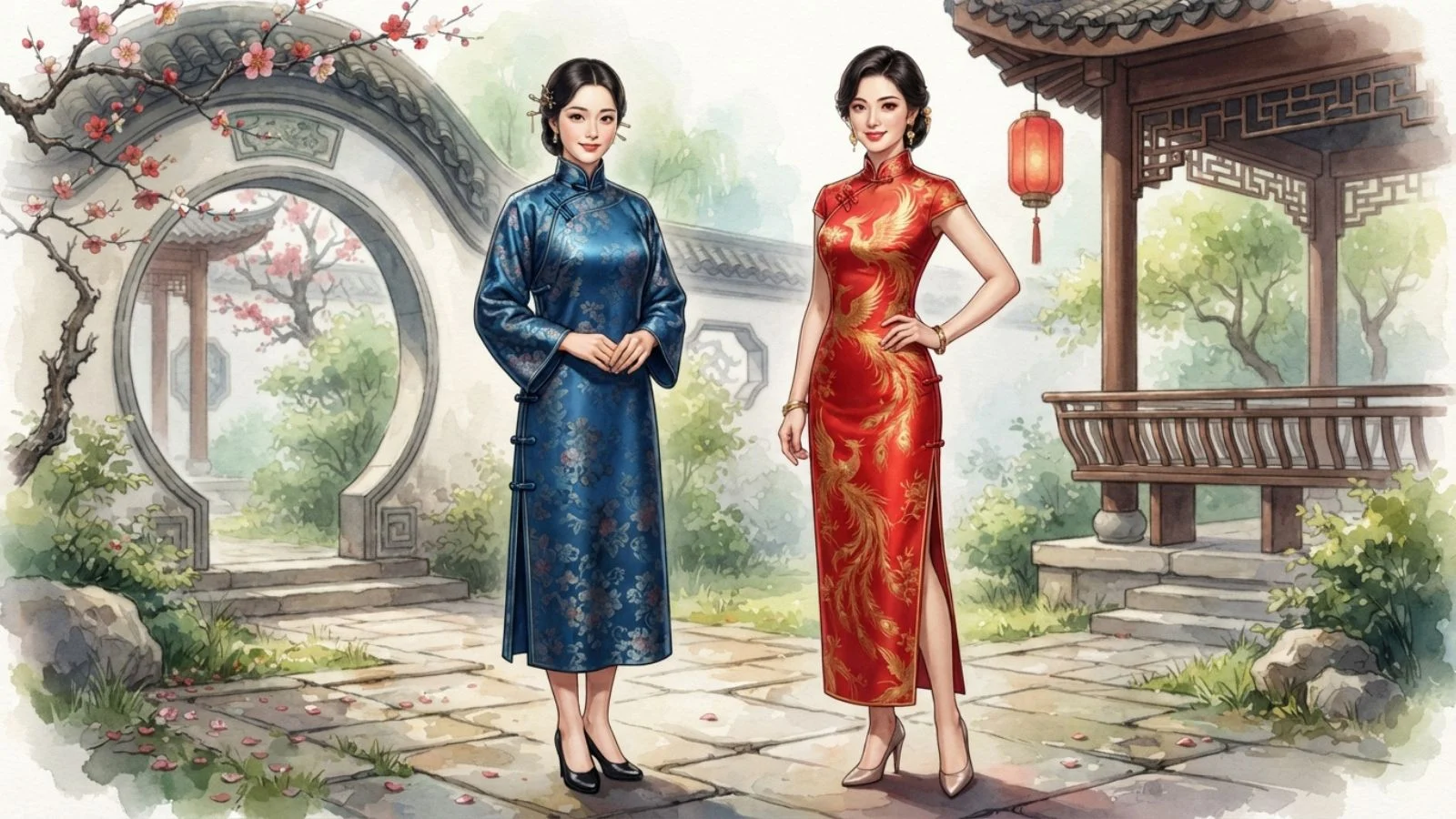
Cheongsam and qipao are two names for the same traditional Chinese dress. Qipao (旗袍) is the Mandarin name, while cheongsam is the Cantonese name, popularized through Hong Kong.
There’s no real difference between the garments themselves; the terms are regional and linguistic, not different styles of dress.
Key Takeaways
- Cheongsam and qipao refer to the exact same fitted, high-collared Chinese dress.
- Qipao is Mandarin Chinese; cheongsam is Cantonese, spread internationally through Hong Kong.
- The dress traces back to loose Manchu robes from the Qing Dynasty, later reshaped into a fitted silhouette in 1920s Shanghai.
- In mainland China and Taiwan, “qipao” is the standard term. In Hong Kong and much of the English-speaking world, “cheongsam” is common too.
- Some fashion writers use “qipao” for the traditional or broader category and “cheongsam” for the modern fitted version, but this is a style convention, not a strict rule.
Cheongsam and Qipao Are the Same Dress, Different Languages
If you’ve searched for pictures of a “qipao” and a “cheongsam” and gotten nearly identical results, that’s because you’re looking at the same dress. The confusion isn’t about the clothing. It’s about which Chinese dialect the word comes from.
What “Qipao” Means
Qipao (旗袍) is Mandarin Chinese. It literally translates to “banner robe.” The “banner” refers to the Eight Banners, the social and military divisions of Manchu society under the Qing Dynasty. Qipao is the term used in mainland China and Taiwan, and it’s the name most fashion historians and Chinese speakers default to today.
What “Cheongsam” Means
Cheongsam comes from Cantonese and roughly means “long gown.” It entered English through Hong Kong, largely because Cantonese-speaking Hong Kong offered more open contact with foreigners in the early 20th century, which made Cantonese pronunciations of Chinese words stick in English before Mandarin ones did. That’s the same reason older English spellings like “Peking” instead of “Beijing” exist.
One small wrinkle worth knowing: in Mandarin, the word cheongsam’s original counterpart, changshan (長衫), actually refers to a men’s long robe, not the women’s dress. But in everyday English and Cantonese usage, “cheongsam” is understood to mean the women’s fitted dress, not the men’s version.
Where the Dress Actually Comes From
The Manchu Origins (Qing Dynasty)
The story starts with the Manchus, who ruled China during the Qing Dynasty. Manchu women wore a loose, straight one-piece robe that hung down the body without hugging any curves. This garment, worn by the Banner People, is the direct ancestor of today’s qipao. It was modest, practical, and meant to be worn regardless of a woman’s age or shape.
The 1920s Shanghai Makeover
The fitted, glamorous dress most people picture today didn’t exist until the 1920s. In Shanghai, designers reworked the loose Manchu robe into a slim, body-conscious silhouette with a high Mandarin collar and side slits, blending it with Western tailoring trends of the era. The modern cheongsam was developed in Shanghai in the 1920s and became especially popular with noble and high-class women through the 1940s. So while the dress feels timelessly “traditional,” its most iconic form is actually a 20th-century fashion innovation, not an ancient design.
Is There Any Real Difference Between Them?
Strictly speaking, no. Cheongsam and qipao describe the same garment. The difference is linguistic: cheongsam is Cantonese for “long dress,” while qipao is the Mandarin name for the same piece, meaning “banner dress.” You can use either word and be talking about the same dress.
The Subtle Style Distinction Some People Make
In some fashion writing, you’ll see a softer, informal distinction: “qipao” used for the dress in general (including its looser, earlier Manchu form), and “cheongsam” reserved specifically for the modern, fitted, high-slit version that came out of 1920s Shanghai. This isn’t an official rule, and plenty of native speakers use the words interchangeably without following it. But it explains why some articles describe cheongsam as “the modern, stylized version” of the qipao.
Which Word Should You Use?
By Region
- Mainland China and Taiwan: Qipao is the standard, almost exclusive term.
- Hong Kong: Both cheongsam and qipao are used interchangeably, though cheongsam carries a distinct local, historical flavor.
- English-speaking countries: Both words appear, but cheongsam has historically been more common in Western fashion writing because it entered English earlier through Hong Kong and Cantonese-speaking communities.
By Audience
If you’re writing or speaking to a mainland Chinese or Mandarin-speaking audience, qipao will feel more natural and recognized. If your audience is more familiar with Hong Kong culture, older Western fashion terminology, or Cantonese-speaking communities, cheongsam works just as well. For a general international audience, either term is understood, and many writers use them together on first mention (as this article does) so readers recognize both.
How to Pronounce Each Word
Getting the pronunciation right helps you sound confident using either term:
- Qipao: CHEE-pow
- Cheongsam: chong-SAHM
Neither word is pronounced the way it looks to English readers at first glance, so it’s worth practicing both if you plan to say them out loud.
Cheongsam vs Qipao: Quick Comparison Table
| Qipao | Cheongsam | |
| Language of origin | Mandarin | Cantonese |
| Literal meaning | “Banner robe” | “Long gown” |
| Common region | Mainland China, Taiwan | Hong Kong, historically Western English usage |
| Refers to | Women’s fitted dress | Women’s fitted dress (changshan, the male form, is a separate garment) |
| Pronunciation | CHEE-pow | chong-SAHM |
| The garment itself | Same dress | Same dress |
Is It Okay for Non-Chinese People to Wear One?
This comes up often alongside the naming question. Opinions among Chinese communities vary. Many people are glad to see the dress appreciated and worn respectfully, especially at events like weddings, cultural celebrations, or when specifically invited to wear one. Others feel it should be reserved for Chinese wearers or specific occasions, particularly when it’s treated as a costume rather than a meaningful garment. There’s no single universal rule, so context, respect, and how the dress is worn matter more than a blanket answer.
Frequently Asked Questions
Is cheongsam the same as qipao?
Yes. They refer to the same traditional Chinese dress. Qipao is the Mandarin name, and cheongsam is the Cantonese name that became common in English through Hong Kong.
Why does the same dress have two names?
Because China has multiple spoken languages. Mandarin and Cantonese are both Chinese languages with different words for the same garment, and both names made their way into English at different times and through different regions.
Which name is more correct to use?
Neither is more “correct.” Qipao is more common in mainland China and Taiwan, while cheongsam is more traditional in Hong Kong and in older Western fashion writing. Either term is understood internationally.
Is a modern qipao different from a traditional one?
Yes, in style. The original Manchu qipao was loose and modest. The version most people picture today, fitted, high-collared, with side slits, was developed in Shanghai in the 1920s and is a modernized evolution of the original design.
Conclusion
Cheongsam and qipao aren’t two different dresses, they’re two names, in two Chinese languages, for the same iconic garment.
Qipao comes from Mandarin, cheongsam from Cantonese, and both point to the fitted, high-collared dress that evolved from loose Manchu robes into the glamorous silhouette Shanghai popularized in the 1920s.
Once you know the language history behind each word, the “difference” stops being confusing and starts being genuinely interesting.