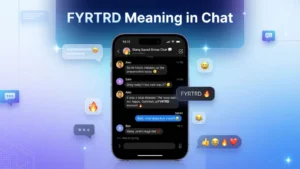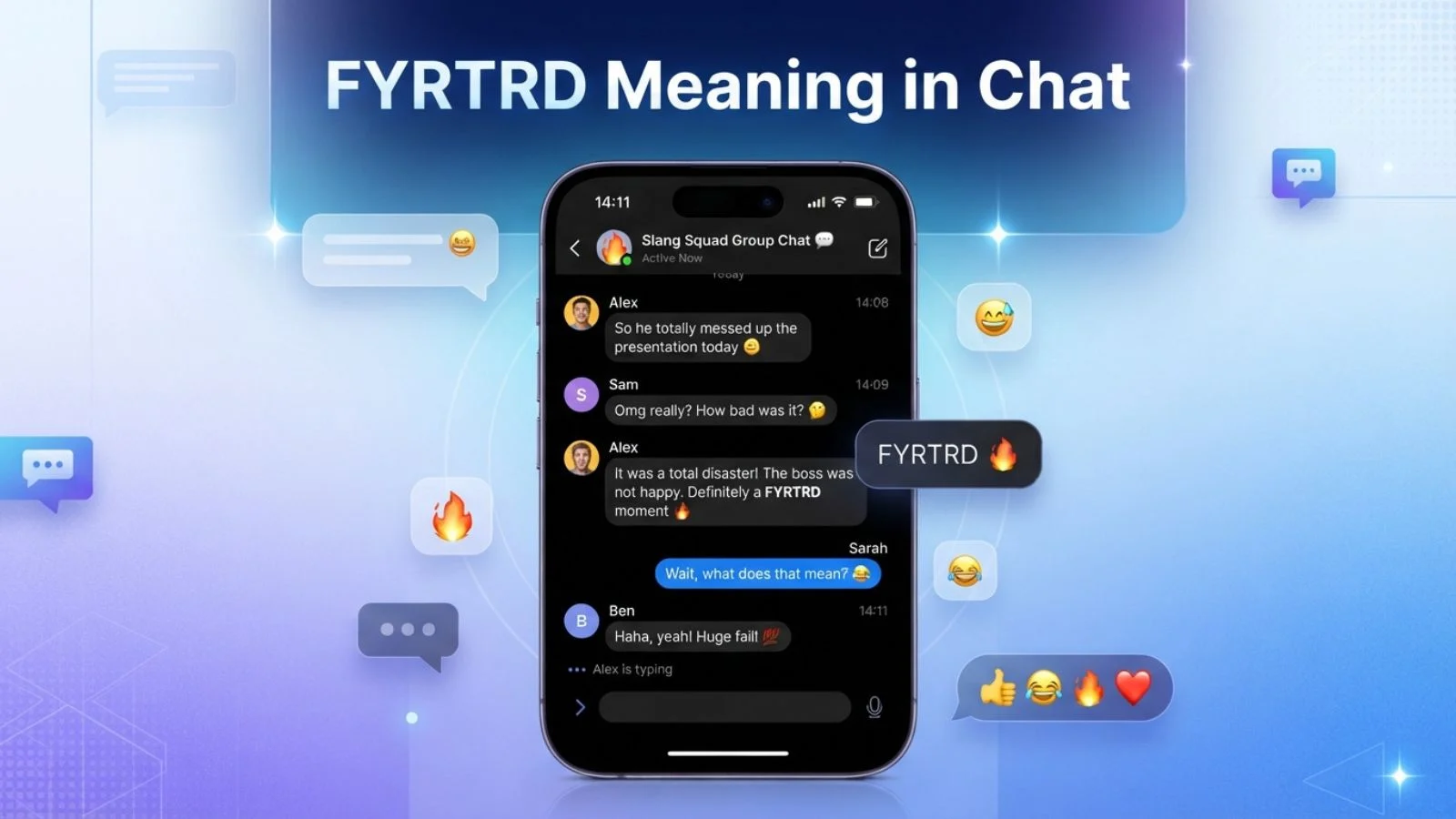
Scroll through TikTok comments, a group chat, or even a passing glance at a license plate, and you might stumble across the word “FYRTRD.”
At first, it looks like a typo or a random string of letters someone mashed together. But this vowel-dropped internet slang has been popping up more and more across texts, captions, and comment sections and once you notice it, you start seeing it everywhere.
So what does FYRTRD actually mean? The short answer: it’s most commonly shorthand for “fired and tired,” a phrase capturing that specific flavor of exhaustion that comes from burnout, a rough week, or simply being done with obligations.
But like a lot of internet slang, FYRTRD doesn’t have one locked definition; its meaning shifts depending on the platform, the person using it, and the context around it. Here’s everything you need to know.
What Does FYRTRD Stand For?
Unlike acronyms with a single, agreed-upon meaning, FYRTRD doesn’t come from an official dictionary or a founding document, it’s a piece of internet slang that grew organically, which is exactly why so many people search for a clear answer.
The most widely accepted reading is “Fired and Tired.” It’s a blunt little phrase that captures a double dose of exhaustion: the frustration of losing a job (literally or figuratively) combined with the bone-deep tiredness that comes from stress, overwork, or simply dealing with too much. Someone might drop it after a brutal shift, a draining argument, or a week that felt like it wouldn’t end.
A second, less common interpretation frames FYRTRD as a longer acronym: “For Your Reference, Totally Retired, Done.” This version tends to show up when people are talking about stepping away from a job, a group, or an ongoing drama less about physical tiredness and more about being finished with something for good.
Then there are the joke expansions that float around slang sites and forums, tying FYRTRD to things like “Fire TRD” (a nod to Toyota’s Racing Development badge) or “Fire Tread” (an off-road/tire reference). These are mostly wordplay rather than serious definitions, but they show how flexible the term has become.
Origin and Etymology
FYRTRD didn’t emerge from a single viral post or a named creator like most internet slang, it grew slowly through shares, remixes, and repeated use until it became recognizable on its own. But its roots trace back to a much older habit: dropping vowels to compress words into something shorter, punchier, and more distinctive.
This tradition goes back further than most people realize. License plate culture has relied on vowel-dropped spellings for decades, since plates only allow a handful of characters and drivers have to get creative to fit a phrase or joke into that space. CB radio lingo followed a similar logic, favoring quick, clipped phrases that were easy to transmit and instantly recognizable over the airwaves. Early internet chatrooms and text messaging picked up the same habit, driven by character limits, slow typing speeds, and a general appetite for shorthand.
FYRTRD fits neatly into that lineage, alongside classics like “BRB,” “GR8,” and “L8R.” It shares the same mix of efficiency, a bit of novelty, and the appeal of looking a little different from standard spelling, something that reads as more casual and more “insider” than typing the full phrase out.
From there, it followed the usual path of modern slang: niche online communities picked it up first, and gradual exposure through texting, comment sections, and short-form video platforms pushed it into broader, more mainstream chat culture over time.
Platform-by-Platform Spread
FYRTRD doesn’t live in just one corner of the internet, it’s spread across nearly every place people chat casually, and it shows up a little differently depending on where you find it.
On TikTok, it tends to appear in captions and comment sections, often paired with humor or a self-care framing think vacation photos captioned “finally further from the 9-5” or comments reacting to relatable burnout content. The tone here leans playful rather than harsh.
Reddit tells a slightly different story. Threads there often debate the “true” meaning of the term, with users cross-referencing Urban Dictionary-style entries and arguing over which definition is most accurate. It’s less about using the word naturally and more about dissecting it.
On Twitter/X, FYRTRD often shows up as a quick, dismissive reply or a way to vent in a single word closer to how people might type “done” or “over it” but with more attitude packed in.
In everyday texting and group chats, it functions as a casual mood indicator, dropped into conversation the same way someone might say “I’m exhausted” or “I can’t even.” It requires little explanation among people already familiar with it.
Gaming chats have their own niche use: FYRTRD gets used to describe teammates who’ve gone quiet or checked out mid-match without warning, essentially calling out someone who’s mentally “retired” from the game.
Usage in Context (with Examples)
Seeing FYRTRD in the wild is one thing, understanding how it actually functions in a sentence is another. Here’s how it typically plays out across different situations.
In texting and DMs, it often shows up in lowercase, blended into casual shorthand: “ngl im fyrtrd rn” translates to “not gonna lie, I’m exhausted right now.” It works almost like a mood report, dropped into conversation without needing further explanation.
In work chats, FYRTRD frequently signals frustration with extra demands. A message like “Boss asked for overtime again. Fyrtrd.” communicates burnout and a refusal to take on more, all in one word.
On social media, it often appears in captions celebrating distance from obligations something like “Finally further from the 9-5” pairs the term with vacation photos or weekend plans, framing it as a small victory over routine.
During arguments or tense exchanges, FYRTRD can serve as a blunt, dismissive reply, functioning similarly to “whatever” but with a sharper edge. It shuts down further debate without much elaboration.
It also shows up in boundary-setting posts, where someone might write “fyrtrd from toxic friends” to signal they’re stepping back from a draining relationship or situation.
In gaming and group chats, the term gets used to call out players who’ve gone quiet or checked out mid-session, essentially labeling them as mentally “retired” from the game without explanation.
Tone and Emotional Register
Beyond its literal meaning, FYRTRD carries a distinct emotional weight that shapes how it lands in conversation. Understanding that tone is just as important as knowing the definition.
At its core, the word functions as a mood indicator similar to phrases like “done,” “over it,” or “burnt out.” It’s a quick way to signal an emotional state without having to explain the full backstory. Someone doesn’t need to detail exactly why they’re exhausted; dropping FYRTRD does the work in a single word.
In recent years, the term has leaned increasingly toward a self-care and boundary-setting undertone. Rather than sounding purely negative, it often reads as someone taking a stand stepping back from a job, a friendship, or an obligation that’s no longer worth the energy. Used this way, it carries a hint of empowerment alongside the exhaustion.
That said, the tone isn’t fixed. In a lighthearted caption under vacation photos, FYRTRD feels playful and celebratory, almost like a joke about needed rest. In a heated argument, the same word can turn sharp and dismissive, cutting off further conversation the way “whatever” might. And in gaming chats calling out an inactive teammate, it takes on a slightly mocking, exasperated edge.
This flexibility is part of what makes FYRTRD useful and occasionally risky. The same four-letter jumble can read as funny, defiant, resigned, or blunt depending entirely on the context surrounding it, which means tone has to be read carefully rather than assumed.
Is FYRTRD Offensive? Disputed Origins
Because FYRTRD looks like a jumbled acronym, people often assume it must have one official, agreed-upon meaning and that assumption is part of where the offensiveness debate comes from.
In current, everyday usage, FYRTRD reads as neutral to playful. Most people encountering it on TikTok, in a group chat, or under a caption interpret it exactly as intended: a shorthand for exhaustion, burnout, or stepping back from something draining. There’s rarely any negative intent behind it in these contexts.
However, some older slang-database entries, the kind found on crowdsourced sites where anyone can submit a definition, link the term to a harsher, offensive combination of words rather than the “fired and tired” reading. This interpretation shows up occasionally in older threads and angrier online arguments, but it’s a minority usage rather than a reflection of how the term functions in mainstream chat today. It’s worth being aware this reading exists, without treating it as the term’s primary or intended meaning.
Given that split, a little caution is reasonable. If you’re using FYRTRD casually with friends who already use it the same way, it’s very unlikely to raise eyebrows. But in unfamiliar group chats, professional settings, or with audiences who might not know the term’s more common usage, it’s safer to skip it or lead with the “fired and tired” framing so there’s no ambiguity about what you mean.
Generational and Audience Differences
Like most internet slang, FYRTRD doesn’t land the same way across every age group or platform, and part of understanding the term means recognizing who’s actually using it and how.
Among younger, TikTok-native audiences, FYRTRD tends to function as lighthearted shorthand dropped into captions, comments, and casual texts without much overthinking. For this crowd, the word is less about precise definition and more about vibe: it signals relatable exhaustion or a playful “I’m so done” moment, and everyone in the conversation generally reads it the same way.
Interestingly, some slang sites frame FYRTRD as having crossover appeal with older internet users, occasionally labeling it “Gen X slang” as it filters into broader use beyond its TikTok origins. This framing suggests the term isn’t strictly confined to one generation, even if its heaviest usage skews younger.
Urban Dictionary plays an outsized role in complicating the picture. Because entries are crowdsourced and unmoderated for accuracy, the platform hosts multiple competing definitions, some playful, some harsher, which means two people searching for “FYRTRD meaning” might land on entirely different explanations depending on which entry they click.
This inconsistency creates real potential for misfires. Someone familiar only with the lighthearted, burnout-related usage might use FYRTRD confidently in a mixed-age or unfamiliar group chat, unaware that a listener might associate it with an older, more negative definition instead. That gap in shared understanding is exactly why context and audience awareness matter more with this term than with most established slang.
FYRTRD vs. Similar Slang Terms
FYRTRD doesn’t exist in a vocabulary vacuum; it sits alongside a handful of other phrases people already use to express exhaustion or a sense of being finished with something. Comparing them helps clarify exactly what makes FYRTRD distinct.
Take “done.” It’s simple, direct, and widely understood across every generation, but it lacks personality. FYRTRD conveys a similar sentiment while adding a layer of internet-native flavor that “done” simply doesn’t carry.
“Over it” works similarly clear and universally recognized, but fairly neutral in tone. FYRTRD, by contrast, leans more playful or defiant depending on context, giving it an edge that a plain phrase can’t replicate.
“Burnt out” is perhaps the closest cousin in meaning, since both terms point toward exhaustion from stress or overwork. The difference is presentation: “burnt out” reads as a straightforward, almost clinical description, while FYRTRD feels like a wink, something shared between people who are in on the joke.
Even “I quit” overlaps conceptually with FYRTRD’s “totally retired, done” interpretation, but “I quit” is a literal statement, whereas FYRTRD keeps things vague and stylized, letting the reader fill in the specifics.
What ultimately sets FYRTRD apart is its compressed, vowel-dropped spelling and its meme-driven punchiness. It doesn’t just communicate a feeling it signals familiarity with internet culture and shorthand trends. The ambiguity that makes it occasionally confusing is also exactly what makes it fun: it rewards insiders who already know the reference while leaving newcomers curious enough to look it up.
When (Not) to Use FYRTRD
Knowing what FYRTRD means is only half the equation. Using it well means reading the room just as carefully as you’d read the definition.
FYRTRD fits comfortably into casual, low-stakes spaces. Texting close friends, captioning a TikTok, dropping a comment on Reddit, or venting in a group chat are all situations where the term lands naturally. In these settings, the audience is likely already familiar with internet slang, and a little ambiguity doesn’t cause confusion; it’s part of the fun.
The calculation changes in more formal or unfamiliar settings. Professional emails, workplace Slack channels with mixed-age colleagues, or communication with anyone who might not follow internet slang trends are all places where FYRTRD risks landing flat or, worse, being misread given its disputed origins. In these contexts, a plain phrase like “burnt out” or “stepping back” communicates the same idea without any risk of misinterpretation.
It’s also worth noting that some slang sites jokingly present a “professional” expansion of FYRTRD like “For Your Reference To Read Down” as something usable in formal emails. This is best treated as a punchline rather than genuine advice; no one is signing off business correspondence with FYRTRD in practice, and attempting to do so would likely confuse more than it clarifies.
The simplest rule of thumb: if you’d feel comfortable using slang like “lol” or “tbh” in that same conversation, FYRTRD probably fits too. If you wouldn’t, it’s safer to spell out what you actually mean.
Common Misconceptions
As FYRTRD has spread across platforms, a few misunderstandings about the term have taken root worth clearing up before wrapping things up.
The biggest misconception is that FYRTRD has one fixed, dictionary-approved meaning. It doesn’t. Unlike established acronyms with a single agreed-upon expansion, FYRTRD emerged organically online, which means its definition has always been shaped by whoever’s using it. Anyone confidently declaring there’s only one “correct” meaning is overstating how internet slang actually works. Multiple interpretations exist side by side, and that’s normal for a term like this.
Another common assumption is that FYRTRD is primarily an insult. This idea traces back to older, harsher entries on crowdsourced slang sites, but it doesn’t reflect how the term functions in everyday chat today. In current usage, across TikTok, texting, and casual social media, FYRTRD overwhelmingly points toward exhaustion, burnout, or stepping back from something not an attack on someone’s intelligence or character.
Finally, some people assume FYRTRD is strictly a car-related term, thanks to joke expansions tying it to Toyota’s TRD badge or tire tread references. While these wordplay interpretations exist and occasionally show up in automotive-adjacent corners of the internet, they’re a small, humorous branch of the term’s usage rather than its main meaning.
Clearing up these misconceptions matters because slang like FYRTRD spreads fastest through repetition and repeating an inaccurate definition just muddies the water further for the next person trying to figure out what it actually means.
Frequently Asked Questions
What does FYRTRD mean in text?
Most commonly, FYRTRD means “fired and tired” slang for feeling exhausted or burnt out, often after a stressful day, job, or draining situation.
Is FYRTRD an acronym?
It functions like one, but it doesn’t have a single official expansion. “Fired and Tired” is the most widely accepted reading, though other interpretations exist depending on context.
Where did FYRTRD come from?
It grew out of vowel-dropped texting culture, similar to older shorthand like “BRB” or “GR8,” with roots tracing back to license plate abbreviations and CB radio lingo. No single post or creator started it; it spread gradually through online sharing.
Is FYRTRD offensive?
Generally, no. Most current usage is neutral or playful. Some older, crowdsourced slang entries link it to a harsher term, but that’s a minority interpretation, not how it’s typically used today.
Can I use FYRTRD in professional settings?
It’s best avoided in formal emails or workplace communication with mixed audiences. It fits casual texting, social captions, and friend-group chats far better than professional correspondence.
Does FYRTRD only relate to cars?
No. While some jokes tie it to Toyota’s TRD badge or tire tread, these are wordplay side-interpretations, not the term’s main meaning.
How do I know which meaning someone intends?
Context is everything. Look at the platform, the relationship between the people chatting, and the surrounding conversation to figure out whether it’s expressing exhaustion, defiance, or something else entirely.
Conclusion
FYRTRD is a perfect example of how internet slang evolves without permission from any dictionary.
What started as a vowel-dropped compression following the same logic as “BRB” or “GR8” has grown into a flexible, mood-driven piece of shorthand that means slightly different things depending on who’s typing it and where.
At its core, the most reliable takeaway is this: FYRTRD most commonly signals “fired and tired,” capturing that specific blend of exhaustion and burnout that comes from work stress, draining relationships, or simply being done with a long week.
But as this guide has shown, that’s far from the only layer. The term shifts in tone across platforms, carries different weight depending on generation and audience, and even has a disputed, harsher interpretation lurking in some slang corners that’s worth knowing about even if it’s not the dominant usage.