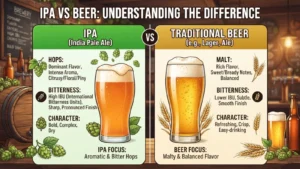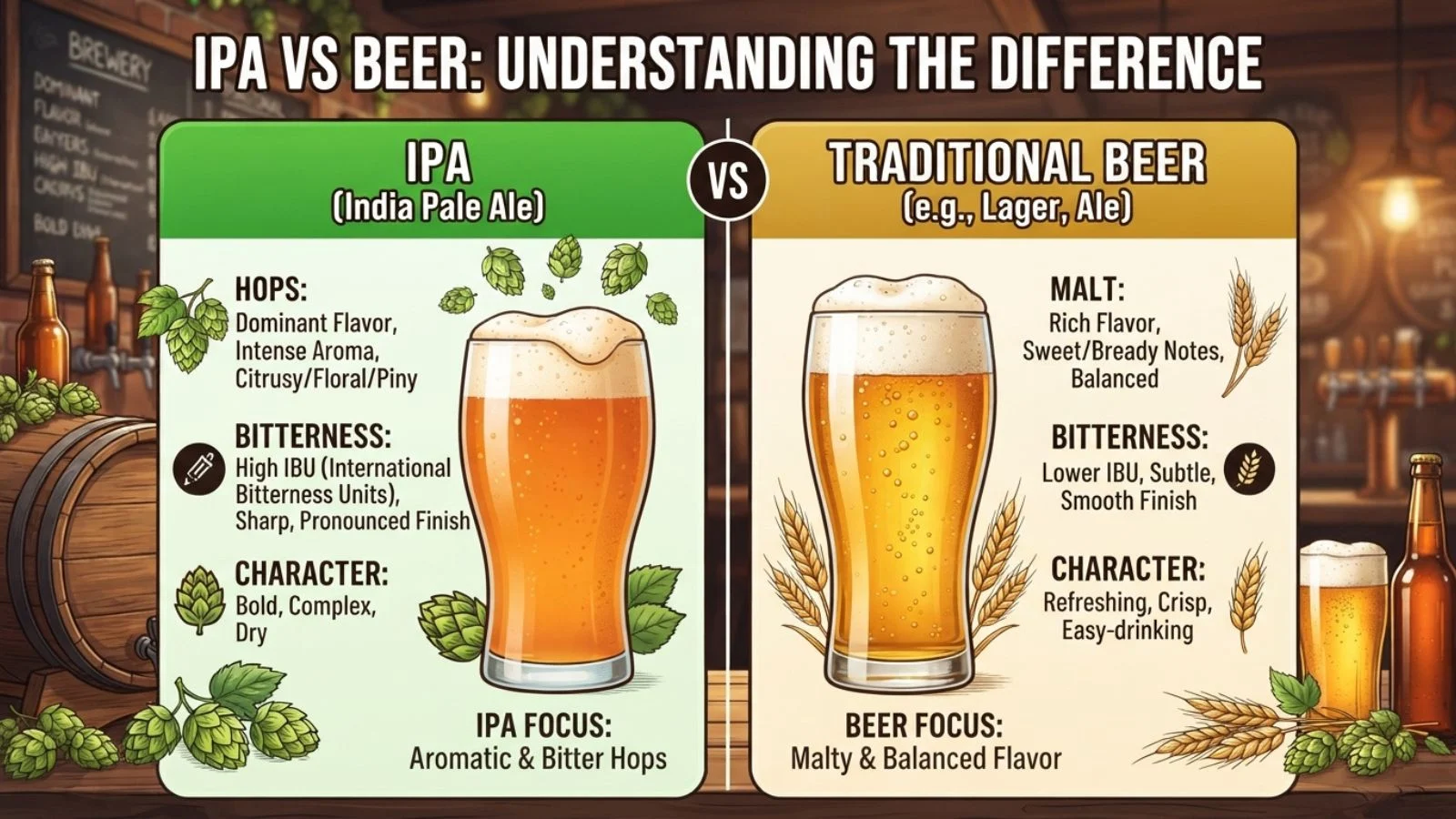
IPA (India Pale Ale) is not a separate drink from beer, it’s a specific style of beer. The real difference is between IPA and other beer styles like lagers or standard pale ales.
IPA is known for its strong hop flavor, higher bitterness and often higher alcohol content compared to lighter more common beers.
Key Takeaways
- IPA is a category of beer not something separate from beer.
- IPA typically has more hops, more bitterness and higher alcohol than a standard lager.
- Bitterness is measured in IBUs (International Bitterness Units) IPAs usually rank much higher than light beers.
- IPA tends to have slightly more calories due to higher alcohol and malt content.
- Choosing between IPA and a milder beer comes down to how much bitterness and hop flavor you enjoy.
Is IPA a Type of Beer?
Yes. IPA stands for India Pale Ale and it’s one of many styles that fall under the broad umbrella of “beer.” Beer itself is a huge category that includes lagers, stouts , wheat beers, pilsners and ales and IPA is one branch of the ale family.
So when people search “IPA vs beer” they’re usually not comparing two different drinks. They’re comparing IPA against the milder more neutral-tasting beers most people are used to drinking like a light lager or a standard pale ale.
IPA vs Regular Beer Key Differences
Taste and Bitterness
This is the biggest difference people notice. IPAs are brewed with a heavy amount of hops the flower used to flavor beer. Hops give IPA its signature bitter citrusy or piney taste. A typical light beer or lager is brewed to be smooth, mild and easy-drinking with very little bitterness.
Bitterness is measured using IBUs or International Bitterness Units. A standard light lager usually sits around 8 to 20 IBUs. An IPA often ranges from 40 to 70 IBUs and some double IPAs go even higher.
Alcohol Content (ABV)
IPAs generally have more alcohol by volume than standard beers.
- A typical light beer: around 4.2% ABV
- A standard lager: around 4.5% to 5% ABV
- A classic IPA: around 6% to 7.5% ABV
- A double or imperial IPA: 8% ABV or higher
There are exceptions. “Session IPAs” are brewed to keep the hoppy IPA flavor while lowering the alcohol content often to around 4% to 5% ABV.
Hops and Ingredients
Regular beer uses hops mainly for balance adding just enough to keep the malt sweetness in check. IPA flips that ratio. Brewers add hops generously sometimes at multiple stages of brewing to push the hop flavor and aroma to the front.
This is also why IPAs often carry strong notes of grapefruit pine mango or resin depending on the hop variety used. A standard beer usually tastes more like bread grain or light sweetness without those bold hop flavors.
Calories
Because IPAs tend to have more alcohol and malt they usually carry more calories than a light beer.
- Light beer: roughly 90–110 calories per 12 oz
- Standard lager: roughly 140–150 calories per 12 oz
- IPA: roughly 170–220+ calories per 12 oz depending on ABV
If you’re watching calorie intake a session IPA or a light lager will usually be the lower-calorie choice.
IPA vs Beer at a Glance
| Feature | Standard/Light Beer | IPA |
| Bitterness (IBU) | 8–20 | 40–100+ |
| Alcohol (ABV) | 4–5% | 6–9%+ |
| Calories (12 oz) | 90–150 | 170–220+ |
| Flavor | Mild grainy smooth | Hoppy bitter citrus/pine |
| Best for | Easy drinking casual sipping | Bold flavor hop lovers |
Types of IPA You Should Know
Not all IPAs taste the same. A few common styles show up on most menus:
- West Coast IPA Sharp bitter and piney. The classic hop-forward style.
- Hazy IPA (New England IPA) Softer bitterness, cloudy appearance, juicy fruit flavor.
- Double IPA (DIPA) Higher alcohol and more intense hop character.
- Session IPA Full hop flavor with lower alcohol made for easier drinking.
Knowing these differences helps if your first IPA tasted too bitter, a hazy or session IPA is often a gentler starting point.
Which Should You Choose: IPA or a Milder Beer?
If you enjoy bold bitter aromatic flavors and don’t mind a stronger drink IPA is a great choice. If you prefer something smoother, lighter and easier to drink in quantity especially in a social setting a standard lager or pale ale is usually the better fit.
Neither option is “better” than the other. It comes down to personal taste and how much bitterness and alcohol you’re comfortable with.
Frequently Asked Questions
Is IPA considered a beer?
Yes. IPA is a specific style within the ale family of beers distinguished mainly by its heavy hop content and bitterness.
Does IPA have more alcohol than regular beer?
Usually yes. Most IPAs range from 6% to 7.5% ABV compared to 4% to 5% for standard lagers though session IPAs are brewed to be lower in alcohol.
Why is IPA more bitter than other beers?
IPA uses significantly more hops during brewing which is the ingredient responsible for bitterness and aromatic flavor in beer.
What’s the difference between IPA and pale ale?
Pale ale is the broader style IPA originally came from. IPA generally has more hops, more bitterness and higher alcohol than a standard pale ale.
Does IPA have more calories than regular beer?
Generally yes since higher alcohol and malt content both add calories. A typical IPA has more calories than a light beer or lager.
At the end of the day asking “IPA vs beer” is really asking “how does IPA compare to the beers I already know.” Once you see IPA as one flavorful branch of the beer family rather than a competitor to it the choice comes down to how much hop bitterness you’re in the mood for.
Conclusion
At the end of the day “IPA vs beer” isn’t really a battle between two different drinks, it’s a comparison between one bold hop-forward style and the milder beers most people grew up drinking.
IPA belongs firmly in the beer family; it just turns up the volume on hops bitterness and often alcohol.
If you love big citrus and pine flavors with a bitter kick, IPA is worth exploring starting with a hazy or session IPA if you’re new to the style.
If you’d rather keep things smooth and easy-drinking a standard lager or pale ale will suit you better.
Either way, understanding what actually separates IPA from other beers makes it much easier to order with confidence next time you’re at a bar or browsing a store shelf.