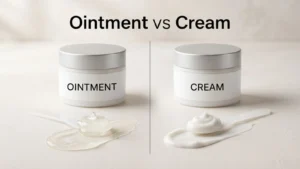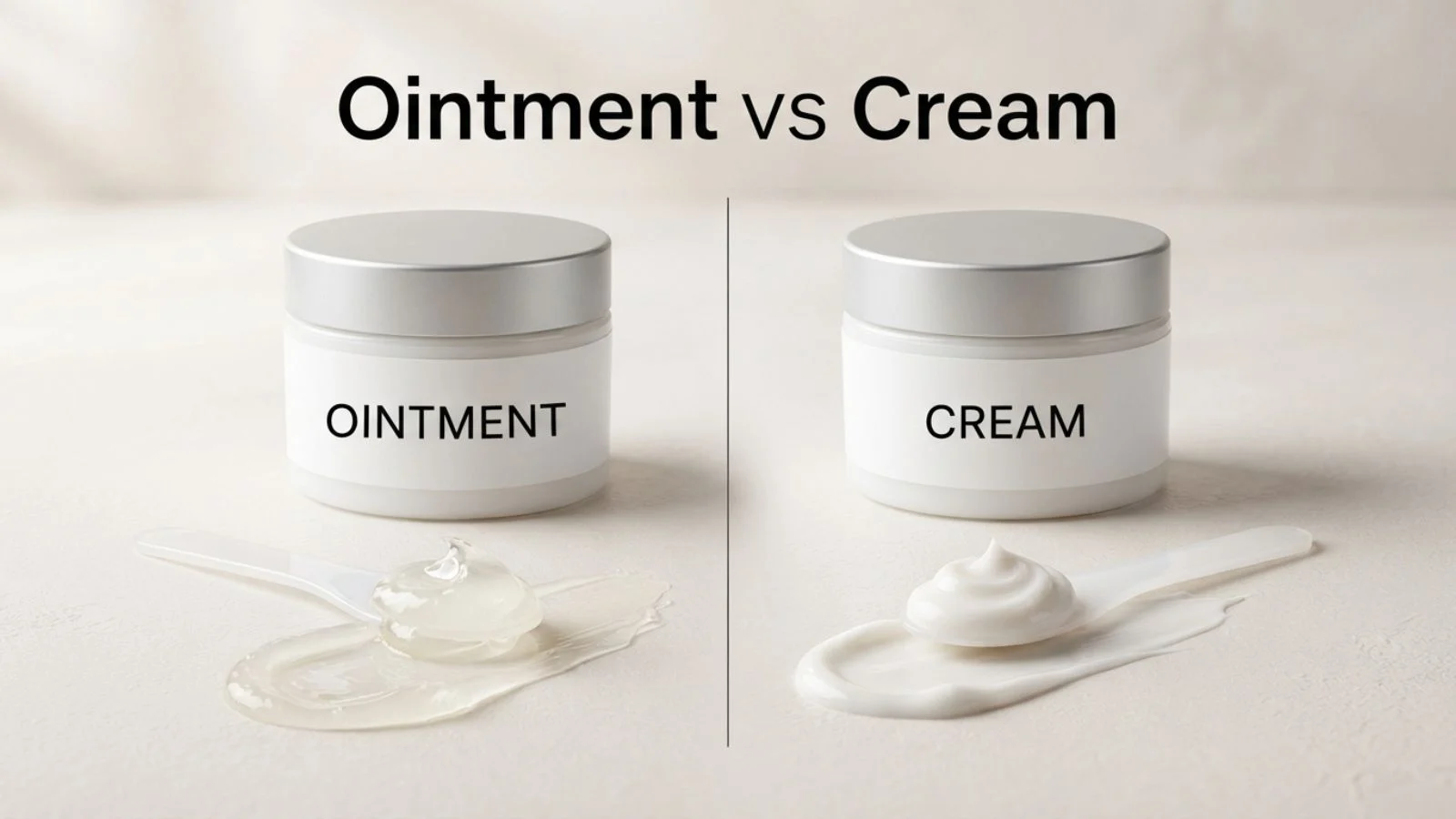
The main difference between ointment and cream is oil content. Ointments are about 80% oil and 20% water, making them thick, greasy, and long-lasting on the skin.
Creams are closer to 50% oil and 50% water, so they absorb faster and feel lighter. Ointments work best for very dry or cracked skin, while creams suit larger areas and everyday use.
Key Takeaways
- Ointments are oil-heavy (about 80% oil) and form a protective seal over skin.
- Creams have roughly equal parts oil and water and absorb more quickly.
- Ointments are better for very dry, cracked, or thickened skin, like on elbows or heels.
- Creams work well for larger body areas, daily moisturizing, and skin that isn’t extremely dry.
- Never swap a prescribed ointment for a cream (or the reverse) without checking with a pharmacist or doctor, since the base changes how the medication works.
What Is an Ointment?
An ointment is a thick, oil-based product made mostly of petroleum jelly, mineral oil, or similar greasy ingredients, with only a small amount of water. Because it’s so oil-heavy, an ointment sits on top of the skin instead of soaking in right away. That oily layer acts like a seal, locking moisture into the skin and blocking out air, wind, and cold.
This makes ointments especially useful for skin that’s severely dry, cracked, or damaged. Many prescription medications, such as certain steroids and antibiotics, come in ointment form because the oily base helps active ingredients stay in contact with the skin longer.
What Is a Cream?
A cream is a smoother, lighter product made from close to equal parts oil and water, blended into a single formula. That balance gives creams a texture that spreads easily and absorbs faster than an ointment. Creams still moisturize and protect the skin, but they don’t leave the same thick, greasy film.
Because they soak in more quickly and feel less heavy, creams are a popular choice for everyday moisturizing and for covering larger areas of the body, like arms, legs, or the face.
Ointment vs Cream: Key Differences
| Feature | Ointment | Cream |
| Oil content | About 80% | About 50% |
| Water content | About 20% | About 50% |
| Absorption | Slow | Faster |
| Texture | Thick, greasy | Smooth, lighter |
| Best for | Very dry, cracked skin | Larger areas, daily use |
| Feel on skin | Sticky, shiny | Non-greasy to mildly greasy |
Oil and Water Content
The oil-to-water ratio is what separates these two products. More oil means better protection against moisture loss but a heavier, greasier feel. More water means faster absorption and a lighter finish, but slightly less staying power against dryness.
Absorption and Texture
Because ointments are so oil-rich, they don’t sink into the skin quickly. Instead, they sit on the surface, forming a barrier. Creams, with their higher water content, absorb faster, which is why they’re comfortable for daily use under clothing or makeup.
How Long They Stay on the Skin
Ointments last longer on the skin surface, which is helpful when you want extended protection, such as overnight. Creams wear off faster and typically need to be reapplied more often, especially on hands or areas that get washed throughout the day.
When to Use an Ointment
Reach for an ointment when:
- Your skin is very dry, rough, or cracked (like heels, elbows, or knuckles in winter)
- You need long-lasting protection against moisture loss
- A doctor has prescribed an ointment for its stronger occlusive effect
- You’re treating a small, localized area rather than a large one
When to Use a Cream
A cream is usually the better pick when:
- You’re moisturizing a large area of skin, such as your arms or legs
- You want something that absorbs quickly and doesn’t feel greasy
- You’ll be applying it during the day, under clothes, or before going out
- Your skin is dry but not severely cracked or damaged
Ointment vs Cream for Specific Skin Conditions
Eczema and Psoriasis
For eczema and psoriasis, many dermatologists lean toward ointments, especially during flare-ups, because the thicker barrier helps calm irritated, cracked skin. Creams are often used for maintenance or milder cases, or on areas like the face where a heavy ointment might feel uncomfortable.
Cuts, Wounds, and Healing Skin
For minor cuts and healing wounds, ointments (like petroleum-based products) are commonly recommended because they keep the wound moist, which can support healing and reduce scabbing. Creams are generally less used here since wounds benefit more from a protective seal than fast absorption.
Acne-Prone or Oily Skin
If your skin is oily or acne-prone, a heavy ointment can feel too greasy and may contribute to clogged pores. A lightweight, water-based cream (or even a gel) is usually the more comfortable and practical choice.
Can You Substitute Cream for Ointment (or Vice Versa)?
Not always, and not without checking first. If a medication was prescribed as an ointment, switching to the cream version of the same drug can change how well it works. The base isn’t just packaging it affects how deeply the medication penetrates the skin and how long it stays in contact with it. If you’ve been given a different form than expected, it’s worth a quick call to your pharmacist before applying it.
Ointment vs Cream vs Lotion
Lotions are the lightest of the three, with even more water than a cream and sometimes added alcohol. They absorb almost instantly and leave little residue, which makes them a good everyday option for normal to oily skin. Ointments sit at the opposite end, with the most oil and the thickest texture. Creams fall in the middle, offering a balance between moisture and quick absorption.
FAQs
Is ointment better than cream for healing?
For wounds and very dry, cracked skin, ointments often perform better because they seal in moisture and protect the area longer. For general skin care or larger areas, creams are usually just as effective and more comfortable to use.
Can I use cream instead of ointment?
For general dryness, yes. But if a doctor specifically prescribed an ointment, switching to a cream version of the same medication without asking can reduce its effectiveness, since the base changes how the drug is absorbed.
Why do doctors prescribe ointment instead of cream?
Doctors often choose ointments when they want a medication to stay on the skin longer or penetrate thickened, scaly skin more effectively, such as with psoriasis or severe eczema.
Does ointment or cream absorb faster?
Cream absorbs faster because of its higher water content. Ointment sits on the skin’s surface longer, which is useful for protection but means it takes more time to fully absorb, if it absorbs at all.
The Bottom Line
Ointment and cream aren’t interchangeable by default the real difference comes down to oil content, and that changes how each one protects, absorbs, and performs on your skin.
If your skin is severely dry or cracked, or you need long-lasting protection, an ointment is usually the stronger choice.
For daily moisturizing or larger areas, a cream is often more practical. When in doubt, especially with a prescription, check with your pharmacist before switching between the two.