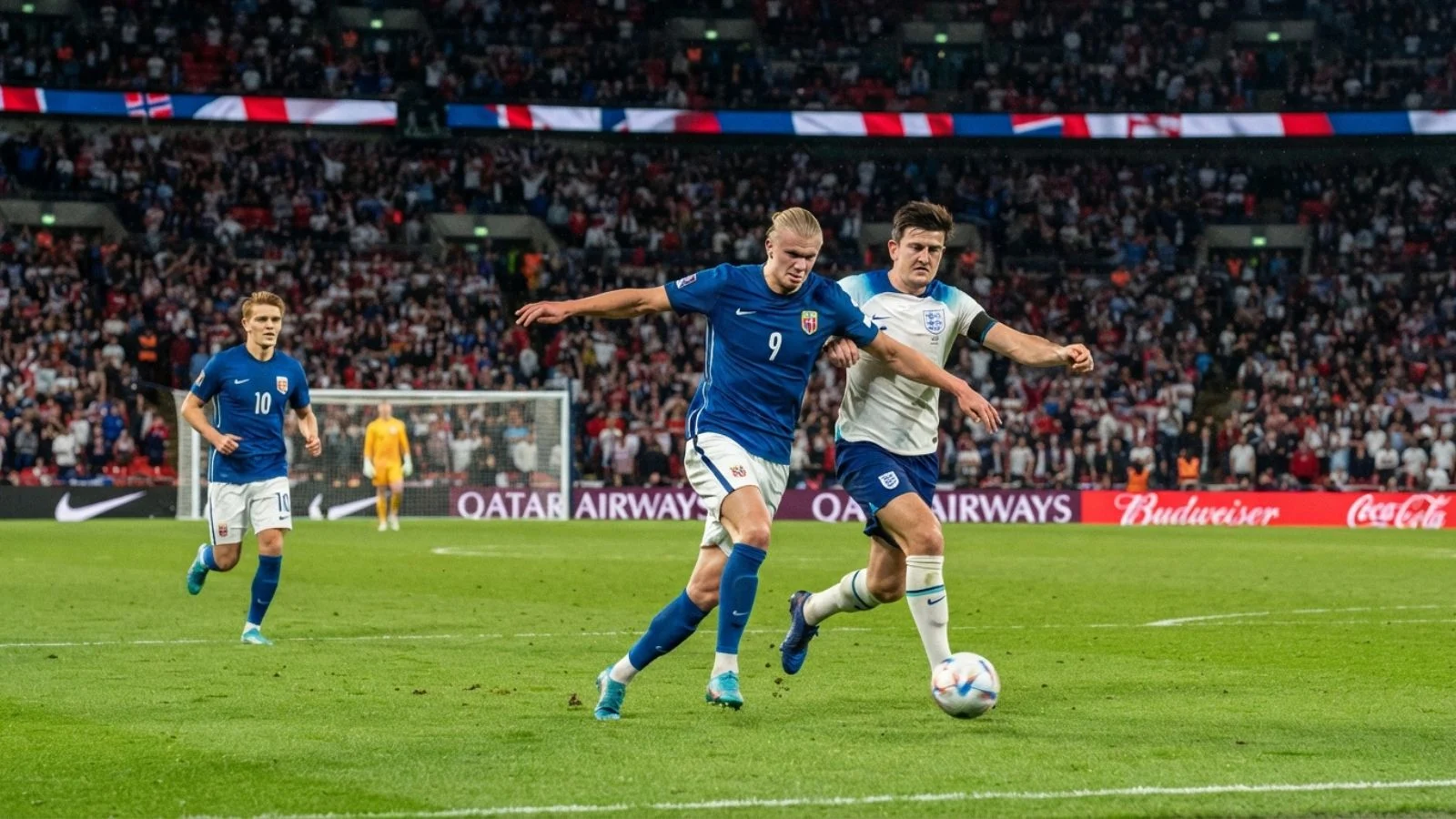
Few match-ups spark as much curiosity as Norway vs England, two nations linked by centuries of Viking raids, North Sea trade and shared wartime history yet worlds apart in almost everything else.
Norway with its dramatic fjords midnight sun and oil-furled sovereign wealth fund has built one of the most equal and content societies on earth.
England meanwhile carries the weight of an empire , a global financial hub in London and a cultural footprint from the Premier League to Shakespeare that few countries can rival.
But how do the two actually stack up when you look past the stereotypes? From cost of living and healthcare to work-life balance education and travel appeal Norway and England offer strikingly different visions of what a good life looks like.
In this guide we’ll break down every major category economy, lifestyle culture and more to help you understand exactly how these two countries compare.
Geography & Natural Environment
Norway and England could hardly look more different on a map. Norway stretches roughly 1750 miles along Scandinavia’s western edge, a narrow mountainous country carved by glaciers into dramatic fjords, steep cliffs and thousands of islands. Roughly a third of the country sits above the Arctic Circle giving it a landscape of tundra glaciers and dense boreal forest. England by contrast is compact and gentle rolling hills, chalk downs and a patchwork of farmland bordered by a much softer, more accessible coastline.
Population density tells its own story. Norway has one of the lowest densities in Europe with vast stretches of uninhabited wilderness even near major cities. England is one of the most densely packed countries in the world, especially around London and the industrial north.
Climate diverges sharply too. Norway’s Arctic and subarctic zones bring harsh winters, heavy snowfall and the famous midnight sun in summer alongside weeks of winter darkness in the north. England’s temperate maritime climate is milder and wetter year-round with far less seasonal daylight variation.
Natural resources have shaped both economies: Norway’s coastline and continental shelf yield oil gas and hydropower while its fjords support a thriving fishing and aquaculture industry. England’s landscape historically powered coal and industry though today its natural resources play a smaller economic role than Norway’s energy wealth.
History
Norway and England’s histories are intertwined from the very start of the Viking Age. Norwegian raiders struck England’s coasts as early as the late 8th century eventually settling large parts of the country and establishing the Danelaw alongside other Scandinavian forces. This era left a lasting linguistic and cultural imprint on English place names and vocabulary that survives today.
The two nations’ paths diverged sharply afterward. Norway spent centuries under Danish then Swedish rule only becoming fully independent in 1905. England meanwhile unified early, built a monarchy that endured political upheaval and expanded into a global empire that shaped much of the modern world.
World War II brought them together again under very different circumstances. Norway endured five years of brutal Nazi occupation while England faced the Blitz and stood as a key Allied stronghold. Both emerged from the war determined to rebuild but took distinct routes: Norway discovered oil in the North Sea in 1969 laying the foundation for extraordinary wealth while England founded the NHS and expanded its welfare state amid industrial decline.
Their relationship with European integration also split. Norway voted against joining the EU twice opting instead for EEA membership that preserves independence while retaining market access. England’s path culminated in Brexit formally exiting the EU in 2020 after decades of complicated membership, a decision still shaping its economy and identity today.
Government & Political System
Both Norway and England operate as constitutional monarchies but the role of the crown and the shape of government differ in important ways. Norway’s monarchy is largely ceremonial with King Harald V serving as a symbolic figurehead while real power rests with the elected Storting (parliament). England’s monarchy embodied by the British royal family plays a similarly ceremonial role within the UK’s Westminster system though it carries far more global visibility and historical weight.
Norway’s parliamentary system uses proportional representation meaning seats in the Storting closely reflect the percentage of votes each party receives. This tends to produce multi-party coalitions and a political culture built around consensus. England as part of the United Kingdom uses a first-past-the-post system for Westminster elections which typically favors two dominant parties and can produce majority governments from a minority of the popular vote.
A key structural difference lies in devolution. England has no separate national parliament of its own; it’s governed directly by the UK Parliament in Westminster unlike Scotland, Wales and Northern Ireland which each have their own devolved legislatures. Norway by contrast is a unitary state with no devolved nations though it grants meaningful autonomy to its municipalities and counties for local governance.
Local governments in both countries handle services like schools, roads and social care but Norway’s municipalities generally hold more direct responsibility for welfare delivery reflecting the country’s broader emphasis on decentralized public services.
Economy
Norway and England run on fundamentally different economic engines. Norway’s economy has been anchored by oil and gas extracted from the North Sea since the late 1960s. Rather than spending this wealth, Norway channels it into the Government Pension Fund Global, the world’s largest sovereign wealth fund worth well over a trillion dollars, ensuring long-term financial security beyond the eventual decline of fossil fuels. England’s economy by contrast is driven by services finance and creative industries with London standing as one of the world’s leading financial hubs alongside New York and Hong Kong.
In terms of GDP per capita Norway consistently ranks among the highest in the world reflecting its small population and immense energy wealth. England’s GDP per capita is solid but more modest, weighed down by regional inequality between prosperous London and struggling former industrial areas in the north.
Income inequality also diverges: Norway has one of the lowest Gini coefficients globally reflecting its egalitarian wage structure and strong social safety net. England shows greater income disparity with wealth concentrated significantly in London and the southeast.
Unemployment tends to run low in both countries though labor market structures differ Norway’s strong unions and collective bargaining agreements shape wages broadly while England’s market is more flexible and decentralized.
Currency-wise the Norwegian krone is closely tied to oil prices and tends to fluctuate more while the British pound remains one of the world’s major reserve currencies, generally more stable but still exposed to global economic shocks.
Cost of Living & Wages
Norway has a reputation as one of the most expensive countries in the world and the numbers largely back it up. Groceries dining out and alcohol in Oslo often cost noticeably more than in London or other major English cities driven partly by high import costs and steep taxes on goods like alcohol and tobacco. Housing however tells a more nuanced story while Oslo isn’t cheap London’s property market is famously brutal with rents and home prices in the capital far outpacing most of England including Norway’s major cities.
Wages help offset Norway’s higher prices. Average salaries in Norway tend to be higher across most sectors and the minimum wage set through collective bargaining rather than a fixed national rate generally supports a comfortable standard of living. England’s minimum wage is set nationally and has risen steadily but wages in many regions outside London lag behind the cost pressures found in the capital.
Taxation is where the two systems diverge most sharply. Norway imposes high income tax rates generally in the 22–39% range depending on income bracket funding its extensive welfare state healthcare and education systems. England’s tax bands are comparatively lower for most earners though top earners face significant rates as well.
When adjusted for purchasing power parity the gap between the two narrows somewhat: Norwegians earn more but also pay more for daily goods and services while English earners often stretch lower wages further outside London though at the cost of Norway’s broader social benefits.
Healthcare
Norway and England both operate universal publicly funded healthcare systems but the structures behind them differ in meaningful ways. Norway’s system is decentralized with regional health authorities managing hospitals and specialist care while municipalities handle primary care and general practitioners. It’s funded primarily through taxation with patients paying modest co-payments for services like GP visits and prescriptions capped by an annual out-of-pocket maximum that protects against catastrophic costs.
England’s National Health Service (NHS) is more centrally funded through general taxation and National Insurance contributions and free at the point of use for most services including GP visits and hospital care. Prescriptions in England carry a flat fee though many groups including children pensioners and those with certain conditions qualify for exemptions.
Wait times remain a point of comparison for both systems. Norway generally reports shorter waits for specialist and elective care than England where the NHS has faced well-documented pressure growing backlogs and lengthening wait times for non-urgent procedures in recent years. Patient satisfaction surveys tend to favor Norway slightly though both countries report strong public support for the principle of universal healthcare itself.
Private healthcare exists as a supplement in both nations. In Norway private insurance remains relatively uncommon and is mostly used to skip queues for non-urgent treatment. In England private healthcare is more established and widely used by those seeking faster access or additional comfort without replacing reliance on the NHS for most major treatment.
Mental health services in both countries have expanded significantly though both also report gaps in accessibility and funding relative to demand.
Education
Norway and England structure their education systems around different philosophies even though both provide free public schooling through the secondary level. Norwegian education emphasizes equality and low-stakes learning in the early years with formal grading typically not introduced until students are around 13 years old. Compulsory education runs from ages 6 to 16 followed by three years of upper secondary school that can be either academic or vocational. England’s system introduces more structured assessment earlier with national curriculum stages standardized testing (like GCSEs at 16 and A-Levels at 18) and a clearer academic-vocational split at the secondary level.
The biggest divide emerges at the university level. Norwegian public universities charge no tuition fees for domestic and in most cases international students funded instead through general taxation. England’s universities charge substantial tuition fees among the highest in Europe for undergraduate degrees though government loan systems help students manage the cost over time.
International rankings tell a mixed story. England is home to some of the world’s most prestigious universities including Oxford and Cambridge and consistently ranks highly in global university league tables. Norway’s universities are strong but less globally dominant with its educational strength showing more clearly in broad literacy equity and PISA assessment scores rather than elite institutional prestige.
Vocational training is deeply embedded in Norway’s system with clear pathways into skilled trades. England has invested in expanding apprenticeships and vocational routes as well though academic pathways still carry more cultural prestige.
Multilingual education is also more common in Norway where English is taught from an early age.
Work Culture & Work-Life Balance
Norway is frequently held up as a model for work-life balance and its labor policies reflect that reputation. The standard work week runs around 37.5 hours overtime is tightly regulated and requires additional compensation and the culture generally discourages working beyond contracted hours. England’s standard work week is similar on paper typically 37 to 40 hours but overtime culture especially in finance law and other high-pressure sectors often extends well beyond that particularly in London.
Parental leave is one of the starkest differences between the two countries. Norway offers one of the most generous parental leave systems in the world allowing parents to share up to roughly 49 weeks at full pay or 59 weeks at reduced pay with dedicated quotas reserved for fathers to encourage shared caregiving. England’s statutory maternity leave allows up to 52 weeks but pay drops significantly after the first six weeks and statutory paternity leave is comparatively brief, typically just one to two weeks.
Vacation entitlements also favor Norway where employees receive a minimum of 25 days of paid annual leave often supplemented by additional days depending on the employer. England’s statutory minimum sits at 28 days though this typically includes public holidays narrowing the practical gap between the two.
Remote work has grown in both countries since the pandemic though adoption varies more by industry than nationality. Retirement ages are broadly similar with both countries gradually raising the state pension age and both offer public pension systems supplemented by workplace and private pension schemes.
Quality of Life & Happiness
Norway consistently ranks among the happiest countries in the world in the annual World Happiness Report often placing in the global top ten while England typically sits comfortably in the top twenty respectable but noticeably behind Norway’s consistent showing. This gap reflects deeper structural differences: strong social trust, low corruption and a robust welfare safety net all weigh heavily in these rankings and Norway scores exceptionally well across each category.
Social trust is a defining feature of Norwegian society. Norwegians report high levels of trust in strangers institutions and government which contributes to lower crime rates and a stronger sense of collective security. England also enjoys relatively low crime rates by global standards though urban centers like London report higher rates of certain offenses including knife crime and theft than most Norwegian cities.
Environmental quality favors Norway significantly. The country generates nearly all of its domestic electricity from hydropower, maintains extensive protected wilderness and has embraced electric vehicles more aggressively than almost anywhere else in the world. England has made environmental progress too particularly in offshore wind energy but continues to grapple with air quality issues in dense urban areas.
Gender equality rankings also tilt toward Norway which regularly ranks among the top countries globally for closing gender gaps in politics, education and economic participation. England performs well by international standards but generally trails Norway in these specific measures.
Culture & Social Customs
Norwegian culture is deeply rooted in egalitarianism reflected in a social norm known as “Janteloven” (the Law of Jante) which discourages boasting or standing out and emphasizes humility and equality among peers. This shapes everything from workplace hierarchies to casual conversation where modesty is valued over self-promotion. England by contrast retains a more visible sense of class consciousness with accent education and background still influencing social perception even as the country has become more socially mobile over recent decades.
Communication styles differ noticeably too. Norwegians tend to be direct and comfortable with silence, often skipping small talk in favor of getting straight to the point. English social interaction leans more heavily on politeness rituals, indirect phrasing and small talk as a social lubricant particularly with strangers or in professional settings.
Religion plays a smaller role in daily Norwegian life with the country being one of the most secular in the world despite Lutheran Christianity’s historical dominance. England shows a similar secular trend though the Church of England retains a formal constitutional role and cultural presence especially around major holidays and ceremonies.
Outdoor life defines much of Norwegian identity through “friluftsliv” a cultural devotion to spending time in nature regardless of weather deeply embedded in childhood upbringing and national identity. English culture carries its own strong outdoor traditions but pub culture holds a more central place in everyday social life serving as a hub for community sport-watching and casual gatherings.
National holidays reflect these differences as well from Norway’s fiercely celebrated Constitution Day on May 17th to England’s blend of religious royal and historical observances throughout the year.
Food & Cuisine
Norwegian cuisine reflects the country’s coastal geography and historical need to preserve food through long winters. Fish plays a central role from salmon and cod to more distinctive dishes like lutefisk (dried whitefish treated with lye) and rakfisk (fermented fish) alongside brown cheese (brunost) and flatbread-style lefse. Traditional English cuisine leans toward hearty comfort-driven staples: the Sunday roast fish and chips meat pies and full English breakfasts remain culturally iconic even as everyday eating habits have shifted toward more global influences.
Modern food scenes in both countries have evolved well beyond these traditions. Oslo has developed a genuinely impressive contemporary dining scene with a growing number of Michelin-starred restaurants emphasizing New Nordic cuisine local seasonal ingredients prepared with minimalist precision. London rivals almost any city in the world for culinary diversity offering everything from world-class fine dining to some of the best international and immigrant-influenced food scenes anywhere reflecting the city’s global population.
Coffee culture is notably strong in Norway which consistently ranks among the highest per-capita coffee consumers globally with coffee breaks woven into both work and social life. England’s drinking culture centers more heavily around tea though coffee shop culture has expanded significantly in recent decades especially in urban areas.
Grocery shopping habits also diverge due to cost. Norwegians often stock up on alcohol and certain goods while traveling abroad due to high domestic taxes and cross-border shopping trips to Sweden are common. English grocery shopping is generally cheaper and more convenience-oriented with a dense network of supermarkets, high street shops and budget chains offering more variety at lower price points than Norway’s more limited retail landscape.
Sports & Recreation
Football dominates English sporting culture in a way few other countries can match. The Premier League is arguably the most-watched domestic football competition in the world and the sport permeates everyday life from pub conversations to youth participation school programs and a passionate deeply tribal fan culture built around local clubs. England’s football stadiums rivalries and matchday traditions form a core part of national identity.
Norway’s sporting identity centers instead on winter sports. Skiing isn’t just a pastime it’s practically a birthright with the popular saying that Norwegians are “born with skis on their feet.” The country consistently dominates Winter Olympic medal tables particularly in cross-country skiing biathlon and ski jumping sports deeply woven into national pride and childhood upbringing. Football exists in Norway too and enjoys solid domestic support but it doesn’t command the same cultural weight it holds in England.
Participation rates differ in interesting ways. Norway has notably high grassroots sports participation across all age groups partly due to strong public investment in local sports clubs and free access to outdoor recreation areas. England has excellent sports infrastructure as well particularly for football, cricket and rugby but participation tends to be more spectator-driven with a larger gap between fans who watch and those who actively play.
Youth sports programs in Norway emphasize inclusion and enjoyment over early competition reflecting the country’s broader egalitarian values. English youth sports, particularly football academies, often introduce competitive structures and talent identification at a younger age mirroring the elite pathway culture surrounding the professional game.
Arts Media & Entertainment
England’s literary legacy is virtually unmatched on the world stage. Shakespeare alone shaped the English language and global theater while centuries of novelists, poets and playwrights from Jane Austen to Charles Dickens to contemporary voices have cemented England’s status as a literary powerhouse. Norway’s literary contribution is smaller in scale but globally significant most notably through Henrik Ibsen whose plays revolutionized modern drama alongside a strong tradition of crime fiction that has found international audiences in recent decades.
Music scenes reveal contrasting cultural exports. England has produced some of the most influential acts in modern music history from The Beatles and Rolling Stones to punk Britpop and a continuous stream of chart-topping pop artists. Norway’s music identity is more niche but distinctive particularly its outsized influence on extreme metal genres like black metal alongside a thriving contemporary pop and electronic scene that has quietly gained international traction.
Film and television industries also differ in scale. England hosts a major global film industry with London serving as a hub for both homegrown productions and international blockbusters alongside a long-standing tradition of acclaimed television drama. Norway’s film industry is smaller but has gained international attention through critically praised films and Nordic noir television series that have found audiences well beyond Scandinavia.
Museums and cultural institutions reflect each country’s historical weight. England boasts globally renowned institutions like the British Museum and National Gallery drawing millions of visitors annually. Norway’s museums, while smaller in number, offer unique cultural depth particularly around Viking history and polar exploration.
Language
English holds a unique global position as the world’s dominant lingua franca used as a first second or working language by billions of people worldwide and serving as the primary language of international business science and media. Norwegian spoken by only around 5 million people occupies a much smaller linguistic footprint used almost exclusively within Norway and among Norwegian communities abroad.
Despite this disparity Norway boasts one of the highest levels of English proficiency in the world among non-native speakers. English is taught from early primary school embedded throughout media and entertainment and widely used in higher education and business settings. This means most Norwegians can communicate comfortably in English making language barriers a minor concern for visitors or expats compared to many other non-English-speaking countries.
Dialectal diversity tells an interesting contrast. Norway has an unusually high number of distinct regional dialects for such a small population and unlike many countries these dialects are widely accepted in formal settings including on national television and in professional environments. England also has strong regional accents and dialects from Cockney to Scouse to Yorkshire but these often carry stronger class and social associations than Norway’s more neutrally regarded dialect variation.
For travelers a handful of Norwegian phrases go a long way: “hei” (hello) “takk” (thank you) and “unnskyld” (excuse me) are simple, commonly appreciated basics. Given how widely English is spoken and understood throughout Norway however visitors rarely face serious communication challenges even in more remote areas of the country.
Travel & Tourism
Norway’s tourism appeal centers on dramatic natural scenery. The fjords particularly Geirangerfjord and Nærøyfjord, both UNESCO World Heritage sites, draw visitors from around the world alongside the Northern Lights in winter and the midnight sun in summer. Cities like Bergen with its colorful wharf district and the Lofoten Islands’ striking peaks add variety beyond the fjords themselves. England’s tourism draws instead on history and culture: London’s museums, palaces and West End theaters, the Roman baths and Georgian architecture of Bath and the pastoral beauty of the Lake District all anchor a very different kind of travel experience.
Timing matters more in Norway due to its extreme seasonal variation. Summer (June–August) offers long daylight hours ideal for hiking and fjord cruises while winter (roughly October–March) is peak season for chasing the Northern Lights in the north. England’s mild climate makes it more consistently visitable year-round though summer remains the most popular season for good weather and long days.
Getting around differs significantly too. Norway’s train and ferry network is scenic but limited by geography with many remote areas requiring car travel or domestic flights. England benefits from a dense well-connected rail network and extensive public transport particularly in and around London.
Budget-wise Norway carries its reputation as an expensive destination with dining and accommodation costing noticeably more than in most of England. Visa requirements are straightforward for most Western travelers to both countries though Norway’s Schengen membership and England’s post-Brexit entry rules now differ meaningfully for EU travelers specifically.
Living Abroad: Immigration & Expat Life
Moving to Norway as a non-EU/EEA citizen typically requires a job offer and a work permit tied to specific skill categories with the process generally considered rigorous but transparent. EU/EEA citizens benefit from freedom of movement rules similar to those once shared across the bloc. England’s post-Brexit immigration system now operates on a points-based model for all international applicants including EU citizens requiring sponsorship from an approved employer and meeting salary and skill thresholds, a significant shift from the pre-Brexit era of free EU movement.
Job markets for expats differ in scope. Norway’s job market rewards specialized skills particularly in energy engineering maritime industries and technology but often expects at least conversational Norwegian for long-term integration especially outside major cities. England’s larger, more diverse economy particularly in London offers substantially more opportunities across finance tech creative industries and services with English fluency naturally removing a major barrier for most expats.
Citizenship pathways also diverge. Norway generally requires seven years of residence Norwegian language proficiency and passing a citizenship test before naturalization. England’s path requires five years of residence for most applicants along with a “Life in the UK” test and English language requirements though timelines can vary based on visa category.
Expat communities are well-established in both countries though England’s particularly in London are considerably larger and more diverse given the city’s global population. Housing presents unique challenges in each: Norway’s rental market is straightforward but supply-limited outside cities while England’s rental market, especially in London, is notoriously competitive and expensive relative to income.
Environmental Policy & Sustainability
Norway’s energy profile stands out globally for its clean electricity generation with nearly 98% of domestic power coming from hydropower supplemented by wind. This gives Norway one of the lowest-carbon electricity grids in the world even as the country remains a major exporter of oil and gas, a paradox often noted by critics who point out the contrast between Norway’s green domestic energy use and its continued fossil fuel exports abroad. England’s energy mix has diversified significantly in recent decades with offshore wind now playing a major role alongside natural gas nuclear power and a rapidly shrinking coal sector that has been almost entirely phased out.
Climate commitments differ in ambition and framing. Norway has pledged to cut emissions by at least 55% by 2030 compared to 1990 levels and aims for climate neutrality shortly after leveraging its wealth to invest heavily in green technology and carbon capture projects. England as part of the UK’s broader commitments has legally binding targets to reach net zero emissions by 2050 with interim milestones focused on power sector decarbonization and phasing out new petrol and diesel vehicle sales.
Electric vehicle adoption is where Norway truly leads the world. The vast majority of new car sales in Norway are now electric driven by substantial tax incentives, toll exemptions and charging infrastructure investment. England has seen steady EV growth as well but adoption rates remain considerably lower hampered by higher upfront costs and a less developed charging network relative to demand particularly outside major cities.
Norway vs England: Head-to-Head Summary
After exploring every major category here’s how Norway and England stack up side by side:
| Category | Norway | England |
| Government | Constitutional monarchy proportional representation | Constitutional monarchy first-past-the-post |
| Economy | Oil/gas-driven sovereign wealth fund | Services/finance-driven London-centric |
| Cost of Living | Higher (groceries dining alcohol) | Lower outside London; London itself is costly |
| Wages | Higher average salaries | Moderate London-weighted |
| Taxes | High (22–39%) | Moderate progressive bands |
| Healthcare | Universal decentralized shorter waits | Universal (NHS) centralized longer waits |
| Education | Free university low-stakes early years | Tuition-based university earlier testing |
| Work-Life Balance | Strong (37.5-hr week generous leave) | Moderate (overtime culture common) |
| Happiness Ranking | Consistently top 10 globally | Typically top 20 |
| Climate | Arctic/subarctic extreme seasonal light | Temperate maritime mild year-round |
| Sports Culture | Winter sports (skiing biathlon) | Football-dominant |
| Language | Norwegian; high English proficiency | English; global lingua franca |
| EV Adoption | World-leading | Growing still behind |
| Immigration | Points/skills-based language expected | Points-based English-friendly |
This side-by-side view highlights a clear pattern: Norway consistently prioritizes equality, sustainability and work-life balance often at the cost of higher prices and a smaller global cultural footprint. England offers greater economic diversity, cultural influence and English-language accessibility but with more visible inequality and cost pressures concentrated in London.
Conclusion
Comparing Norway and England ultimately reveals two very different but equally compelling models of modern life.
Norway offers a smaller, more egalitarian society built on natural wealth, strong social safety nets and an unmatched connection to the outdoors, ideal for those who prioritise work-life balance, environmental values and long-term stability over global cultural influence or economic diversity.
England by contrast delivers scale: a larger economy, greater career diversity, deep historical and cultural weight and the practical advantage of English fluency, though often paired with higher inequality and more competitive daily living, especially in London.
Neither country is objectively superior; they simply optimize for different things. Someone drawn to nature equality and a slower pace of life will likely find Norway’s model deeply appealing even with its higher price tag.
Someone seeking career opportunity, cultural energy and global connectivity may find England’s diversity and accessibility better suited to their goals.