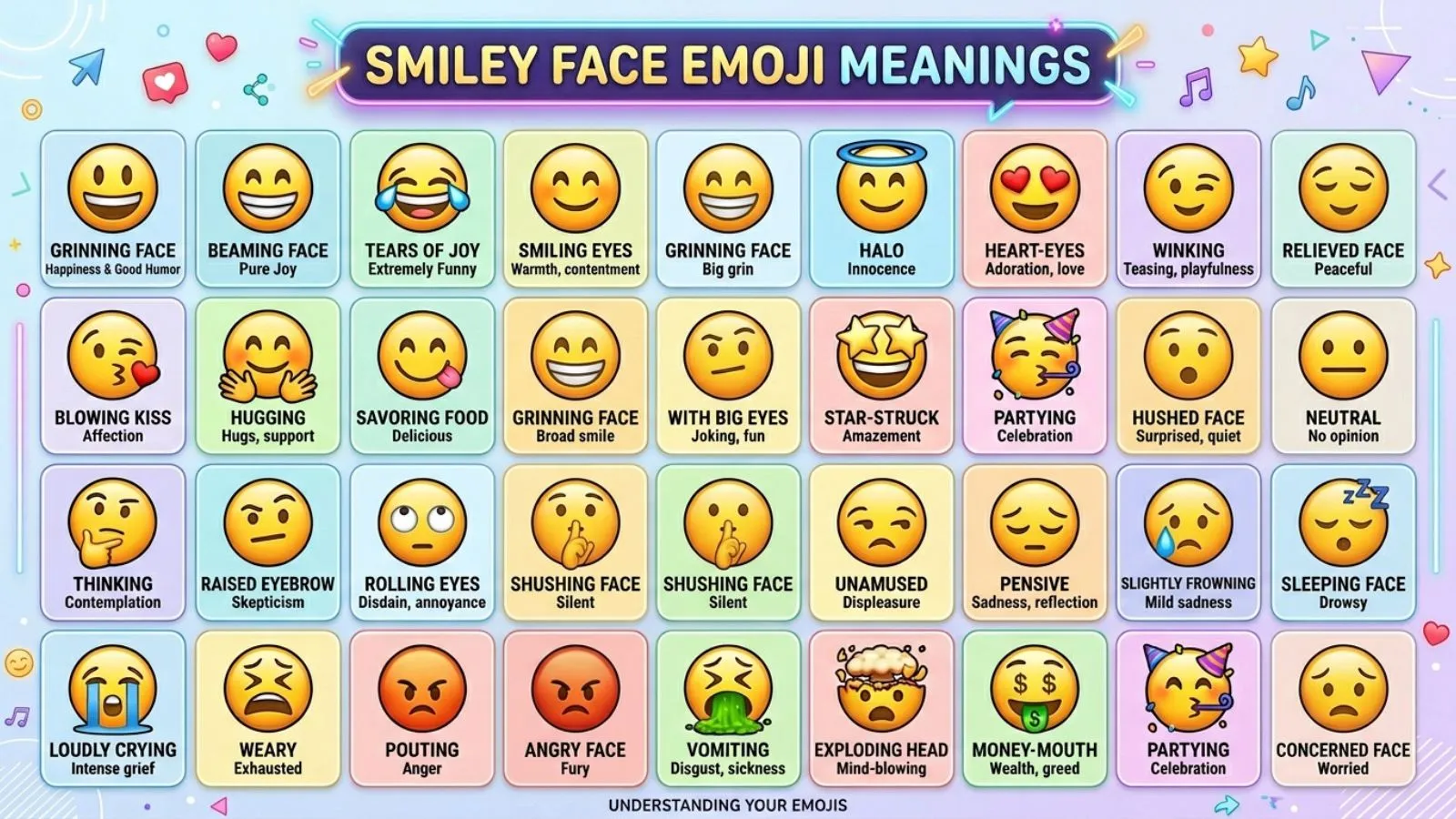
Ever wondered what that simple 😊 really means in chats, posts, and DMs? Its meaning changes more than you think in 2026.
You send a simple smiley face in a message thinking it looks friendly… but the other person reads it completely differently.
Sometimes it feels warm and kind, other times it feels passive-aggressive or even sarcastic. That’s the strange power of the smiley face emoji 😊 in today’s digital world.
In 2026, emojis aren’t just decorations they are emotional signals that shape conversations a single smile can mean happiness, awkwardness, politeness, or even hidden frustration depending on context.
Many people misunderstand it in texts, especially across Instagram, Whats App, and Ticktock comments.
That’s why knowing the real smiley face emoji meanings is important if you want to communicate clearly and avoid confusion.
This guide breaks it all down in a simple, human way so you always know what people really mean when they send a smiley face emoji 😊.
What does Smiley Face Emoji Mean?
The smiley face emoji 😊 is one of the most flexible emojis in digital communication. At its core, it represents happiness, warmth, and friendliness. But in modern 2026 online culture, its meaning depends heavily on tone and context.
Most common meanings include:
- Genuine happiness or positivity
- Polite friendliness in conversations
- Soft agreement or acknowledgment
- Slight awkwardness or emotional distance
- Passive-aggressive politeness (yes… really)
For example:
- “Okay 😊” → can feel passive-aggressive
- “Thanks 😊” → polite and soft
- “I’m fine 😊” → may hide emotions
This is why the smiley face emoji is both loved and misunderstood. It adapts to emotion, making it one of the most context-sensitive emojis online.
How to use Smiley Face Emojis
Using smiley face emojis correctly depends on your intention. If you want to sound friendly, warm, or non-threatening, the smiley 😊 works perfectly.
Best ways to use it:
- Ending a polite message: “See you later 😊”
- Softening a request: “Can you send it today 😊”
- Showing gratitude: “Thanks for your help 😊”
- Keeping tone light in chats
But be careful—overusing it in serious conversations can make you seem unserious or emotionally distant.
Best emoji combinations for copy paste
Here are ready-to-use smiley combinations for chats and social media:
- 😊✨💛 — soft happy vibe
- 😊🌸💬 — friendly conversation tone
- 😊👍🔥 — positive approval
- 😊🤍🌿 — calm aesthetic mood
- 😊😂💭 — playful texting vibe
- 😊💫🌈 — dreamy aesthetic style
- 😊🙌🎉 — celebration mood
These combos are widely used on WhatsApp, Instagram captions, and TikTok comments in 2026.
Aesthetic emoji ideas for social media
Aesthetic emoji styling is huge in 2026, especially for bios and captions. The smiley emoji plays a central role in creating soft, emotional visuals.
Popular aesthetic styles:
- Soft girl vibe: 😊🌷🕊️🤍
- Minimal aesthetic: 😊🤍✨
- Dreamy mood: 😊🌙💫
- Chill lifestyle: 😊🌊🌿
- Romantic tone: 😊❤️🌹
Example caption:
“Slow mornings and soft thoughts 😊🌿✨”
These combinations help your posts feel more expressive and visually appealing.
Common problems and solutions
Many users misunderstand smiley emojis in conversations. Here are common issues:
Problem 1: It feels sarcastic
Solution: Use emojis like 😊✨ instead of only 😊
Problem 2: It feels cold or distant
Solution: Add warmth emojis like 💛 or 🤍
Problem 3: Mixed interpretation in chats
Solution: Match emoji with clear wording
Problem 4: Overuse makes messages weird
Solution: Use sparingly for better impact
Understanding context is the key to avoiding emoji confusion in 2026.
Trending emoji usage in 2026
In 2026, the smiley face emoji is trending in more expressive and layered communication styles. People no longer use it just for happiness—it’s part of emotional storytelling.
Trending uses include:
- Passive-aggressive texting tone control
- Softening blunt messages
- Aesthetic caption styling on Instagram
- Emotional masking in online chats
- Viral TikTok comment reactions
The biggest shift in 2026 is that emojis are now “tone markers,” not just reactions. The smiley face emoji 😊 leads this trend because it can hide, soften, or amplify emotion depending on context.
Emoji Meaning Quick Table
| Emoji | Meaning | Usage Tone |
|---|---|---|
| 😊 | Friendly smile | Neutral / Warm |
| 😊✨ | Positive & soft vibe | Aesthetic |
| 😊💛 | Caring tone | Emotional |
| 😊🙂 | Slightly polite | Formal |
| 😊😐 | Hidden discomfort | Passive tone |
FAQs
1. What does 😊 mean in texting?
It usually means friendliness, politeness, or soft happiness depending on context.
2. Is 😊 always positive?
No, it can also feel passive-aggressive or distant in some conversations.
3. Why do people use 😊 instead of 😄?
Because it feels softer, more neutral, and less overly excited.
4. Can 😊 be sarcastic?
Yes, especially in short replies like “Okay 😊”.
5. Is smiley emoji still popular in 2026?
Yes, it remains one of the most widely used emojis globally.
6. What emojis go well with 😊?
✨💛🌸🤍🌿 are commonly paired for aesthetic and emotional tone.
Conclusion
The smiley face emoji 😊 may look simple, but it carries a surprising amount of emotional depth in digital communication today.
In 2026, it’s no longer just a symbol of happiness it’s a tone sifter that can make messages feel warm, distant, polite, or even slightly sarcastic depending on how it is used.
Understanding its meaning helps you avoid misunderstandings in chats, especially on platforms like Whats App, Instagram, and Ticktock where tone is often unclear.
If you’re using it to soften a message, add friendliness, or create an aesthetic vibe, the smiley face emoji remains one of the most powerful communication tools online.
The key is context what you say around it completely changes its meaning once you master that, you’ll be able to express emotions more clearly and connect better in every conversation without confusion or misinterpretation. It’s small, but it speaks louder than you think 😊.