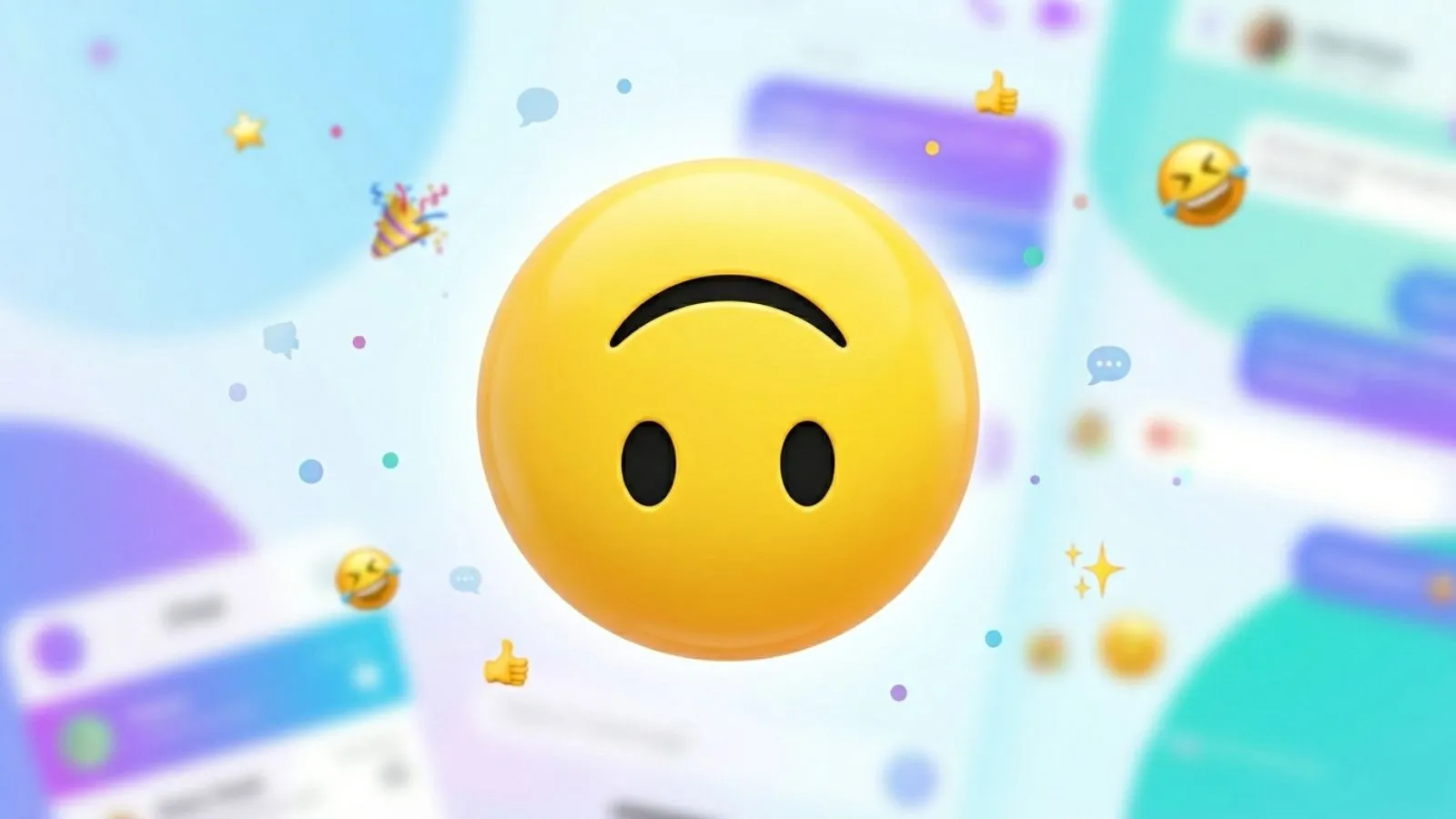
It looks simple, but the meaning behind the upside down smile emoji is surprisingly deep, funny, and sometimes confusing.
I still remember the first time I received this emoji from a friend after complaining about my day.
We thought they were mocking me… but turns out, they were just trying to say “it’s all fine, don’t stress 😌.”
That moment made me realise how one tiny emoji can completely change the tone of a conversation upside down smiley 🙃 meaning from a girlwhat does upside down smile mean.
Since then, the upside down smile emoji has become one of the most misunderstood yet expressive symbols in digital chatting what does this emoji mean 🙃.
What does Upside Down Smile Emoji mean?
The upside down smile emoji (🙃) is used to show sarcasm, irony, awkward feelings, or playful frustration.
It can also mean “I’m okay… but not really okay.”
Common meanings include:
- Sarcasm or joking tone
- Hidden sadness behind a smile
- Awkward or cringe moments
- Lighthearted frustration
- “Everything is fine” energy (even when it’s not)
It’s basically a fake smile turned upside down to express mixed emotions.
How to use Upside Down Smile emojis
You can use 🙃 in everyday conversations when words feel too serious or too emotional.
Examples:
- “Oh great, another Monday 🙃”
- “I totally didn’t fail that test 🙃”
- “Love when plans get canceled last minute 🙃”
- “Sure, I’m fine 🙃”
It works best when you want to sound casual but slightly sarcastic.
Best emoji combinations for copy paste
Here are some aesthetic and expressive combos you can use:
- 🙃😂 (sarcastic laugh)
- 🙃💔 (fake smile, real hurt)
- 🙃✨ (trying to stay positive)
- 🙃😌 (calm but ironic)
- 🙃🔥 (chaotic energy)
- 🙃🥲 (emotional but hiding it)
- 🙃💀 (dark humor vibe)
Aesthetic emoji ideas for social media
If you’re posting on Instagram, TikTok, or WhatsApp status, these styles work really well:
- “life lately 🙃✨💔”
- “just surviving 🙃🌧️”
- “smiling through it 🙃🙂”
- “vibes: confused but okay 🙃💫”
- “don’t ask 🙃🖤”
Creators often use it in captions to show relatable chaos or emotional humor.
Common problems and solutions
| Problem | Solution |
|---|---|
| Emoji shows differently on devices | Update your keyboard or OS |
| People misunderstand tone | Add extra emojis like 😂 or 😌 |
| Looks too negative | Pair with positive emojis ✨🌸 |
| Not available in old apps | Use copy-paste from Unicode-supported sources |
Trending emoji usage in 2026
In 2026, the upside down smile emoji is trending heavily in:
- Relatable meme captions
- Gen Z sarcasm texting
- Emotional “soft humor” posts
- TikTok POV videos
- “I’m fine” aesthetic content
It’s now a global symbol of hidden emotions wrapped in humor.
FAQs
1. What is the upside down smile emoji used for?
It shows sarcasm, awkward feelings, or pretending to be fine.
2. Is 🙃 a negative emoji?
Not always it can be playful, ironic, or emotional depending on context.
3. Why do people use it instead of 🙂?
Because it adds sarcasm or emotional depth that a normal smile doesn’t show.
4. Can I use it in professional chats?
It’s better to avoid it in formal messages, but fine in casual work chats.
5. What does 🙃💔 mean?
It usually means emotional pain hidden behind a fake smile.
Conclusion
The upside down smile emoji (🙃) is more than just a flipped face it’s a powerful way to express emotions that words often fail to capture.
In today’s digital conversations, people rarely say exactly what they feel, and this emoji perfectly fills that gap.
If it’s sarcasm, hidden sadness, awkward humour, or simply “I’m fine but not really,” 🙃 carries a layered meaning that makes texting more expressive and relatable.
Its popularity continues to grow because it matches real human emotions complex, mixed, and sometimes confusing.
From casual chats with friends to viral Ticktock captions, it has become a modern symbol of emotional irony.
When used correctly, it can add depth, humour, and personality to your messages however, context matters, so pairing it with other emojis can help avoid misunderstandings.
In short, 🙃 is not just an emoji it’s a whole mood that reflects how people truly feel in the digital age.
Continue Reading:
- 105 Emoji People Meanings You Should Know for 2026
- 91 Sad Crying Emoji: When and How to Use It Correctly for 2026
- 45 Phoenix Emoji Symbolism, Unicode, and Fun Facts (2026)