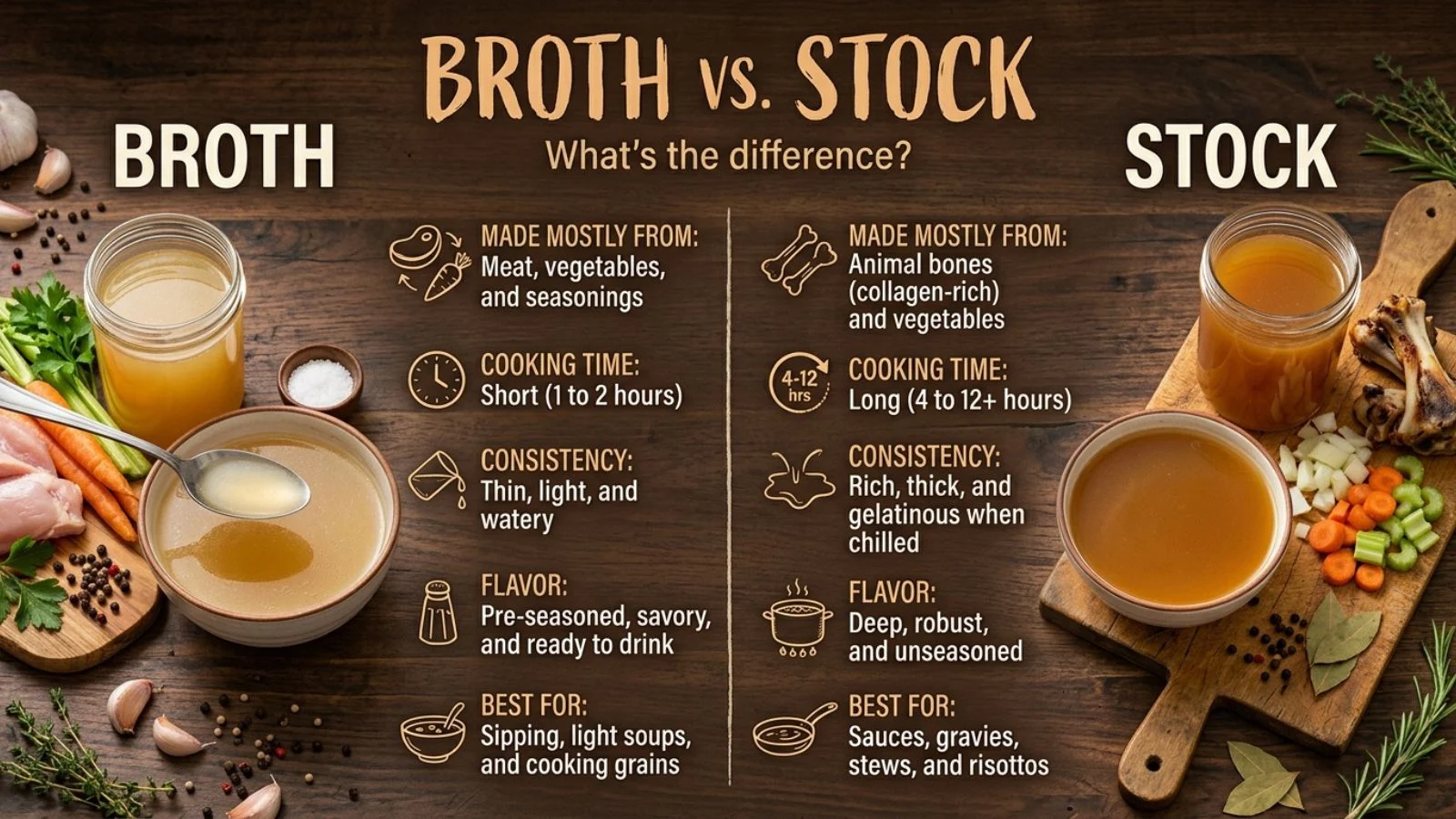
The main difference between broth and stock is what they’re made from and how long they cook.
Stock is made by simmering bones (often roasted first) for several hours, which releases collagen and gives it a rich, slightly thick texture.
Broth is made by simmering meat, usually with vegetables and seasoning, for a shorter time, resulting in a lighter, ready-to-sip liquid.
Key Takeaways
- Stock = bones, long simmer (2-6 hours), unseasoned, often gels when chilled
- Broth = meat, shorter simmer (45 minutes-2 hours), seasoned, stays liquid when chilled
- You can substitute one for the other in most recipes with minor adjustments
- “Vegetable stock” is technically a misnomer since stock relies on bones for body
- Store-bought versions often blur these lines, so always check the label if precision matters
What Is Stock?
Stock starts with bones chicken, beef, pork, or fish sometimes roasted first to deepen the color and flavor. Cooks simmer the bones with water and a few aromatics, usually onion, carrot, and celery, for anywhere from two to six hours.
That long cook time pulls collagen out of the bones and connective tissue. Once the collagen breaks down, it turns into gelatin. This is why good homemade stock often turns jiggly, almost like soft Jell-O, once it cools in the fridge. That gelatin is also what gives stock its silky body when it’s heated back up in a soup or sauce.
Stock is almost always left unseasoned. Chefs treat it as a blank-canvas ingredient, not a finished product, so they add salt later depending on what they’re cooking.
What Is Broth?
Broth is simpler and faster. It’s made by simmering meat, not just bones, along with vegetables and seasoning, usually for 45 minutes to two hours. Because it uses actual meat rather than relying on long-simmered bones, broth doesn’t develop much gelatin. It stays liquid even after it’s chilled.
Broth is typically seasoned with salt, pepper, and herbs while it cooks, which is part of why it tastes good enough to sip on its own, straight from a mug. A simple example: poach a chicken breast in water with onion, garlic, and salt for 20-30 minutes, and you’ve made broth.
Broth vs Stock: Side-by-Side Comparison
| Stock | Broth | |
| Main ingredient | Bones (sometimes with some meat) | Meat |
| Cook time | 2-6 hours | 45 minutes-2 hours |
| Seasoning | Unseasoned | Salted and seasoned |
| Texture | Thick, often gels when cold | Thin, stays liquid when cold |
| Best used for | Sauces, gravies, braises, risotto | Soups, sipping, quick-cooking grains |
| Can you drink it plain? | Not really tastes flat | Yes, it’s seasoned to be enjoyable on its own |
Can You Substitute Broth for Stock (or Stock for Broth)?
Yes, in almost every home recipe, you can swap one for the other without ruining the dish. A few small adjustments help:
- Using broth where stock is called for: The dish may turn out slightly less rich or silky, since broth has less gelatin. This usually isn’t noticeable in soups, but it matters more in a sauce that depends on stock for body.
- Using stock where broth is called for: Taste and add salt, since stock is unseasoned and may taste flat on its own.
For everyday cooking soups, stews, rice, braises the two are close enough that most people won’t notice the swap.
When to Use Stock vs When to Use Broth
Reach for stock when you’re making:
- Pan sauces and gravies, where body and richness matter
- Risotto, where a silky texture improves the final dish
- Braises and stews that simmer for a long time, since stock holds up well
Reach for broth when you’re making:
- A quick soup where you want ready-to-eat flavor fast
- Rice, quinoa, or other grains cooked in liquid for extra taste
- Something you might sip on its own, like a light vegetable or chicken broth
What About Bone Broth and Vegetable Stock?
Two common terms confuse people even more.
Bone broth is a hybrid. It’s simmered longer than regular broth often 12 hours or more using bones, which gives it more gelatin than typical broth. But it’s usually seasoned like a broth, which is why it keeps the word “broth” in its name even though the long cooking time and bones make it closer to stock in some ways.
Vegetable stock is, strictly speaking, a bit of a misnomer. True stock gets its body from bones, and vegetables don’t contain collagen. What’s sold as “vegetable stock” is really a well-seasoned, simmered mix of vegetable scraps which, by the definitions above, is closer to a vegetable broth. In everyday cooking and on grocery store shelves, though, the label “vegetable stock” is common and accepted.
Which Is Healthier, Stock or Broth?
Neither is clearly “healthier” across the board; it depends on what you’re comparing.
- Stock tends to have more protein from the gelatin released by bones, along with some minerals.
- Broth, especially when made with lean meat and trimmed skin, can be lower in fat.
- Store-bought versions of either can be high in sodium, so check labels if you’re watching salt intake, and look for low-sodium options when available.
If you’re making it at home, you control the salt and fat either way, which matters more for health than whether you call it stock or broth.
FAQs
Is chicken broth the same as chicken stock?
Not exactly. Chicken broth is made by simmering chicken meat with vegetables and seasoning for under two hours, producing a light, ready-to-drink liquid. Chicken stock is made by simmering chicken bones for several hours, producing a richer, thicker, unseasoned liquid that often gels when chilled.
Can I use stock instead of broth in a recipe?
Yes. Since stock is unseasoned, taste your dish and add salt as needed. The flavor will be a bit deeper, which usually works well in soups and stews.
Is bone broth the same as stock?
They’re closely related but not identical. Bone broth is simmered even longer than stock, often over 12 hours, and is typically seasoned, while classic stock is left unseasoned.
How long do homemade stock and broth last in the fridge?
Both keep for about 4-5 days when properly cooled and stored in a sealed container. For longer storage, freeze either one for up to 3 months.
Conclusion
Stock and broth aren’t the same thing, but the difference rarely makes or breaks a dish. Stock brings more body and richness from long-simmered bones; broth is lighter, faster, and seasoned enough to enjoy on its own.
Keep both on hand if you cook often, and don’t stress too much if a recipe calls for one and your pantry only has the other.
This replaces the closing paragraph at the end of the Final Article section; just add the heading directly above it when you drop the piece into your CMS or doc. Everything else in the article stays the same.