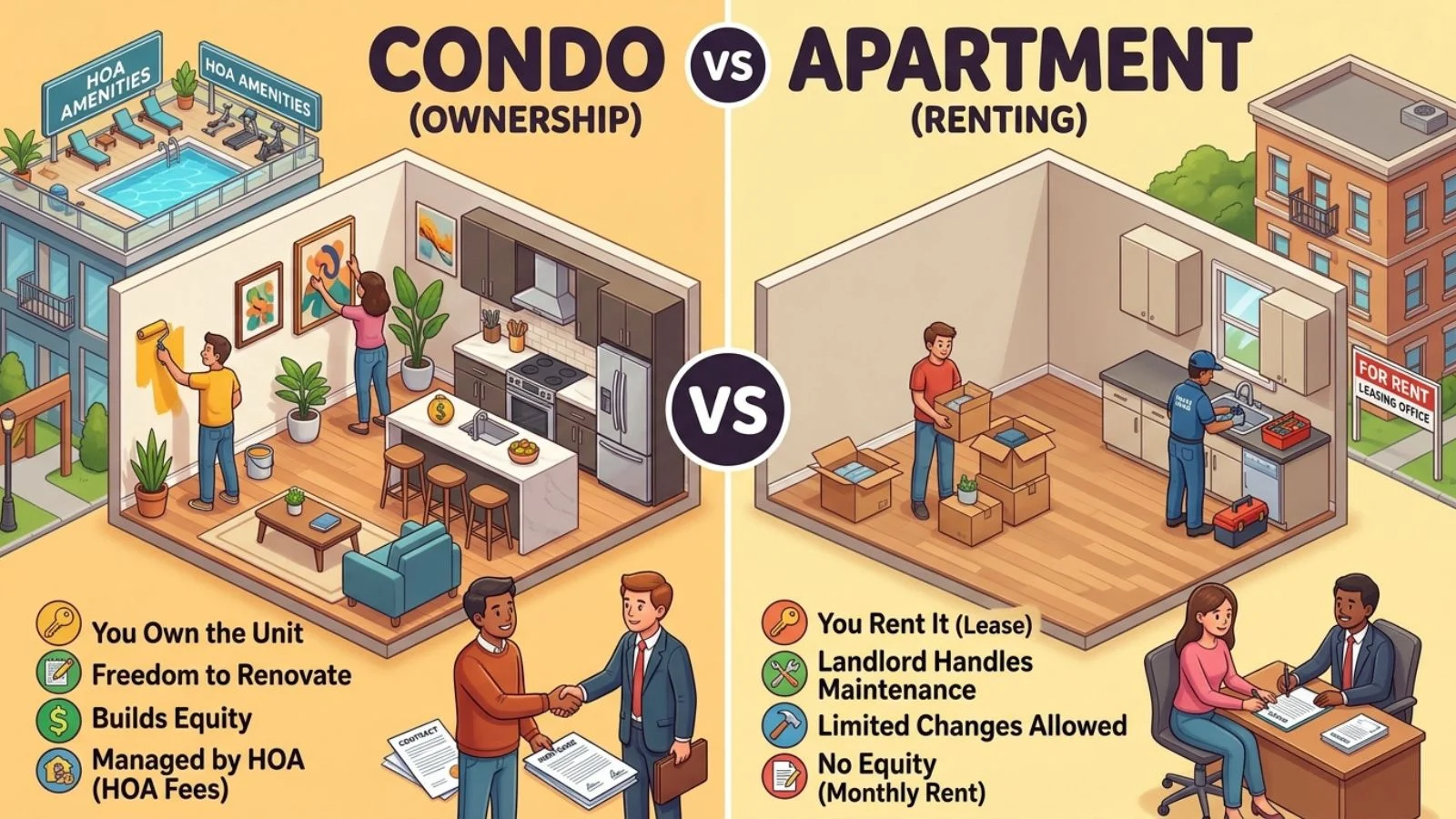
A condo is a home you own, usually inside a larger building or community, with shared areas managed by a homeowners association.
An apartment is a home you rent from a landlord or property manager. The main difference is ownership: condo owners hold a deed to their unit, while apartment renters pay monthly rent under a lease.
Key Takeaways
- A condo is owned by the buyer, while an apartment is rented from a landlord.
- Condo owners pay mortgage, property taxes, and monthly HOA fees. Renters usually pay rent and some utilities.
- Condo owners are responsible for the inside of their unit. Landlords usually handle repairs in apartments.
- Condos give owners more control over their space, but they also come with HOA rules and fees.
- Apartments are often more flexible and need less money upfront.
What Is a Condo?
A condominium, or condo, is a housing unit that a person owns. The unit is part of a building or community where some spaces are shared. These shared spaces, called common areas, can include hallways, elevators, a roof, a pool, or a gym.
Each owner holds a deed to their own unit. They also share ownership of the common areas with the other owners. A homeowners association (HOA) manages the building. The HOA collects monthly fees and makes rules about the property. Owners vote on many decisions through the association.
What Is an Apartment?
An apartment is a housing unit that someone rents. The owner is usually a landlord, an investment company, or a property management firm. The renter signs a lease, which sets the monthly rent, the length of the stay, and the rules.
Apartments are often in large buildings with many units, but a single apartment building can also be made up of a few units. The renter does not own any part of the building.
Condo vs Apartment: Key Differences
The biggest difference is who owns the home. But the two options also differ in how they cost money, who fixes problems, and how much freedom you have.
| Factor | Condo | Apartment |
| Ownership | You own the unit | You rent the unit |
| Monthly payment | Mortgage (or no loan), property taxes, HOA fees | Rent, often plus utilities |
| Upfront cost | Down payment and closing costs | Security deposit and first month’s rent |
| Repairs | The owner pays for the inside. HOA handles shared areas. | Landlord handles most repairs |
| Changes to the unit | Allowed within HOA rules | Usually need landlord approval |
| Lease length | No lease, but you can sell when you choose | Set by a lease, often 12 months |
| Building amenities | Often included, paid through HOA fees | Often included in rent |
One point often surprises buyers. Many condos look just like apartments. A condo can sit in a tall building with a lobby, a hallway, and neighbors on every side. What separates a condo from an apartment is the legal arrangement, not the look of the building.
Costs: Monthly and Upfront
Condos usually require more money at the start. Buyers often need a down payment, which is a share of the purchase price, plus closing costs. These costs can be thousands of dollars or more, depending on the price and the lender. Lenders also review the condo building itself before approving a loan, which can add time to the process.
Apartments are usually cheaper to move into. Renters often pay a security deposit and the first month’s rent. Some landlords also require an application fee.
Monthly costs work differently. A condo owner pays a mortgage, property taxes, insurance, and HOA fees. HOA fees can rise over time, and an association may also charge a special assessment for a large repair, such as a new roof. An apartment renter pays rent and sometimes utilities. Rent may rise when the lease ends, but the renter does not face special bills for building repairs.
Whether a condo is cheaper than an apartment depends on the location, the price, and how long you plan to stay. Compare the full monthly cost of owning, including fees, with the rent for a similar space nearby.
Repairs and Maintenance
Repairs are a major difference in day-to-day life. In an apartment, the landlord usually handles most problems, from a broken water heater to a leaking faucet. Renters typically report the issue and wait for the landlord or manager to arrange a fix.
In a condo, responsibilities are split. The owner pays for and maintains the inside of the unit, including appliances, flooring, and fixtures. The HOA pays for the outside of the building and the common areas, usually using the monthly fees. Your condo documents, often called the bylaws or declaration, explain exactly which parts belong to whom. Read them before you buy.
Rules, Flexibility, and Resale
Condos often have more rules than people expect. Many HOAs limit pets, short-term rentals, parking, noise, and exterior changes such as a new balcony enclosure. Some restrict how many units can be rented out. These rules can be stricter than a typical apartment lease.
On the other hand, condo owners have more freedom inside their unit. They can usually paint, renovate, and decorate without asking a landlord, as long as they follow the HOA’s rules and any required approvals.
Resale is another key difference. When you own a condo, you can sell it when you choose and keep any increase in value. Your sale may depend on the building’s finances, reserve funds, and HOA approval. Renters do not build equity, but they can move when their lease ends without selling anything.
Which Option Is Right for You?
The right choice depends on your budget, your timeline, and how you want to live.
A condo may be a good fit if…
- You plan to stay in one place for several years.
- You want to build equity and own your home.
- You are comfortable with HOA rules and monthly fees.
- You want to make changes to your living space.
An apartment may be a good fit if…
- You need flexibility to move on short notice.
- You want lower upfront costs.
- You prefer to have repairs handled by someone else.
- You are not ready to take on a mortgage.
Frequently Asked Questions
Is a condo an apartment?
Not exactly. A condo is a type of ownership, while an apartment usually refers to a rental unit. A condo can look like an apartment from the outside, but the owner holds a deed to it. Some people casually call condos “apartments,” but in real estate, the terms have different legal meanings.
Is a condo cheaper than an apartment?
It depends. A condo may cost more upfront because of the down payment and closing costs. Monthly costs can be similar to rent in some markets, but HOA fees, taxes, and possible special assessments add to the total. Compare the full cost of owning with the full cost of renting in your area.
Can you rent out a condo?
Often, yes, but not always. Many condo owners rent their units to tenants. However, some HOAs limit or ban renting. Check the building’s rules before you buy if you plan to be a landlord.
Final Thoughts
Condos and apartments can look alike, but the difference comes down to ownership. A condo gives you a home to build equity in, with more control over your space and more responsibility for its upkeep.
An apartment gives you flexibility, lower upfront costs, and a landlord to handle most repairs.
Before you decide, look at your timeline, your budget, and how much you want to manage. If you plan to stay for several years and can handle a down payment and monthly HOA fees, a condo may serve you well.
If you need to move easily or want to keep your costs low, an apartment may be the better fit. Whichever you choose, read the lease or the HOA documents carefully before you sign.