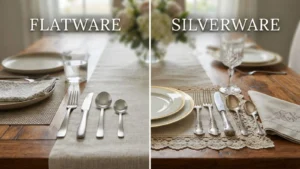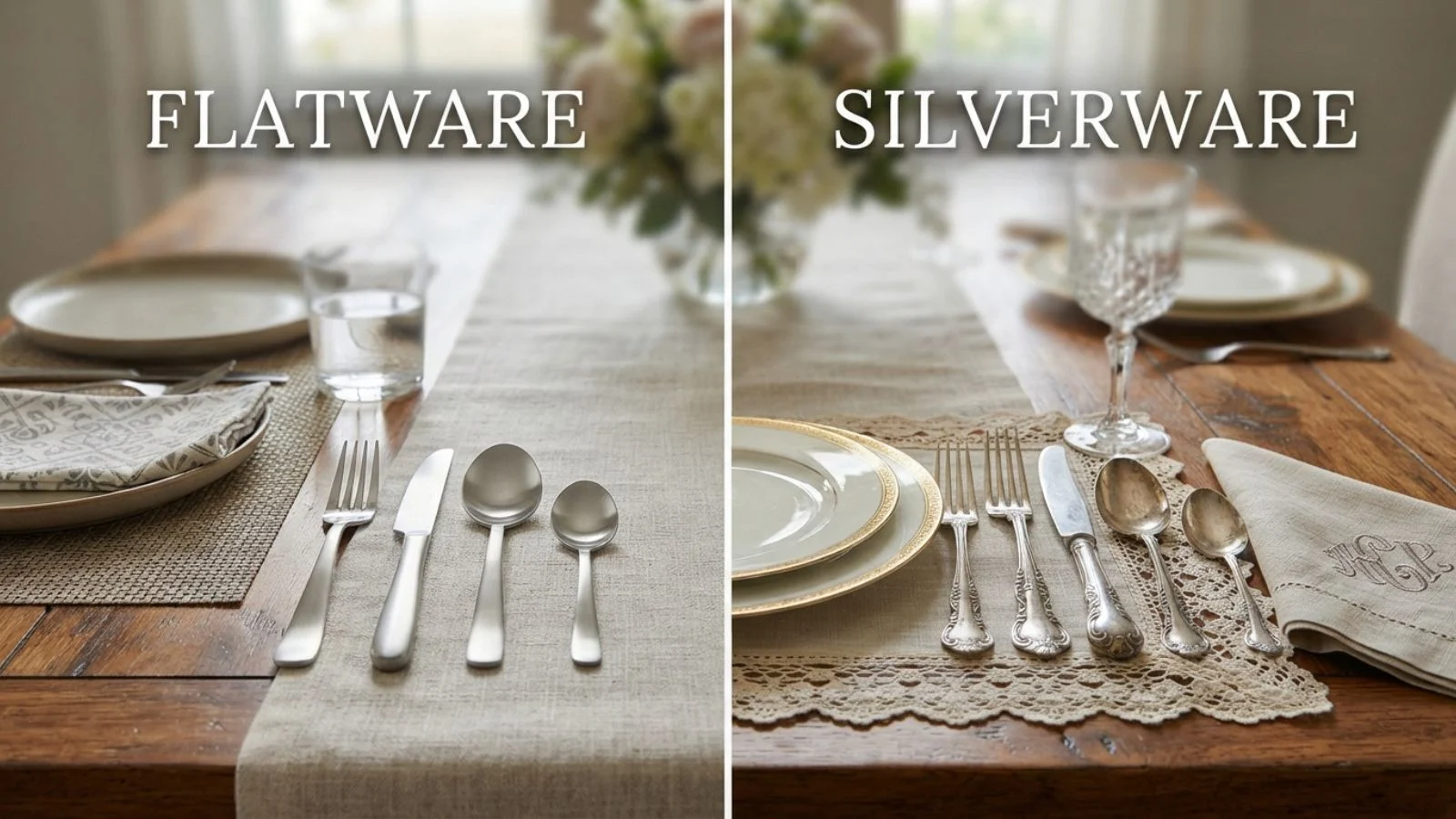
Flatware and silverware are often used interchangeably, but they’re not technically the same. Flatware is the general term for forks, knives, and spoons, regardless of material.
Silverware specifically means utensils made of or plated with real silver. Today, most “silverware” in American homes is stainless steel flatware; the name just stuck around from tradition.
Key Takeaways
- Flatware refers to any set of forks, knives, and spoons, made from any material.
- Silverware technically means utensils made of sterling silver or silver plate.
- Most people say “silverware” out of habit, even when the utensils are stainless steel.
- Cutlery is a related term, more common in British English, that usually includes knives and sometimes all eating utensils.
- The word you use rarely matters in casual speech, but it can matter when shopping, writing product descriptions, or setting a formal table.
What Is Flatware?
Flatware is the broad, material-neutral term for the utensils you eat with: forks, knives, and spoons. The name comes from the fact that these pieces are relatively flat, compared to “hollowware” like bowls, pitchers, and serving dishes.
Flatware can be made from:
- Stainless steel
- Sterling silver
- Silver plate
- Plastic
- Titanium or other specialty metals
If you buy a boxed set of utensils at a home goods store, it’s almost always labeled “flatware,” because that word covers any material.
What Is Silverware
Silverware, strictly speaking, means utensils made from real silver either sterling silver (a durable silver alloy) or silver-plated metal (a base metal coated in a thin layer of silver). Genuine silverware tarnishes over time, needs regular polishing, and is often reserved for special occasions or passed down as a family heirloom.
The catch is that “silverware” has drifted away from its literal meaning. Many American households use it as a catch-all word for any eating utensils, even basic stainless steel ones from an everyday drawer.
Flatware vs Silverware: The Core Difference
The real distinction comes down to material and formality.
- Flatware is a category. It includes any fork, knife, or spoon, made of any material.
- Silverware is technically a subset of flatware specifically the pieces made of or coated in silver.
In other words, all silverware is flatware, but not all flatware is silverware.
Comparison Table
| Feature | Flatware | Silverware |
| Material | Any (steel, silver, plastic, etc.) | Silver or silver-plated |
| Common usage | Retail, product listings, formal terminology | Everyday speech, casual reference |
| Maintenance | Low (especially stainless steel) | Higher (requires polishing to prevent tarnish) |
| Typical setting | Daily use or formal dining | Special occasions, heirlooms, formal dinners |
| Region | Used across the U.S. | More common in American English |
Why Do People Still Say “Silverware” If It’s Not Silver?
This comes down to history and habit. Before stainless steel became widely available in the mid-20th century, silver-plated and sterling silver utensils were the standard in most American homes. The word “silverware” became the default way to refer to eating utensils in general.
When stainless steel took over as the practical, affordable choice, the utensils changed, but the vocabulary didn’t fully catch up. People kept calling their kitchen drawer utensils “silverware” out of habit, even though almost none of it is actually silver anymore. This is a common pattern in language, where a word outlives the exact thing it originally described.
Is Cutlery the Same as Flatware or Silverware?
Cutlery adds a third layer to this conversation. In British English, “cutlery” is the standard, everyday term for all eating utensils, including forks, knives, and spoons. In American English, cutlery more often refers specifically to knives and cutting tools, though it’s increasingly used as a synonym for flatware in retail and dining contexts.
So depending on where you are:
- In the UK, cutlery usually means what Americans call flatware.
- In the US, cutlery can mean knives specifically, or sometimes the full utensil set, depending on context.
Which Term Should You Use?
In Everyday Conversation
It genuinely doesn’t matter. If you ask someone to “grab the silverware” or “grab the flatware,” they’ll understand you mean forks, knives, and spoons. Casual speech doesn’t require technical precision here.
When Shopping or Registering for Gifts
Retailers and wedding registries typically use “flatware” as the official product category, since it covers stainless steel, silver-plated, and sterling silver options under one label. If you’re specifically looking for real silver pieces, search using “sterling silverware” or “silver-plated flatware” to get accurate results.
In Writing or Product Listings
For blog posts, product descriptions, or professional writing, “flatware” is the more accurate and material-neutral term. Save “silverware” for situations where the pieces are actually made of silver, or when you’re intentionally using it in its common, informal sense.
FAQs
Is flatware the same thing as silverware?
Not exactly. Flatware is the general term for forks, knives, and spoons made from any material. Silverware technically refers only to utensils made of or coated in silver, though many people use it loosely for any utensils.
Why is it called silverware if it’s not silver?
The term comes from a time when most household utensils really were made of silver or silver plate. As stainless steel became common, the word “silverware” stuck around as an informal habit, even though the material changed.
What is included in a flatware set?
A standard flatware set typically includes dinner forks, salad forks, dinner knives, teaspoons, and soup spoons, often in sets of 4, 8, or 12 place settings.
Is cutlery the same as flatware?
It depends on the region. In British English, cutlery usually means the same thing as flatware. In American English, it more often refers to knives specifically, though usage varies.
Which term is more correct to use?
“Flatware” is the more accurate, material-neutral term and is preferred in retail, writing, and formal contexts. “Silverware” is fine in casual conversation but is technically inaccurate unless the utensils are actually silver.
The Bottom Line
Flatware and silverware aren’t strictly interchangeable, even though most people treat them that way.
Flatware is the umbrella term for any forks, knives, and spoons. Silverware is a specific type of flatware made from real silver.
In daily conversation, either word works fine but if you’re shopping, writing, or want to be precise, “flatware” is the safer, more accurate choice.