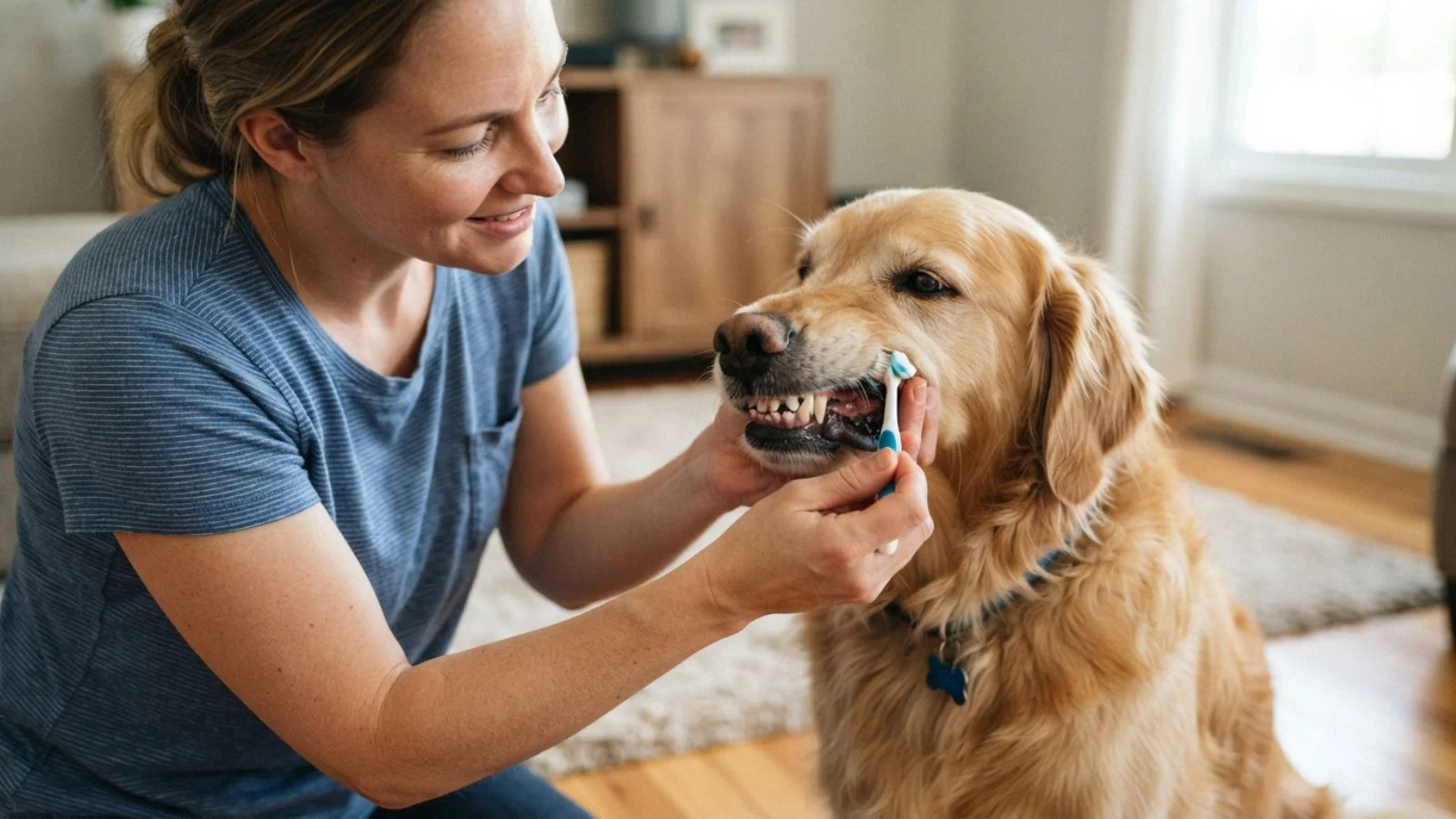
A dog’s dazzling smile is more than just cute, it’s a window into their overall health dental disease is one of the most common yet overlooked health issues in dogs with studies showing that a majority of dogs over the age of three already show signs of periodontal disease.
What starts as simple plaque buildup can quickly progress into painful gum infections, tooth loss and even bacteria entering the bloodstream putting strain on vital organs like the heart liver and kidneys.
The good news? Most dental problems are preventable with a consistent at-home care routine paired with regular veterinary support.
Cleaning your dog’s teeth doesn’t have to be a stressful battle for either of you with the right technique tools and patience, it can become a simple part of your routine.
Understanding Canine Dental Health
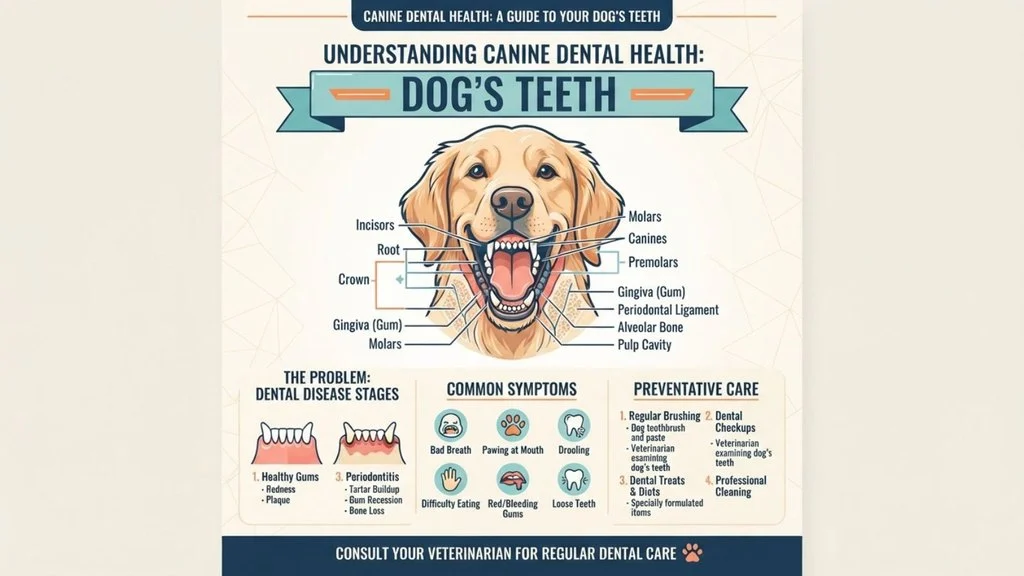
Before diving into brushing techniques it helps to understand what’s actually happening inside your dog’s mouth. Dogs have 42 adult teeth including incisors for nibbling canines for tearing and premolars/molars for grinding, each type playing a distinct role and each vulnerable to different issues.
Dental problems typically begin with plaque, a soft sticky film of bacteria that forms on teeth within hours of eating. If plaque isn’t removed regularly it hardens into tartar (calculus) within just a few days. Unlike plaque tartar that can’t be brushed away, it requires professional scaling to remove. As tartar builds up along and beneath the gumline it creates the perfect environment for bacteria to inflame the gums, a condition known as gingivitis. Left untreated gingivitis can progress into periodontal disease where the infection damages the ligaments and bone supporting the teeth eventually leading to tooth loss.
Certain dogs face a higher risk of dental issues. Small and toy breeds such as Chihuahuas and Yorkshire Terriers often have overcrowded teeth that trap food and plaque more easily. Senior dogs are also more susceptible both because of years of cumulative wear and because aging immune systems are less effective at fighting off oral bacteria. Flat-faced (brachycephalic) breeds like Pugs and Bulldogs may also experience misalignment issues that make cleaning more difficult.
Signs of Dental Problems
Knowing what to look for is the first step in catching dental issues before they become serious. Many signs are subtle at first so regular checks at home can make a big difference in your dog’s comfort and long-term health.
The most common early warning sign is bad breath. While dogs aren’t known for minty-fresh breath a strong persistent odor often signals bacterial buildup rather than something to simply ignore. Discolored teeth are another red flag. Healthy teeth should be white to slightly off-white while yellow or brown coating usually indicates tartar accumulation.
Gum health is just as telling as the teeth themselves. Healthy gums are firm and pink; red swollen or bleeding gums point to gingivitis or more advanced periodontal disease. You may notice bleeding when your dog chews on toys or during brushing sessions.
Behavioral changes are also worth watching closely. Loose or wobbly teeth, excessive drooling or a dog pawing at their mouth can all indicate pain or discomfort. Some dogs become reluctant to eat hard kibble chew on one side of their mouth or lose interest in toys they once loved to chew.
If you notice any of these signs, especially bleeding gums, loose teeth, facial swelling or a sudden drop in appetite, it’s time to schedule a veterinary visit rather than relying on home care alone. Catching problems early can prevent pain infection and costly treatment down the line so don’t wait for symptoms to worsen before seeking help.
Supplies You’ll Need
Having the right tools on hand makes dental care easier and safer for both you and your dog. The good news is that you don’t need an elaborate setup, just a few key items.
The most important supply is a dog-specific enzymatic toothpaste. These toothpastes are formulated to break down plaque and often come in dog-friendly flavors like poultry or peanut butter making the process more enjoyable for your pup. It’s critical to never use human toothpaste as many formulas contain xylitol, an artificial sweetener that is highly toxic to dogs along with fluoride which can cause stomach upset or worse if swallowed in large amounts. Dogs don’t spit so anything you use will be ingested.
For applying the toothpaste you have a few options depending on your dog’s tolerance and your comfort level. A finger brush, a soft silicone cap that fits over your fingertip, is a great starting point for beginners and nervous dogs since it lets you feel resistance and control pressure gently. Long-handled dog toothbrushes often double-ended with different bristle sizes work well for reaching back molars once your dog is used to the process.
Some pet owners also keep dental wipes or gauze pads on hand as a lower-maintenance alternative or backup option especially for dogs who resist brushes altogether. These can be wrapped around a finger and rubbed gently along the teeth and gumline.
Preparing Your Dog for Brushing
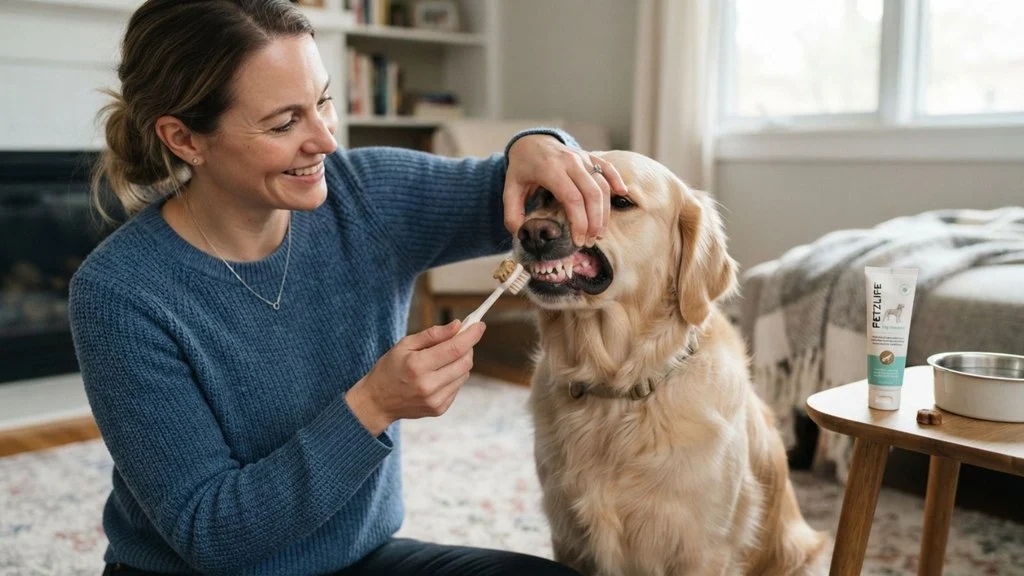
Jumping straight into brushing can overwhelm a dog who isn’t used to having their mouth handled so a gradual introduction sets the stage for long-term success. Patience during this stage pays off with a far more cooperative dog down the line.
If possible, early puppies tend to adapt to new routines more easily than adult dogs and introducing mouth handling during their socialization period builds comfort that lasts a lifetime. That said, adult and senior dogs can absolutely learn to accept brushing with the right approach; it just may take a bit more time and consistency.
Begin by letting your dog sniff and lick a small amount of the enzymatic toothpaste off your finger without any brush involved. This helps them associate the flavor with something positive rather than something threatening. Once they seem comfortable gently lift their lips and touch their teeth and gums with your finger for just a few seconds offering praise or a treat afterward.
Over several short sessions gradually increase the amount of time you spend touching their mouth before introducing an actual brush or finger brush. Keeping initial sessions brief even just 10 to 15 seconds is enough progress on early days.
Throughout this process positive reinforcement is key. Use a calm encouraging tone, offer treats or praise after each session and never force your dog if they become anxious or resistant. Ending each session on a positive note, even a short one, builds trust and makes your dog more receptive to the next step: full brushing.
Step-by-Step Brushing Technique
Once your dog is comfortable with having their mouth handled you’re ready to move into full brushing. A calm environment and a consistent routine will make each session smoother.
Start by choosing a quiet space and positioning your dog comfortably. Many owners find it easiest to sit behind or beside their dog cradling their head gently rather than facing them directly, which can feel confrontational to some dogs. Small dogs can be held in your lap while larger dogs may sit or lie down beside you.
Apply a small amount of enzymatic toothpaste to your finger brush or toothbrush. Gently lift your dog’s lip to expose their teeth and gumline then angle the bristles at roughly a 45-degree angle toward the gumline where plaque accumulates most. Using small circular motions brush a few teeth at a time working systematically from the back molars toward the front incisors. The outer surfaces of the teeth are the priority since dogs’ tongues naturally help keep inner surfaces cleaner.
Pay special attention to the back molars and canine teeth as these are common sites for tartar buildup and are often neglected due to being harder to reach. Aim to spend about 30 seconds per side for a total of roughly one to two minutes per session.
Throughout the process watch your dog’s body language. If they become stressed, pause and try again later rather than pushing through. Finish each session with praise, a treat or a favorite activity so your dog associates brushing with positive outcomes rather than stress.
How Often to Brush
Consistency matters more than perfection when it comes to your dog’s dental routine. While the frequency you brush plays a major role in preventing plaque buildup, even a realistic sustainable schedule can make a significant difference in your dog’s oral health.
Veterinary dentists generally recommend brushing daily for the best results. This is because plaque begins forming within hours of eating and hardens into tartar within just a few days meaning daily brushing interrupts this cycle before it has a chance to solidify. Dogs who receive daily brushing tend to have noticeably healthier gums, fresher breath and fewer instances of tartar accumulation over time compared to those brushed less frequently.
That said daily brushing isn’t always realistic for every owner’s schedule and that’s okay. Brushing at least two to three times per week still provides meaningful protection against plaque buildup and is far better than not brushing at all. The key is finding a frequency you can maintain consistently since sporadic brushing a week of daily sessions followed by weeks of none is less effective than a steady if less frequent routine.
To help build a lasting habit try linking brushing to an existing part of your daily routine such as right after an evening walk or before bedtime. Setting a phone reminder in the early weeks can also help until it becomes second nature. Over time many dogs come to expect and even look forward to their brushing sessions especially when paired with praise and treats.
Alternatives and Supplemental Options
While brushing remains the gold standard for canine dental care it isn’t the only tool available and combining it with supplemental options can boost your results especially for dogs who resist brushing.
Dental chews and treats are among the most popular supplements. Look for products carrying the Veterinary Oral Health Council (VOHC) seal which indicates they’ve been tested and shown to reduce plaque or tartar buildup. These chews typically work through a mechanical scraping action as your dog chews though they should complement rather than replace brushing.
Water additives and dental sprays offer a low-effort option for dogs who won’t tolerate brushing or chewing at all. These products are added to drinking water or sprayed directly in the mouth and work by reducing bacteria levels though their effectiveness is generally milder than mechanical cleaning methods like brushing or chewing.
Specialized dental diets are another option formulated with kibble of a specific size shape and texture designed to scrape plaque off teeth as your dog chews rather than shattering immediately like regular kibble.
Raw bones and specially designed chew toys can also help mechanically remove plaque and tartar through gnawing. However they come with important cautions: bones that are too hard can fracture teeth and small or brittle pieces pose a choking or intestinal blockage risk. Always supervise chewing sessions and choose appropriately sized options for your dog’s size and chewing habits.
Professional Veterinary Cleanings
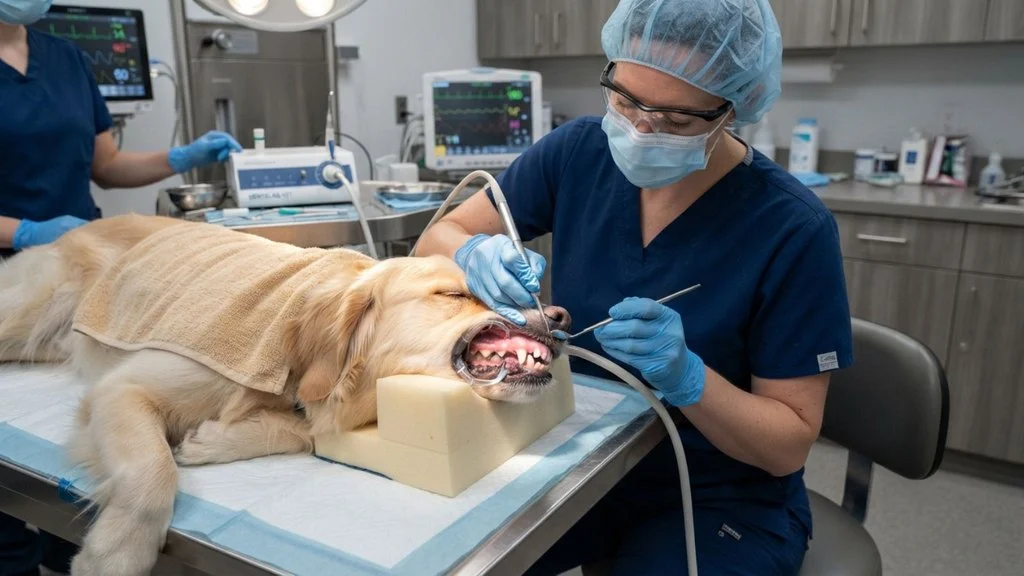
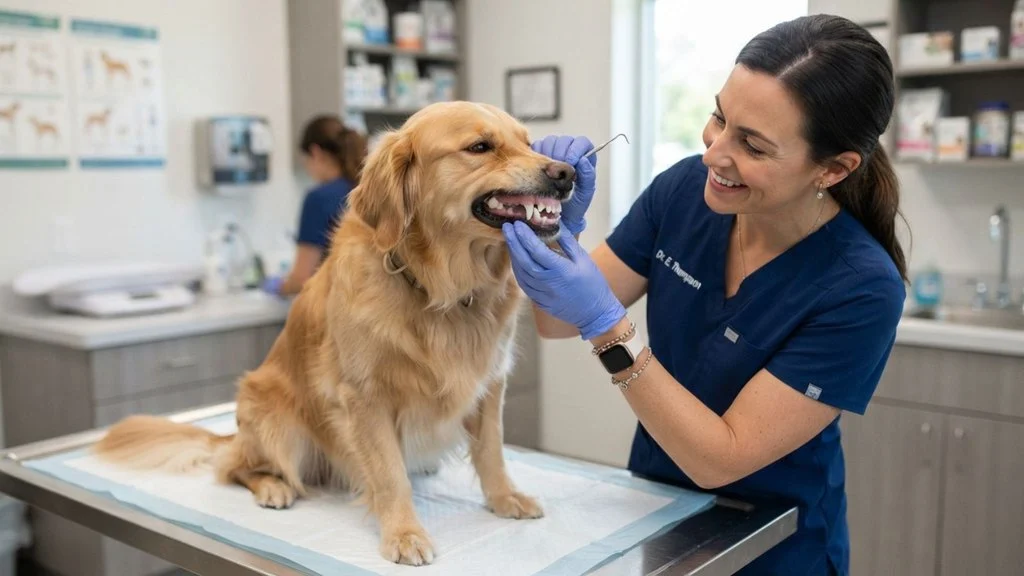
Even with a diligent at-home routine professional veterinary cleanings play an essential role in your dog’s dental care that brushing alone cannot replace. Tartar that has already hardened on the teeth can only be removed through professional scaling making periodic cleanings a necessary complement to daily maintenance.
A professional dental cleaning typically begins with a full oral examination under general anesthesia which allows the veterinary team to thoroughly assess every tooth including those beneath the gumline that can’t be evaluated while a dog is awake. Dental X-rays are often taken to check for issues hidden below the surface such as root damage or bone loss which aren’t visible during a standard visual exam. The veterinary team then performs scaling to remove tartar from the tooth surfaces and below the gumline followed by polishing to smooth the enamel and slow future plaque buildup. If any teeth are found to be severely damaged or diseased extractions may be performed during the same procedure.
How often your dog needs a professional cleaning varies based on breed age and how consistent their at-home care has been. Some dogs may need cleanings annually while others with excellent home care might go longer between visits. Your veterinarian can help determine the right schedule during regular checkups.
Cost is an important consideration as professional cleanings can range from a few hundred to over a thousand dollars depending on the extent of the work needed for anesthesia and any additional procedures like extractions. While it’s an investment it’s a critical one for preventing more serious costly health issues down the road.
Common Mistakes to Avoid
Even well-intentioned dog owners can make mistakes when it comes to dental care, some of which can undo the benefits of an otherwise consistent routine. Being aware of these common pitfalls can help you get the most out of your efforts.
One of the most serious mistakes is using human toothpaste instead of a dog-specific enzymatic formula. As mentioned earlier human toothpaste often contains xylitol which is toxic to dogs along with fluoride and foaming agents that can cause stomach upset. Similarly using a toothbrush with bristles that are too hard can injure sensitive gum tissue so always opt for soft-bristled or silicone brushes designed for dogs.
Moving too quickly through the introduction process is another common error. Rushing a dog into full brushing sessions before they’re comfortable with mouth handling often leads to fear resistance or even biting, setting the entire routine back. Taking the time to gradually build trust pays off far more in the long run.
Many owners also unintentionally neglect the back molars and gumline focusing brushing efforts primarily on the front more visible teeth. Since tartar tends to accumulate most heavily at the back of the mouth and along the gumline, skipping these areas leaves the most vulnerable spots unprotected.
Inconsistency is another pitfall brushing intensely for a week and then abandoning the routine reduces its effectiveness compared to steady if less frequent care. Finally ignoring early warning signs like bad breath, bleeding gums or reluctance to eat can allow treatable issues to progress into more serious painful conditions requiring costly veterinary intervention.
Special Considerations
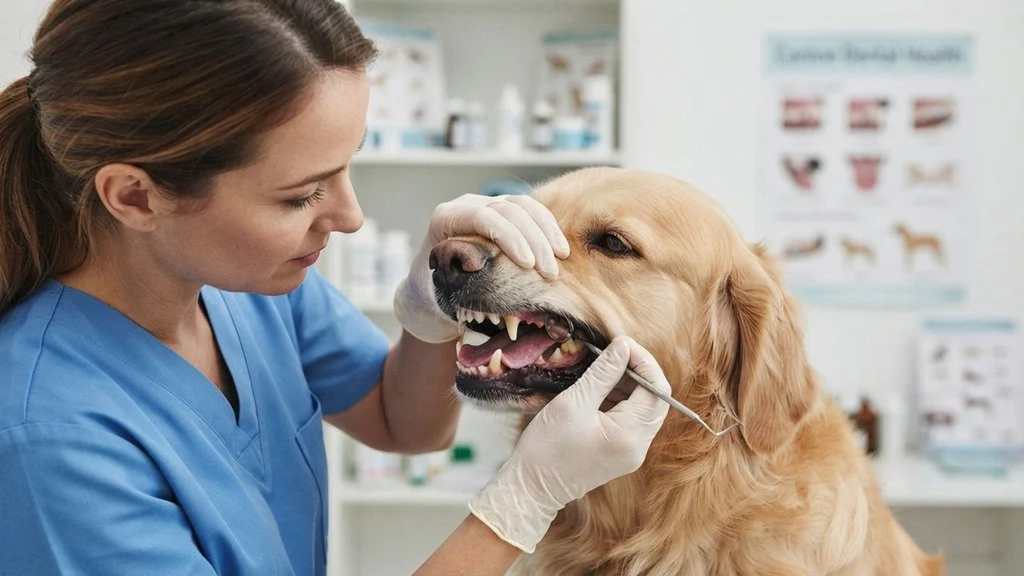
Dental care isn’t one-size-fits-all different life stages and dog types come with their own unique needs and challenges worth understanding.
For puppies dental care should begin early even before all their adult teeth have come in. Gently handling a puppy’s mouth and introducing the taste of toothpaste during their socialization window typically between 3 and 14 weeks helps them grow into adult dogs who are comfortable with brushing. Puppies also go through a teething phase between roughly 3 and 6 months during which their baby teeth fall out and adult teeth emerge so it’s normal to see some blood or loose baby teeth during this period.
Senior dogs often require extra attention and patience. Years of plaque accumulation may have already led to some degree of dental disease and existing sensitivity or missing teeth can make brushing more delicate. Softer brushes, gentler pressure and closer monitoring for pain or resistance are especially important for older dogs.
Dogs who strongly resist brushing require a troubleshooting approach rather than giving up altogether. Going back several steps to basic mouth handling using higher-value treats trying different brush types or brushing in shorter but more frequent sessions can help rebuild tolerance. In some cases leaning more heavily on alternatives like dental chews, water additives or wipes may be a reasonable interim solution while continuing to work toward acceptance of brushing.
Regardless of your dog’s age or temperament, working within their comfort level while gradually building good habits will lead to better long-term results than forcing a routine before they’re ready.
Conclusion
Caring for your dog’s teeth is one of the most impactful things you can do for their overall health and quality of life yet it’s often one of the most overlooked aspects of pet care. As we’ve covered throughout this guide dental disease doesn’t happen overnight it progresses gradually from simple plaque buildup to tartar gingivitis and eventually more serious periodontal disease if left unaddressed. The encouraging part is that this progression is highly preventable with the right combination of home care and professional support.
Building a consistent brushing routine even if it’s just two to three times a week rather than daily makes a meaningful difference in your dog’s oral health over time. Pairing brushing with supplemental options like VOHC-approved dental chews water additives or appropriate chew toys can further support your efforts especially on days when a full brushing session isn’t possible. And no matter how diligent your at-home routine is, regular veterinary checkups and professional cleanings remain an essential part of catching and addressing issues that can’t be managed with a toothbrush alone.