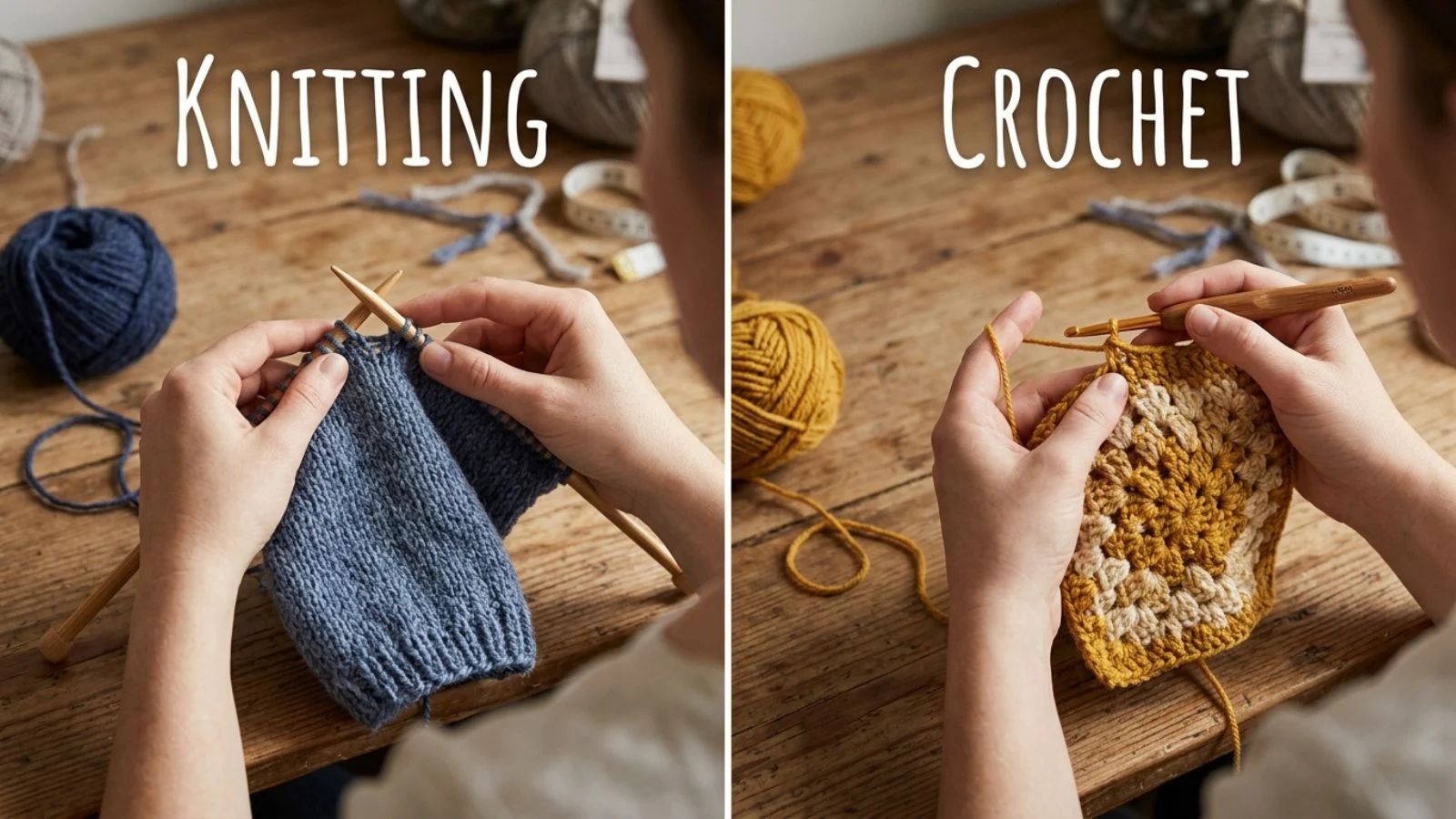
Knitting uses two needles to hold and work a row of “live” stitches at once, creating a stretchy, flat fabric.
Crochet uses a single hook to work one loop at a time, creating a denser, more structured fabric.
Crochet is generally easier to learn and fix mistakes in, while knitting is better for stretchy, fitted garments like sweaters and socks.
Key Takeaways
- Knitting uses two needles and keeps many stitches “alive” at once; crochet uses one hook and works a single active loop.
- Crochet fabric is denser and holds its shape; knitting fabric is stretchier and drapes more.
- Crochet is usually faster to learn, and dropped stitches are easier to fix.
- Knitting tends to use less yarn than crochet for the same size project.
- Both crafts can make garments, blankets, and accessories. The best choice depends on the project and your patience for a learning curve.
What Is Knitting?
Knitting is a needlecraft that turns yarn into fabric using two needles (or more, for circular projects). You cast a row of loops onto one needle, then use the second needle to pull new loops through the old ones, moving the stitches back and forth between the two needles row by row.
Every stitch on the needle stays “live” until you finish the project. That’s part of why knitting is so good at producing stretchy fabric; the interlocking loops can flex and bounce back, which is exactly what you want in a sock or a snug sweater.
What Is Crochet?
Crochet uses a single hook instead of needles. You start with a slip knot and a chain, then use the hook to pull new loops through existing ones, one at a time. Unlike knitting, only one loop is ever “active” on the hook; the rest of the stitches are locked into place as soon as you finish them.
Because crochet relies on this single active loop rather than a row of live stitches, the resulting stitches tend to look more like small knots, while knitted stitches lie flatter and less bulky. That structural difference shapes almost everything else about how the two crafts compare.
Knitting vs Crochet: The Core Differences
Tools: Needles vs. Hook
Knitting needs two needles (straight, circular, or double-pointed, depending on the project) plus stitch markers and sometimes a cable needle. Crochet needs just one hook. That makes crochet simpler to carry around and easier to set down mid-row without losing your place if your hook slips out, your work generally stays put.
Stitch Structure: Live Loops vs. Single Loop
This is the real engine behind every other difference. In knitting, a whole row of stitches sits “live” on the needles, which is what allows techniques like cables and colorwork that reshape stitches mid-project. In crochet, each stitch is completed and locked in before you move to the next one, so there’s only ever one loop you can “undo” at a time.
Fabric Texture and Stretch
Knitted fabric is flatter, lighter, and notably stretchy, ideal for anything that needs to move with a body, like socks, gloves, or fitted sweaters. Crocheted fabric is thicker, more textured, and holds its shape rather than stretching, which makes it better suited to blankets, bags, amigurumi toys, and anything you want to keep a defined structure.
Speed and Learning Curve
Crochet typically has a gentler learning curve. There’s only one stitch on the hook at a time, so if you make a mistake, you usually just unravel back to it and keep going. Knitting requires tracking many live stitches at once, and a dropped stitch can unravel (“run”) down the fabric if you’re not careful, which makes early mistakes feel higher-stakes.
Once learned, many crocheters report finishing comparable projects faster, since larger crochet stitches build fabric in fewer rows. Knitting rows tend to be finer and more time-consuming, but that fineness is also what gives knit fabric its refined drape.
Yarn Usage and Cost
Crochet generally uses more yarn than knitting for an equivalent-sized project, because crochet stitches wrap around themselves more. Starting costs are low for both crafts; a basic hook or a pair of needles and a skein of yarn will get you going for under $20 but if you’re working on a budget per project, knitting usually stretches your yarn further.
Knitting vs Crochet Comparison Table
| Feature | Knitting | Crochet |
| Tools needed | Two needles (or more) | One hook |
| Active stitches | Many, held “live” on needles | One, on the hook |
| Fabric feel | Stretchy, flatter, drapes well | Dense, textured, holds shape |
| Mistake recovery | Harder stitches can run | Easier unravel to the error |
| Yarn usage | Generally less | Generally more |
| Best for | Sweaters, socks, fitted garments | Blankets, bags, amigurumi, edging |
| Learning curve | Steeper at first | Gentler for most beginners |
Which Projects Suit Knitting vs. Crochet?
Choose knitting when you want a garment that needs to stretch and move with the body: socks, sweaters, hats with ribbing, or baby clothes. The interlocking live stitches give knit fabric naturally.
Choose crochet when you want something that holds a firm, three-dimensional shape stuffed animals (amigurumi), market bags, blankets, and decorative edging. Crochet’s locked stitches resist stretching, which keeps those projects looking crisp.
Plenty of projects work well either way scarves, dishcloths, and simple hats can be made successfully in both crafts, just with a different look and feel.
Is Knitting or Crochet Easier for Beginners?
For most new crafters, crochet is easier to start with. You only manage one tool and one active loop, mistakes are simpler to spot and fix, and basic stitches (chain, single crochet, double crochet) can be learned in a single sitting.
Knitting has more of a learning curve because you’re tracking a whole row of stitches across two needles, and a missed stitch can be harder to catch early. That said, many knitters find the rhythm becomes just as automatic once the basics click it simply takes more repetition to get there.
Neither craft is objectively “better.” Crochet usually wins on speed-to-first-finished-project; knitting usually wins on the polish and stretch of the final fabric.
Can You Combine Knitting and Crochet?
Yes. Many crafters use both techniques in the same piece, for example, knitting the body of a sweater and crocheting a decorative border, or using a crochet hook to pick up a dropped knit stitch. There’s also Tunisian crochet, a hybrid technique that uses a long hook to keep multiple loops active at once, producing a fabric that looks and behaves more like knitting while using crochet’s single-hook method.
FAQs
Is crochet easier to learn than knitting?
For most beginners, yes. Crochet uses one tool and one active stitch at a time, which makes early mistakes easier to spot and correct than in knitting.
Does knitting or crochet use more yarn?
Crochet typically uses more yarn than knitting for a project of the same size, because crochet stitches loop around themselves more densely.
Can you make the same things with knitting and crochet?
Many items such as scarves, hats, and dishcloths can be made in either craft, though the texture and stretch will differ. Fitted garments favor knitting; structured items favor crochet.
Which is faster, knitting or crochet?
Crochet often builds fabric faster per row since the stitches are larger, though total project time depends on the pattern and your skill level in each craft.
Is crochet or knitting better for blankets?
Both work well, but crochet blankets tend to hold their shape and texture better, while knit blankets drape more softly.
Final Verdict:
If you want quick wins and a forgiving learning process, start with crochet if you’re drawn to stretchy, polished garments like sweaters and socks and don’t mind a steeper learning curve, start with knitting.
Either way, you’ll build a transferable sense of yarn tension, pattern-reading, and stitch rhythm that makes the second craft easier to pick up later.