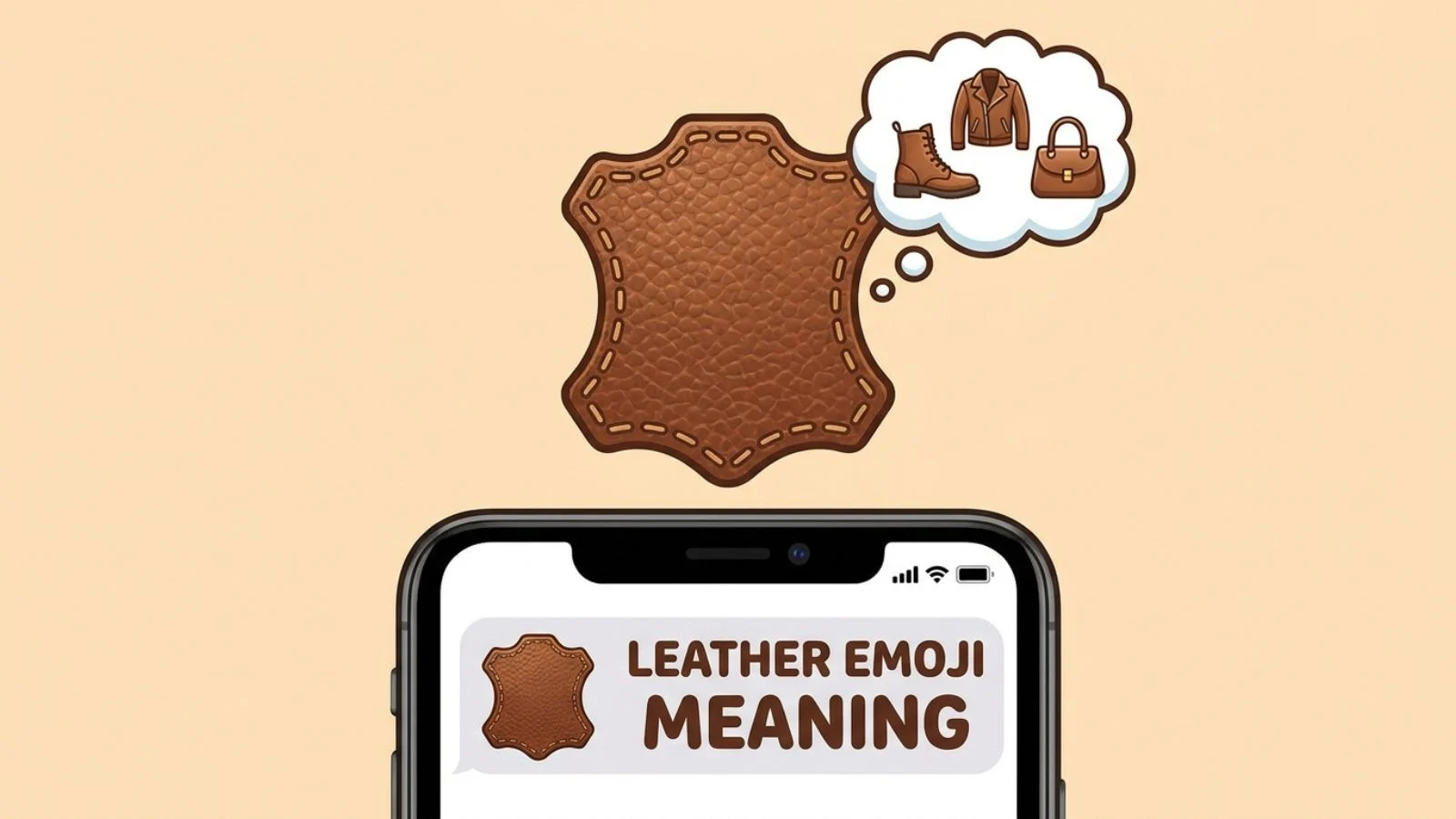
Ever typed out a caption about your new leather jacket and paused, scrolling through your emoji keyboard, looking for one single symbol that just screams “leather”? You’re not alone and here’s the twist: it doesn’t exist.
Despite thousands of emojis covering everything from tacos to specific hairstyles, Unicode has never approved a dedicated leather emoji.
Yet somehow, “leather emoji” is a search people make constantly, if they’re texting about a new pair of boots, referencing leather subculture in an alternative community, or hunting for the perfect symbol to pair with a product listing.
So what do people actually use instead? In this guide, we’ll break down the emojis commonly substituted for “leather,” what they mean in different contexts (fashion, subcultural, e-commerce), and how to combine them so your message lands exactly the way you intend, no dedicated leather emoji required.
Understanding Emoji Standards (Why No “Leather” Emoji Exists)
To understand why there’s no leather emoji, it helps to know how emojis actually get made. Every emoji you use from 😂 to 🥑 goes through the Unicode Consortium, the nonprofit organization responsible for standardizing text and symbols across every device, operating system, and platform. Nothing gets added on a whim.
Anyone can technically submit an emoji proposal, but the bar is high. Submissions need to demonstrate broad usage potential, distinctiveness from existing emojis, and evidence that people actually need it, not just that it would be nice to have. The Unicode Emoji Subcommittee reviews proposals annually, and most are rejected or asked to be revised and resubmitted, sometimes for years.
This explains why some materials and textures made the cut while others didn’t. Denim, for instance, got its own emoji (🧵 is often mistaken for it, though there’s no true denim emoji either) because of massive cultural relevance in fashion. Wood appears indirectly through 🪵. But leather, despite being a hugely common material in fashion, furniture, and countless subcultures, has never had a dedicated proposal to gain enough traction to be approved.
Part of the issue is representational difficulty: how do you visually depict “leather” in a 32×32 pixel icon without it collapsing into looking like brown fabric or an animal hide? That ambiguity may be one reason no one’s successfully pushed a leather emoji through the pipeline and why, for now, people rely on substitutes instead.
Full List of Emojis Used to Represent “Leather”
Since there’s no single official symbol, people have built an informal shorthand using a mix of clothing, animal, and color-based emojis. Here’s the most commonly used lineup:
🧥 Coat the most frequent substitute, especially when referencing leather jackets specifically.
🏍️ Motorcycle strongly tied to leather jacket culture, biker aesthetics, and rock-and-roll style.
👢 Boots and 👞 Shoe used when the leather item in question is footwear.
🐄 Cow / 🐮 Cow Face representing leather’s raw material origin (cowhide), often used humorously or literally in product contexts.
🤎 Brown Heart a color-based stand-in, especially popular in aesthetic or mood-board style captions.
🛋️ Couch and Lamp used when talking about leather furniture rather than clothing.
💼 Briefcase, 👜 Handbag, and 👛 Purse common in posts about leather goods and accessories.
⛓️ Chains and 🖤 Black Heart frequently paired together in subcultural or aesthetic (goth, alternative, biker) contexts rather than literal leather references.
🟫 Brown Square and 🟤 Brown Circle simple color blocks sometimes used as a minimalist leather stand-in.
Context is everything here; the same emoji can mean something completely different depending on who’s using it and where. A 🧥 in a fashion caption reads very differently than 🖤⛓️ in a subcultural post, which is exactly what we’ll unpack in the next section.
Leather Emoji in Fashion & Style Context
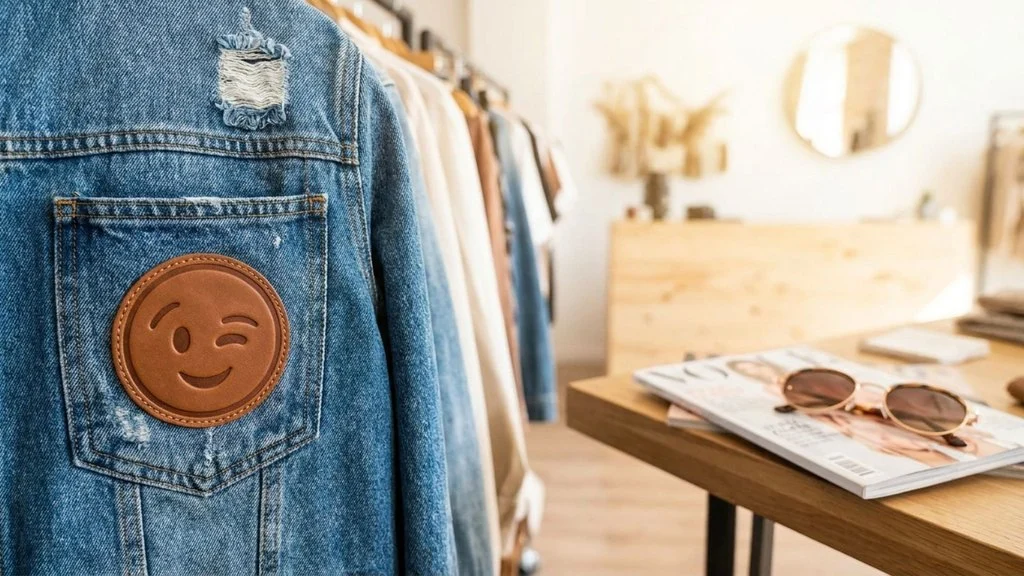
In fashion and style content, leather emojis are almost always used as visual shorthand to save space in a caption while still signaling exactly what’s being shown. Influencers and brands rely on a small, consistent set of emojis to flag leather items instantly, especially on platforms like Instagram and TikTok where captions are skimmed rather than read in full.
The 🧥 emoji dominates when the post is about outerwear leather jackets, blazers, or coats. It’s often paired with a color emoji (🖤 for black leather, 🤎 for brown or tan leather) to communicate both material and shade in a glance: “🧥🖤 restocked” instantly tells a follower what dropped without a single word.
For footwear, 👢 and 👞 do similar work, frequently combined with ✨ or 🔥 to signal a “new arrival” or “trending” tone rather than literally describing the item.
Leather pants and skirts don’t have as clean a substitute, so captions often lean on 👖 (jeans) loosely, or skip a garment-specific emoji altogether and rely on 🖤 plus descriptive hashtags instead.
Seasonally, leather emoji combinations spike around fall and winter, often paired with 🍂 or ❄️, tying the material to autumnal or cold-weather aesthetic posts a trend worth noting if you’re optimizing content for seasonal search interest.
Leather Emoji in Subcultural & Community Contexts
Beyond fashion, “leather” carries significant weight within specific subcultures, and the emoji usage here differs sharply from mainstream style content.
The leather subculture has roots dating back to mid-20th-century motorcycle clubs and later became closely associated with parts of the LGBTQ+ community, where leather clothing, accessories, and imagery came to symbolize identity, community, and belonging. This history is often reflected in Pride-related content, where the leather pride flag (black, blue, and white stripes with a red heart) is referenced in text using color-based emojis like 🖤 and 🤍, since no direct flag emoji exists for it.
In alternative, goth, and kink-adjacent online spaces, leather-related emoji combinations tend to lean darker and more symbolic. Combinations like 🖤⛓️ or 🖤🏍️ show up frequently, pairing the material association with mood or aesthetic rather than a literal clothing reference. Chains (⛓️), motorcycles (🏍️), and black hearts (🖤) recur often because they evoke a broader visual identity tied to leather culture, rather than the material itself.
It’s worth noting for readers that the same emoji combination can read completely differently depending on the platform, audience, and surrounding text, a distinction worth flagging so readers correctly interpret tone in different social contexts rather than assuming one universal meaning.
Leather Emoji in Product Descriptions & E-Commerce
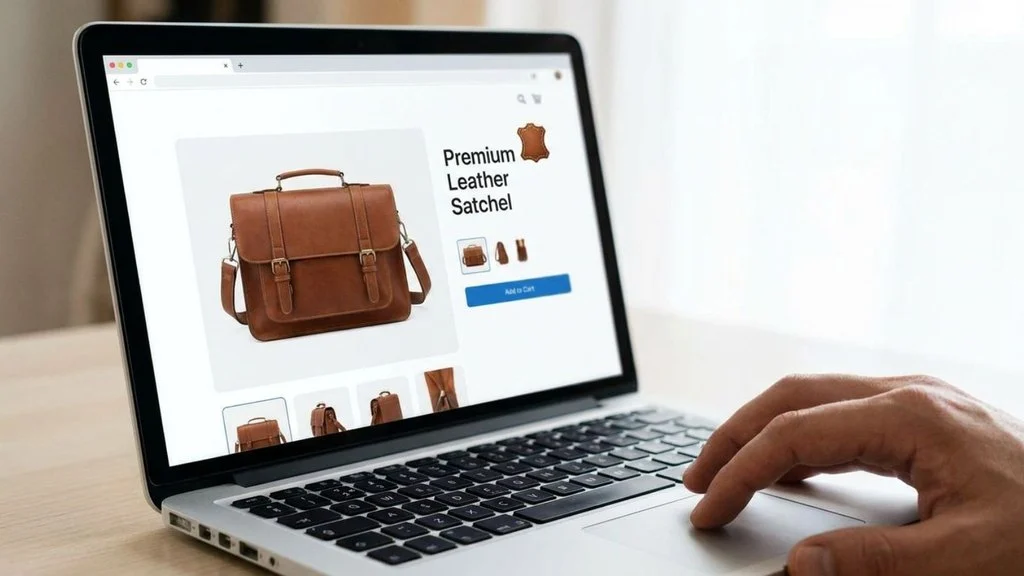
Emojis play a surprisingly strategic role in how leather goods get marketed and sold online, particularly on visually driven platforms like Instagram, TikTok, Etsy, and Depop.
On Instagram and TikTok, sellers use emoji combinations at the start or end of captions to make products scannable in a crowded feed. A typical format might look like “🧥💯 Genuine leather jacket, size M” where 💯 signals authenticity (“100% leather”) almost as effectively as the word itself, and often gets used precisely because it’s more eye-catching than plain text.
On resale platforms like Depop and Etsy, sellers frequently combine material emojis with quality signals: 🐄 or 🐮 to indicate cowhide origin, 🤎 or 🟫 for color, and ✨ or 🔥 to suggest desirability or trending status. These aren’t just decorative; many buyers scan listings quickly, and a well-placed emoji can communicate material and quality faster than a full description.
There’s also a discoverability angle worth mentioning: emojis paired with hashtags (like 🧥 + #genuine leather) can improve how a post performs in platform search and For You page algorithms, since some platforms factor in emoji-hashtag pairings as engagement signals. For sellers specifically, this makes emoji choice less about style and more about conversion worth a quick callout for readers running their own shops.
Platform-Specific Alternatives
Since Unicode hasn’t approved a standard leather emoji, several platforms have filled the gap with their own custom options worth knowing if standard emojis don’t quite cut it for what you’re trying to say.
Discord has an active custom emoji culture, and many leathercraft, biker, and fashion-focused servers have created their own leather-specific emojis (jackets, hides, tools) uploaded by community members. If you’re active in a niche Discord server, checking the emoji list is often more useful than relying on the default keyboard.
Slack works similarly workplace channels for leather crafters, cobblers, or fashion teams sometimes upload custom leather-related emoji reactions for internal use, though this is less common outside hobbyist or trade-specific workspaces.
iMessage and WhatsApp don’t support custom emoji the same way, but both have sticker packs (some free, some paid through their respective app stores) featuring leather jackets, boots, and biker imagery that can be searched and added to a conversation as an alternative to text-based emoji.
Bitmoji and Memoji offer another workaround entirely; rather than searching for a symbol, users can dress their avatar in a leather jacket or leather boots, effectively creating a personalized “leather emoji” that no default keyboard offers.
How to Request a New Emoji
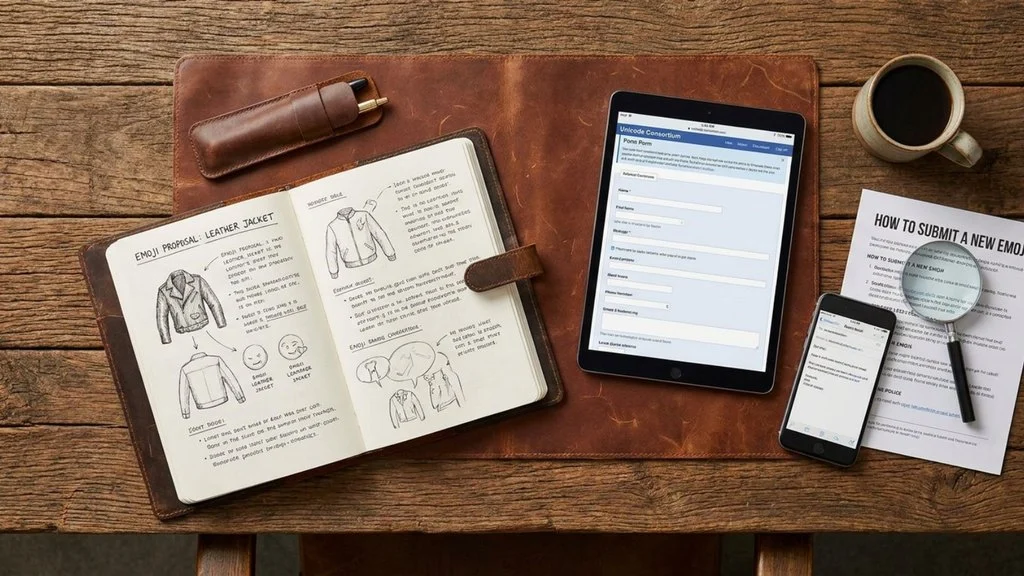
For readers frustrated by the lack of options, it is technically possible to propose a new emoji though the process is lengthy and success isn’t guaranteed.
Anyone can submit a proposal to the Unicode Consortium, but it needs to go through their official emoji submission process, which starts with drafting a formal proposal document. This document must include a clear rationale for why the emoji is needed, evidence of its potential usage frequency, and proof that it fills a genuine gap rather than duplicating an existing symbol. Visual mockups of how the emoji might look across different platforms (Apple, Google, Samsung, etc.) are also typically expected.
Proposals are submitted to the Unicode Emoji Subcommittee, which reviews submissions against strict selection factors: compatibility, expected usage level, distinctiveness, and completeness (does it fill an actual category gap, like materials or fabrics, that’s currently missing?).
Realistically, the odds are tough. Thousands of proposals have been submitted over the years, and only a small percentage make it through each annual cycle. Emojis representing broad cultural relevance (like specific foods, flags, or professions) tend to have an easier path than niche materials like leather, which may explain why it’s been passed over so far despite clear demand.
Text & Hashtag Alternatives When No Emoji Fits
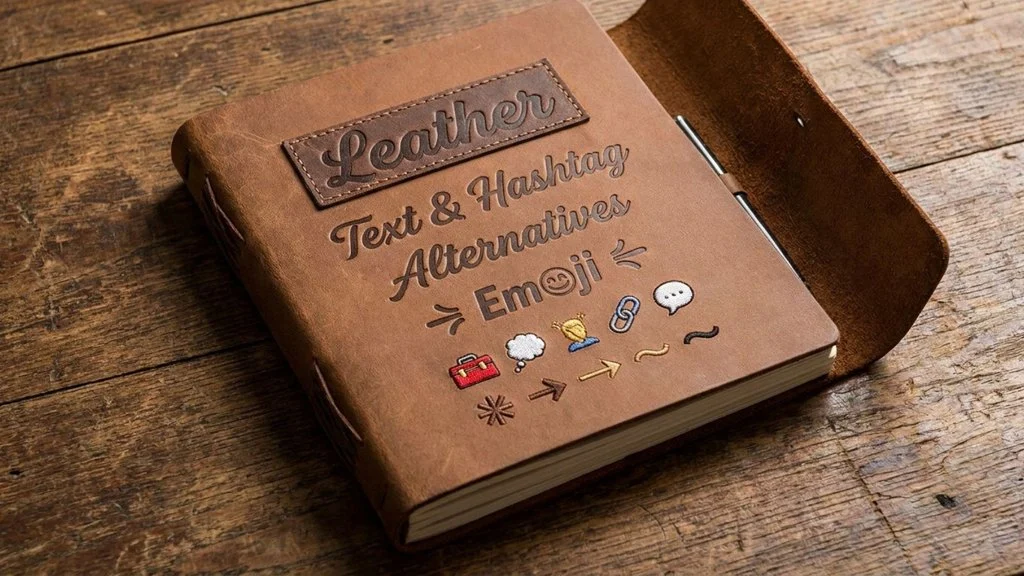
When no combination of emojis quite captures what you’re going for, falling back on text and hashtags is often the more reliable option especially in contexts where clarity matters more than aesthetic shorthand.
Hashtags remain one of the most effective ways to signal “leather” clearly, both to human readers and to platform algorithms. Common examples include #leatherjacket, #leathercraft, #leatherfashion, #genuine leather, and #leatherlovers, all of which are widely used across Instagram, TikTok, and Pinterest to categorize leather-related content and improve discoverability in searches and hashtag feeds.
For SEO purposes specifically, plain text almost always outperforms emoji. Search engines can’t parse emoji meaning the way they parse written words, so if you’re writing a product title, blog post, or listing description meant to rank in search results, spelling out “leather” directly (rather than relying on 🧥 or 🐄) is essential for visibility.
A hybrid approach tends to work best in casual, visual-first content: pairing a word with a supporting emoji, such as “Leather 🧥 restock” or “Genuine leather 💯,” gives you the clarity of text with the visual punch of emoji. This method is especially common in captions, story text overlays, and product cards, where you want both skimmability and searchability without sacrificing either one.
Quick Reference Table/Cheat Sheet
For readers who just want the fast answer, here’s a scannable breakdown of the best emoji matches for different leather-related items and contexts, along with backup options when the primary choice doesn’t quite fit the tone you’re going for.
| Leather Item/Context | Best Emoji Match | Alternative Options |
| Leather jacket | 🧥 | 🖤, 🏍️ |
| Leather boots | 👢 | 🥾, ✨ |
| Leather shoes | 👞 | 👠 (heels) |
| Leather bag/purse | 👜 | 👛, 💼 |
| Leather furniture | 🛋️ | 🟫, 🤎 |
| Raw material/origin | 🐄 | 🐮, 🐃 |
| Color (black leather) | 🖤 | ⚫, 🟫 |
| Color (brown leather) | 🤎 | 🟤, 🟫 |
| Subculture/biker aesthetic | 🏍️🖤 | ⛓️🖤 |
| LGBTQ+ leather community | 🖤🤍 | (leather pride flag colors) |
| E-commerce/authenticity | 💯 | ✨, 🔥 |
| Craft/tools | 🪡 | 🧵, 🛠️ |
This table works well as a standalone visual break in the post and is the kind of content that tends to get saved, screens hotted, or linked to directly, worth designing it as a simple graphic if you want extra share ability on Interest or Instagram.
Conclusion
At the end of the day, the “leather emoji” so many people search for simply doesn’t exist as an official Unicode symbol and it may never.
Materials like leather occupy an odd space in emoji standards: culturally significant enough to reference constantly, yet visually ambiguous enough that no single proposal has managed to clear the Unicode Consortium’s high bar for approval.
That said, the absence of one dedicated symbol hasn’t stopped people from building a rich, informal shorthand around it.
If you’re referencing a leather jacket, footwear, furniture, sub cultural identity, or product authenticity, there’s a well-established set of emoji combinations 🧥, 🖤, 🏍️, 🐄, 🤎, and more that reliably communicate the idea, provided you choose them with context in mind.
The biggest takeaway for readers is that context changes everything. The same emoji pairing that reads as a casual fashion caption in one space can carry an entirely different meaning in a subcultural or community context elsewhere. Understanding that nuance is more valuable than memorizing a single “correct” emoji.