You’re scrolling through a group chat when someone drops 🫠 the melting face emoji and suddenly you’re not sure if they’re joking, dying of embarrassment, or just complaining about the heat. You’re not alone.
The melting emoji meaning is one of the most debated topics in modern texting, because this little yellow face somehow captures heat, awkwardness, sarcasm, and quiet dread all at once.
Since its release, the melting face emoji has become a staple for expressing “I’m fine” energy while secretly falling apart. But what does 🫠 actually mean, and why does it seem to shift depending on who sends it and when?
In this guide, we’ll break down everything about the melting emoji: its origin and design, the many meanings it carries, real examples of how people use it, and how it compares to similar emojis so you’ll never second-guess a 🫠 again.
What Is the Melting Face Emoji? (Visual Breakdown)
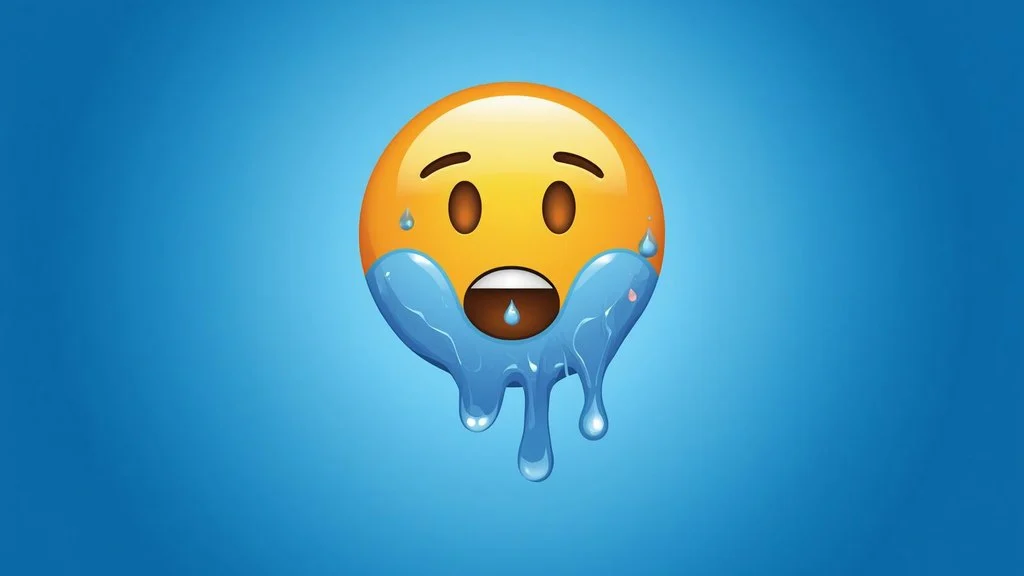
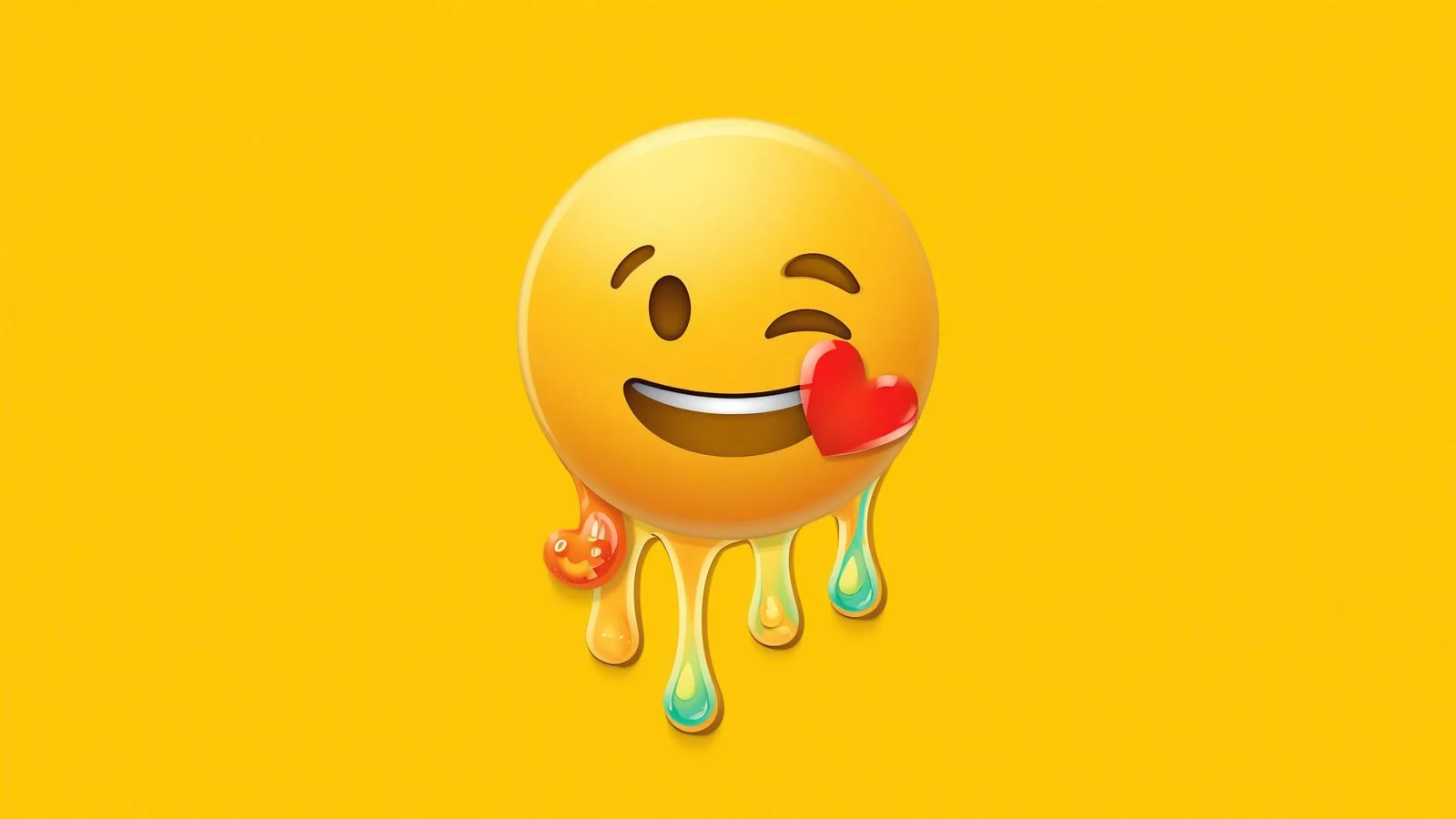
At first glance, the melting face emoji 🫠 looks simple: a yellow smiley face with a gentle, closed-eye smile. But look closer, and the bottom half tells a different story: it droops, sags, and appears to dissolve into a small puddle, as if the face itself is losing its shape.
This contrast is exactly what makes the emoji so effective. The upper half keeps the classic “everything’s okay” expression: soft eyes, a calm smile while the lower half suggests something is quietly falling apart. It’s this tension between a composed expression and a collapsing structure that gives the emoji its signature “I’m fine, but also not fine” quality.
Officially, the emoji is named Melting Face and carries the Unicode codepoint U+1FAE0. It belongs to the “Smileys & Emotion” category, specifically grouped under the face-neutral-skeptical classification, a category reserved for expressions that don’t fit neatly into simple happy or sad emotions.
Unlike some emojis, the melting face has no gender or skin tone variations, keeping its design consistent across most platforms. However, as we’ll cover in the next section, subtle differences in how each platform renders the drip, eyes, and color can slightly change how “intense” or “playful” the melting effect feels.
Platform-by-Platform Design Differences
Like most emojis, the melting face doesn’t look identical everywhere. Because each tech company designs its own emoji set, the melting face emoji can feel slightly different depending on where you’re texting from and those small design choices can actually shift how the emoji is interpreted.
On Apple devices, the melting face has a soft, rounded droop with a subtle smile, giving it a gentler, almost cartoonish feel. Google’s version leans more dramatic, with a wider drip and a more exaggerated “dissolving” look this design became widely recognized after it was featured on the cover of The New York Times in September 2021, helping cement the emoji’s popularity.
Samsung’s rendering tends to feel slightly more literal, resembling melting wax, while Microsoft and WhatsApp versions sit somewhere in between recognizable, but with their own subtle shading and shape differences.
These design variations matter more than they might seem. A version with a more relaxed, subtle melt can read as lighthearted or sarcastic, while a more intense, exaggerated melt can come across as dramatic or overwhelmed. Since the sender and receiver may be using different platforms, the same emoji can visually “feel” different to each person adding yet another layer to its already ambiguous meaning.
Origin and Official History

The melting face emoji wasn’t a random addition to our keyboards; it went through a formal proposal process before becoming official. The emoji was submitted to the Unicode Consortium by Neil Cohn, Jennifer Daniel, and Erik Carter, with the original proposal dated December 10, 2019, and later updated in February 2020.
In the proposal, the creators argued the emoji would see extremely high usage, pointing to strong search interest around the concept of “melting” as a widely relatable expression. After review, the emoji was officially approved under Unicode 14.0 in 2021, giving it the technical name melting-face and placing it within the “face-neutral-skeptical” sort category.
One of the more surprising details behind its design is its inspiration: according to Cohn, the emoji draws from a common trope in Japanese manga, where an embarrassed or overwhelmed character dramatically transforms, sometimes turning into paper and floating away to visually represent intense emotion. The creators wanted to capture that same exaggerated, visceral feeling, but in a flexible format that could apply to far more than just embarrassment.
Notably, the original proposal also suggested the emoji could represent conflicting emotional states at once being “happy but also sad,” or “putting on a good face despite pain.” This built-in duality wasn’t accidental; it was intentional from the very beginning, laying the groundwork for the wide range of meanings the emoji carries today.
Core Meanings A Deep Dive
The melting face emoji carries an unusually wide range of meanings, which is exactly why it resonates with so many people.
Literal heat is the most straightforward use describing physical discomfort from hot weather, like “I feel like I’m going to melt in this heat 🫠.”
Embarrassment is another major use case, capturing the cringe of an awkward moment or a mistake you wish you could take back.
Overwhelm and burnout show up frequently too, with people using 🫠 to express mental exhaustion or a sense of being stretched too thin.
Sarcasm is where the emoji gets clever, pairing a calm smile with a collapsing structure perfectly captures the “everything is totally fine” tone people use when things clearly aren’t.
Dread or anxiety is a subtler use, often applied when someone is anticipating something uncomfortable and wants to metaphorically disappear before it happens.
Less commonly, the emoji is used to express romantic swooning “melting” from something sweet or charming someone said.
There’s also a darker reading tied to smiling depression, referencing the idea of masking real pain behind a composed expression, a theme referenced in the emoji’s original proposal.
Finally, some use it to convey a wallflower or disappearing feeling wanting to fade into the background in an uncomfortable social setting.
Real-World Example Usage
Seeing the melting face emoji in real conversations makes its flexibility much clearer. Here are some common ways people actually use 🫠 in texts and social posts:
Heat/weather: “It’s so hot today, I feel like a 🫠!” a simple, literal way to describe sweltering temperatures without saying much else.
Embarrassment: “I sent that text to my boss instead of my friend 🫠” the emoji instantly communicates cringe without needing extra explanation.
Sarcasm/”I’m fine” energy: “Trying to keep my cool while being roasted in the group chat lol 🫠😂” here, the emoji signals that the person is laughing on the outside while internally struggling.
Overwhelm: “Three deadlines, two meetings, and it’s only Tuesday 🫠” a shorthand for being mentally stretched thin.
Anticipation/dread: “Waiting for my exam results like 🫠” capturing anxious anticipation before an uncomfortable moment.
Romantic/swooning: “When they said that thing and I just 🫠” expressing being charmed or emotionally weakened by someone’s words.
Notice how the same emoji shifts meaning depending on the words around it. Without context, 🫠 alone could mean almost anything hot, embarrassed, stressed, or smitten. Paired with the right phrase, though, its intended tone usually becomes obvious.
Why Is This Emoji So Ambiguous? (The Psychology of Emoji Interpretation)
Unlike emojis with a single, obvious meaning like 😂 or ❤️ the melting face was intentionally designed to hold conflicting emotions at once. The original proposal specifically noted its ability to represent being “happy but also sad,” or “putting on a good face despite pain.” This dual nature is baked into its very design, not something users invented afterward.
Part of what makes this possible is the emoji’s structure itself: a calm, composed face paired with a visibly collapsing shape. That contradiction mirrors a very human experience appearing fine on the surface while internally struggling which is why so many people find it deeply relatable, even when they can’t articulate exactly why.
Context plays a massive role in resolving this ambiguity. The same emoji can mean “it’s hot outside” or “I’m falling apart emotionally,” depending entirely on the surrounding text, the relationship between sender and receiver, and even the platform’s specific rendering.
Rather than being a flaw, this ambiguity has become part of the emoji’s appeal. Many users report using it precisely because it lets them express something they can’t fully put into words: a vague, layered feeling rather than one clean emotion. Some writers have even described the emoji as a kind of shared cultural shorthand for modern overwhelm, where everyone interprets it slightly differently, but everyone still “gets it.”
Melting Face vs. Similar Emojis (Comparison Section)
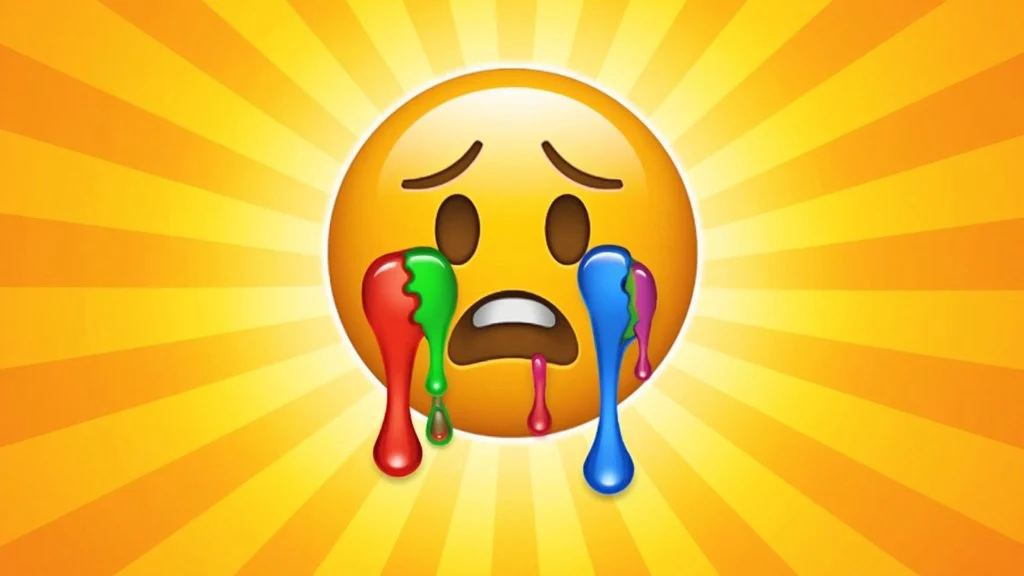
With so many overlapping “struggling” emojis available, it helps to know when melting face is the right choice versus a similar alternative.
🥵 Hot Face is the more literal option for physical heat. If you’re strictly talking about temperature, no emotional subtext communicates that directly, while a melting face adds a layer of dramatic or emotional flair.
😅 Downcast Face with Sweat leans nervous and apologetic. It works well for awkward situations where you want to soften a mistake, whereas melting your face suggests a more intense, “I can’t even” reaction.
😩 Weary Face captures plain exhaustion or frustration without the layered ambiguity. Use this when you want a clear, single-note expression of being tired or annoyed.
🫥 Dotted Line Face conveys wanting to disappear or feeling invisible, similar to one of melting face’s less common uses but without any of the heat, humor, or sarcasm melting face can carry.
😶🌫️ Face in Clouds works well for zoning out or dissociating, which differs from melting face’s more emotionally charged “falling apart” quality.
The key distinction: a melting face is best when you want to combine multiple emotions at once like humor and dread, or calm and chaos rather than express one clear feeling. If your message needs precision, one of these alternatives may communicate your intent more clearly. But if you want to capture that layered, “I’m fine but not fine” energy, melting face remains the most versatile choice.
Cultural Reception and Popularity
Since its release, the melting face emoji has grown from a niche addition to one of the most beloved emojis in regular use. Its rise wasn’t just gradual, it was boosted by a few standout cultural moments.
One major milestone came when Google’s rendering of the emoji appeared on the cover of The New York Times in September 2021, introducing it to a much wider audience beyond typical emoji enthusiasts and cementing its place in mainstream conversation.
The emoji has also consistently ranked among people’s favorites in workplace and social media polls. In one CNET staff survey, melting face tied for the top spot as the most-loved emoji, with roughly 10% of votes. Staffers who chose it described it as the perfect symbol for “being on the verge of a meltdown from things going awry” while still trying to keep smiling, a sentiment that captures exactly why the emoji resonates so widely.
Beyond polls, melting face has become a fixture in memes, reaction posts, and everyday captions, often used to add humor to chaotic or overwhelming situations. Its popularity spans casual texting, workplace humor, and social commentary, making it one of the more emotionally versatile additions to modern emoji culture.
What makes its popularity notable is that it didn’t rely on a single obvious meaning to become popular unlike emojis tied to specific events. Instead, its open-ended, relatable nature is precisely what helped it become a go-to expression for the everyday chaos of modern life.
How to Use the Melting Face Emoji Effectively
Because the melting face emoji carries so many possible meanings, using it well comes down to context and clarity. A few simple guidelines can help ensure your intended tone actually lands.
Pair it with text for clarity. Since 🫠 alone can mean almost anything heat, embarrassment, stress, or sarcasm adding a short phrase helps narrow down your meaning. “It’s so hot outside 🫠” reads very differently from “I can’t believe I said that 🫠.”
Combine it with other emojis. Stacking a melting face with a complementary emoji is one of the easiest ways to reinforce tone.
For example, 🥵🫠 emphasizes literal heat, while 🫠😂 signals that you’re laughing through an awkward or chaotic moment.
Consider your relationship with the recipient. Because the emoji can be read as vulnerable (hinting at stress or dread) or lighthearted (hinting at humor or sarcasm), it works best in casual or personal conversations with people who understand your usual tone. In more formal or professional messages, its ambiguity can create confusion, so it’s best avoided.
Think about platform differences. Since the emoji renders differently depending on whether you or the recipient are using Apple, Google, Samsung, or another platform, keep in mind that the visual “intensity” of the melt might differ slightly on their end.
Used thoughtfully, a melting face can add humor, warmth, or relatable chaos to a message. Used carelessly, it can create the exact kind of confusion the emoji is famous for so a little context always goes a long way.
Frequently Asked Questions
What does 🫠 mean when a guy sends it?
There’s no single meaning tied to gender context that matters most. It could signal flirtation (“melting” from something charming), embarrassment, or simply that he’s joking around. Look at the surrounding conversation for clues.
Is the melting face emoji flirty?
It can be. When used after a compliment or sweet comment, 🫠 often implies being charmed or “weak in the knees.” However, it’s just as commonly used for heat, stress, or sarcasm, so flirtation is only one of several possible meanings.
Is the melting emoji positive or negative?
It’s genuinely neutral-to-mixed by design. The emoji can express something lighthearted (humor, sarcasm, flirtation) or something more negative (overwhelm, dread, embarrassment). Its emotional tone depends almost entirely on the message it’s paired with.
What’s the difference between 🫠 and 🥲?
🥲 (Smiling Face with Tear) conveys bittersweet emotions happiness mixed with sadness or relief. 🫠 leans more toward chaos, heat, or dramatic overwhelm, often with a sarcastic or self-deprecating edge rather than genuine emotional tears.
When was the melting face emoji added to keyboards?
It was approved under Unicode 14.0 in 2021, though rollout to individual keyboards and platforms varied slightly depending on the device and operating system update schedule.
Why does the melting face emoji feel so relatable?
Because it visually captures the common experience of appearing calm on the outside while feeling overwhelmed underneath a feeling many people recognize instantly, even without needing an exact definition.
Conclusion
At its core, the melting face emoji 🫠 isn’t meant to have one fixed definition and that’s exactly what makes it so useful.
From the moment it was proposed, its creators intended it to hold multiple, even conflicting, emotions at once: heat and humor, calm and chaos, a smile paired with quiet collapse.
That built-in duality has allowed it to become one of the most versatile emojis in everyday texting.
If you’re using it to complain about summer heat, laugh off an embarrassing moment, mask stress with sarcasm, or express being charmed by someone’s words, the melting face adapts to whatever emotional nuance you need, something few other emojis can claim.
Its ambiguity, rather than being a drawback, has become part of its charm, offering a shared shorthand for the messy, layered feelings that are hard to put into plain words.
As we’ve covered, understanding 🫠 fully means looking beyond the image itself its origin in manga-inspired design, its intentional emotional flexibility, its platform-based visual differences, and the surrounding context of any message it appears in all shape how it should be read.