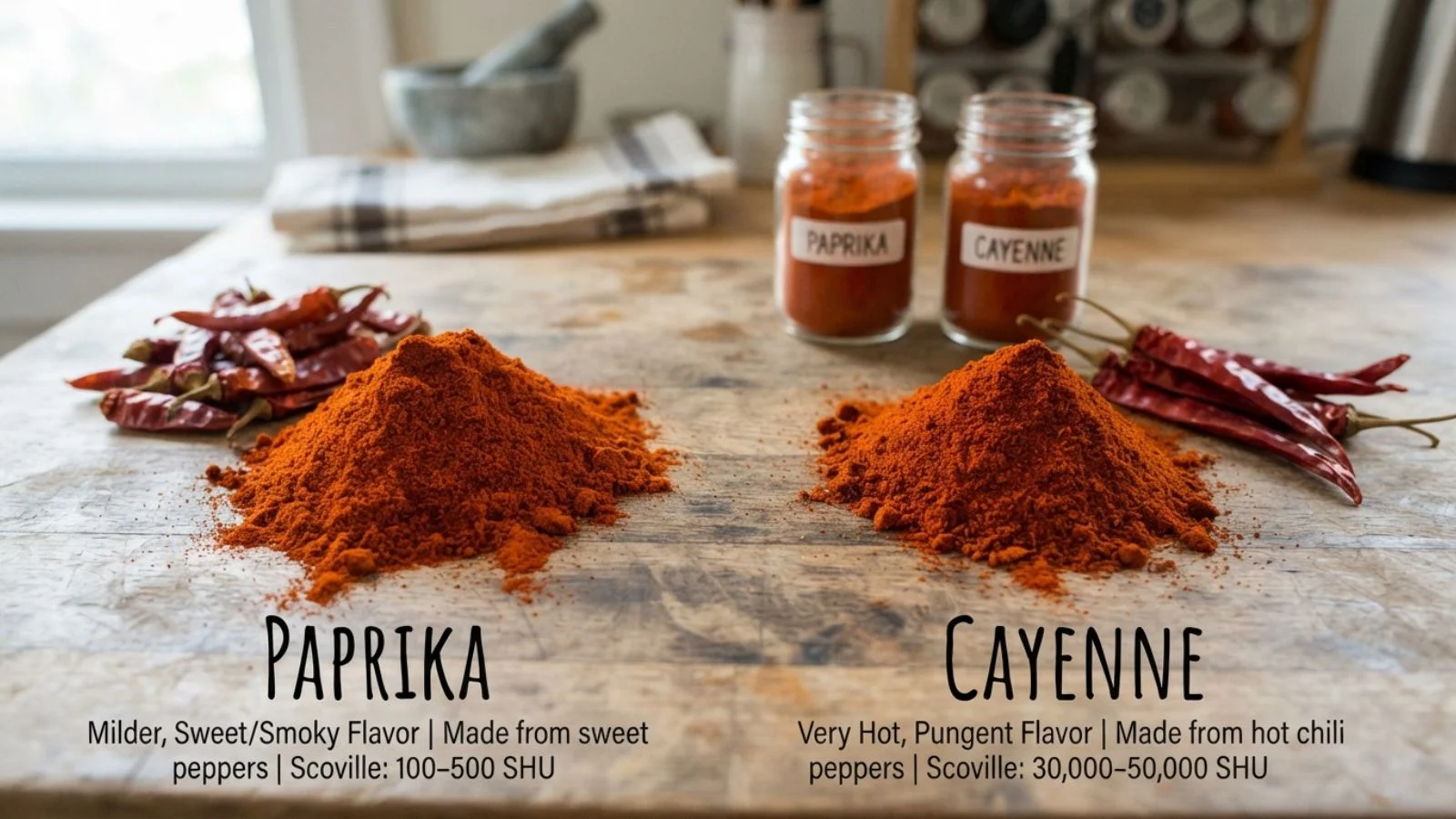
Paprika and cayenne are both made from dried, ground chili peppers, but they are not the same spice.
Paprika is mild to moderately hot (0–2,000 Scoville Heat Units) and has a sweet, earthy flavor.
Cayenne pepper is consistently fiery (30,000–50,000 Scoville Heat Units) with a sharp, direct heat and little added flavor. They are not one-to-one substitutes.
Key Takeaways
- Paprika and cayenne come from different types of Capsicum peppers and are processed differently.
- Cayenne is roughly 30 to 100 times hotter than most paprika, depending on the paprika variety.
- Paprika adds color and mild-to-moderate flavor; cayenne adds heat with minimal flavor complexity.
- If you’re out of one, you can substitute the other but only in small amounts, and the result will taste different.
- Smoked paprika brings a wood-fire flavor that plain cayenne can’t replicate.
Paprika vs Cayenne at a Glance
| Paprika | Cayenne Pepper | |
| Made from | Various sweet or mild-to-hot red peppers | Long, slender cayenne chili peppers |
| Heat level | 0–2,000 SHU (sweet paprika has almost none) | 30,000–50,000 SHU |
| Flavor | Sweet, earthy, sometimes smoky | Sharp, hot, slightly tangy |
| Color | Vibrant red-orange | Dull red |
| Common uses | Goulash, deviled eggs, roasted meats, color garnish | Hot sauce, Cajun dishes, spice rubs, chili |
| Texture | Fine powder | Fine powder |
What Is Paprika?
Paprika is a powder made from dried red peppers in the Capsicum annuum family. Depending on which peppers are used and how they’re processed, paprika can be sweet, hot, or smoked. It’s mostly known for its bright color and gentle flavor rather than heat, which is why so many recipes call for it as a finishing touch or garnish rather than a way to spice up a dish.
Hungary and Spain are the two countries most associated with paprika. Hungarian paprika tends to be sweeter and more finely ground, while Spanish paprika (pimentón) often includes smoked varieties made by drying peppers over oak fires.
Sweet, Hot, and Smoked Paprika
Not all paprika is the same:
- Sweet paprika has little to no heat and a mild, slightly fruity taste. It’s the most common type sold in grocery stores.
- Hot paprika uses spicier pepper varieties and has a noticeable but still manageable kick.
- Smoked paprika is dried over wood smoke, giving it a deep, barbecue-like flavor. It can be sweet or hot.
If a recipe just says “paprika” with no qualifier, it almost always means sweet paprika.
What Is Cayenne Pepper?
Cayenne pepper is ground from a specific type of long, thin, red chili pepper known for consistent, intense heat. Unlike paprika, cayenne isn’t really about flavor complexity, it’s about delivering heat quickly and directly. There’s no “sweet cayenne” equivalent; it’s hot every time.
Cayenne shows up in hot sauces, Cajun and Creole cooking, chili powder blends, and spice rubs where the goal is to add real spiciness rather than color or subtle flavor.
Paprika vs Cayenne Heat Level (Scoville Comparison)
Heat is measured on the Scoville scale, which tracks capsaicin (the compound that makes peppers spicy). This is where paprika and cayenne diverge the most:
- Sweet paprika: close to 0 SHU comparable to a bell pepper
- Hot paprika: roughly 1,000–2,000 SHU a mild-to-moderate warmth
- Cayenne pepper: roughly 30,000–50,000 SHU sharp, immediate heat
Even hot paprika is nowhere near as spicy as cayenne. That gap is the single biggest reason the two spices aren’t interchangeable in equal amounts.
Flavor Differences
Beyond heat, paprika and cayenne taste different in ways that matter for cooking:
- Paprika brings sweetness, earthiness, and (in smoked varieties) a campfire-like depth. It rounds out a dish’s flavor.
- Cayenne is mostly one-note: heat, with a faint sharp or tangy edge underneath. It doesn’t add much flavor complexity on its own.
This is why paprika is often used generously for both color and taste, while cayenne is used sparingly, more like a seasoning adjustment than a flavor base.
Can You Substitute Paprika for Cayenne (or Vice Versa)?
You can substitute one for the other in a pinch, but because the heat levels are so far apart, you need to adjust the amount and not swap them evenly.
Cayenne-to-Paprika Substitution Ratio
If a recipe calls for cayenne and you only have paprika, use about 3 to 4 times more paprika than the cayenne amount listed, and expect a much milder, sweeter result. For real heat, add a pinch of black pepper or hot sauce alongside the paprika.
Paprika-to-Cayenne Substitution Ratio
If a recipe calls for paprika and you only have cayenne, use about 1/4 of the amount of cayenne, roughly 1/4 teaspoon of cayenne for every 1 tablespoon of paprika called for. Start with less than that, since it’s easy to add more heat but hard to remove it. Keep in mind you’ll lose the color and sweetness paprika would have added.
When to Use Paprika vs When to Use Cayenne
Use paprika when you want:
- Color on deviled eggs, potato salad, or roasted vegetables
- A gentle, sweet or smoky background flavor in stews, goulash, or rubs
- A dish that isn’t meant to be spicy
Use cayenne when you want:
- Real, noticeable heat in chili, hot sauce, or Cajun dishes
- A quick way to spice up soups, marinades, or sauces
- A small amount of heat without changing a dish’s core flavor much
FAQs
Is paprika the same as cayenne pepper?
No. Both come from chili peppers, but paprika is mild to moderately hot with a sweet, earthy flavor, while cayenne is consistently very hot with little flavor beyond the heat itself.
Which is hotter, paprika or cayenne?
Cayenne is much hotter. Most paprika sits under 2,000 Scoville Heat Units, while cayenne ranges from 30,000 to 50,000 SHU dozens of times spicier.
Can I substitute cayenne for paprika?
Yes, but use far less about 1/4 teaspoon of cayenne per tablespoon of paprika called for. The dish will lose paprika’s color and sweetness but gain heat.
Is smoked paprika spicier than cayenne?
No. Smoked paprika can be sweet or hot, but even hot smoked paprika is far milder than cayenne. Its main feature is a smoky flavor, not heat.
What can I use instead of cayenne pepper?
Paprika (in larger amounts) works for color, but for actual heat, consider hot sauce, crushed red pepper flakes, or a pinch of black or white pepper as alternatives.
Conclusion
Paprika and cayenne may sit next to each other in the spice rack, but they play very different roles in the kitchen.
Paprika brings color, sweetness, and sometimes a smoky depth without much heat, while cayenne delivers sharp, direct spiciness with little flavor beyond that kick.
Knowing this difference helps you avoid recipe mishaps using cayenne when a dish just needs color, or paprika when you actually want fire.
If you ever need to substitute one for the other, adjust the quantity carefully, since a small amount of cayenne goes a very long way.