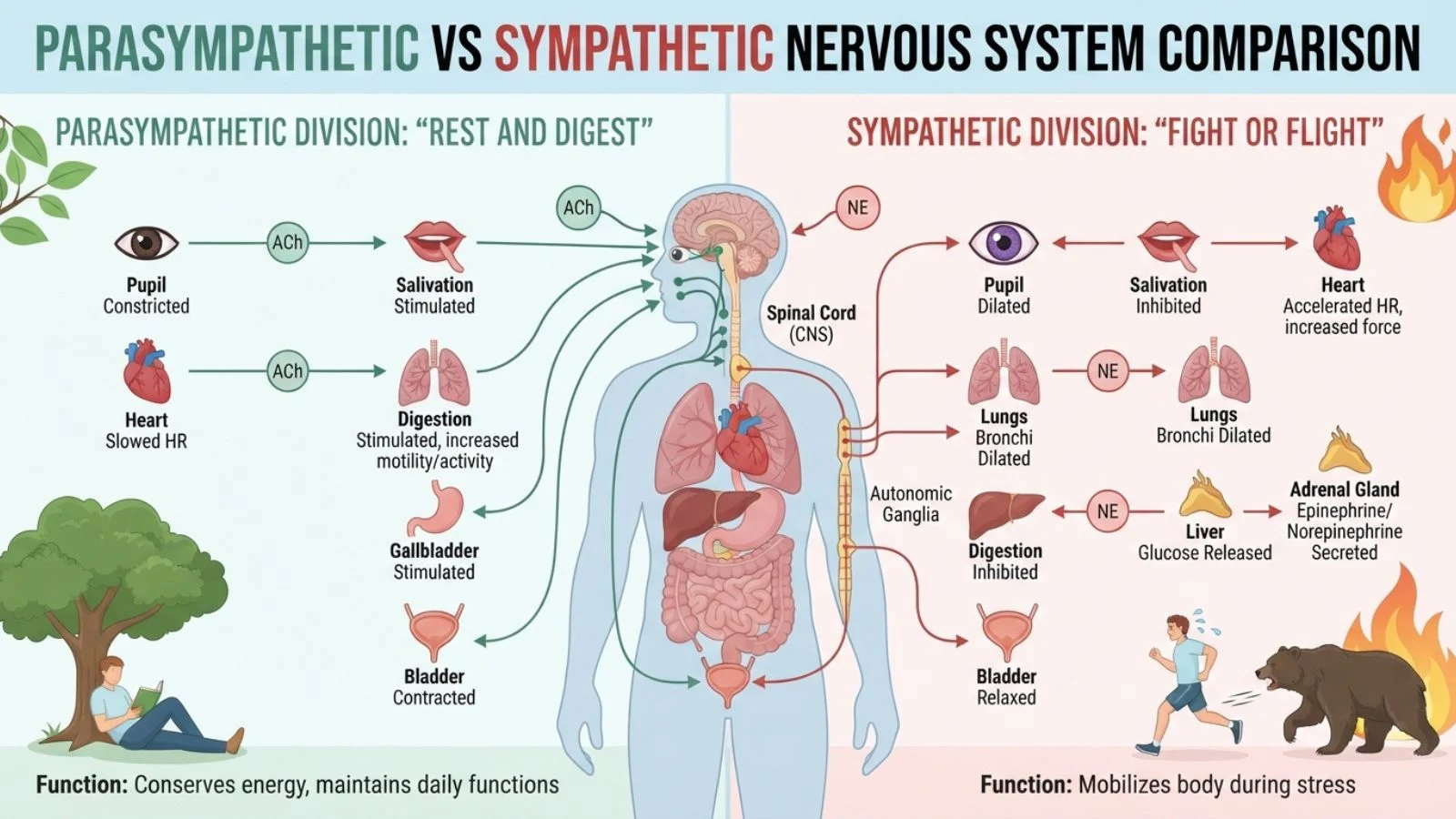
The sympathetic nervous system triggers your body’s “fight or flight” response, speeding up your heart rate and preparing you for action during stress or danger.
The parasympathetic nervous system does the opposite: it triggers “rest and digest,” slowing your heart rate and helping your body relax, digest food, and recover once the stress has passed.
Key Takeaways
- The sympathetic and parasympathetic nervous systems are the two main branches of the autonomic nervous system (ANS).
- Sympathetic = fight or flight (speeds things up). Parasympathetic = rest and digest (slows things down).
- The sympathetic system uses mainly norepinephrine; the parasympathetic system uses mainly acetylcholine.
- Both systems are usually active at the same time one just dominates depending on the situation.
- You can nudge your body toward parasympathetic dominance with slow breathing, relaxation, and rest.
What Is the Autonomic Nervous System?
Your autonomic nervous system (ANS) controls the things your body does automatically, without you thinking about them your heartbeat, breathing rate, digestion, and more. It has two main divisions that balance each other out: the sympathetic nervous system and the parasympathetic nervous system.
Think of them as a gas pedal and a brake. The sympathetic system speeds your body up to handle stress or danger. The parasympathetic system slows it back down so you can rest, digest, and recover. Neither one works alone; your body is constantly adjusting the balance between the two.
Sympathetic Nervous System: Fight or Flight
What Triggers It
The sympathetic nervous system activates when your brain perceives a threat, stress, or excitement. This could be a real danger, like a car swerving toward you, or something less dramatic, like a tight deadline or a public speaking moment.
What It Does to Your Body
Once triggered, the sympathetic system works fast, often within seconds. It:
- Speeds up your heart rate
- Widens your pupils
- Redirects blood flow to your muscles
- Slows or pauses digestion
- Releases adrenaline and norepinephrine
- Increases alertness and energy
This is your body getting ready to confront a threat or run from it the classic “fight or flight” state.
Parasympathetic Nervous System: Rest and Digest
What Triggers It
The parasympathetic nervous system takes over when you’re safe, relaxed, or winding down after a stressful event passes, during meals, or while you sleep.
What It Does to Your Body
The parasympathetic system works more slowly and locally than the sympathetic system, gradually guiding your body back to a calm state. It:
- Slows your heart rate
- Constricts your pupils
- Stimulates digestion and saliva production
- Supports energy storage and tissue repair
- Relies mainly on acetylcholine as its messenger
This is the “rest and digest” state that lets your body recover and conserve energy.
Parasympathetic vs Sympathetic: Side-by-Side Comparison
| Feature | Sympathetic (Fight or Flight) | Parasympathetic (Rest and Digest) |
| Main role | Prepares body for action | Restores body to calm |
| Trigger | Stress, danger, excitement | Safety, rest, digestion |
| Heart rate | Increases | Decreases |
| Pupils | Dilate | Constrict |
| Digestion | Slows down | Speeds up |
| Main neurotransmitter | Norepinephrine | Acetylcholine |
| Origin in spinal cord | Thoracic and lumbar regions | Cranial nerves and sacral region |
| Speed of response | Fast, broad | Slower, more targeted |
Do They Work at the Same Time?
Yes. A common misconception is that your body switches entirely from one mode to the other, like flipping a switch. In reality, both systems are active to some degree at all times. What changes is which one dominates. During a stressful meeting, your sympathetic system takes the lead. An hour later, relaxing on the couch, your parasympathetic system takes over. The two are constantly adjusting to keep your body in balance, a process called homeostasis.
What Happens When the Systems Are Out of Balance?
When the sympathetic system stays switched on too often from chronic stress, poor sleep, or constant pressure it can contribute to issues like high blood pressure, anxiety, trouble sleeping, and digestive problems. On the other hand, a healthy, responsive parasympathetic system helps the body recover faster after stress and supports better digestion and sleep. Long-term sympathetic dominance is one reason chronic stress takes a physical toll, not just a mental one.
How to Activate Your Parasympathetic Nervous System
You can’t force a full switch, but you can nudge your body toward rest-and-digest mode:
- Slow, deep breathing longer exhales than inhales signal safety to your nervous system.
- Gradual movement, gentle stretching or walking instead of intense exercise right before bed.
- Time outdoors or in quiet spaces reduces sensory overload that keeps the sympathetic system active.
- Consistent sleep habits support the nightly shift toward parasympathetic dominance.
- Mindful eating slowly, without distraction, supports better digestion.
FAQs
What is the main difference between sympathetic and parasympathetic nervous systems?
The sympathetic nervous system prepares your body for action during stress (“fight or flight”), while the parasympathetic nervous system calms your body down afterward (“rest and digest”). They have largely opposite effects on things like heart rate, digestion, and pupil size.
What triggers the parasympathetic nervous system?
It’s triggered by safety and rest situations like sitting down to eat, relaxing after a stressful event, or falling asleep. Slow breathing and calm environments also encourage parasympathetic activity.
Can you be in both sympathetic and parasympathetic mode at once?
Yes. Both systems are typically active simultaneously, with one dominating depending on the situation. Your body constantly shifts the balance between them rather than switching entirely from one to the other.
What happens when the systems are out of balance?
If the sympathetic system stays dominant for too long, it’s linked to issues like high blood pressure, poor sleep, anxiety, and digestive trouble. A well-functioning parasympathetic system helps the body recover and stay balanced.
How can you activate your parasympathetic nervous system?
Slow breathing with long exhales, gentle movement, time in calm environments, consistent sleep, and mindful eating all help shift the body toward rest-and-digest mode.
Conclusion
The sympathetic and parasympathetic nervous systems aren’t competitors, they’re partners that keep your body balanced.
The sympathetic system gets you ready to act when you’re stressed or threatened, while the parasympathetic system brings you back down afterward so you can rest, digest, and heal.
Both are working in the background at all times, shifting their balance based on what your body needs at the moment.
Understanding this balance matters beyond biology class. When stress becomes constant, the sympathetic system can stay switched on too long, and that takes a real toll on sleep, digestion, and overall health.
Simple habits like slow breathing, consistent sleep, and quiet downtime help your parasympathetic system do its job, keeping your body resilient and able to recover the way it’s designed to.