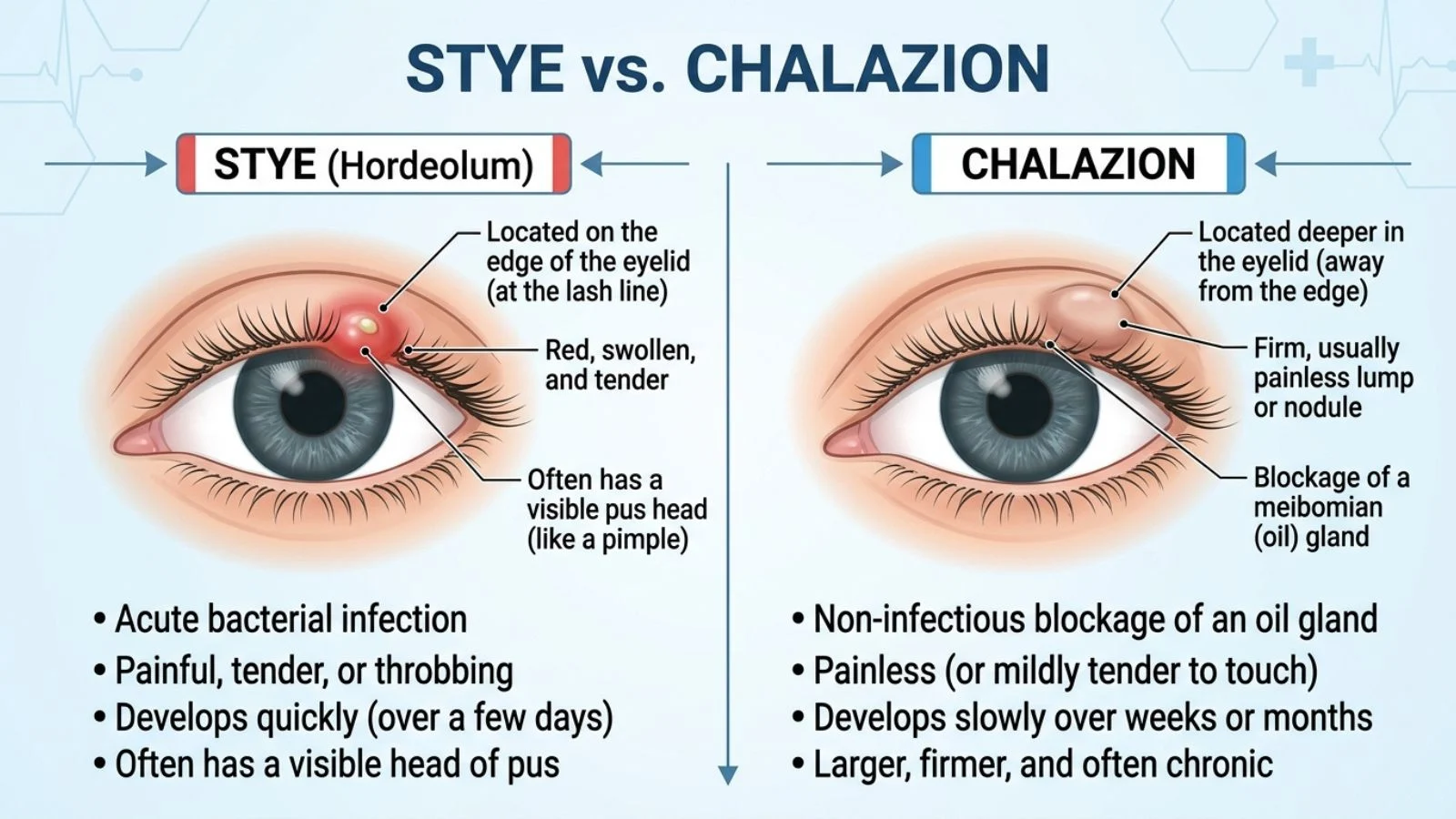
A stye is a painful, red bump caused by an infection in an eyelid gland, usually near the lash line.
A chalazion is a usually painless, firm lump caused by a blocked oil gland deeper in the eyelid. Styes tend to appear quickly and hurt, while chalazia develop slowly and often do not.
Key Takeaways
- A stye is an infection. It is typically tender, red, and may come to a head.
- A chalazion is a blocked gland. It is usually firm, painless, and sits farther back on the lid.
- Most styes heal on their own within one to two weeks with warm compresses.
- Chalazia can take several weeks to months to resolve and sometimes need a doctor’s care.
- Never squeeze either one, because this can spread infection or worsen swelling.
What Is a Stye?
A stye, also called a hordeolum, is a bacterial infection of a small gland at the edge of the eyelid. Most styes are caused by Staphylococcus aureus, the same common bacterium that lives harmlessly on many people’s skin.
Styes come in two types. An external stye forms at the base of an eyelash, where the small glands attached to the lash follicle become infected. An internal stye forms inside the eyelid, in a larger oil gland called a meibomian gland. Internal styes often feel more painful and may be less visible from the outside.
Typical symptoms include a red, tender bump, swelling of the lid, and sensitivity to light. The bump often fills with pus and may develop a visible yellow head within a few days.
What Is a Chalazion?
A chalazion is a blockage in a meibomian gland. These glands produce the oily layer of your tears. When one gets clogged, the oil builds up and the gland swells into a lump.
Unlike a stye, a chalazion is not usually an active infection. It is a type of inflammation caused by the trapped oil. Because of this, a chalazion often grows slowly over several days and may not hurt at all. It usually sits further back on the eyelid, not at the lash line, and it can feel firm or rubbery when you touch it.
Why Chalazia Often Do Not Hurt
Because a chalazion is an inflammatory reaction to blocked oil rather than a fresh infection, the surrounding tissue is often less irritated. Many people notice a lump they never felt before, with little pain. Some chalazia do become tender, especially if they grow large or if a stye has started nearby.
Stye vs Chalazion: Key Differences
| Feature | Stye | Chalazion |
| Cause | Bacterial infection, often Staphylococcus aureus | Blocked meibomian gland |
| Pain | Usually painful and tender | Usually painless |
| Location | Near the lash line | Farther back on the eyelid |
| Onset | Fast, often within a day or two | Slow, over several days or weeks |
| Redness | Often red and warm | Mild or no redness |
| Typical duration | About one to two weeks | Several weeks to months |
| Drainage | May drain pus | Rarely drains |
If the lump is painful and near the lashes, a stye is more likely. If it is painless, firm, and set further back, a chalazion is more likely. Still, the two can look similar, so a doctor can confirm the diagnosis when in doubt.
How to Treat a Stye at Home
Most styes improve without medical treatment. The most effective step is a warm compress. Soak a clean cloth in warm water, not hot, and hold it against the closed eyelid for about 10 to 15 minutes. Repeat several times a day. The warmth helps the blocked gland open and drain on its own.
Keep your eyelids clean by gently washing them with mild soap or a commercial eyelid cleanser. Avoid wearing eye makeup and contact lenses until the stye has healed. Do not squeeze or pop the bump. Squeezing can push infection deeper into the eyelid and spread it to nearby tissue.
How to Treat a Chalazion
Warm compresses are also the first line of treatment for a chalazion. Many chalazia shrink over several weeks with consistent use. Gentle lid massage after the compress may help open the gland, but do not press hard.
If a chalazion does not improve after several weeks, grows larger, or affects your vision, a doctor can help. Options include a steroid injection into the lump to reduce inflammation, or a small procedure called incision and curettage, in which the doctor makes a tiny cut and removes the trapped material. These treatments are done in an office and are generally quick.
Can a Stye Turn Into a Chalazion?
Yes, this can happen. When a stye does not drain fully, the infection may heal into a blocked, inflamed gland. That leftover lump is a chalazion. This is one reason why consistent warm compresses matter during the first days of a stye.
When to See a Doctor
Most eyelid bumps are harmless, but some signs call for prompt medical care. See an eye doctor if you notice any of the following:
- Changes in vision or blurred vision that does not clear
- Redness or swelling that spreads to the eye or cheek
- Fever or feeling generally unwell
- A lump that keeps growing or does not improve after a few weeks
- A bump that bleeds or has an unusual shape or color
- Repeated chalazia or styes in the same spot
Your optometrist or ophthalmologist can examine the lump and rule out less common conditions. Some eyelid growths look similar to a chalazion but need a different treatment.
Frequently Asked Questions
Is a chalazion dangerous?
A chalazion is not usually dangerous. It is generally harmless, but a large one can press on the eye and cause blurred vision or astigmatism. If this happens, a doctor should evaluate it.
How long does a chalazion take to go away?
Many chalazia clear up within several weeks with warm compresses. Some take a few months, and some may need medical treatment to resolve.
Should I pop a stye or chalazion?
No. Popping either one can spread infection and cause more swelling. Let it drain naturally or ask a doctor to treat it.
Is a stye contagious?
The bacteria that cause a stye can spread through touch, so wash your hands often and avoid sharing to
Final Thoughts
A stye and a chalazion can look alike, but they usually behave differently. A stye tends to hurt, appears quickly near the lash line, and often clears within a couple of weeks.
A chalazion is typically painless, grows slowly further back on the lid, and can take longer to go away.
In both cases, warm compresses and good eyelid hygiene are the best first steps, and squeezing the bump is the one thing to avoid.
Most eyelid bumps are harmless and resolve on their own. Still, if the lump keeps growing, affects your vision, or does not improve after a few weeks, it is worth booking a visit with an eye doctor.
A quick exam can confirm what you are dealing with and get you the right treatment sooner.