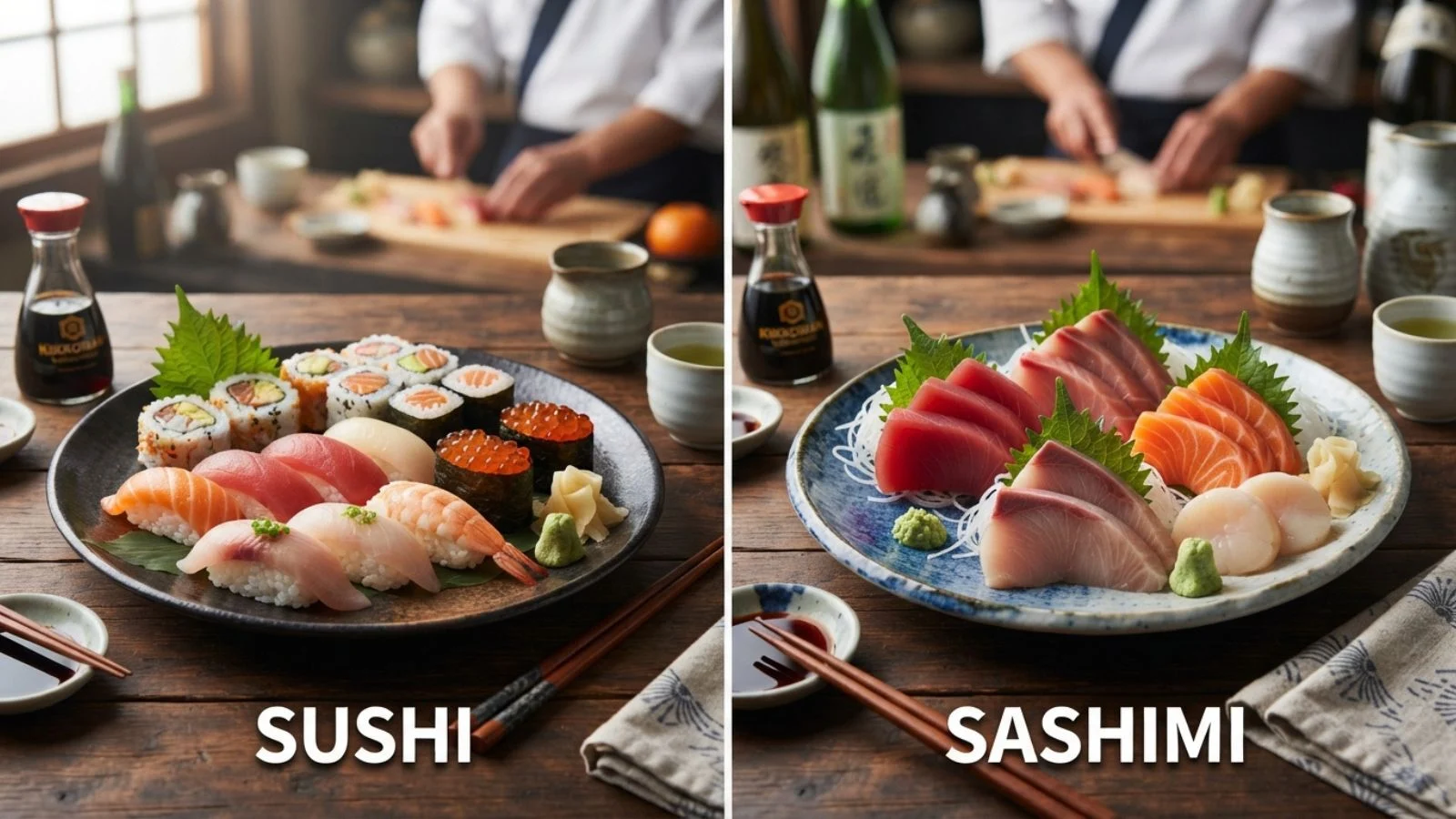
Sushi is any dish made with vinegared sushi rice, and it may or may not include raw fish. Sashimi is thinly sliced raw fish or seafood served without rice.
The key difference is the rice: if a dish has it, it’s sushi, and if it doesn’t, it’s sashimi.
Key Takeaways
- Sushi always contains vinegared rice. Raw fish is common but not required.
- Sashimi is thin slices of raw fish or seafood, served with no rice.
- Sashimi is not technically a type of sushi, though it’s often served alongside it.
- Nigiri is a type of sushi because it has rice under a topping of fish.
- Both are typically served with soy sauce, wasabi, and pickled ginger.
What Is Sushi?
Sushi is a Japanese dish built around rice. The word itself comes from older Japanese terms related to vinegar and rice, and that vinegar seasoning is what defines it. Sushi rice is cooked and mixed with rice vinegar, sugar, and salt, giving it a slightly tangy flavor.
The Role of Vinegared Rice
Rice is the common thread in every type of sushi. Nigiri, maki rolls, and hand rolls all use it. Some dishes top the rice with fish. Others roll it with vegetables, egg, or cooked seafood.
Sushi Doesn’t Have to Include Raw Fish
Many people assume sushi means raw fish, but that’s a common misunderstanding. A vegetable roll made with cucumber and avocado is still sushi. So is a shrimp tempura roll. Raw fish is a popular ingredient, but it isn’t what makes something sushi.
What Is Sashimi?
Sashimi is a Japanese dish of thinly sliced raw fish or seafood. Salmon and tuna are the most common choices, but chefs also serve yellowtail, sea bream, and other fish. Sashimi can also be made from other meats, though fish is far more common.
How Sashimi Is Served
Sashimi arrives as neat slices on a plate, often with a small mound of shredded daikon radish, a leaf of shiso, and a dab of wasabi. The fish is the star. Because there is no rice to fill the plate, the knife work and freshness of the fish matter a lot.
Key Differences at a Glance
| Feature | Sushi | Sashimi |
| Contains vinegared rice | Always | Never |
| Contains raw fish | Often, but not always | Always (or raw seafood) |
| Can include cooked ingredients | Yes | No, it’s served raw |
| Typical forms | Nigiri, maki, temaki, chirashi | Thin slices served alone |
| Calories and carbs | Higher, due to rice | Lower, since there’s no rice |
Sashimi vs Nigiri: The Common Mix-Up
Nigiri is a common source of confusion because it looks like sashimi with a bit of rice underneath. Nigiri is a small mound of rice topped with a slice of fish, so it counts as sushi. Sashimi has no rice at all. If you order a plate of sliced tuna with no rice, you’re getting sashimi. If you order the same tuna pressed onto a rice bed, you’re getting nigiri.
How to Order Sushi and Sashimi
If you’re new to Japanese dining, sushi is often an easier starting point because the rice makes the bite feel more familiar. Once you’re comfortable with raw fish, sashimi lets you taste the fish on its own. Many restaurants also offer chirashi, a bowl of sushi rice topped with assorted sashimi, which is a good way to try both.
Health and Nutrition Notes
Both dishes can be part of a balanced diet. Fish-based sashimi provides protein and omega-3 fatty acids. Sushi usually has more calories and carbohydrates because of the rice, and some specialty rolls add mayonnaise or fried ingredients that raise the calorie count. Because both dishes use raw fish, choose reputable restaurants and ask about how the fish is handled if you’re pregnant or have a weakened immune system.
Frequently Asked Questions
Is sashimi sushi?
Not technically. Sashimi has no vinegared rice, so it isn’t classified as sushi. Restaurants often serve the two together, which is why people use the terms interchangeably. Strictly speaking, though, they are different dishes.
Is sushi always raw fish?
No. Sushi is defined by its rice. Many sushi rolls contain cooked fish, vegetables, egg, or tempura, and some contain no fish at all.
Is sashimi healthier than sushi?
It’s usually lower in calories and carbohydrates because it has no rice. Whether it’s healthier overall depends on the fish and the rest of your meal.
Which costs more, sashimi or sushi?
It varies by restaurant. Sashimi is often priced by the fish quality and the number of slices, so premium cuts can cost more than a basic roll.
Final Thoughts
The difference between sushi and sashimi comes down to rice. Sushi is a rice-based dish that may or may not include raw fish.
Sashimi is simply sliced raw fish or seafood without rice. Once you know that one rule, you can read any menu with confidence.