
Have you ever wondered how ancient Romans organized their working lives centuries before labor unions or professional associations existed?
The answer lies in a fascinating institution called the collegia meaning. Far more than a simple word, “collegia meaning” represents one of Rome’s most enduring social innovations: a system of associations that gave structure, identity, and protection to everyday citizens, freedmen, and even slaves.
From bakers and blacksmiths to religious devotees and burial societies, collegia touched nearly every corner of Roman life.
They functioned as guilds, social clubs, and support networks all at once, quietly shaping the economy and society of the ancient world.
In this article, we’ll break down the true meaning of collegia, trace its origins in Roman history, explore the different types that existed, and reveal how this ancient concept still echoes in modern words like “college meaning” and “collegiate.”
Let’s dive in.
Etymology and Definition

The word “collegia” is the plural form of the Latin term collegium, which literally translates to “society” or “association joined together.” It derives from collega, meaning “colleague” or “partner,” which itself combines com- (“together”) and legere (“to choose” or “to gather”). At its core, then, collegium describes a group of people who have chosen to unite for a shared purpose.
In practical terms, a collegium referred to any recognised association in ancient Rome that functioned as a legal entity capable of owning property, collecting dues, and even suing or being sued in court. This gave collegia a level of legal legitimacy that was remarkable for the time, especially considering that membership often included freedmen and slaves who otherwise had little social standing.
It’s worth noting the grammar: collegium is singular, while collegia is the plural form. So while you might say “a collegium was formed,” you’d say “several colleges existed in Rome.”
The influence of this Latin root extends far beyond antiquity. Modern English words like college, colleague, and collegiate all trace their lineage back to collegium, a linguistic thread connecting ancient Roman guilds to today’s universities, professional bodies, and academic institutions.
Historical Origins in Ancient Rome
The origins of collegia are traditionally traced back to the legendary king Numa Pompilius, Rome’s second king, who is said to have established early trade guilds around the 8th–7th century BCE. According to tradition, Numa organized craftsmen into collegia including weavers, dyers, shoemakers, doctors, and painters partly to reduce social tensions between different ethnic and social groups in early Rome. While this origin story blends legend with history, it reflects how deeply collegia were woven into Rome’s cultural identity from the start.
As the Roman Republic developed, collegia grew in number and influence, evolving beyond simple trade groups into religious, social, and even political organizations. By the late Republic, collegia had become a common feature of urban life, particularly among the lower classes, freedmen, and slaves who found in these associations a rare avenue for community, identity, and mutual support.
However, this growth wasn’t without controversy. Some colleges became entangled in political activity, occasionally serving as tools for mobilizing votes or even inciting unrest. This eventually drew the attention of Roman authorities, setting the stage for future regulation.
By the time Rome transitioned from Republic to Empire, collegia had firmly established themselves as a fixture of Roman society economically useful, socially significant, but also politically sensitive. This tension between utility and control would shape how emperors approached collegia in the centuries that followed.
Legal and Political Status

As collegia grew in number and influence, Roman authorities recognized the need to regulate them both to harness their benefits and to curb their potential for disorder. Roman law eventually classified collegia into two categories: collegium legitimum (lawful, officially sanctioned associations) and collegium illicitum (unlawful or unauthorized associations).
A major turning point came during the late Republic. In 64 BCE, the Senate issued a senatus consultum suppressing political collegia due to concerns over their role in electoral manipulation and civil unrest. These political clubs, known as collegia sodalicia, were later revived by the controversial tribune Clodius, only to be permanently abolished by Julius Caesar, who viewed them as a genuine threat to public order.
This pattern of control continued under Augustus, who reaffirmed restrictions through the Lex Julia, requiring collegia to obtain formal approval from the Senate or the emperor himself in order to operate legally. This effectively transformed collegia from spontaneous grassroots associations into state-monitored institutions.
Despite these restrictions, many colleges, particularly trade guilds and burial societies, continued to thrive under imperial oversight, as they served practical economic and social functions that benefited Roman society. Religious and professional collegia, in particular, were often viewed as far less threatening than their political counterparts.
This legal evolution reveals a recurring theme in Roman history: the balancing act between empowering citizen associations and preventing them from becoming vehicles for political disruption.
Types of Collegia
Collegia in ancient Rome came in several distinct forms, each serving a different purpose within society.
Collegia opificum were trade and craft guilds, bringing together artisans such as blacksmiths, weavers, dyers, and shoemakers. These groups allowed skilled workers to organize around shared professional interests, often tracing their origins back to the legendary reforms of Numa Pompilius.
Collegia mercatorum represented merchant and commercial associations, giving traders a collective voice in economic matters and helping regulate commerce within Roman towns and provinces.
Collegia religiosa, or religious collegia, were devoted to the worship of specific deities. Members gathered for rituals, festivals, and sacrifices, often forming tight-knit spiritual communities tied to a shared patron god or goddess.
Collegia funeraticia, or burial societies, held particular importance for the lower classes. These associations ensured members received proper funeral rites, a significant concern in a society where dignified burial was closely tied to social status while also providing a support network during times of hardship.
Collegia sodalicia, or political and social clubs, were among the most controversial. Originally social in nature, some evolved into instruments of political mobilization, occasionally contributing to unrest which explains why they attracted the most scrutiny from Roman authorities.
Finally, collegia iuvenum served as youth organizations, preparing young Roman citizens for civic and military responsibilities.
Together, these varied types illustrate just how deeply collegia were embedded in nearly every aspect of Roman public and private life.
Internal Structure and Governance

Despite their varied purposes, most collegia shared a surprisingly organized internal structure, one that mirrored, in miniature, the administrative style of Rome itself.
Membership was typically open to Roman citizens, but many colleges also welcomed freedmen and, in some cases, slaves, making them uniquely inclusive compared to other Roman institutions. Prospective members usually paid an entry fee and ongoing dues, which funded the collegium’s shared treasury, property, and communal activities.
Leadership followed a defined hierarchy. A magister typically served as the presiding officer, overseeing meetings and representing the collegium in official matters. Larger or more prestigious collegia might also elect a quinquennalis, a role similar to a five-year magistrate responsible for broader administrative duties, along with curators who managed finances and day-to-day operations.
Wealthy patrons, known as patroni, often sponsored collegia, lending financial support and social prestige in exchange for honorary recognition, a relationship that mirrored Rome’s broader patron-client system.
Collegia also maintained formal governing documents, including a lex collegii (the collegium’s charter or bylaws), membership rolls, and financial records. Regular meetings often included communal meals, known as cena collegii, which reinforced social bonds among members.
This structured governance gave collegia legitimacy and longevity, allowing them to function almost like small-scale corporations complete with leadership, legal standing, and formalized membership rules centuries before the modern concept of incorporation existed.
Social and Economic Functions
Beyond their formal structure, collegia played a vital role in the everyday social and economic lives of their members particularly for those who had limited standing in broader Roman society.
One of the most significant functions was mutual aid. Collegia often provided financial support to members facing illness, poverty, or other hardships, functioning much like an early form of social insurance. This safety net was especially valuable for freedmen and lower-class citizens who lacked family wealth or influential connections to fall back on.
Perhaps most notably, many colleges guarantee proper burial rites for their members. In Roman culture, a dignified funeral carried deep social and religious significance, and the fear of an unmarked or neglected grave was very real for the whose . By pooling resources, burial collegia ensured that even the most modest members received appropriate funerary rites and a place of remembrance.
Economically, college offered valuable networking opportunities. Trade and merchant collegia allowed members to share resources, negotiate collectively, and strengthen their standing within local markets offering real advantages in an economy without modern business structures.
Collegia also fostered a strong sense of identity and belonging. For freedmen and slaves in particular, membership offered a rare source of dignity, community, and purpose in a society that otherwise offered them little status.
Finally, the patron-client relationships embedded within many colleges created mutually beneficial ties: patrons gained prestige and loyalty, while members gained protection, resources, and social capital.
Religious and Ceremonial Dimensions

Religion played a central role in the life of many colleges, shaping their identity, rituals, and sense of community.
Many colleges adopted a patron deity, whose worship formed the spiritual core of the association. Trade-based collegia, for example, often honored gods associated with their craft such as Minerva, the goddess of handiwork and skill, who was closely linked to the origins of Rome’s earliest artisan guilds. This divine association gave members a sense of shared purpose that extended beyond mere professional interest.
Religious observance within collegia typically included regular festivals, sacrifices, and communal worship ceremonies. These events weren’t just spiritual obligations, they were also important social gatherings that reinforced bonds among members and provided structure to the college’s calendar.
As Rome’s empire expanded, many colleges also played a role in venerating the Imperial cult, incorporating loyalty to the emperor into their religious practices. This blending of civic duty and spirituality helped collegia align themselves with the broader values of the Roman state, which in turn helped legitimize their existence.
Additionally, as trade and travel connected Rome with the far reaches of its empire, many colleges absorbed elements of foreign religious practices, creating a fascinating syncretism between Roman traditions and provincial beliefs. This blending of religious customs reflected the diverse, multicultural nature of the empire itself.
Together, these ceremonial and religious dimensions transformed collegia from mere professional or social groups into deeply meaningful spiritual communities.
Collegia and Roman Politics
While many colleges focused on trade, religion, or mutual support, others became deeply entangled in the political life of Rome, sometimes with turbulent consequences.
Political collegia, known as collegia sodalicia, were often used as tools for electoral mobilization. Ambitious politicians recognized that these associations, with their built-in networks of loyal members, could be leveraged to secure votes or rally public support for specific candidates and causes.
This political utility, however, came with significant risks. During the late Republic, collegia became associated with civil unrest and violence, most notably through their connection to figures like Clodius, who used organized collegia as a base of street-level political power. These groups were sometimes little more than organized gangs, contributing to the breakdown of public order in Rome’s increasingly volatile political climate.
Such unrest didn’t go unnoticed by Roman authorities. The Senate’s suppression of political collegia in 64 BCE, followed by their eventual permanent abolition under Julius Caesar, reflected growing anxiety over how easily these associations could be weaponized for factional gain.
Interestingly, this political sensitivity was largely confined to Rome itself. In the provinces, collegia particularly trade and religious associations tended to operate with far less scrutiny, as they posed little threat to imperial stability far from the political epicenter.
This contrast highlights an important truth about college: their impact and reputation varied dramatically depending on location, purpose, and the political climate of the time.
Decline and Transformation

As Rome entered Late Antiquity, the collegia system began to undergo significant transformation, shaped by shifting religious, political, and administrative forces.
One of the most influential factors was the rise of Christianity as the dominant religion of the empire. Many colleges had deep roots in pagan worship, built around patron deities and traditional religious festivals. As Christianity spread and eventually became the state religion under later emperors, these pagan-based collegia gradually lost their religious relevance, and many either dissolved or were reshaped to fit the new religious landscape.
At the same time, the Roman administrative system itself was evolving. Later emperors introduced sweeping bureaucratic reforms, tightening state control over various aspects of public life. Collegia, once semi-independent associations, increasingly found themselves absorbed into more rigid administrative frameworks particularly trade collegia, which were sometimes compelled by the state to continue their professions as a form of hereditary obligation, ensuring the empire’s economic needs were met.
Despite this decline in their original form, the underlying concept of collegia didn’t disappear, it transformed. As the Western Roman Empire gave way to early medieval society, the collaborative, guild-like spirit of collegia found new expression in medieval craft guilds and religious confraternities, which adopted similar structures of mutual support, shared professional identity, and communal governance.
Legacy: From Collegia to Modern Institutions
The influence of Roman collegia didn’t end with the fall of the empire; it quietly shaped institutions that still exist today.
As collegia transformed into medieval craft and merchant guilds, they carried forward the same core principles: shared professional identity, mutual support, and structured governance. These medieval guilds would go on to influence the development of modern trade organizations and even early labor unions.
The linguistic legacy is equally striking. The Latin root collegium directly gave rise to the English word “college” originally referring to any organized association of colleagues, long before it became associated specifically with higher education. This is why we still describe universities as having “collegiate” systems, and why terms like fellow and colleague carry echoes of the collaborative spirit of ancient collegia.
The concept also survives in religious and institutional contexts. The College of Cardinals, which elects the Pope, and various collegiate churches reflect the same idea of a formal body of equals working together toward a shared purpose.
Even government terminology bears this legacy: the Electoral College, used in modern democratic systems, draws its name from this same root, describing a formal assembly gathered for a specific collective function.
From trade unions to universities to religious bodies, the DNA of Roman collegia is woven into countless modern institutions, a testament to how effectively this ancient Roman innovation solved timeless human needs for community, structure, and collective purpose.
Collegia vs. Similar Roman Institutions
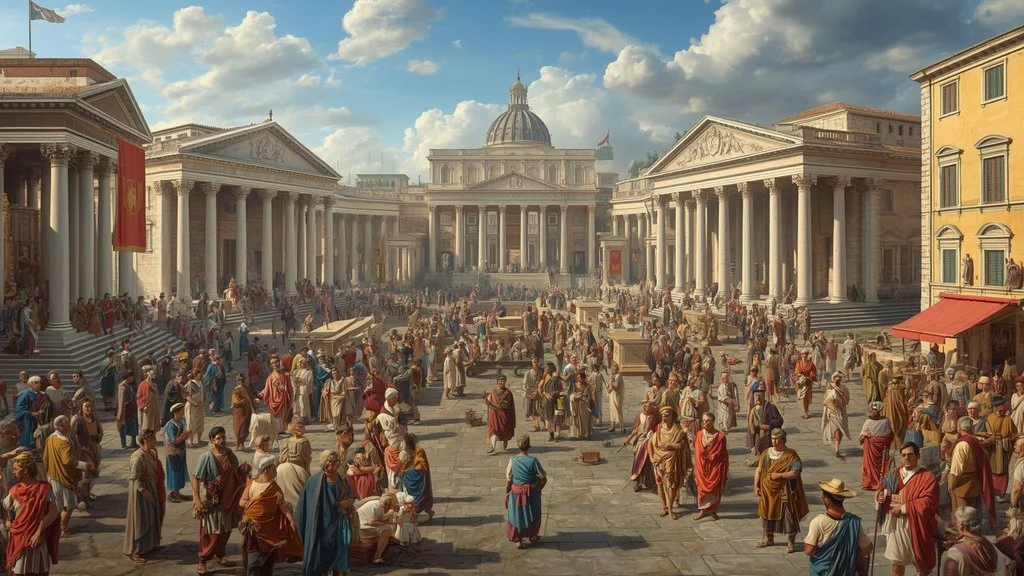
To fully understand collegia, it helps to compare them with other Roman associative terms that are often confused or used interchangeably.
Collegia vs. Sodalitas
While both terms describe organized groups, their scope differs significantly. Collegium is the broader term, encompassing associations of nearly any kind professional, religious, or civic. Sodalitas, on the other hand, was more narrowly focused, typically referring to a union formed specifically for maintaining religious cult practices. In essence, every sodalitas could be considered a type of collegium, but not every collegium was a sodalitas.
Collegia vs. Societas
The distinction here lies in permanence and purpose. Collegia were designed as lasting institutions, often persisting for generations with ongoing membership, governance structures, and communal obligations. A societas, by contrast, was typically a temporary partnership often formed for a specific business venture or short-term commercial purpose that dissolved once its goal was achieved.
Collegia vs. Modern Trade Unions
Comparing collegia to today’s trade unions reveals both similarities and key differences. Like modern unions, collegia offered mutual support, shared professional identity, and collective bargaining-like influence in some cases. However, unlike modern unions, collegia also served religious, social, and funerary functions, and membership often extended to freedmen and slaves groups excluded from most other Roman institutions of the time.
Notable Examples from History

While many colleges have been lost to time, historical records and archaeological evidence provide fascinating glimpses into specific, well-documented associations.
One of the most prestigious was the Collegium Pistorum, the guild of bakers. Unlike many other trade collegia, this group received notable wealth and even political recognition within the Roman Senate, a reflection of just how essential bread production was to Roman daily life and public stability.
The Collegium Fabrum, or guild of craftsmen and builders, represented another significant example. These associations brought together skilled workers involved in construction and manufacturing, playing a practical role in the ongoing development of Roman infrastructure and urban life.
Much of what we know about these and other colleges comes from epigraphic evidence inscriptions carved into stone, particularly tombstones and dedicatory monuments, many of which are catalogued in the Corpus Inscriptionum Latinarum (CIL). These inscriptions often list collegium names, member titles, and even funeral arrangements, offering rare, direct insight into the lives of ordinary Romans.
Classical authors also occasionally referenced collegia in their writings. Cicero discussed the political dangers of certain collegia in his speeches, while historians like Suetonius and Pliny made passing references to specific guilds and associations in their broader accounts of Roman society.
Together, these examplespreserved through both stone and textoffer a tangible connection to the collegia system, transforming it from an abstract historical concept into a documented, lived reality for countless Romans.
Frequently Asked Questions (FAQ)
What is the plural of collegium?
The plural of collegium is collegia. While collegium refers to a single association, collegia is used when referring to multiple associations collectively.
Were colleges only for men?
Collegia primarily consisted of male members, reflecting the broader gender norms of Roman society. However, some religious and burial collegia did allow women to participate, particularly in cult worship or funerary associations tied to specific deities or family groups.
Did slaves belong to collegia?
Yes, remarkably, slaves and freedmen were often permitted to join certain colleges, especially burial societies and trade guilds. This made collegia one of the few Roman institutions offering a sense of community, structure, and dignity to those at the bottom of the social hierarchy.
How is “collegia” used in modern English?
While “collegia” itself isn’t commonly used in everyday modern English, its root, collegium, lives on through words like college, collegiate, and colleague. It also appears in specific institutional contexts, such as the College of Cardinals or academic and professional colleges.
Were all colleges legal?
No. Roman law distinguished between collegium legitimum (lawful, authorized associations) and collegium illicitum (unauthorized or banned associations). Political collegia, in particular, faced repeated restrictions due to their potential for civil unrest.
Why were some collegia banned?
Certain colleges, especially political ones, were banned because they were used to organize votes, mobilize crowds, or incite unrest activities Roman authorities viewed as threats to public order and imperial stability.
Conclusion
The story of collegia offers a remarkable window into the everyday lives of ordinary Romans, a side of history often overshadowed by emperors, wars, and political intrigue.
At its core, “collegia” means far more than a simple association; it represents an ingenious social innovation that gave structure, dignity, and community to countless people, including those with little status elsewhere in Roman society.
From humble trade guilds and religious worship groups to burial societies and, at times, politically charged clubs, collegia touched nearly every corner of Roman life.
They provided practical benefits like mutual aid and proper burial rites, while also fostering a powerful sense of belonging and shared identity, something particularly meaningful for freedmen and slaves navigating a rigid social hierarchy.
Even as collegia faced legal restrictions, political suppression, and eventual transformation with the rise of Christianity and administrative reform, their underlying spirit never truly disappeared.
Instead, it evolved, living on through medieval guilds, and eventually shaping modern institutions we still recognize today, from universities to the College of Cardinals to the very concept of collegiate life.