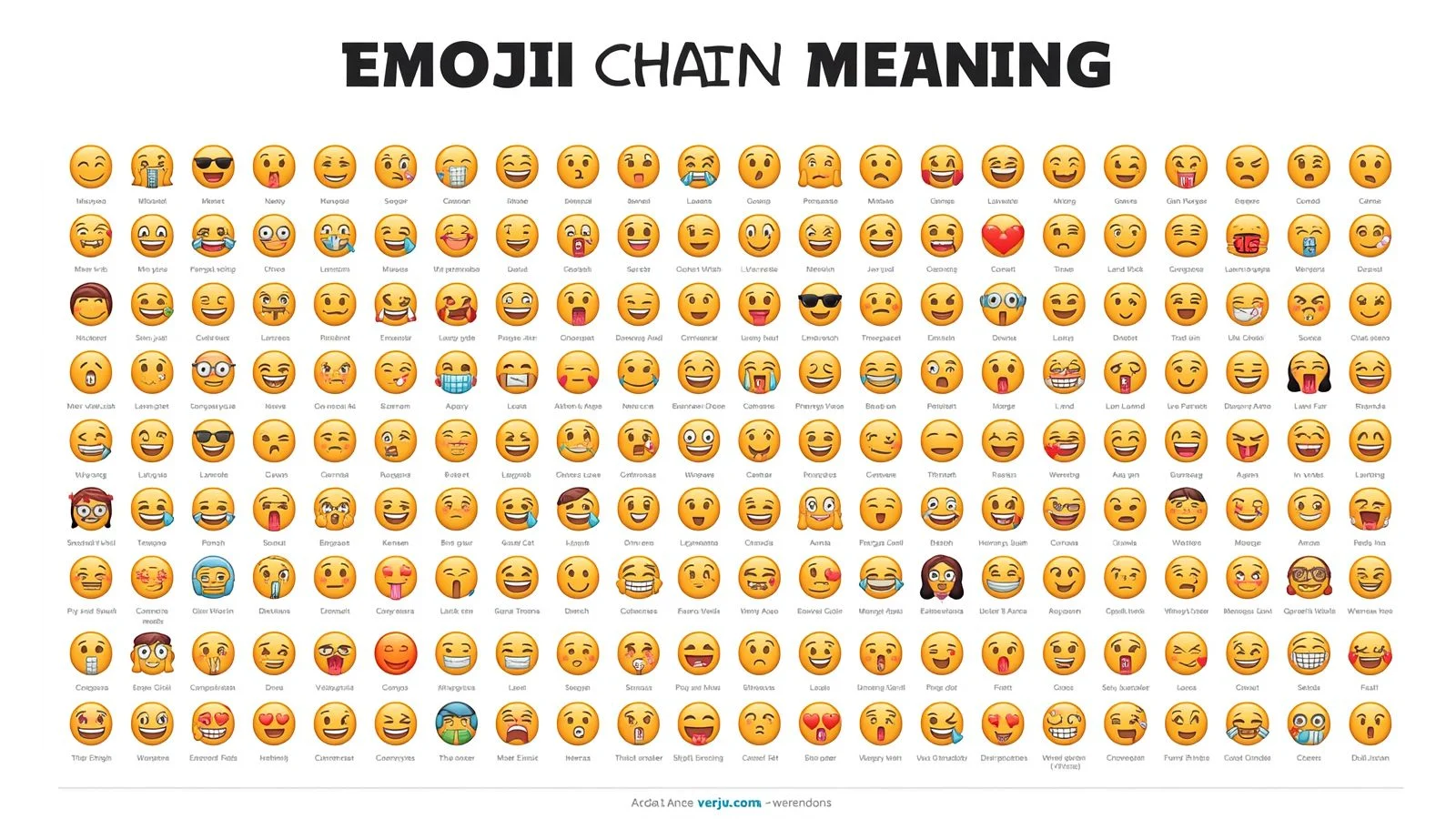
That’s the power of an emoji chain: a sequence of two or more emojis strung together to communicate something no single icon could say alone.
What started as playful shorthand between friends has evolved into a full-blown visual language, complete with its own logic, slang, and regional dialects.
Emoji chains show up everywhere in texts, Instagram captions, TikTok comments, and even dating app bios and their meanings can shift dramatically depending on order, context, and who’s sending them.
A chain like 😏🔥💦 might read as flirtatious in one conversation and completely different in another.
In this guide, we’ll break down how emoji chains work, decode some of the most common combinations, and explore why this compressed form of communication has become second nature for so many of us.
How Emoji Chains Work
At first glance, emoji chains might look random just a handful of small icons tossed together. But there’s actually a loose “grammar” guiding how we build and interpret them, even if most people have never consciously thought about it.
The most basic rule is sequential logic. Emoji chains tend to read left to right, almost like a mini narrative or timeline. A chain like 🏃♀️➡️🏠 reads as “running home,” with each icon acting like a word in a sentence rather than a standalone symbol.
Then there’s combinatorial meaning, the idea that individual emojis can shift meaning entirely once paired with others. 😂 on its own signals laughter, but combine it with 💀 and the tone shifts to “I’m dead” an exaggerated, ironic expression of finding something hilarious rather than literal laughter.
Order matters too. 😢❤ ️ might suggest heartbreak followed by love or reassurance, while flipping it to ❤ ️😢 can imply love turning to sadness. The sequence changes the emotional arc being communicated.
Finally, context is everything. A chain that reads as sarcastic between close friends might come across as confusing or even inappropriate in a professional Slack message.
Categories of Emoji Chains
Emoji chains aren’t one-size-fits-all they cluster into recognizable categories, each with its own tone and typical use case.
Emotional and mood chains capture a feeling in a glance, like 😩😮💨😔 for exhaustion or overwhelm. Romantic and flirtatious chains think 😏🔥💦 signal attraction or playful tension, often used in texting or dating app conversations. Related but distinct are suggestive chains, which lean on euphemism and coded imagery (like fruit or food emojis) to imply something more explicit without spelling it out.
Sarcasm and irony chains flip literal meaning on its head. 🙃🔪💀 doesn’t suggest actual violence it’s a dramatized, ironic way of saying something was painfully awkward or “killed” the sender emotionally (usually from secondhand embarrassment or plot twists).
On the lighter side, humor and meme chains thrive on absurdist, often nonsensical pairings that go viral through repetition rather than logic. Celebration and hype chains like 🎉🥳🍾 mark achievements or good news, while food and craving chains (🍕😩👅) express strong desire for something delicious.
Drama and gossip chains 👀☕🍵 signal that tea is about to be spilled, often prefacing juicy information. Support and comfort chains offer condolences or encouragement without needing words, and approval or hype-man chains (🔥🔥💯) validate someone’s post, outfit, or accomplishment.
Finally, warning chains subtly flag caution about a person or situation, proving emoji chains can carry serious social function, not just humor.
Platform-Specific Conventions

Emoji chains don’t behave the same way everywhere the platform shapes both the style and the expected meaning.
In texting apps like iMessage and WhatsApp, chains tend to be more personal and shorthand-heavy, relying on inside jokes and shared history between sender and recipient. A chain that makes perfect sense between two close friends might be indecipherable to an outsider.
On Instagram, emoji chains show up heavily in captions and comments, often used to punctuate a mood or add humor without cluttering the text. A caption ending in ☀️🌊🍹 instantly signals a beach vacation without needing a single word of description.
TikTok has arguably driven the fastest evolution of emoji chain culture, with comment sections developing their own micro-trends. Certain combinations go viral for a few weeks, carrying very specific in-joke meanings tied to a sound, trend, or creator.
Twitter/X favors punchier, wittier chains built for quick-scroll engagement, often layered with sarcasm or meme references.
Discord and gaming communities develop their own specialized emoji dialects, sometimes incorporating custom server emojis alongside standard ones, creating chains that are nearly unreadable outside that specific community.
Dating apps like Tinder, Hinge, and Bumble see heavy use of flirtatious and playful chains in bios and opening messages, where emojis do double duty as personality signals and icebreakers.
Meanwhile, workplace platforms like Slack and Teams call for restraint, chains here skew toward simple approval (👍🎉) rather than anything ambiguous or suggestive.
Cultural, Regional & Generational Variation
Emoji chains aren’t interpreted the same way across every audience age, culture, and community all shape how a sequence gets read.
Generational gaps are especially pronounced. Gen Z has embraced ironic and often counterintuitive uses 💀 for laughing, 😭 for something being “so good it hurts” rather than literal sadness while Millennials and Gen X are more likely to interpret emojis at face value. This gap has led to well-documented cross-generational confusion, where a chain meant as high praise reads as distress to an older recipient.
Subcultural dialects also shape emoji chain usage. Fandom communities often develop chains tied to specific characters, ships, or storylines that are meaningless outside that fanbase. Similarly, certain communities have developed coded chains that carry specific in-group significance, allowing for subtle communication within a shared cultural context.
Meanings also drift over time. An emoji’s connotation can shift dramatically from its original design intent, sometimes flipping entirely, as seen with symbols that started with one association and evolved into ironic or humorous shorthand instead. This constant evolution means emoji chains function less like a fixed dictionary and more like a living slang system, requiring ongoing cultural fluency to keep up.
Decoding Emoji Chains: A Framework
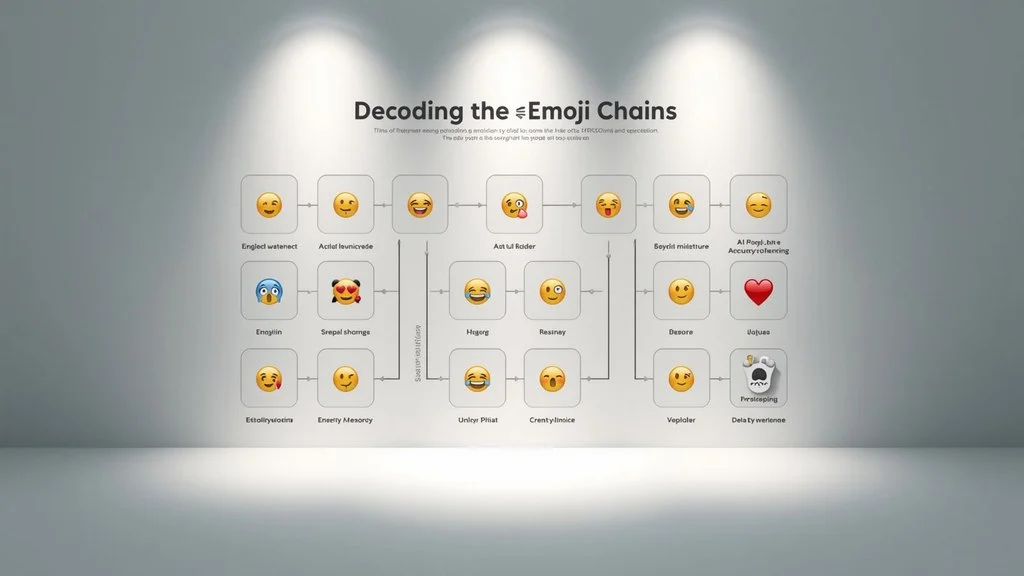
With so much ambiguity built into emoji chains, having a systematic approach makes interpretation far less guesswork-heavy.
Step 1: Read each emoji individually. Start with the literal, dictionary-level meaning of each icon in the chain. This baseline matters even when the final meaning departs from it entirely; you need to know the “default” before you can spot the twist.
Step 2: Assess the sequence. Look at the order the emojis appear in. Chains often function like mini-narratives, so reading left to right can reveal a cause-and-effect or before-and-after structure that changes the overall message.
Step 3: Factor in sender and platform. The same chain means something different depending on who sent it and where. A chain from a close friend on iMessage carries different weight than an identical one commented on a stranger’s TikTok post.
Step 4: Consider recent trends. Emoji meanings shift with virality. A combination might carry a very specific, temporary meaning tied to a meme, sound, or cultural moment context that’s easy to miss if you’re not plugged into current trends.
Ambiguity, Miscommunication & Etiquette
For all their expressive power, emoji chains carry a built-in risk: they’re easy to misread. Without tone of voice or facial expression, a chain intended as playful sarcasm can land as genuine criticism, and a chain meant to comfort can come across as dismissive if the emojis are unfamiliar to the recipient.
This ambiguity has caused real friction. In workplaces, an emoji chain intended as lighthearted feedback has sometimes been interpreted as passive-aggressive or unprofessional, especially across generational lines where emoji fluency varies widely. In dating contexts, flirtatious chains can be misread as either too forward or confusingly platonic, depending on how well the two people know each other’s texting style.
Given these risks, a few etiquette principles help avoid miscommunication. In professional or unfamiliar contexts, it’s safer to default to simple, widely understood chains (👍🎉) rather than ambiguous or trend-dependent ones. Sensitive topics such as grief, conflict, and serious news generally call for restraint, since an emoji chain can unintentionally trivialize a serious moment. And when clarity matters more than cleverness, pairing a chain with a short text explanation prevents the message from being left open to interpretation.
Creating Effective Emoji Chains
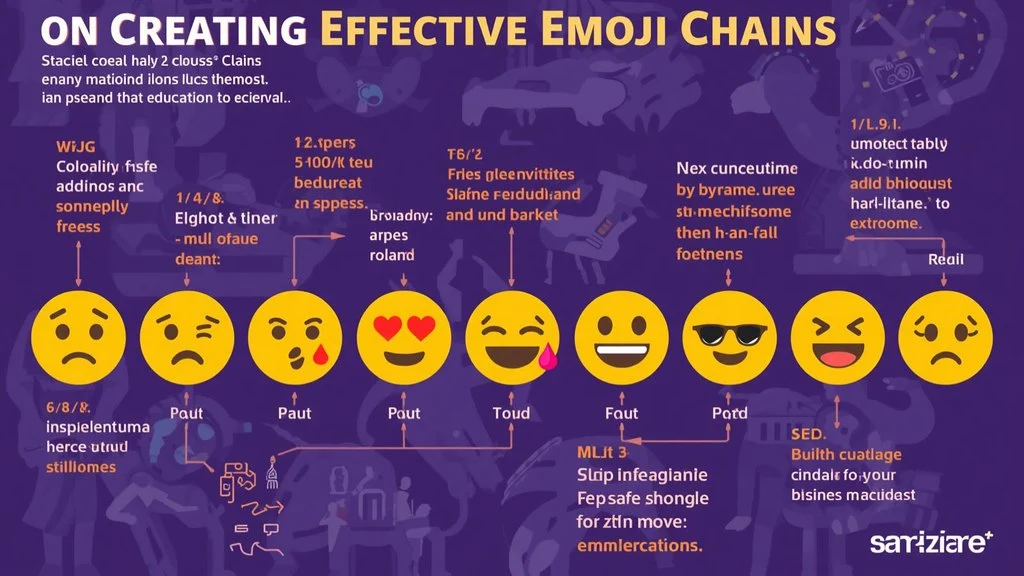
Building a good emoji chain is part art, part strategy. The goal is usually to strike a balance between clarity and creative flair, depending on the audience and purpose.
Start with intent. Are you trying to be immediately understood, or is a bit of mystery part of the fun? A caption meant for close followers who get your humor can lean cryptic, while a chain meant for broader engagement should stick to widely recognized combinations.
Consider your audience’s fluency. A chain packed with trend-based or ironic emojis might land perfectly with a younger, terminally-online audience but fall flat or confuse an older or more general one. Matching the chain’s complexity to who’s actually going to read it is key.
A few techniques consistently make chains land better:
- Mirroring: pairing emojis with parallel meanings to reinforce a single idea (🔥🔥🔥 for pure intensity)
- Escalation: building emojis in a sequence that ramps up emotion or tension (😐😦😱)
- Contrast: juxtaposing opposing emojis to create irony or humor (💀😇)
Keep it tight. The best chains are usually short, three to five emojis are often the sweet spot. Longer chains risk becoming visual clutter rather than a clear message, diluting the punch that made the format effective in the first place.
Emoji Chains in Marketing & Pop Culture
Brands have caught on to the expressive shorthand of emoji chains, using them to add personality and relatability to campaigns without the formality of full sentences. A well-placed chain in an ad caption or product description can signal an instantly playful, urgent, celebratory tone while feeling native to how audiences already communicate online, rather than like corporate marketing speak.
Social media managers frequently lean on emoji chains to punctuate posts, replies, and community engagement. A brand responding to a customer comment with a simple 🙌🔥💯 feels more authentic and conversational than a written response, helping companies appear approachable rather than distant or overly formal.
Music and entertainment have embraced the trend too, with emoji chains occasionally appearing in song-related content, promotional materials, or fan-made content as a way to tease themes or moods without spoiling details. Merchandising has followed suit, with emoji-based graphics showing up on apparel and products aimed at audiences fluent in this visual shorthand.
The Future of Emoji Chains
As digital communication continues evolving, emoji chains are likely to become even more sophisticated and more deeply woven into everyday interaction.
AI and predictive text are already shaping how people build chains, with smart keyboards suggesting relevant emoji combinations based on conversation context. As this technology improves, it may standardize certain chain meanings while also enabling more personalized, adaptive suggestions based on an individual’s texting history and style.
New emoji releases continue to expand the creative possibilities for chain-building. Each yearly batch of new emojis introduces fresh combinations and nuances, allowing chains to capture increasingly specific emotions, objects, or cultural references that older emoji sets couldn’t quite express.
There’s also a growing case for viewing emoji chains as something closer to a visual pidgin language, an evolving system with enough shared structure and recognizable patterns to function as genuine communication, even without formal rules. As younger generations grow up fluent in this shorthand from an early age, chains may become even more integral to how meaning gets conveyed, potentially influencing formal digital communication norms over time.
Cross-platform consistency may also improve, as social platforms and messaging apps increasingly study how users combine emojis to refine their own suggestion algorithms and design choices.
Ultimately, emoji chains represent a broader shift in how humans communicate in digital spaces compressing emotion, tone, and narrative into a handful of small icons. As the format matures, it’s likely to remain a permanent fixture of digital language rather than a passing trend.
Conclusion
Emoji chains have quietly become one of the most versatile tools in modern digital communication capable of expressing humour, affection, sarcasm, excitement, and even warning, all without a single written word.
What started as a playful shorthand between friends has grown into a genuinely complex system, complete with its own logic, regional dialects, and generational quirks.
As we’ve seen throughout this guide, understanding emoji chains isn’t just about knowing what each individual icon means, it’s about reading sequence, context, platform, and relationship all at once.
A chain that reads as hilarious between close friends might come across as confusing or even inappropriate in a professional setting, which is exactly why fluency in this visual language matters more than ever.