If you’ve spent any time in a teacher’s lounge, a Facebook teaching group, or even scrolling TikTok during summer break, chances are you’ve heard the name Teachers Pay Teachers.
Since 2006, this online marketplace has quietly transformed the way educators find, share, and sell classroom resources from printable worksheets to full-year digital curricula.
What started as one teacher’s side project has grown into a platform with millions of active users and billions of downloads, reshaping how PreK-12 teachers spend their planning time and, for some, how they earn a living.
But what exactly is Teachers Pay Teachers, and how does it actually work? Is it still worth using in 2026, whether you’re looking to save hours on lesson prep or hoping to turn your own classroom materials into extra income?
This guide breaks down everything you need to know from how the marketplace works to what it really takes to succeed.
What Is Teachers Pay Teachers?

Teachers Pay Teachers (commonly shortened to TPT) is an online marketplace built specifically for buying and selling original educator-created resources. It was founded in 2006 by Paul Edelman, a former New York City public school teacher who saw firsthand how much time educators spent creating materials from scratch, often duplicating work that another teacher, somewhere else, had already done. His idea was simple: let teachers share and sell their resources directly with one another.
That simple idea has since grown into one of the largest resource-sharing platforms in education. Today, TPT hosts more than 3 million resources, has surpassed 1 billion downloads, and serves over 2.6 million active users worldwide. The marketplace focuses primarily on a PreK-12 audience, though homeschool parents, tutors, and special education professionals also make up a significant share of its buyers.
In 2023, TPT was acquired by IXL Learning, a move that expanded its reach and integrated it further into the broader ed-tech ecosystem. The platform has also introduced additional tools over the years, most notably Easel by TPT, an interactive lesson-delivery and assessment tool that lets teachers assign digital resources directly to students.
What makes TPT stand out isn’t just its size, it’s the fact that everything on the platform is created by real teachers, for real classrooms, which is part of why it has remained a go-to resource hub for over a decade.
How the Marketplace Is Structured
Part of what makes Teachers Pay Teachers so useful is the sheer variety of content available and how it’s organized to help teachers find exactly what they need, fast.
Resource types on TPT span a wide range: worksheets, full lesson plans, unit and year-long bundles, quizzes and assessments, task cards, classroom decor, clip art, and interactive digital activities built for platforms like Google Slides or Easel if a teacher needs a five-minute warm-up or an entire semester’s curriculum, there’s likely a listing for it.
Free vs. paid resources exist side by side. Many sellers offer free “starter” products to build trust with buyers, while premium, more comprehensive resources are sold for a price often ranging from a couple of dollars for a single worksheet to $100 or more for full curricula.
Format options also vary. Some resources are strictly digital downloads (PDFs, editable slides, or interactive apps), while others are designed to be printed and used physically in the classroom. Increasingly, sellers offer “digital + print” hybrid versions of the same resource to accommodate different classroom setups.
Organization by grade and subject makes browsing manageable despite the platform’s massive catalog. Resources are typically filterable by grade band (elementary, middle, high school), subject area (math, literacy, science, social-emotional learning, health/PE, and more), and resource type helping both buyers and sellers navigate a marketplace with millions of active listings.
How TPT Works for Buyers

Getting started as a buyer on Teachers Pay Teachers is straightforward. Creating a free account takes just a couple of minutes, and from there, teachers can browse, save favorites, and make purchases right away.
Searching and filtering is where most buyers spend their time. TPT’s search bar lets users filter by grade level, subject, resource type, and price, making it easier to narrow down millions of listings to exactly what’s needed for tomorrow’s lesson. Before buying, it’s worth reviewing a seller’s ratings, product previews, and detailed descriptions; these give a clear sense of quality before any money changes hands.
Payment and pricing work much like any online marketplace, with secure checkout and prices ranging from free to premium multi-week bundles.
For schools and districts, TPT offers TPT School Express, which allows administrators to allocate funds directly to teachers and set purchasing guidelines, streamlining the approval process for classroom spending. Larger institutional purchases can also go through purchase orders, which typically come with a minimum order amount and a processing fee, subject to credit approval.
One detail buyers often overlook is licensing. Purchasing a resource usually grants a single-classroom or single-user license, not automatic permission to share it school-wide or district-wide. Understanding these terms matters, especially for schools making bulk purchases or teachers wanting to share resources with colleagues.
How TPT Works for Sellers
Turning classroom materials into income starts with setting up a seller account. The process is simple: create a store, prepare an original resource, upload the file, and publish a clear, accurate listing describing exactly what buyers will receive.
One non-negotiable rule applies to every seller: you must own the material or hold the commercial rights to use it. That means images, fonts, book excerpts, characters, and maps used in a resource need proper licensing permission to use something in your own classroom doesn’t automatically extend to reselling it to others.
Membership tiers shape how much sellers actually earn. TPT offers a Basic (free) tier and a paid Premium tier, which comes with an annual fee but pays out a significantly higher percentage per sale. For active sellers, the math often favors upgrading once sales pick up, since the per-sale earnings gap between tiers adds up quickly over time.
Payouts are calculated after transaction fees are deducted, and sellers receive their earnings monthly through Hyperwallet, a third-party payment platform.
Sellers also get access to a dashboard with sales analytics, traffic data, and buyer feedback tools that help identify which products are performing well and where a listing might need improvement. Reviews and ratings, in particular, play a meaningful role in how visible a product becomes in search results, making customer satisfaction just as important as the resource itself.
Can You Actually Make Money on TPT?

This is the question most aspiring sellers care about most and the honest answer is: it depends heavily on effort, strategy, and time invested.
Income on Teachers Pay Teachers is heavily top-heavy. Most sellers earn what’s best described as “side money” often somewhere between $0 and $100 a month. A smaller group of more established sellers earns a steady $100 to $1,000 monthly. And only a small percentage of sellers reach full-time income levels, sometimes ranging from $3,000 to $10,000 or more per month. In other words, the top sellers capture a disproportionately large share of total platform earnings compared to everyone else.
This distribution isn’t unique to TPT; it mirrors most online marketplaces, where a large number of stores see sporadic or minimal income, a smaller group builds consistent revenue, and a tiny slice of top performers dominates total sales.
What separates high earners from the rest usually isn’t luck. It’s strategy: choosing a focused niche, researching what teachers are actively searching for, optimizing listings with strong keywords and eye-catching previews, and treating the store like an actual business rather than a place to upload random files and hope for sales.
It’s worth noting that TPT has had sellers reach the $1 million profit mark, with over 300 sellers hitting that milestone as of 2022 proof that serious income is possible, even if it represents a small fraction of the total seller base.
What Sells Well on TPT Right Now
Certain categories consistently outperform others on Teachers Pay Teachers, and understanding these trends can help both sellers plan their next product and buyers know where to find the strongest resources.
Math bundles remain some of the platform’s top performers, particularly for grades 6 through 12. Gamified formats like themed mystery or “whodunnit” activities that turn practice problems into a puzzle-solving experience have proven especially popular for keeping older students engaged.
Health and PE curricula occupy a smaller but highly stable niche. Unlike trend-driven categories, top sellers in this space have held their position for years, largely because the content is research-based and compliance-focused rather than dependent on seasonal appeal or trendy design.
No-prep, digital-plus-print resources are in high demand across nearly every subject. With teachers stretched thin by larger class sizes and shrinking planning time, resources that require zero setup and that work equally well projected on a screen or printed on paper tend to convert well.
High-ticket bundles, such as full-year curricula priced at $100 or more, have also become a reliable business model for established sellers, since they offer higher per-sale revenue and strong perceived value for buyers looking for a complete solution rather than piecing together individual resources.
Social platforms like Pinterest and TikTok increasingly influence what sells, too many buyers discover new TPT products through “teacher-gram” style content before ever searching the marketplace directly.
Key Trends Shaping TPT in 2026

The Teachers Pay Teachers landscape continues to evolve, and a few clear trends are shaping what sells and what teachers are searching for this year.
Accessibility has become a top priority. New digital accessibility requirements are pushing schools to demand materials that are screen-reader friendly, easy to navigate, and usable by students with a wide range of needs. Sellers who build accessibility into their resources from the start are increasingly favored by both individual teachers and larger institutional buyers.
Intentional strategy has replaced “hope it sells” uploading. In earlier years, simply publishing a resource was often enough to generate some traffic. That’s no longer the case. Sellers who consistently perform well are the ones researching what teachers are actively searching for, optimizing titles and descriptions with strong keywords, and designing professional, high-converting covers and thumbnails.
Classroom pressures are driving demand. Teacher burnout, larger class sizes, and rising expectations mean that resources solving a specific, time-consuming problem rather than generic content are what buyers gravitate toward. Differentiation tools, intervention materials, and test-prep resources are all seeing strong demand as a result.
Google Classroom compatibility remains essential. As more schools rely on digital learning platforms, resources built to integrate smoothly with tools teachers already use continue to outperform those that don’t.
Competition keeps rising, which means store branding, consistent listing quality, and a clear niche matter more than ever for sellers trying to stand out.
How to Start and Grow a Successful TPT Store
Starting a TPT store is easy, building one that actually generates consistent income takes intention and strategy.
Choose a focused niche. Rather than creating a little bit of everything, successful sellers tend to specialize whether that’s middle school math, kindergarten literacy centers, or SEL activities. A clear niche makes it easier to build authority and repeat customers.
Research keywords before creating anything. TPT is a search-driven marketplace, meaning buyers type a query and the platform surfaces the most relevant matches. Using TPT’s own search bar, along with seller tools like Search Analytics, helps identify what teachers are actually typing in grade level, subject, skill, and format are usually the core building blocks of a strong keyword.
Design covers and thumbnails that convert. Since most buyers judge a listing within seconds, an eye-catching, professional-looking cover image significantly affects click-through rates and ultimately, sales.
Use bundling strategically. Grouping related resources into a discounted bundle increases average order value while giving buyers a sense of added value compared to purchasing items individually.
Market beyond TPT itself. Many top sellers build an audience through a blog, email list, or social platforms like Pinterest and TikTok, driving external traffic to their store rather than relying solely on internal search.
Avoid common early mistakes, like uploading low-effort resources, ignoring keyword research, or expecting fast results. Sustainable TPT income is typically built over months of consistent, quality output rather than overnight success.
Pros and Cons of Teachers Pay Teachers
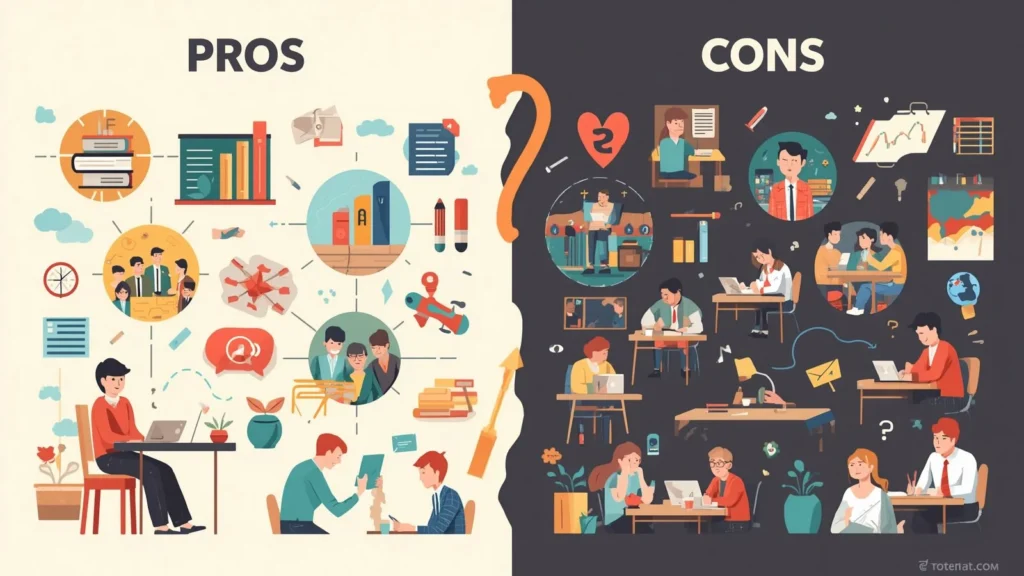
Like any marketplace, Teachers Pay Teachers has clear strengths and a few trade-offs worth knowing before diving in as a buyer or seller.
For Buyers
Pros:
- Saves significant time compared to creating resources from scratch
- Huge variety across nearly every subject, grade level, and teaching style
- Resources are created and tested by real teachers, not generic content mills
- Options range from free materials to premium, ready-to-use curricula
Cons:
- Quality can vary significantly from seller to seller
- Licensing terms can be confusing, especially for schools wanting to share resources across multiple classrooms
- It’s easy to overspend on impulse purchases when browsing a marketplace this large
For Sellers
Pros:
- Flexible, low-barrier way to earn extra income from materials already being created for your own classroom
- Creative outlet with the potential to build a genuine small business
- Access to built-in analytics and a large, ready-made audience of buyers
Cons:
- The market is increasingly saturated, making it harder for new sellers to stand out
- Success requires real time investment in strategy, SEO, design, and marketing not just uploading files
- Earnings are heavily top-heavy, meaning most sellers earn modest income while a small percentage account for the majority of total sales
- Membership fees and transaction fees can eat into profits, especially at the Basic tier
Frequently Asked Questions
Is Teachers Pay Teachers legit?
Yes. TPT is a well-established marketplace that’s been operating since 2006 and was acquired by IXL Learning in 2023. It has millions of active users and a long track record, though as with any marketplace, resource quality still varies by individual seller.
Can I use a TPT resource with my whole grade level or school?
Not automatically. Most purchases come with a single-classroom or single-user license. Sharing a resource school-wide or district-wide typically requires purchasing additional licenses or using a bulk/site license option if the seller offers one that always checks the specific product’s terms before sharing.
Do I need to be a certified teacher to sell on TPT?
No formal teaching credential is required to open a seller account, though many successful sellers are current or former educators who understand exactly what classroom resources teachers need.
How do I know if a seller’s material is high quality?
Check the seller’s overall store rating, read individual product reviews, and review the free preview before purchasing. Established sellers with consistent ratings and detailed previews are generally a safer bet.
How long does it take to start earning as a seller?
There’s no fixed timeline, but many sellers report needing six to twelve months of consistent, keyword-optimized listings before seeing steady traffic and sales. Building a real store rather than uploading a handful of products and stopping tends to be the biggest factor in long-term success.
Conclusion
Teachers Pay Teachers has grown from one teacher’s simple idea into one of the largest marketplaces in education, and its impact on how PreK-12 teachers plan, purchase, and share classroom resources is hard to overstate.
For buyers, it offers an enormous, constantly growing library of teacher-tested materials that can save countless hours of prep time as long as licensing terms and resource quality are considered before hitting “buy.”
For sellers, TPT represents a genuine opportunity, but not a guaranteed one. The platform rewards sellers who treat their store like an actual business: researching keywords, focusing on a clear niche, designing professional listings, and staying consistent over months rather than expecting overnight results.
While only a small percentage of sellers reach full-time income, thousands of teachers have successfully turned classroom-tested materials into meaningful side income or more.
Heading into 2026, trends like accessibility compliance, digital-plus-print flexibility, and intentional SEO strategy are reshaping what succeeds on the platform, making it more important than ever for sellers to stay informed and adaptable.