
Spark plugs may be small but they play a big role in how your engine runs and knowing how long it takes to replace them can help you decide whether to tackle the job yourself or book a shop appointment.
The honest answer is: it depends. A straightforward four-cylinder engine with easy access might take you 20 to 40 minutes from start to finish while a V6 or V8 with plugs buried deep under the intake manifold could eat up two hours or more even for someone who’s done it before.
The real timeline hinges on a handful of factors: how many cylinders your engine has, how accessible those plugs are, what kind of ignition system you’re working with and how comfortable you are with basic hand tools.
In this guide we’ll break down realistic time estimates for every engine type, walk through what actually happens during the job and share tips to help you get it done faster.
The Short Answer
If you just need a number to plan around here’s the quick version: most spark plug jobs take anywhere from 20 minutes to 3 hours depending almost entirely on your engine type and your experience level.
By cylinder count:
- 4-cylinder engines: 20–60 minutes
- 6-cylinder engines: 45 minutes–2.5 hours
- 8-cylinder engines: 1–3 hours
The wide ranges exist because two engines with the same cylinder count can have very different layouts. A 4-cylinder with plugs lined up on top of the engine is a fast simple job. A V6 with rear cylinders tucked under the intake manifold can take just as long as some V8s.
By skill level:
- First-timer: Add 30–60 minutes on top of the base estimate for research careful handling and double-checking each step.
- Experienced DIYer: Often finishes a simple 4-cylinder job in 15–20 minutes flat.
- Professional mechanic: Typically 20–45 minutes even on trickier engines thanks to shop tools and repetition.
Think of these numbers as a starting point rather than a guarantee. If your car has a straightforward inline engine and you’ve got the right tools laid out beforehand you’re likely on the faster end. If you’re working on a transverse-mounted V6 in a cramped engine bay or you’re doing this for the very first time, budget extra rushing a spark plug job is how stripped threads and misfires happen.
What a Spark Plug Job Actually Involves
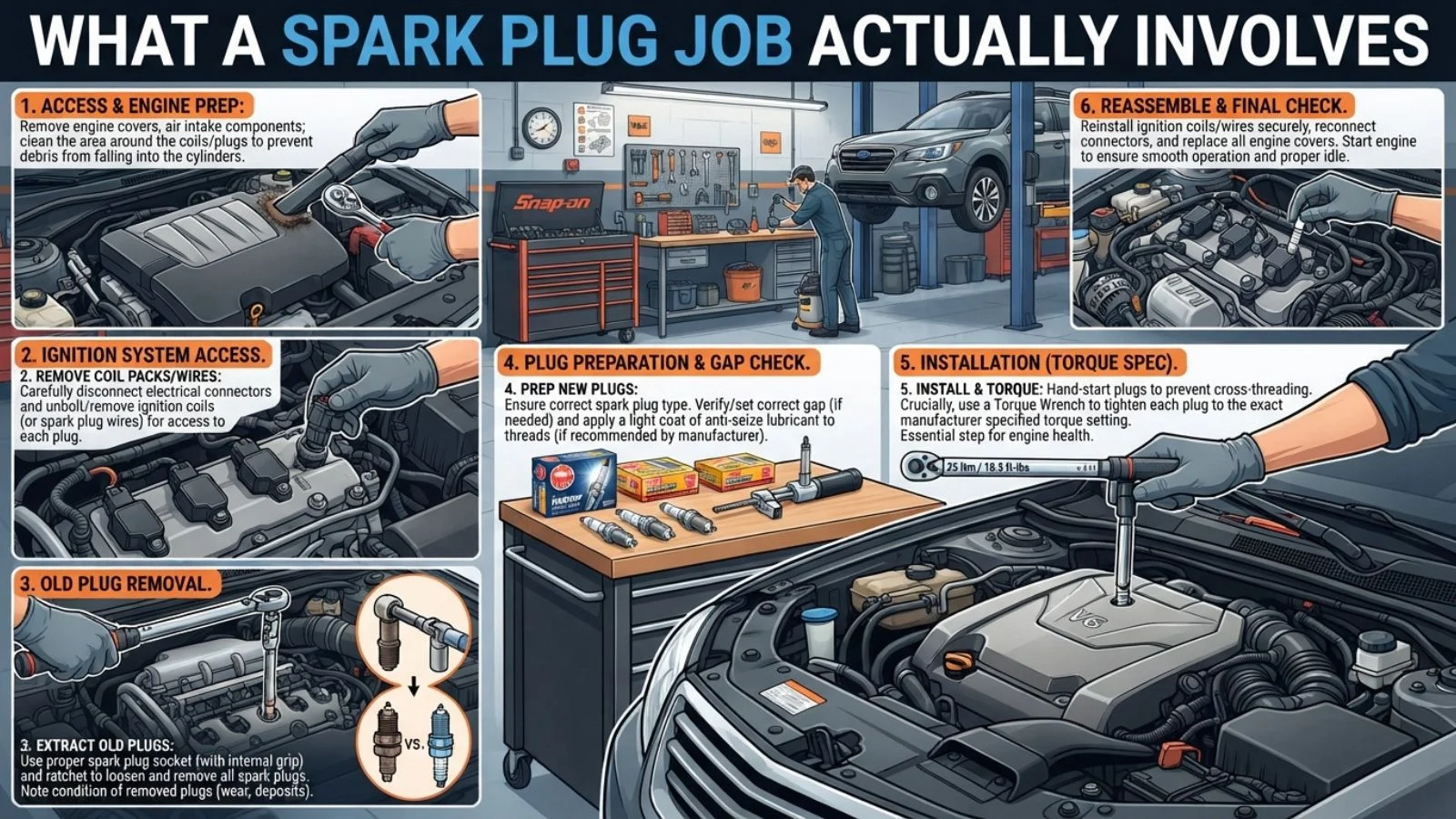
Before diving into time estimates by engine type it helps to understand what the job actually entails. Breaking it into steps makes it easier to see where the minutes go and where delays tend to creep in.
1. Prep and safety. Let the engine cool completely (10–30 minutes if you just drove) then disconnect the battery if your ignition system requires it. Gather your tools so you’re not hunting mid-job.
2. Access the plug. Remove any engine covers air intake components or wiring harnesses blocking the way. On easy engines this takes seconds; on buried V6/V8 rear cylinders it can take 20–30 minutes alone.
3. Remove the ignition coil or wire. Coil-on-plug systems need each coil unbolted and unplugged individually before the plug is exposed.
4. Remove the old plug. Using a spark plug socket back it out carefully to avoid dropping debris into the cylinder.
5. Inspect the old plug. A quick look at the electrode and deposits can reveal engine issues worth noting.
6. Gap and install the new plug. Check the gap against manufacturer specs, thread it in by hand to avoid cross-threading then torque to spec.
7. Reassemble. Reconnect the coil or wire, replace covers and reconnect the battery if disconnected.
Key Factors That Affect Time
Several variables stack together to determine whether your spark plug job takes 20 minutes or three hours.
Number of cylinders. The most obvious factor for each additional plug means repeating the removal-and-install sequence adding roughly 5–15 minutes per cylinder depending on access.
Engine layout and accessibility. Inline engines typically have plugs lined up on top in plain view. V6 and V8 engines split cylinders across two banks and the rear bank is often hidden under the intake manifold firewall or wiring sometimes requiring partial disassembly just to reach the plugs.
Ignition system type. Coil-on-plug systems (common in modern cars) add a step per cylinder since each coil must be unbolted and unplugged. Older distributor or spark-plug-wire systems can sometimes be quicker though wires must be labeled to avoid mixing up the firing order.
Plug condition. Plugs that haven’t been changed in years can seize in the cylinder head requiring penetrating oil and extra care to avoid stripping threads turning a 5-minute step into a 30-minute one.
Additional disassembly needs. Some engines require removing the intake manifold wiper cowl or other components just to reach certain plugs which can add an hour or more by itself.
Tools and experience. Having the correct socket extensions and a torque wrench on hand and knowing how to use them shaves significant time off every step compared to improvising or looking things up mid-job.
Time Estimates by Engine Type
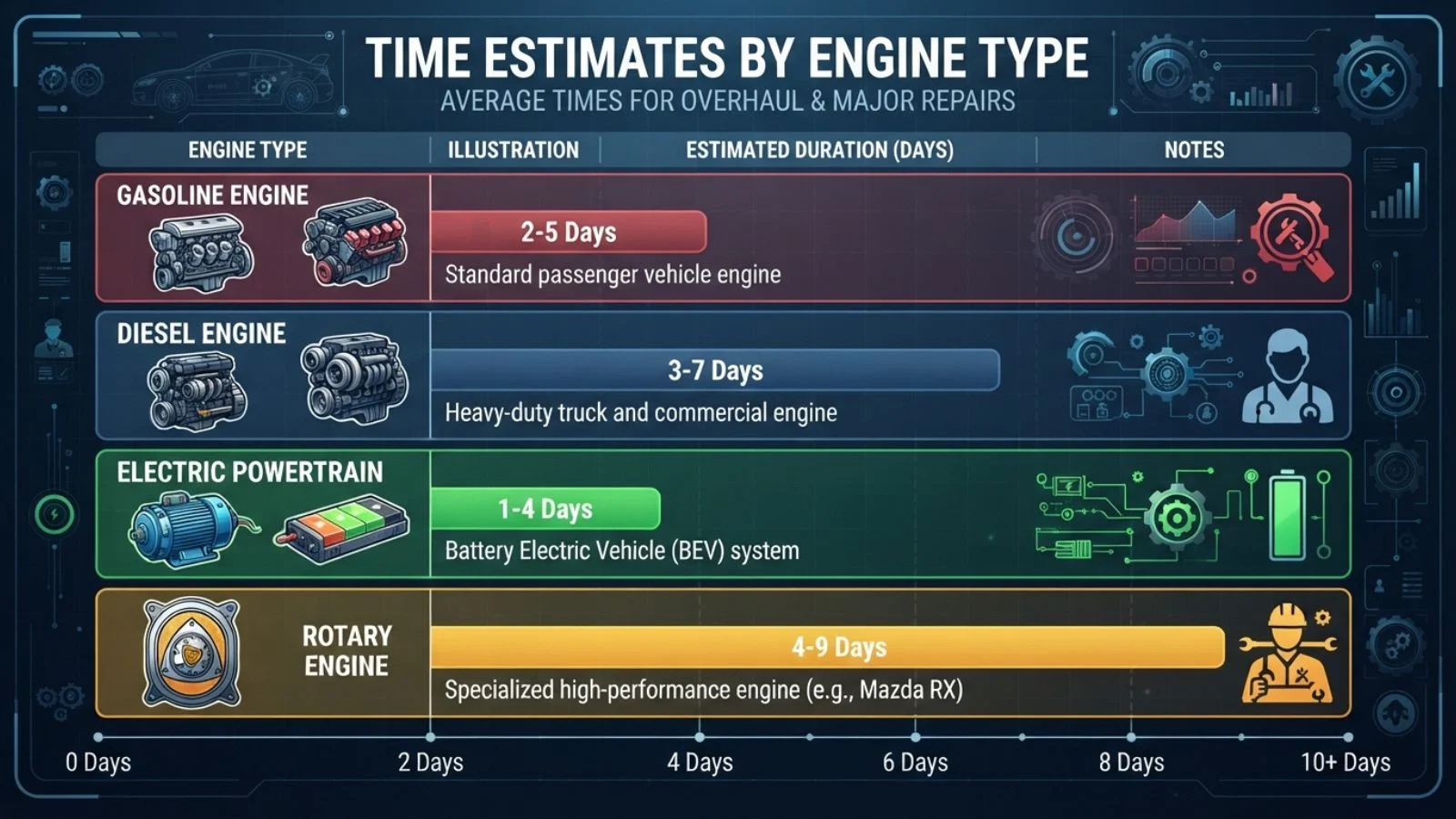
Inline 4-cylinder. The easiest and fastest configuration in most cases. Plugs sit in a single row on top of the engine usually with straightforward access. Expect 20–40 minutes for a standard job or up to 60 minutes in tighter engine bays common on some compact cars.
Inline 6-cylinder. Similar layout to the 4-cylinder but with two extra plugs to work through. Budget 35–55 minutes on engines with good access.
V6 engines. This is where things get variable. The front bank is often easy to reach, taking 20–30 minutes on its own. The rear bank however frequently sits close to the firewall or under intake components which can push total time to 1.5–2.5 hours on the more difficult layouts particularly on transverse-mounted V6s in front-wheel-drive vehicles.
V8 engines. Time varies by vehicle. Trucks and rear-wheel-drive cars with V8s often have decent access on both banks keeping the job to 1 — 1.5 hours. Transverse V8s or those in tight engine bays can stretch to 2–3 hours especially if intake components need removal.
Turbocharged and tight-bay engines. Turbo plumbing intercooler piping and additional wiring can add 20–40 minutes regardless of cylinder count since these components often sit directly above or beside the plugs.
Motorcycles and small engines. Typically much faster, often 10–20 minutes total thanks to minimal plug count and open access, though some fully-faired motorcycles require bodywork removal first.
DIY vs. Professional Shop Time
Shops often quote spark plug replacement as a flat “labor time” based on standardized guides but that number doesn’t always match the actual wrench time involved.
Typical shop turnaround. Most shops estimate 0.5 to 1.5 hours of labor for a straightforward 4- or 6-cylinder job and up to 2–3 hours for a difficult V6 or V8. However your car may sit in the shop queue for much longer than the actual labor time, often a half-day or more when you factor in scheduling check-in and multi-point inspections some shops bundle in.
Billed labor vs. real time. Mechanics are often faster than the “book time” listed in repair labor guides since those guides are padded in a safety margin. A job billed at 1.5 hours might genuinely take an experienced tech closer to 45–60 minutes.
When a shop saves more than it costs. If your engine requires intake manifold removal, has notoriously buried rear plugs or you don’t already own the right tools, paying a shop can be the more time-efficient choice especially if a mistake (like a stripped thread or a broken plug) would cost you far more time and money to fix than the service itself.
When DIY makes sense. If your engine has easy access and you already have basic tools, doing it yourself is often faster than scheduling and waiting for a shop appointment plus you’ll save on labor costs.
Tools Needed and How They Affect Speed

Having the right tools on hand before you start is one of the biggest time-savers in a spark plug job. Missing even one item can mean a mid-job trip to the auto parts store easily adding 30–60 minutes.
Essential tools:
- Spark plug socket (with a rubber insert to grip the plug securely)
- Ratchet and extensions to reach recessed plugs
- Torque wrench to avoid over- or under-tightening
- Spark plug gap tool to set the electrode gap correctly
- Dielectric grease for coil boots or wire ends
- Anti-seize compound (check manufacturer recommendations as some plugs come pre-coated)
Nice-to-have tools that cut time:
- Swivel or U-joint extensions for angled access in tight engine bays
- Magnetic pickup tool for retrieving dropped plugs or hardware
- Spark plug boot puller to remove stuck coil boots without damaging wires
- Telescoping mirror or inspection camera for checking hard-to-see threads and connections
- Compressed air or a small brush to clear debris from around the plug well before removal preventing dirt from falling into the cylinder
Impact of missing tools. Without a proper spark plug socket removal can take three times as long and risks cracking the porcelain insulator. Skipping the torque wrench often leads to comebacks from over-tightened (cracked) or under-tightened (leaking) plugs turning a one-time job into two.
Common Time-Adding Complications
Even a well-planned spark plug job can run long when something doesn’t go as expected. Here are the complications that most often blow past the estimated time.
Stuck or seized plugs. Plugs that haven’t been changed in years, especially in aluminum cylinder heads, can seize due to corrosion. Forcing a stuck plug risks stripping the threads so the safer approach is penetrating oil and patience which can add 15–30 minutes per stubborn plug.
Stripped spark plug threads. If a plug is cross-threaded or forced it can strip the threads in the cylinder head. Fixing this typically requires a thread repair kit (like a Heli-Coil) adding an hour or more and in severe cases may require removing the head entirely.
A broken or snapped plug. On rare occasions an old or brittle plug can snap during removal leaving part of it lodged in the cylinder head. Extracting a broken plug is one of the most time-consuming complications possible, sometimes requiring specialty extraction tools or a trip to a shop easily adding hours.
Coil boot stuck to the plug. Rubber coil boots can bond to the plug ceramic over time from heat cycling. Removing a stuck boot without the right tool can take several extra minutes per cylinder and risks damaging the boot or wire.
Incorrect gap causing misfires. Installing a plug with the wrong gap can cause a rough-running engine leading to a comeback repair effectively doubling the time investment across two separate sessions.
Step-by-Step Time-Saving Tips
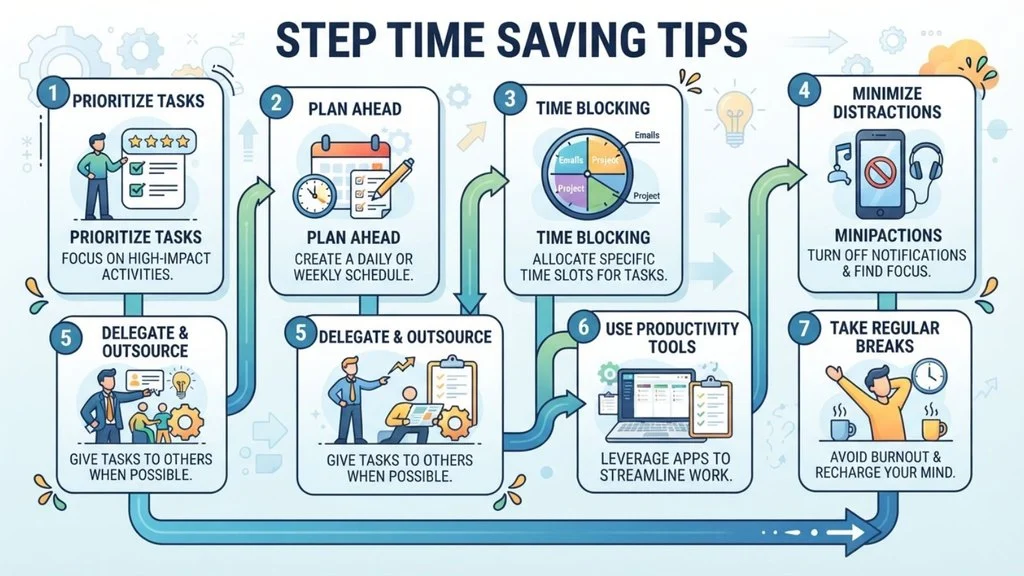
A little preparation goes a long way toward keeping your spark plug job on the fast end of the time range. These tips address the most common sources of delay.
Research your specific engine first. Before you touch a wrench look up your exact make model and year to confirm plug type gap specification torque value and whether your engine has any known access difficulties. Five minutes of research can save 30 minutes of guesswork.
Buy the correct plugs in advance. Match the OEM-recommended type copper platinum or iridium and double-check the part number. A wrong plug means a return trip and a wasted afternoon.
Pre-gap your plugs before installation. Many new plugs ship pre-gapped but it’s worth verifying with a gap tool beforehand rather than discovering an issue mid-install.
Work one cylinder at a time. Remove inspect gap install and torque a single plug before moving to the next. This prevents mixing up coils or wires and keeps the firing order intact.
Label wires or coils if needed. On older distributor-style systems label each wire before disconnecting it to avoid firing-order confusion during reassembly.
Use a torque wrench correctly. Tightening to the exact spec avoids two of the most common comeback issues: cracked plugs from over-tightening and leaks or misfires from under-tightening.
Keep your workspace organized. A magnetic tray for small hardware and a clean well-lit area reduce fumbling and dropped parts and small delays that add up across multiple cylinders.
How Often Spark Plugs Need Changing
Understanding replacement intervals helps put the time investment in context. Spark plugs aren’t a job you’ll be repeating often which makes doing it right the first time even more worthwhile.
Copper spark plugs. The most affordable option but also the shortest-lived typically needing replacement every 20000–30000 miles. They’re common in older vehicles or as budget replacements and while individual plugs are cheap the shorter interval means more frequent jobs over the life of the car.
Platinum spark plugs. A step up in durability platinum plugs generally last 60000–90000 miles. Many factory-installed plugs in vehicles from the 2000s onward use this material as a balance between cost and longevity.
Iridium spark plugs. The longest-lasting option is often rated for 80000–120000 miles or more. Iridium’s hardness and higher melting point allow for a finer electrode tip which improves ignition efficiency and extends service life significantly. Many modern vehicles ship with iridium plugs from the factory.
Why the interval matters for timing. Vehicles with iridium plugs may go a decade or more between spark plug jobs meaning by the time replacement is due other components nearby vacuum lines wiring or intake gaskets may also show wear potentially extending the job.
Checking your owner’s manual. Manufacturer-specified intervals can vary from these general guidelines so always confirm the recommended mileage for your specific vehicle before assuming it’s time for a change.
Signs You’re Overdue

Waiting past the recommended interval doesn’t just risk engine performance issues, it can also make the eventual job take longer since worn plugs are more likely to seize or foul the threads on removal.
Rough idle. Worn spark plugs struggle to maintain a consistent spark causing the engine to shake or run unevenly at idle. This is often one of the earliest noticeable symptoms.
Engine misfires. A misfire happens when a cylinder fails to fire properly due to a weak or fouled plug. You may feel a jerk or stumble during acceleration and the check engine light often illuminates with a misfire code.
Poor fuel economy. Worn plugs create a weaker less efficient spark forcing the engine to work harder and burn more fuel to maintain performance, sometimes reducing mileage by 10–20%.
Hard starts. If your engine cranks longer than usual before starting, especially in cold weather, degraded spark plugs may be struggling to ignite the air-fuel mixture consistently.
Lack of acceleration or power. A noticeable delay or sluggishness when pressing the gas pedal can indicate the spark plugs are no longer delivering a strong consistent spark under load.
Why waiting adds time later. The longer plugs stay in place the more likely they are to corrode or seize into the cylinder head especially in aluminum engines. What could have been a straightforward 30-minute swap can turn into an hour-plus ordeal involving penetrating oil, extra torque and a higher risk of stripped threads.
FAQs
Can I change spark plugs myself with no experience?
Yes in most cases. If your engine has an accessible layout like a standard 4-cylinder it’s one of the more beginner-friendly maintenance tasks. Just budget extra time for research and careful methodical work and don’t skip the torque wrench.
Do all cylinders take the same amount of time?
Not always. On inline engines cylinders are usually equally accessible so time per plug stays consistent. On V6 and V8 engines however the front bank is often much faster than the rear bank which may be tucked under the intake manifold or close to the firewall.
Why do some cars take way longer than others even with the same engine size?
Engine layout and placement in the vehicle matter more than cylinder count alone. A transverse-mounted V6 in a compact engine bay can take twice as long as a longitudinally-mounted V6 in a truck simply due to how much room there is to work.
Is it worth paying a shop instead of doing it myself?
It depends on your engine’s difficulty and your tool collection. For easy accessible engines DIY often saves both time and money. For engines requiring intake manifold removal or other extensive disassembly a shop’s specialized tools and experience may finish the job faster and with less risk of costly mistakes like stripped threads.
How do I know which spark plug type my car needs?
Check your owner’s manual or look up your VIN using the wrong plug type can affect performance and engine longevity.
Conclusion
So how long does it actually take to change spark plugs? For most drivers the honest range is 20 minutes to 3 hours and the deciding factors come down to three things.
How many cylinders your engine has, how accessible those cylinders are and how comfortable you are with the process.
If you’re working on a simple inline 4-cylinder with good access and the right tools laid out beforehand you can realistically finish in under an hour even as a first-timer.
If you’re tackling a V6 or V8 with plugs buried under the intake manifold budget closer to 2–3 hours and don’t be surprised if it takes longer than expected the first time through.