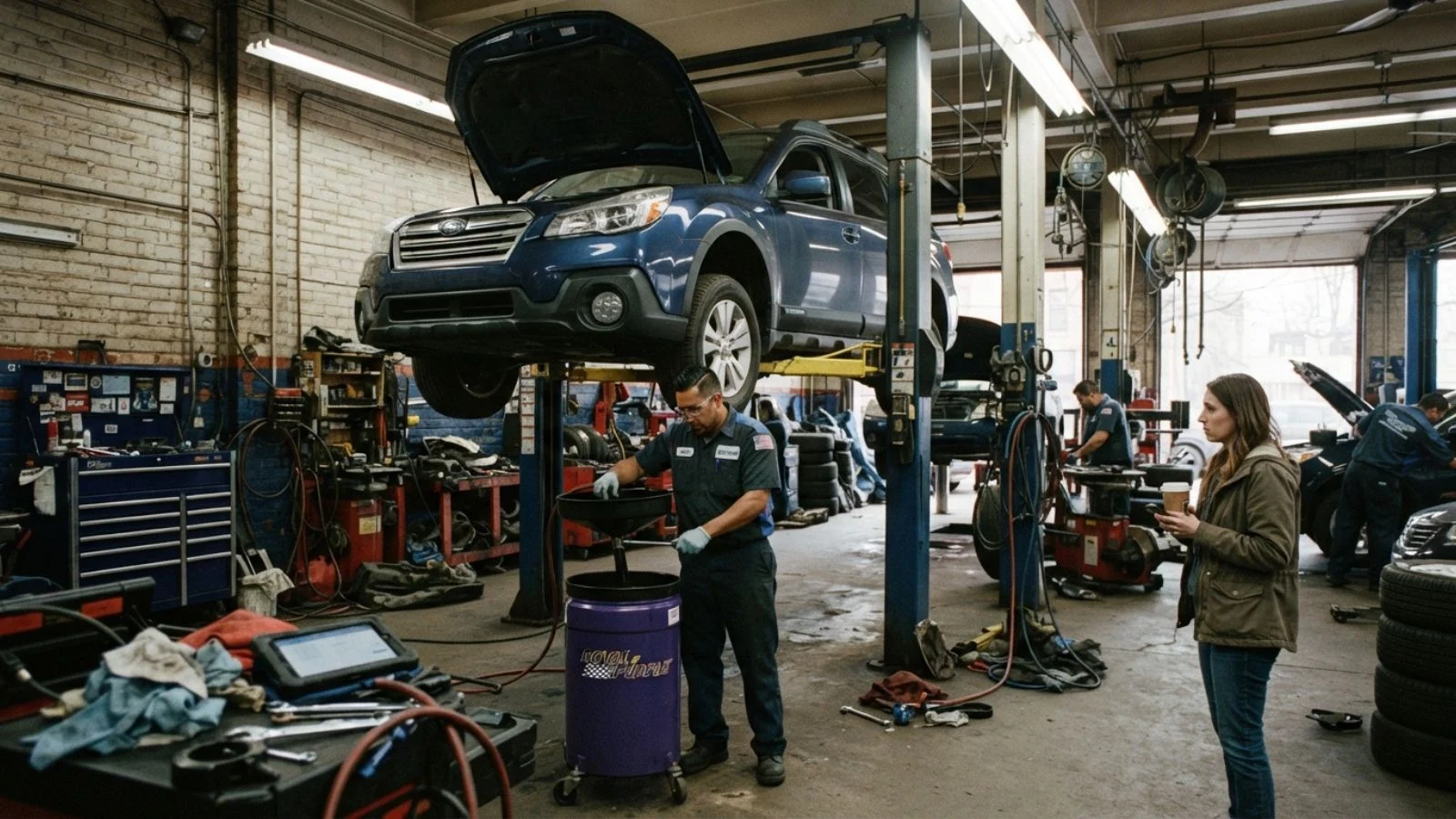
Few car maintenance tasks feel as routine as an oil change, yet the actual time it takes can vary more than most drivers expect.
Some oil changes wrap up in under 20 minutes, while others stretch past an hour, and the difference often comes down to where you go, what type of oil your vehicle needs, and how busy the shop is that day.
If you’re squeezing an oil change into a lunch break, planning a Saturday morning errand run, or considering doing it yourself in the driveway, knowing what to expect can help you plan your day more accurately.
In this guide, we’ll break down average oil change times across different service types and locations, walk through each step of the process, and share practical tips for minimizing your wait. By the end, you’ll know exactly how long to budget and how to speed things up when time is tight.
Average Time by Service Type
The type of oil your vehicle uses plays a significant role in how long the service takes, since different oils have different viscosities and draining properties.
Conventional Oil Change
This is typically the fastest option, usually taking between 20 and 30 minutes. Conventional oil flows and drains more predictably, and the process itself is straightforward with minimal complications.
Synthetic Blend Oil Change
A step up from conventional, synthetic blend changes generally take about 25 to 35 minutes. The slight increase in time comes from the oil’s different composition, though the process remains largely similar to a conventional change.
Full Synthetic Oil Change
Full synthetic oil changes often take 30 to 45 minutes. While the draining and refilling process isn’t dramatically different, full synthetic services frequently include more thorough filter replacements and inspections, since vehicles requiring full synthetic oil tend to be newer or higher-performance models.
Diesel Oil Change
Diesel engines typically require more oil volume and often have larger, harder-to-access filters, pushing service time to 45 minutes or more. Some diesel trucks also require additional fluid checks specific to their engine systems.
Keep in mind these are baseline estimates for the oil change itself; they don’t account for additional wait time if the shop is busy, or extra minutes added for optional inspections and add-on services, which we’ll cover later in this guide.
Where You Get It Done Affects the Time

Beyond oil type, the location you choose has just as much impact on how long you’ll be waiting.
Quick-Lube Chains
Shops built specifically for fast oil changes are usually your quickest option, often finishing in 15 to 25 minutes. These locations are designed for high volume and typically don’t require appointments you drive in, and technicians work efficiently since oil changes are their primary service.
Dealership Service Centers
Dealerships tend to take longer, often 45 minutes to an hour, even for a routine oil change. This is partly because dealership technicians frequently perform a multi-point inspection alongside the oil change, and partly because dealerships often handle multiple vehicles simultaneously, meaning yours may sit for a bit before being serviced.
Independent Mechanic Shops
Local, independent shops fall somewhere in the middle, usually 30 to 45 minutes. Timing can vary widely depending on the shop’s size, staffing, and whether they accept walk-ins or require scheduled appointments. Smaller shops may also be juggling other repair jobs alongside oil changes.
DIY at Home
Changing your own oil gives you full control over timing, but it’s rarely the fastest option for beginners. Between gathering tools, positioning the vehicle, and draining and refilling oil, DIY changes often take 45 minutes to an hour for a first-timer, though experienced DIYers can finish in 20 to 30 minutes.
Step-by-Step Breakdown of the Process (and Time Per Step)
Understanding what actually happens during an oil change helps explain where the minutes go.
Check-In / Paperwork (2–5 minutes)
This includes confirming your vehicle details, oil preference, and any additional services you’d like added, such as a tire rotation.
Vehicle Lift and Drain Old Oil (5–10 minutes)
The technician raises the vehicle, locates the drain plug, and lets the old oil fully drain into a collection pan. This step can’t be rushed, since incomplete draining leaves contaminated oil behind.
Replace Oil Filter (3–5 minutes)
The old filter is removed and replaced with a new one. Time here depends heavily on the filter’s location; some are easy to access, while others are tucked behind engine components.
Refill With New Oil (5 minutes)
Once the drain plug is reinstalled, the technician adds the correct amount and type of new oil, checking the dipstick to confirm proper levels.
Fluid Top-Offs and Multi-Point Inspection (5–15 minutes, if included)
Many shops check coolant, brake fluid, washer fluid, and tire pressure at this stage. This step varies most in length depending on the shop’s standard procedure.
Checkout / Payment (3–5 minutes)
Finally, you’ll review the service summary, pay, and receive documentation for your records.
Factors That Can Speed Up or Slow Down an Oil Change
Even at the same shop, oil change times can vary from visit to visit. Here’s what typically makes the difference.
Vehicle Type
Smaller sedans generally have easier engine access, making for quicker service. Trucks and SUVs often hold more oil and may have filters positioned in less accessible spots, adding extra minutes.
Filter Accessibility and Engine Layout
Some vehicles have oil filters that are simple to reach from underneath, while others require removing panels or working around other engine components. This single factor can add 5 to 10 minutes on its own.
Shop Busyness, Time of Day, and Day of Week
Weekends and lunch hours tend to be the busiest times at most shops, leading to longer wait times even if the service itself is quick. Early mornings on weekdays are typically the fastest.
Add-On Services Requested
Tire rotations, wiper blade replacements, air filter swaps, and similar extras all add time on top of the base oil change, sometimes doubling your total visit length.
Appointment vs. Walk-In
Scheduling ahead usually means your vehicle is serviced right away, while walk-ins may need to wait for a bay to open up, especially during peak hours.
DIY Oil Change: How Long It Really Takes
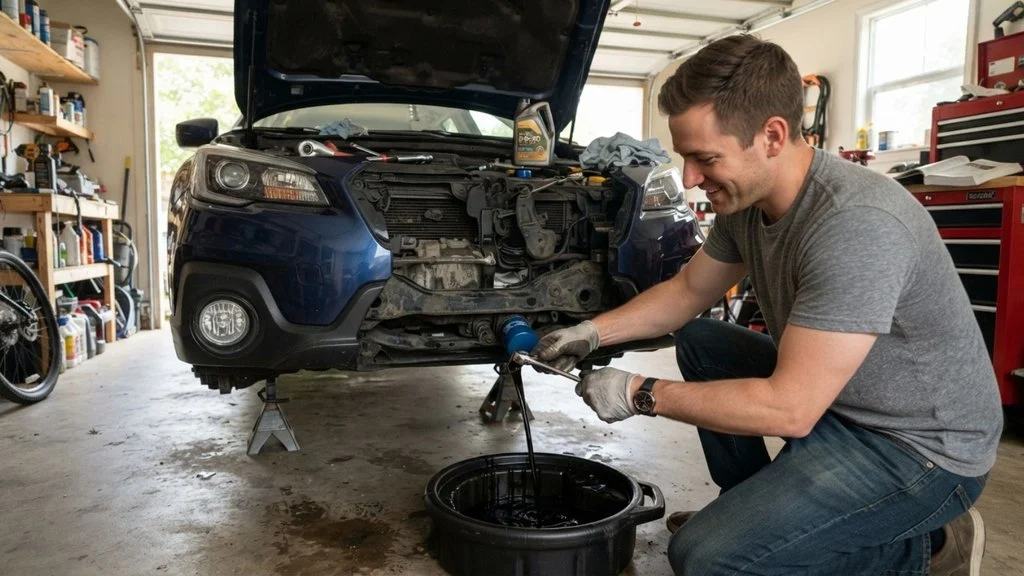
Changing your own oil offers control and cost savings, but the time investment depends heavily on experience.
Time for a Beginner vs. an Experienced DIYer
First-timers should budget 45 minutes to an hour, factoring in time spent reading instructions, locating the drain plug and filter, and double-checking each step. Experienced DIYers who’ve done this before can often complete the entire process in 20 to 30 minutes, since they already know their vehicle’s specific setup.
Tools and Setup Time vs. Actual Oil-Change Time
A significant chunk of DIY time isn’t the oil change itself, it’s preparation. Gathering tools (wrench, oil filter tool, drain pan, jack and jack stands), positioning the vehicle safely, and setting up a workspace can easily take 10 to 15 minutes before you even start draining oil. Cleanup and proper disposal of old oil add another 10 minutes or so afterward.
Pros and Cons of DIY Timing vs. Shop Timing
While a shop visit might take less total time for beginners, DIY has the advantage of working around your own schedule, not driving to a location or waiting for a bay to open. However, unexpected issues, like a stuck drain plug or difficulty accessing the filter, can turn a quick job into a much longer one. Over time, as your process becomes routine, DIY oil changes often become just as fast as a shop visit, if not faster.
How to Minimize Your Wait Time
If speed is your top priority, a few simple strategies can significantly cut down your total time at the shop.
Booking Appointments in Advance
Scheduling ahead is one of the most effective ways to reduce wait time. It guarantees a service bay is ready for you rather than leaving you competing with walk-in customers for availability.
Best Times of Day and Week to Go
Early weekday mornings, right when a shop opens, tend to be the least busy. Avoid lunch hours, Friday afternoons, and weekends if possible, since these are typically peak times when wait lists grow longest.
Using Online Check-In or Scheduling Apps
Many quick-lube chains and dealerships now offer online check-in tools that let you reserve a spot or add your vehicle to a virtual queue before you arrive. This can shave significant time off your total visit by reducing in-person wait.
Choosing Quick-Lube vs. Dealership Based on Urgency
If you need the fastest possible service, quick-lube chains are generally your best bet since oil changes are their core business. Save dealership visits for times when you also want a more thorough inspection or need dealership-specific service records, even if it means a longer wait.
What Happens During “Extra” Time (Inspections, Upsells)
If your oil change is taking longer than the baseline estimates suggest, it’s often due to what happens alongside the actual service.
Why Some Visits Take Longer Than Expected
Many shops use the oil change as an opportunity to perform a broader vehicle check, since your car is already lifted and accessible. While this can be genuinely useful for catching issues early, it also adds time you may not have planned for, sometimes 10 to 20 extra minutes.
Common Upsells That Add Time
Technicians frequently point out additional services during this inspection window, including:
- Air filter replacement
- Cabin air filter replacement
- Wiper blade replacement
- Fluid top-offs (brake, coolant, power steering)
- Tire rotation or pressure adjustments
Each of these, if you agree to add them, extends your total visit, sometimes significantly if the shop needs to source a part or fluid they don’t have prepped.
How to Opt Out If You’re in a Hurry
If time is tight, it’s completely reasonable to let the front desk know upfront that you only want the oil change and nothing else. Most shops will respect this and skip the inspection walkthrough or upsell conversation entirely. Being clear about your time constraints when you check in, rather than after the inspection has already started, is the most effective way to keep your visit short.
Signs You Shouldn’t Rush the Process

While minimizing wait time is a reasonable goal, there are certain parts of an oil change that shouldn’t be sped through, even if it means a slightly longer visit.
Importance of Proper Draining and Torque on the Drain Plug
Old oil needs adequate time to fully drain from the engine. If a technician rushes this step, residual old oil can mix with the new oil, reducing its effectiveness. Similarly, the drain plug must be tightened to the correct torque specification too loose to risk leaks, while overtightening can strip the threads or damage the oil pan, leading to costly repairs down the line.
Why “Fast” Isn’t Always “Best”
A shop that consistently completes oil changes in under 10 minutes may be cutting corners, whether that’s skipping a thorough drain, using a lower-quality filter, or skipping fluid level checks entirely. It’s worth being cautious of any service that seems unusually rushed compared to the averages outlined earlier in this guide.
What to Watch For
If you’re waiting in the lobby, it’s reasonable to ask how long the service typically takes and to expect at least the baseline minutes discussed in this guide. If you notice oil leaks, a burning oil smell, or a dashboard warning light shortly after a suspiciously fast oil change, it’s worth having the work double-checked, since these can be signs the job wasn’t done properly.
FAQ Section
How long does a synthetic oil change take?
A full synthetic oil change typically takes 30 to 45 minutes, slightly longer than a conventional oil change. The extra time usually comes from more thorough filter replacement and inspection steps commonly paired with synthetic services, rather than the oil itself taking longer to drain or fill.
Can I wait at the shop, or should I drop off my car?
Most quick-lube chains and many independent shops are designed for waiting, with the process usually finishing in under 45 minutes. Dealerships, especially if you’re getting a multi-point inspection, may take closer to an hour, so dropping off your vehicle and returning later can be more convenient if your schedule allows it.
Do I need an appointment?
It depends on the shop. Quick-lube chains typically accept walk-ins without issue, while dealerships and some independent shops often recommend or require appointments to guarantee a service bay. Booking ahead, when possible, is almost always the faster route.
How long does a dealership oil change take vs. a quick-lube?
Dealerships generally take longer, often 45 minutes to an hour, due to standard multi-point inspections and higher vehicle volume. Quick-lube chains, built specifically for speed, usually finish in 15 to 25 minutes since oil changes are their primary focus rather than one of many services offered.
Conclusion
So, how long does it take to get an oil change? On average, expect anywhere from 15 minutes to an hour, depending largely on where you go, what type of oil your vehicle uses, and how busy the shop is that day.
Quick-lube chains remain the fastest option for a no-frills oil change, while dealerships and independent shops often take longer due to added inspections and higher service volume. DIY oil changes offer the most schedule flexibility, though beginners should budget extra time for setup and cleanup.
If minimizing your wait is the priority, the most effective steps are booking an appointment in advance, choosing early weekday mornings, and being upfront about wanting just the oil change without additional inspections or upsells.
That said, it’s worth resisting the urge to prioritize speed above all else; a properly drained, correctly filled, and properly torqued oil change protects your engine far more than shaving off a few extra minutes ever could.