There’s nothing worse than pulling a tray of fries out of the air fryer only to find them pale, limp, or burnt on one side.
The good news? Getting perfectly crispy, golden fries at home isn’t about luck, it’s about knowing the right time and temperature for whatever fries you’re working with.
Air frying has become the go-to method for home cooks who want that deep-fried crunch without the mess, the extra oil, or the wait for a pot of oil to heat up.
But here’s the catch: there’s no single “correct” cook time. Frozen shoestring fries cook differently than thick-cut steak fries. Fresh-cut potatoes behave differently than store-bought bags.
Even your specific air fryer model can shift the timing by several minutes this guide breaks down exactly how long to air fry every type of fry, plus the tricks that make the difference between soggy and flatteringly crisp.
How Long to Air Fry Fries
Quick Answer:
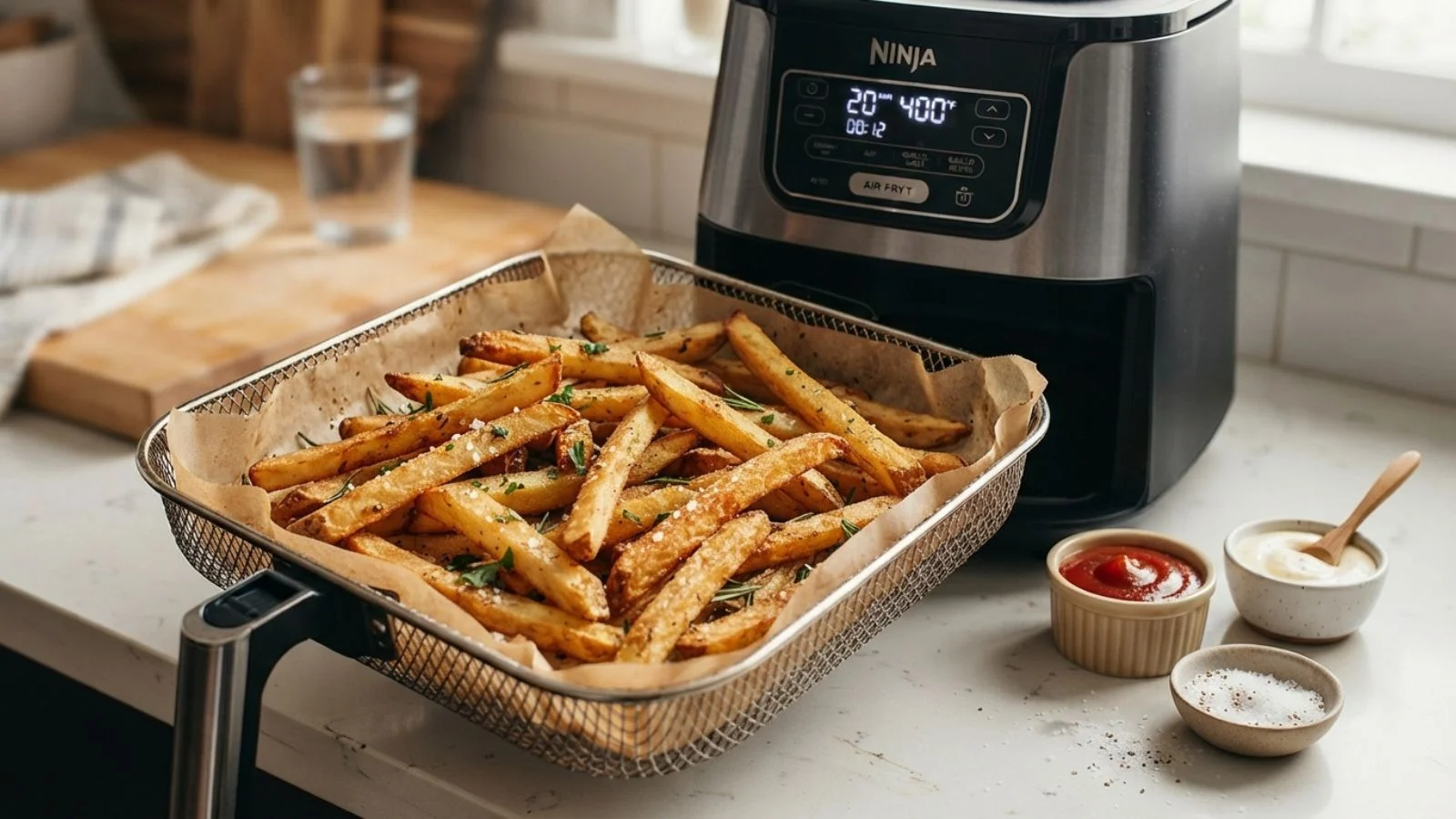
If you’re in a hurry, here’s the short version. Most fries cook somewhere between 12 and 20 minutes at 375–400°F, depending on if they’re frozen or fresh-cut, and how thick they are.
Frozen fries are par-cooked at the factory, so they need less time, typically 12–18 minutes at 400°F, with a basket shake around the halfway mark. Thinner cuts like shoestring fries land on the shorter end; thicker cuts like steak fries or waffle fries need closer to 18 minutes.
Fresh-cut fries take a bit longer since they’re raw all the way through. Plan on 18–25 minutes at 380°F, shaking the basket every 7–8 minutes for even cooking. Thicker wedges or steak-cut fries can push past 25 minutes.
As a general rule of thumb:
- Thin/shoestring fries: 10–14 minutes
- Regular crinkle or straight-cut: 14–18 minutes
- Steak fries or wedges: 18–24 minutes
- Sweet potato fries: 12–16 minutes (watch closely they burn faster due to natural sugars)
These numbers are a solid starting point, but your results will vary based on your air fryer’s wattage, how full the basket is, and whether the fries are fresh from the freezer or slightly thawed. Keep reading for exact times broken down by fry type, plus the small tweaks that make a big difference in texture.
The Core Variables That Determine Cook Time
Before you set a timer, it helps to understand why fry cook times vary so much. Several factors are at play, and once you know them, you can adjust confidently instead of guessing.
Fresh-cut vs. frozen is the biggest factor. Frozen fries are par-fried or par-baked before packaging, so they only need to finish cooking and crisp up. Fresh-cut fries start raw, so they take longer to cook through.
Potato type matters too. Starchy potatoes like russets crisp up beautifully, while waxy potatoes hold more moisture and can take slightly longer. Sweet potatoes contain natural sugars that caramelize fast, so they burn more easily at high heat.
Cut thickness and shape directly affect airflow and cook time. Thin shoestring fries cook quickly since there’s less potato to heat through, while thick steak fries or wedges need more time for the center to soften.
Air fryer type and wattage can shift timing by several minutes. Basket-style air fryers tend to circulate air more aggressively than oven-style or toaster-oven air fry settings, so the same recipe can cook faster in one machine than another.
Batch size is often overlooked. Overcrowding the basket blocks airflow, leading to steaming instead of crisping which means longer cook times and softer results.
Finally, starting temperature plays a role: fries cooked straight from the freezer take longer than those that have slightly thawed on the counter.
Detailed Time & Temp Charts by Fry Type
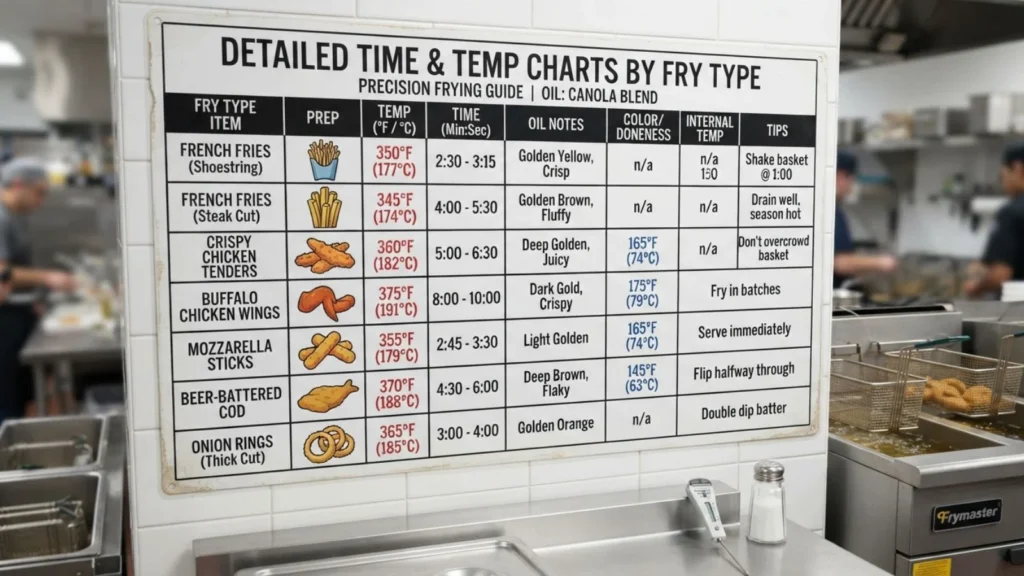
Use this breakdown to find your exact fry type and skip the guesswork.
Frozen shoestring/thin-cut fries: 400°F for 10–14 minutes. Shake the basket at the 6-minute mark. These cook fast, so check early to avoid burning the thin edges.
Frozen crinkle-cut fries: 400°F for 14–16 minutes. Shake halfway through. The ridges help crisp evenly, but they can still stick together if overcrowded.
Frozen steak fries: 400°F for 18–20 minutes. Shake every 6–7 minutes. The thicker cut means the inside needs more time to soften.
Frozen waffle fries: 400°F for 12–15 minutes. Shake once halfway. Their crosshatch shape crisps quickly, so watch closely toward the end.
Frozen curly fries: 400°F for 12–15 minutes. Shake at the halfway point. The ridged surface browns fast.
Frozen sweet potato fries: 380°F for 12–16 minutes. Shake every 5 minutes. Lower heat prevents the natural sugars from scorching before the inside cooks.
Fresh-cut russet fries: 380°F for 20–25 minutes. Shake every 7–8 minutes. Soaking and drying the cut potatoes beforehand improves crispness.
Fresh-cut sweet potato fries: 375°F for 15–18 minutes. Shake every 5–6 minutes to prevent burning.
Homemade wedges (skin-on): 380°F for 22–26 minutes. Shake every 8 minutes; the thicker cut needs the longest total time.
Double-fried method: Cook once at 350°F for 10 minutes, rest 5 minutes, then finish at 400°F for 8–10 minutes for maximum crispiness.
Step-by-Step Method (Universal Process)
No matter which fry type you’re making, this basic process applies across the board.
1. Prep for consistency. Cut fresh potatoes into uniform sizes so they cook evenly mismatched thickness means some fries finish before others. If using fresh-cut potatoes, soak them in cold water for 20–30 minutes to remove excess starch, then pat completely dry before cooking.
2. Apply oil correctly. Frozen fries usually need little to no extra oil since they’re pre-coated. For fresh-cut fries, toss with 1–2 teaspoons of oil per batch just enough to help browning without making them greasy. A light spray works better than pouring, since it coats evenly.
3. Preheat if your model allows it. Preheating for 3–5 minutes helps fries start crisping immediately instead of steaming in a cool basket, especially for fresh-cut varieties.
4. Load the basket in a single layer. Avoid stacking or overlapping fries crowding blocks airflow and leads to soggy, unevenly cooked results. Cook in batches if needed.
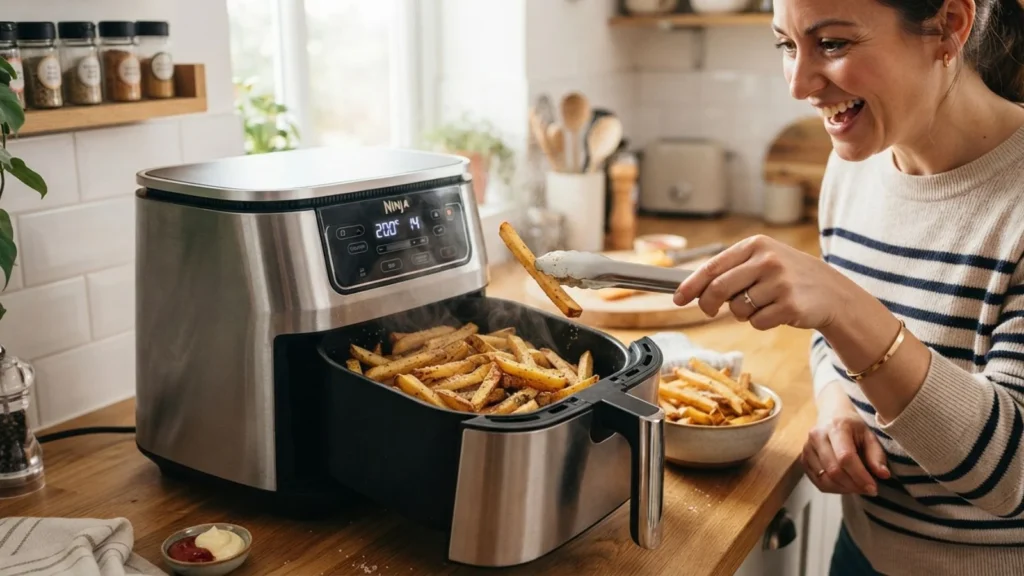
5. Shake or flip on schedule. Shake the basket at the intervals noted for your fry type (roughly every 5–8 minutes) to promote even browning on all sides.
6. Check for doneness visually. Look for golden-brown color and a firm, crisp exterior. Fresh-cut fries should offer no resistance when pierced.
7. Let them rest briefly. A minute or two off heat helps the exterior set and get even crispier.
Troubleshooting & Common Mistakes
Even with the right time and temperature, a few common errors can throw off your results. Here’s how to fix them.
Soggy fries. This is usually caused by overcrowding the basket, which traps steam instead of allowing hot air to circulate. It can also happen if fresh-cut fries weren’t dried thoroughly before cooking, since excess moisture prevents crisping. Fix it by cooking in smaller batches and patting potatoes completely dry beforehand.
Unevenly cooked fries. If some fries are golden while others are still pale, the culprit is usually inconsistent cutting or skipping the basket shake. Cut fries to a uniform thickness and shake at the recommended intervals to redistribute them.
Burnt outside, raw inside. This typically happens when the temperature is too high for a thick cut, like steak fries or wedges. Lower the temperature slightly and extend the cook time so the inside has a chance to cook through before the outside overcooks.
Fries sticking to the basket. A light coat of oil on the basket itself, not just the fries, helps prevent sticking especially with fresh-cut potatoes that release starch during cooking.
Fresh-cut fries need more attention than frozen. Frozen fries are par-cooked and more forgiving, while fresh-cut fries are raw and more sensitive to timing, oil amount, and moisture. Expect to check fresh-cut batches more frequently, especially the first time you make them in your specific air fryer.
Pro Tips for Restaurant-Quality Results
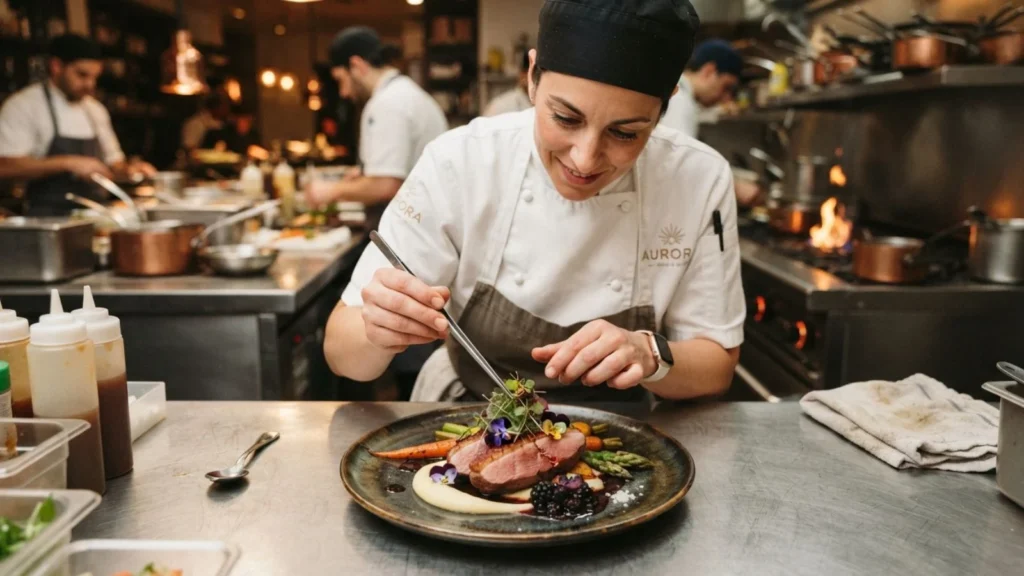
If you want fries that rival your favorite restaurant’s, these techniques make the biggest difference.
Cold water soaks. Soaking fresh-cut potatoes in cold water for 20–30 minutes (or up to a few hours in the fridge) pulls out excess surface starch. This is the single most effective step for achieving a crisp exterior instead of a starchy, soft one. Always dry the fries thoroughly with a towel afterward any leftover moisture will steam instead of crisp.
Cornstarch coating trick. After soaking and drying, toss fresh-cut fries in a light dusting of cornstarch (about a tablespoon per batch) before adding oil. The starch creates an extra-crisp shell as it cooks, similar to the texture you’d get from a deep fryer.
Double-frying technique. Cooking fries in two stages: a lower-temperature first pass to cook the inside, followed by a short high-heat blast to crisp the outside produces the closest results to classic deep-fried fries. This method takes a bit longer but is worth it for special occasions.
Seasoning timing. Salt fries immediately after they come out of the air fryer, while they’re still hot, so it sticks to the surface. Adding salt before cooking can draw out moisture and lead to sogginess.
Best oils for air frying. Choose oils with a high smoke point, like avocado oil, canola oil, or refined peanut oil. These hold up well at 375–400°F without breaking down or adding an off flavor.
Special Cases
A few scenarios come up often enough that they deserve their own guidance.
Cooking from fully frozen vs. slightly thawed. Most frozen fries are designed to go straight from freezer to air fryer, and this actually produces the best texture thawing beforehand can make them mushy since ice crystals release extra moisture as they melt. If your fries have thawed slightly, just extend the cook time by 1–2 minutes and keep a close eye on them.
Reheating leftover fries. Air fryers are excellent for reviving day-old fries, which often turn soft in the fridge. Reheat at 375°F for 3–5 minutes, shaking once halfway through. There’s no need to add oil for reheating; the goal is just to re-crisp the exterior without drying out the inside.
Cooking a large batch. Since overcrowding ruins texture, large batches should be cooked in multiple rounds rather than piled into one basket. Keep finished fries warm in a low oven (around 200°F) while later batches cook, so everything is hot and crisp when served together.
Dietary variations. For an oil-free version, skip the oil entirely for frozen fries (they’re already coated) or use a light water spray for fresh-cut fries to help seasoning stick, though texture will be slightly less crisp. For low-sodium diets, season with herbs, garlic powder, or a salt substitute instead of table salt, added immediately after cooking so the flavor still adheres to the hot surface.
Frequently Asked Questions
Do you need to preheat an air fryer for fries?
Preheating isn’t strictly required, but it helps. A hot basket means fries start crisping right away instead of steaming as the appliance comes up to temperature. If your air fryer supports it, preheat for 3–5 minutes before adding fries, especially for fresh-cut batches.
Can you stack or layer fries?
It’s best to avoid stacking. Air fryers work by circulating hot air around food, and piled-up fries block that airflow, leading to uneven cooking and soggy spots. If you’re making a large batch, cook in multiple rounds instead of overloading the basket.
Why aren’t my fries getting crispy?
This usually comes down to moisture, overcrowding, or too little oil. Make sure fresh-cut fries are dried thoroughly after soaking, cook in a single layer, and use enough oil to coat the surface lightly. Shaking the basket regularly also helps expose more surface area to hot air.
Can you air fry fries without oil?
Yes, especially with frozen fries, which are already coated with oil during processing. Fresh-cut fries can be air fried without oil too, though the texture will be slightly less crisp and golden.
How do you reheat fries in an air fryer?
Reheat at 375°F for 3–5 minutes, shaking halfway through. No extra oil is needed; the goal is simply to re-crisp the outside.
Do all air fryer brands cook at the same speed?
No. Wattage and airflow design vary by brand and model, so cook times can shift by several minutes. Always check fries a few minutes early the first time you try a new recipe.
Conclusion
Getting perfectly crispy fries in the air fryer comes down to understanding a few key variables: if your fries are fresh or frozen, how thick they’re cut, and how your specific air fryer handles heat and airflow.
As a quick recap, frozen fries generally need 12–18 minutes at 400°F, while fresh-cut fries take closer to 18–25 minutes at 380°F, with thicker cuts like wedges and steak fries landing on the longer end of that range.
The times and temperatures in this guide are a reliable starting point, but don’t be afraid to adjust based on your own results.
Every air fryer behaves a little differently, and the only way to find your machine’s sweet spot is to test a batch, take notes, and tweak from there.
Small habits drying fresh-cut potatoes thoroughly, avoiding overcrowded baskets, and shaking at the right intervals matter just as much as the timer itself.