Methylene blue has quietly moved from a niche pharmaceutical compound into the spotlight of the biohacking and wellness world.
First synthesized in the 1800s as a textile dye, it later found its way into medicine as one of the first synthetic drugs, used to treat conditions like methemoglobinemia and malaria.
Today, a growing number of people are exploring it for entirely different reasons from supporting mitochondrial energy production to sharpening focus and mood.
But taking methylene blue orally isn’t as simple as swallowing a capsule. Getting it right means understanding the correct grade, choosing a safe form, knowing how much to take, and being fully aware of the risks especially when it comes to drug interactions.
This guide walks through everything you need to know before considering methylene blue, from sourcing a pure product to recognizing warning signs your body might give you.
As always, this is educational information, not medical advice. Talk to a healthcare provider before adding it to your routine.
What Is Methylene Blue?
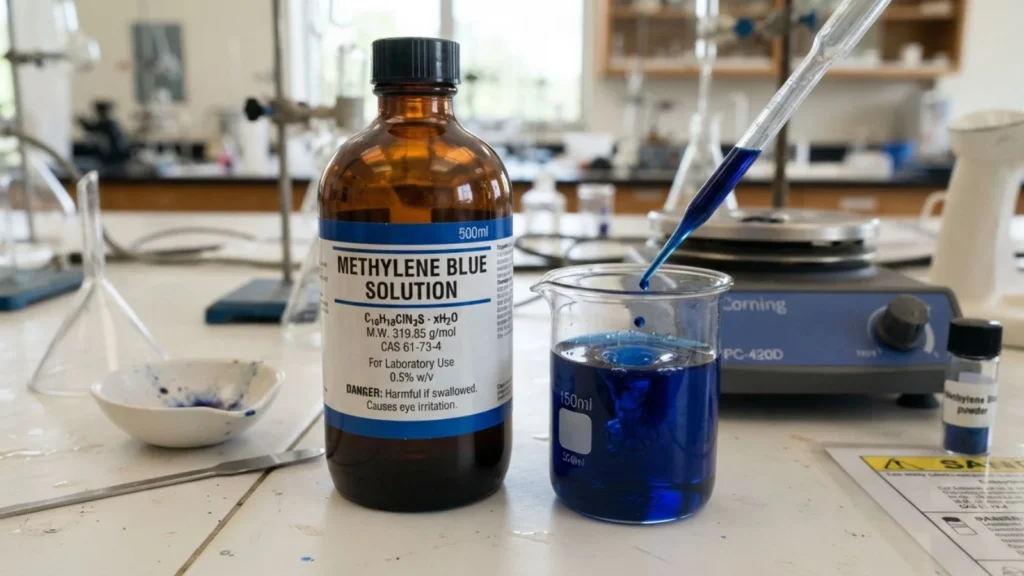
Methylene blue has an unusual history for a compound now associated with wellness trends. It was first synthesized in 1876 as a synthetic dye for the textile industry, prized for its deep blue color. Just a few years later, scientists discovered it had biological effects, making it one of the earliest fully synthetic drugs used in medicine.
Its first major medical role came as an antimalarial treatment in the late 1800s, and it later became a standard treatment for methemoglobinemia, a blood disorder where hemoglobin can’t properly release oxygen to tissues. It’s also used as a diagnostic dye in certain surgical and lab procedures, and in some cases to treat drug-induced toxicity.
More recently, methylene blue has attracted attention outside traditional medicine. Researchers have studied its role in supporting mitochondrial function, the energy-producing part of cells, which has fueled interest in its potential effects on mental clarity, focus, and mood. This has led to its adoption in biohacking communities, where people take small oral doses hoping to tap into these effects.
It’s worth noting that most of this modern, low-dose usage is not FDA-approved for these purposes. The compound’s approved medical uses remain narrow, and much of what’s discussed today is based on emerging research, anecdotal reports, and off-label experimentation.
Grades of Methylene Blue Why It Matters
Not all methylene blue is created equal, and this is one of the most important safety considerations before taking it orally. The compound is sold in several different grades, each manufactured and purified for a specific purpose and only one of them is intended for human consumption.
Pharmaceutical-grade (USP) methylene blue is manufactured to strict purity standards, tested for contaminants, and regulated for use in humans. This is the only grade that should ever be considered for oral intake. It typically comes with clear labeling, batch testing information, and sourcing transparency from the manufacturer.
Industrial-grade methylene blue, by contrast, is produced for uses like textile dyeing, biology lab staining, or chemical processing. It often contains heavy metals, solvents, and other impurities that are not screened out during manufacturing. This grade is significantly cheaper and more widely available online, which unfortunately makes it easy to mistake for something safe to ingest.
Aquarium-grade methylene blue, commonly sold to treat fish diseases and fungal infections in tanks, falls into a similar category. While it may look identical to pharmaceutical versions in liquid form, it is not manufactured or tested to the same purity standards and should never be consumed.
Because mislabeling and low-quality sourcing are common, buyers should look for third-party lab testing, clear USP or pharmaceutical-grade labeling, and reputable suppliers before ever considering oral use.
Forms Available

Once someone has sourced pharmaceutical-grade methylene blue, the next consideration is which form to use. Each comes with its own practical trade-offs around convenience, dosing precision, and taste.
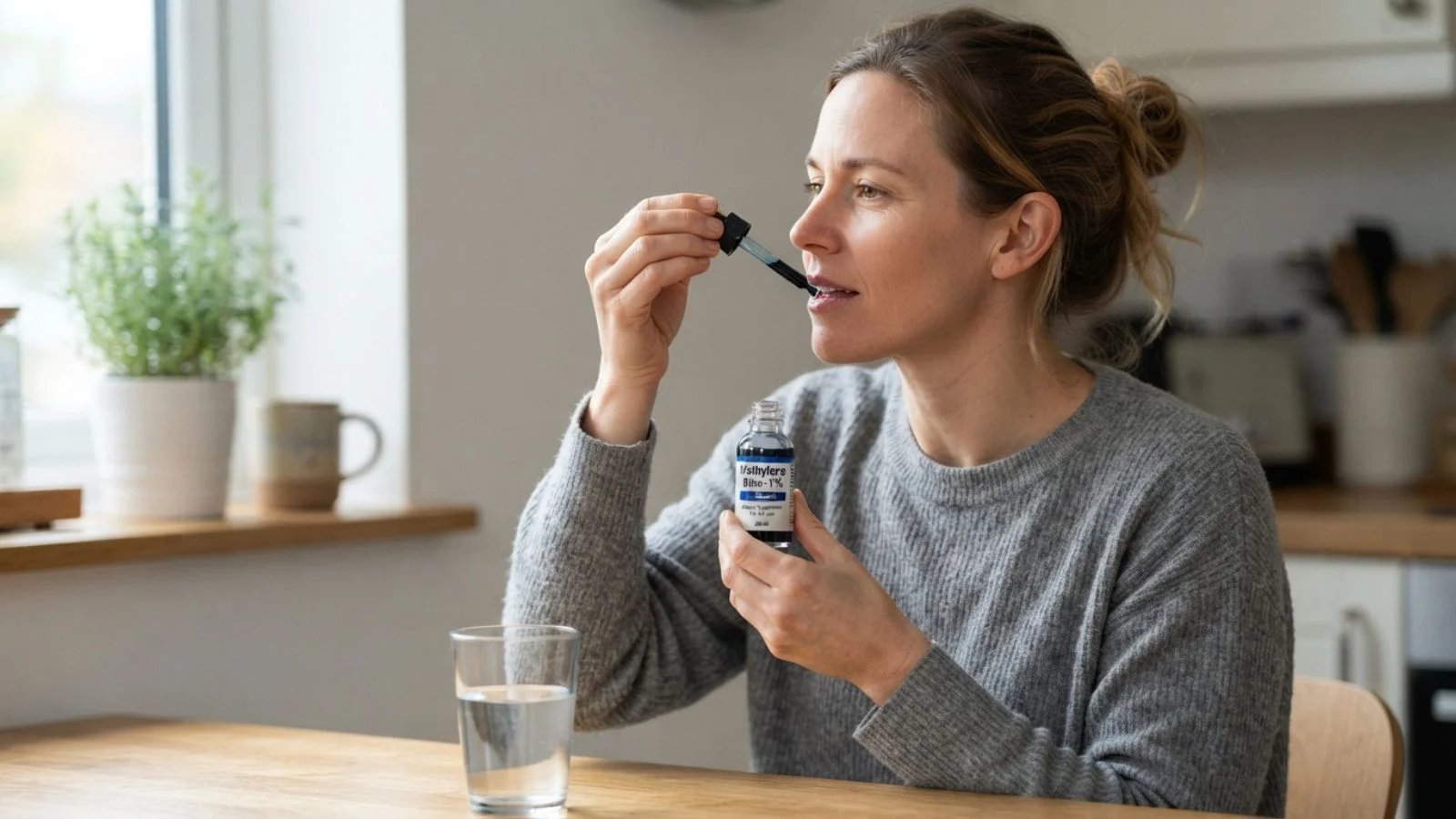
Liquid drops are the most common form for oral use, typically sold as a solution diluted to a specific concentration (often 1% or 0.1%). Drops allow for flexible, fine-tuned dosing useful since individual tolerance varies widely but they also carry a strong, bitter taste and a well-known tendency to stain the mouth, teeth, and tongue if not diluted properly.
Capsules offer a more convenient, mess-free alternative. Because the liquid is pre-measured and encased, capsules avoid the staining issue and mask the taste almost entirely. The trade-off is less flexibility: dosage adjustments require opening capsules or switching products rather than simply adjusting drop count.
Powder form is less common for casual use but is sometimes purchased by those who prefer to measure and prepare their own solutions at home. This offers maximum control over concentration but requires precise measuring equipment (a milligram scale) to avoid dosing errors, and improper handling increases contamination risk.
Some people also mix drops into juice or water to offset the taste, though this doesn’t reduce the staining risk since the compound still contacts the teeth and mouth during swallowing.
Choosing a form often comes down to whether someone prioritizes dosing precision (drops) or convenience and taste-masking (capsules).
How People Take It Orally
The way methylene blue is taken orally depends largely on the form chosen, but a few common practices show up across most approaches.
For liquid drops, the standard method is diluting the measured dose into a glass of water or juice rather than taking it straight. This serves two purposes: it makes the intensely bitter, medicinal taste more tolerable, and it helps reduce direct contact with teeth and gums, lowering (though not eliminating) staining risk. Some people use a straw specifically to minimize contact with teeth.
For capsules, the process is simpler; they’re swallowed like any other supplement, typically with water. This is the preferred method for those who find the liquid taste or staining unmanageable.
Timing is another consideration people weigh. Some take it in the morning, citing the interest in mitochondrial and cognitive effects as a reason to align it with daytime activity. Others take it with food to reduce the chance of stomach upset, since taking it on an empty stomach has been reported to cause nausea in some users.
Because staining is one of the most commonly reported nuisances, some people brush their teeth shortly after taking a dose, or rinse their mouth immediately afterward. It’s worth noting that staining is temporary and cosmetic. It isn’t a sign of harm but it can be off-putting enough to affect whether someone continues using it.
Dosage Considerations

Dosage is one of the most debated aspects of oral methylene blue use, largely because there’s no officially established dosing standard for the low-dose, off-label purposes people are exploring today. Medical dosing for approved conditions like methemoglobinemia is well-established and administered under clinical supervision but that has little bearing on the doses discussed in wellness or biohacking contexts.
Within online communities and anecdotal reports, doses are often described in small fractions of a milliliter when using diluted liquid drops, with wide variation depending on the person, their goals, and the concentration of the product itself. This variation is exactly why “start low and go slow” is the most consistent piece of advice across sources beginning with a minimal amount and observing the body’s response before considering any increase.
Because concentration differs significantly between products (a 1% solution is ten times stronger than a 0.1% solution, for example), doses are not interchangeable across brands. Someone accustomed to a certain number of drops from one product could unknowingly take a much larger effective dose from another.
Body weight, individual sensitivity, and any existing medications or health conditions all factor into how someone responds, which is exactly why generic dosing charts circulating online can be misleading or unsafe to follow blindly.
Given these variables, this is an area where professional medical guidance isn’t just a formality, it’s the only way to arrive at a dose appropriate for a specific individual’s health profile.
Safety, Risks & Side Effects
Even at the low doses often discussed for wellness purposes, methylene blue carries real risks that go beyond mild inconvenience and understanding them is essential before considering use.
The most commonly reported effects are relatively benign: blue or green-tinted urine, and occasionally stool, is expected and harmless, simply a result of how the compound is metabolized and excreted. Some users also report mild gastrointestinal discomfort, nausea, or headache, particularly when taken on an empty stomach or at higher doses.
The far more serious risk involves serotonin syndrome, a potentially life-threatening condition that can occur when methylene blue is combined with certain antidepressants, including SSRIs, SNRIs, and especially MAOIs. Methylene blue itself acts as a monoamine oxidase inhibitor, and this interaction is well-documented in medical literature; it’s one of the most important warnings associated with the compound.
Another significant concern is G6PD deficiency, a genetic condition affecting red blood cells. In people with this deficiency, methylene blue can trigger hemolytic anemia, a serious breakdown of red blood cells. Because G6PD deficiency often goes undiagnosed, this risk isn’t always obvious to someone considering use.
Certain groups should avoid methylene blue entirely or only use it under strict medical supervision: pregnant or breastfeeding individuals, people with kidney impairment, and anyone taking serotonergic medications. Given these risks, screening for underlying conditions and medication interactions with a healthcare provider isn’t optional; it’s a necessary safety step.
Drug & Supplement Interactions
Methylene blue’s interaction profile is one of the most critical safety topics in this entire guide, and it deserves careful attention beyond a passing mention.
The single most dangerous interaction involves serotonergic medications, a category that includes SSRIs (like sertraline or fluoxetine), SNRIs (like venlafaxine), tricyclic antidepressants, and especially MAOIs. Because methylene blue itself has monoamine oxidase inhibiting properties, combining it with these medications can trigger serotonin syndrome, a condition marked by agitation, rapid heart rate, high fever, and in severe cases, life-threatening complications. This isn’t a theoretical risk; it’s documented clearly enough that many clinical sources treat it as an outright contraindication rather than a caution.
Beyond antidepressants, other substances that affect serotonin levels carry similar risk, including certain migraine medications (triptans), some opioids like tramadol and meperidine, and supplements such as St. John’s Wort, which also has serotonergic activity.
Methylene blue may also interact with other medications metabolized through similar liver pathways, potentially altering how effectively those drugs work or clear from the body. People on blood thinners or medications affecting blood cell counts should also exercise caution, given methylene blue’s effects on red blood cells.
Because these interactions can be severe and aren’t always intuitive, anyone taking prescription medications, especially anything affecting mood, mental health, or serotonin should treat a conversation with a doctor or pharmacist as a mandatory step, not an optional precaution, before ever considering methylene blue.
Storage & Handling

Proper storage isn’t just about preserving product quality with methylene blue, it also plays a role in safety, given its potency and the ease with which it can be mistaken for something harmless.
Methylene blue is sensitive to light exposure, which can degrade the compound over time and reduce its effectiveness. Most reputable liquid products come in dark amber or cobalt glass bottles specifically to block light. It should be stored in a cool, dark place, a cabinet or drawer away from direct sunlight or heat sources like a stove or window sill rather than left out on a counter.
Temperature stability also matters. Extreme heat can accelerate degradation, so storing it somewhere with consistent, moderate room temperature is generally recommended over places prone to fluctuation, like a car or a bathroom with heavy shower steam.
Perhaps the most important handling consideration is keeping it away from children and pets. Because liquid methylene blue is intensely pigmented and sometimes flavored or mixed into drinks, it can be visually mistaken for candy, juice, or a harmless liquid by a curious child. Ingestion of a concentrated or industrial-grade product could be significantly more dangerous for a child than the small doses an adult might take intentionally. Bottles should be stored with child-resistant caps when possible and kept out of reach entirely, ideally in a locked or high cabinet.
Frequently Asked Questions
Is methylene blue legal to buy and use?
Yes, methylene blue is legal to purchase in the United States and many other countries, and it’s approved by the FDA for specific medical uses like treating methemoglobinemia. However, its use for wellness, cognitive, or mood-related purposes is not FDA-approved; this falls into off-label territory, meaning it’s legal to obtain but not officially sanctioned for those uses.
Does it really turn urine and stool blue?
Yes, and this is completely normal. As the body metabolizes and excretes methylene blue, it commonly causes urine to turn blue or green, and in some cases stool as well. This is a harmless, expected side effect rather than a warning sign.
Can I take it every day?
There’s no established consensus on long-term daily use for off-label purposes, since most research focuses on short-term or clinical applications. Anyone considering regular use should do so under medical guidance rather than assuming daily use is automatically safe.
How long until I notice effects?
Reported timelines vary widely depending on the person, dose, and what effects they’re looking for (energy, mood, focus). Some users report noticing effects within an hour, while others report more gradual changes. There’s no standardized timeframe backed by clinical research for off-label use.
Can it interact with caffeine or other stimulants?
While not as dangerous as the serotonergic drug interactions, combining stimulants with methylene blue may amplify jitteriness or overstimulation in some people, so starting cautiously is wise.
Conclusion
Methylene blue’s journey from 19th-century textile dye to modern wellness trend is genuinely fascinating, but that novelty shouldn’t overshadow the seriousness required when considering oral use.
This is a compound with real pharmacological effects, a documented history in medicine, and critically real risks that demand respect rather than casual experimentation.
The most important takeaways bear repeating. Sourcing matters enormously: only pharmaceutical-grade, USP-certified methylene blue should ever be considered for oral consumption, never industrial or aquarium-grade products.
Dosing lacks a universal standard for off-label use, making a cautious “start low and go slow” approach essential rather than optional.
And the interaction risks particularly with serotonergic medications like SSRIs, SNRIs, and MAOIs are serious enough to be treated as potential dealbreakers rather than footnotes.