If you’ve ever stood in the grocery store staring at a pack of water bottles wondering “how many of these am I actually supposed to drink today?” you’re not alone. For years the go-to advice has been the simple “8 glasses a day” rule.
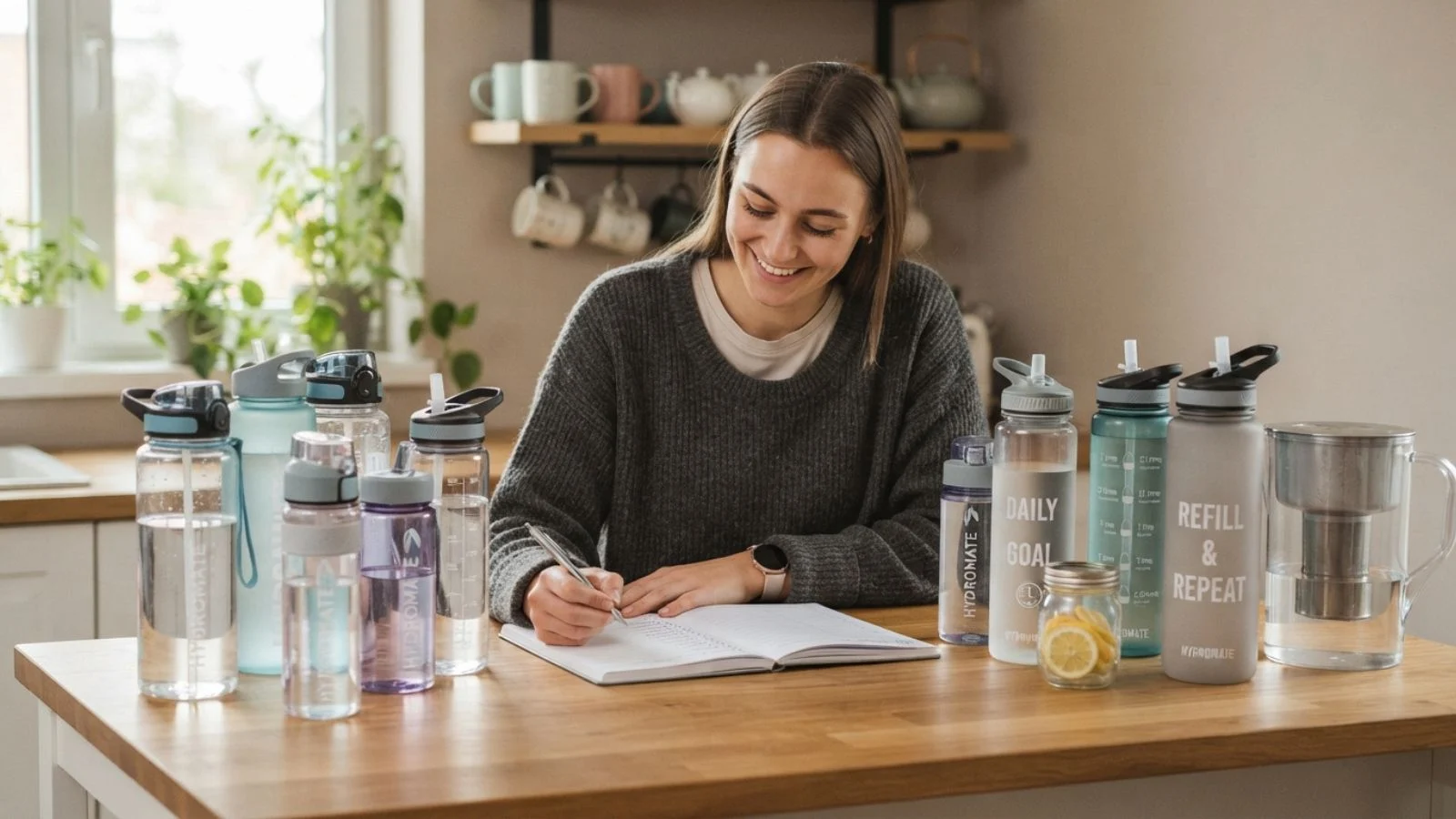
But here’s the catch: not all water bottles are created equal. A standard bottle can hold anywhere from 8 ounces to over a liter which means the number you need can swing wildly depending on the size in your hand.
The truth is there’s no single magic number that applies to everyone. Your ideal water bottle count depends on your body weight, activity level, climate and even your diet.
In this guide we’ll break down the science behind hydration guidelines, show you exactly how to convert your daily fluid needs into real bottle counts and help you figure out the number that’s right for you.
Why Hydration Matters
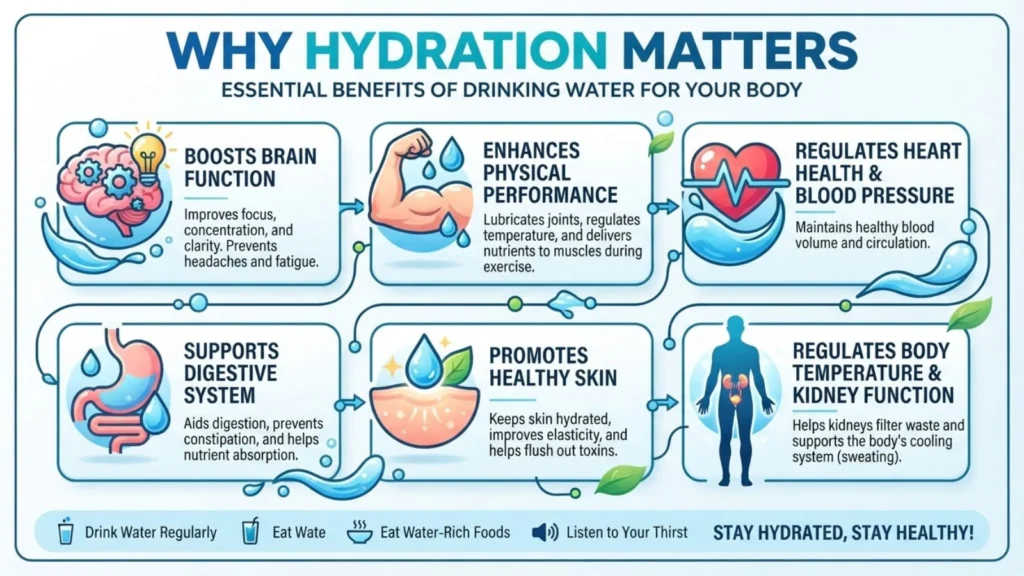
Water isn’t just a thirst-quencher it’s involved in nearly every function your body performs. It makes up roughly 60% of your total body weight and plays a role in regulating temperature cushioning joints transporting nutrients and oxygen to cells and flushing out waste through urine and sweat. Even your brain relies on proper hydration to function at its best; studies have shown that losing just 1-2% of your body’s water content can measurably affect concentration, mood and short-term memory.
When you don’t drink enough your body starts sending warning signals. Mild dehydration often shows up as fatigue headaches, dry mouth and difficulty focusing symptoms that are easy to mistake for something else like lack of sleep or low blood sugar. Left unaddressed, these small deficits can snowball. Chronic under-hydration has been linked to more serious issues including kidney stones, urinary tract infections, constipation and even long-term strain on cardiovascular health since your heart has to work harder to pump thicker, more concentrated blood.
On the flip side, staying properly hydrated supports clearer skin, better digestion, more stable energy levels throughout the day and improved physical performance whether you’re hitting the gym or just getting through a busy workday.
Understanding why hydration matters makes it much easier to stay motivated about how much you’re drinking. Next we’ll look at what the official guidelines actually recommend and where the popular “8 glasses a day” rule came from.
The Standard Water Intake Guidelines
So where do official hydration numbers actually come from? The most commonly cited guideline is from the U.S. National Academies of Sciences Engineering and Medicine which recommends about 3.7 liters (roughly 125 ounces) of total fluids per day for men and 2.7 liters (about 91 ounces) for women. It’s important to note the phrase “total fluids” . This figure includes water from all beverages plus the water content naturally found in foods like fruits, vegetables and soups, not just what you sip from a bottle.
Other health organizations offer similar but slightly varied numbers. The European Food Safety Authority for instance recommends around 2.5 liters for men and 2.0 liters for women daily factoring in a moderate climate and activity level. These ranges typically assume a sedentary-to-moderately-active adult in a temperate environment meaning your personal number could be higher depending on your circumstances.
Then there’s the infamous “8×8 rule” : eight 8-ounce glasses totaling 64 ounces (about 1.9 liters) a day. While it’s catchy and easy to remember this guideline didn’t originate from rigorous scientific research. It’s more of a rounded-off estimate that’s stuck in popular culture for decades. It’s not wrong exactly, it’s just a rough baseline rather than a personalized target.
The bottom line: these guidelines are useful starting points but real hydration needs vary from person to person. Next we’ll translate these ounce and liter figures into something more practical: actual water bottle counts.
Converting Ounces/Liters into “Water Bottles”
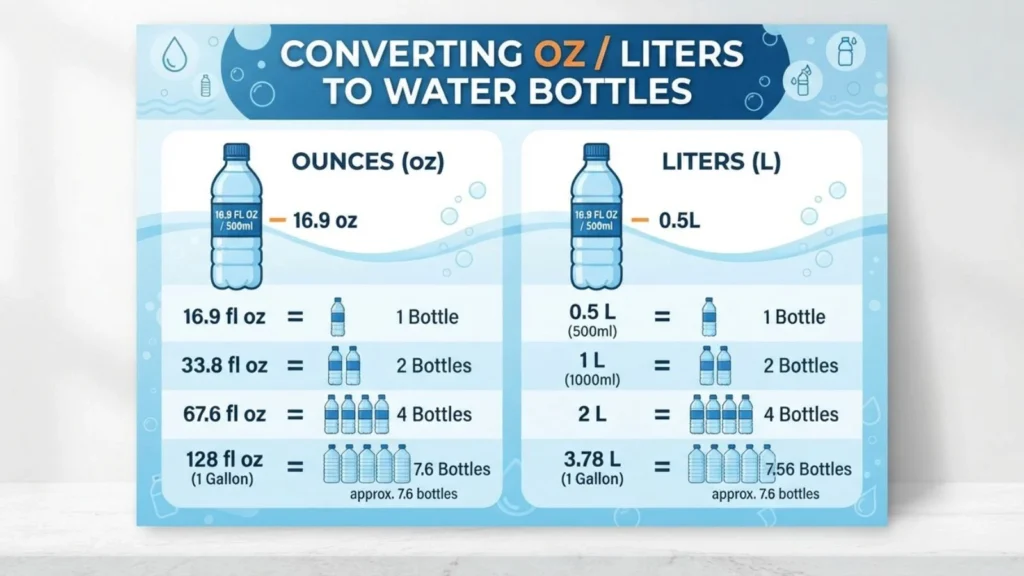
Now for the part you actually came here for: turning those ounce and liter recommendations into real countable water bottles. Since bottle sizes vary so much the same daily target can look wildly different depending on what’s in your hand.
Let’s use a common target of 91–125 ounces (roughly 2.7–3.7 liters) per day based on the National Academies’ guidelines:
- 8 oz bottles (small): 11–16 bottles a day
- 16.9 oz bottles (standard single-serve like most bottled water brands): 5–7 bottles a day
- 500 ml bottles (~16.9 oz): 5–7 bottles a day
- 1 liter bottles: 3–4 bottles a day
- 32 oz bottles (large reusable like a Nalgene or Hydro Flask): 3–4 bottles a day
If you’re using the simpler “8×8 rule” (64 oz total) that translates to roughly 4 standard 16.9 oz bottles, 2 one-liter bottles or just 2 refills of a 32 oz bottle.
The takeaway here is simple: the number of bottles matters far less than the total volume you’re drinking. Someone proudly finishing “6 bottles a day” using an 8 oz bottle is actually drinking less than someone finishing just 2 bottles of a 32 oz size. Always check the label on your bottle to know exactly how many ounces or milliliters it holds; that’s the real number to track.
Personal Factors That Change the Number
General guidelines are a solid starting point but your actual hydration needs depend on several personal factors that can shift your target significantly.
Body weight plays a major role larger bodies generally require more water to function properly. A common formula is drinking half your body weight (in pounds) in ounces of water daily.
Age affects hydration needs too; older adults often have a reduced sense of thirst making it easier to under-drink without realizing it.
Activity level is one of the biggest variables. Someone exercising intensely or working a physically demanding job can lose significant fluid through sweat and may need an extra 12–24 ounces (or more) per hour of activity.
Climate and altitude matter as well hot humid weather increases sweat loss while high altitudes can increase respiratory water loss and urine output.
Pregnancy and breastfeeding raise fluid needs substantially since the body is supporting additional bodily functions and in breastfeeding producing milk.
Diet influences hydration too. High-sodium or high-protein diets increase water needs to help the kidneys process waste while foods high in water content (like fruits and vegetables) can supplement your intake.
Health conditions including fever, vomiting, diarrhea , kidney issues or certain heart conditions can dramatically change fluid requirements and anyone managing a chronic condition should consult a doctor for personalized guidance.
Finally caffeine and alcohol have mild diuretic effects meaning heavy consumption may modestly increase your water needs to compensate.
How to Calculate Your Personal Water Bottle Target
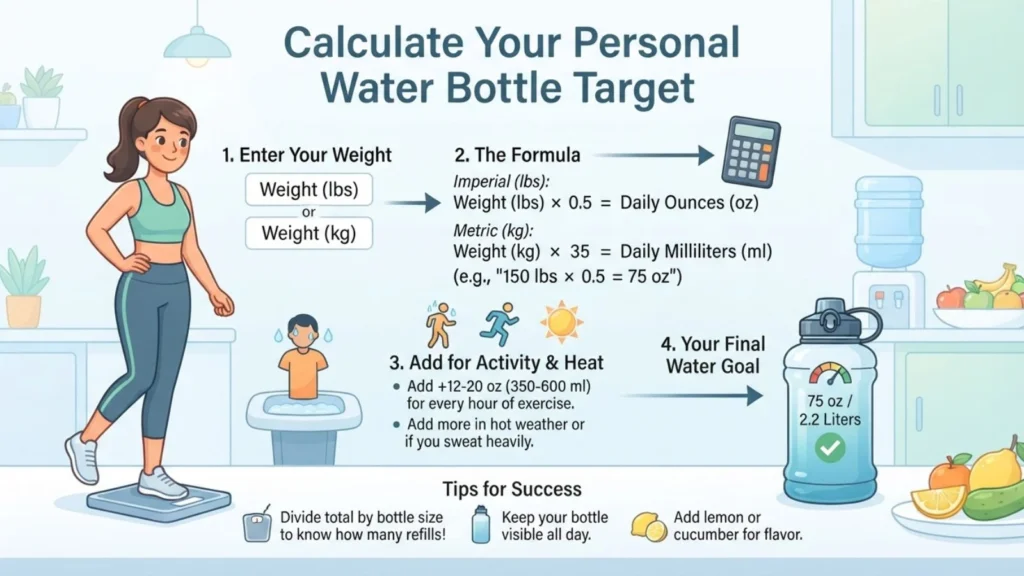
Ready to find your actual number? Here’s a simple step-by-step way to calculate it.
Step 1: Start with the baseline formula. Take your body weight in pounds and divide it by 2. That gives you your baseline daily water intake in ounces. For example a 160-pound person would aim for about 80 ounces of water per day.
Step 2: Adjust for activity. Add 12 ounces for every 30 minutes of moderate-to-intense exercise. If you work out for an hour add 24 ounces to your baseline.
Step 3: Adjust for climate. If you live in a hot or humid climate or spend a lot of time outdoors add another 8–16 ounces to account for extra sweat loss.
Step 4: Convert to bottles. Divide your total ounces by the size of your bottle (in ounces) to get your daily bottle count.
Worked examples:
- Sedentary office worker 150 lbs temperate climate: 75 oz baseline → about 4–5 standard 16.9 oz bottles a day.
- Active athlete 180 lbs hot climate 1-hour daily workout: 90 oz baseline + 24 oz (exercise) + 12 oz (climate) = 126 oz → about 7–8 standard bottles a day.
- Outdoor laborer 200 lbs summer heat: 100 oz baseline + 16 oz (climate/activity) = 116 oz → roughly 3–4 large 32 oz bottles a day.
Simple takeaway: When in doubt aim for half your body weight in ounces then adjust upward for heat and activity.
Signs You’re Drinking Enough (or Not Enough)
Formulas and calculators are helpful but your body also gives you real-time feedback on your hydration status if you know what to look for.
Urine color is one of the simplest and most reliable indicators. Pale yellow like light lemonade generally means you’re well-hydrated. Dark yellow or amber-colored urine is a sign you need to drink more while completely clear urine may actually mean you’re overdoing it.
Thirst is another obvious cue but it’s worth noting that by the time you feel thirsty you may already be mildly dehydrated, especially true for older adults whose thirst signals weaken with age.
Physical and cognitive signs of good hydration include steady energy levels, clear thinking elastic-feeling skin (a quick pinch test can reveal skin turgor) and regular comfortable urination (roughly every 3–4 hours). Signs of dehydration go beyond thirst and include headaches, dizziness , dry mouth muscle cramps and unusually dark or infrequent urination.
It’s also possible to drink too much water, a condition called hyponatremia or water intoxication. This happens when excessive water intake dilutes sodium levels in the blood and it’s most common among endurance athletes who drink large volumes without replacing electrolytes. Symptoms include nausea, confusion , headache and in severe cases seizures.
The goal isn’t perfection, it’s paying attention to your body’s signals and adjusting your intake accordingly rather than rigidly hitting a number regardless of how you feel.
Tips to Hit Your Daily Water Bottle Goal
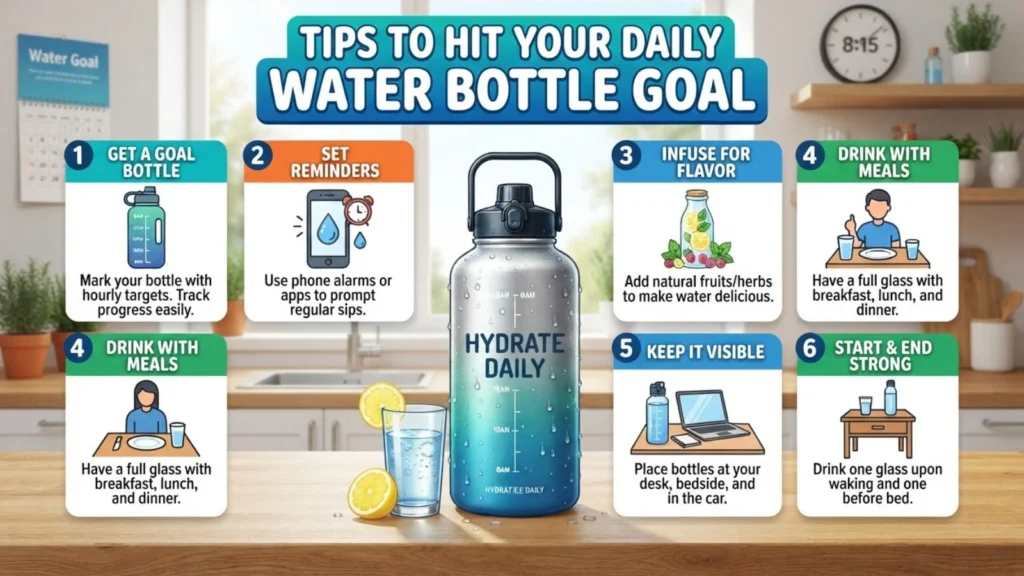
Knowing your target is one thing, actually hitting it consistently is another. Here are practical strategies to help you stay on track.
Build simple habits. Keep a water bottle within arm’s reach at all times on your desk in your car by your bed. Marked bottles with time-stamped goals (e.g. “finish by noon”) can turn an abstract daily target into a series of small achievable checkpoints throughout the day.
Use reminders. Hydration apps and even basic phone alarms can nudge you to drink at regular intervals which is especially useful for people who get absorbed in work and forget to drink for hours at a time.
Pair drinking with existing routines. Drink a glass when you wake up before each meal and before/after exercise. Anchoring water intake to habits you already have removes the need to “remember” separately.
Consider your bottle choice. Reusable bottles (like stainless steel or BPA-free plastic) are more environmentally friendly than single-use plastic and often come in larger sizes meaning fewer refills to reach your goal. Insulated bottles that keep water cold can also make drinking more appealing especially in warmer months.
Flavor it if needed. If plain water feels boring add fresh fruit slices cucumber mint or a splash of unsweetened flavoring. This can make a real difference for people who consistently under-drink simply because they don’t enjoy the taste of plain water.
Common Myths About Water Intake
With so much hydration advice floating around it’s easy to absorb myths as fact. Let’s clear up a few of the most persistent ones.
Myth: Everyone needs exactly 8 glasses a day. As covered earlier the “8×8 rule” is a rough catchy estimate not a scientifically derived number tailored to individuals. Your actual needs depend on body weight activity climate and more so treating 8 glasses as a strict universal rule oversimplifies a genuinely individual need.
Myth: Coffee and tea don’t count toward hydration. While caffeine has a mild diuretic effect the fluid volume in coffee and tea still contributes positively to your overall hydration. You’d need to drink an excessive amount of caffeinated beverages before the diuretic effect meaningfully offsets the water you’re taking in.
Myth: Thirst means you’re already severely dehydrated. Thirst is simply your body’s early signal that it’s time to drink; it doesn’t mean you’re in a dangerous state. That said, relying solely on thirst can mean under-drinking particularly for older adults or during intense exercise so it shouldn’t be your only gauge.
Myth: More water is always better. Hydration isn’t a “more is better” situation. Excessive water intake especially without adequate electrolyte replacement can lead to hyponatremia. Like most things related to health balance, not maximization is the goal.
Understanding these myths helps you make decisions based on your actual needs rather than outdated or oversimplified rules of thumb.
FAQ Section
How many 16.9 oz water bottles should I drink a day?
Based on standard guidelines of roughly 91–125 ounces of total fluids per day you’d need about 5 to 7 standard 16.9 oz bottles daily. This can shift higher if you’re active, live in a hot climate or have a larger body weight.
How many 500ml water bottles are 2 liters?
Since 500ml is roughly equivalent to 16.9 oz you’d need exactly 4 bottles of 500ml to reach 2 liters (2000ml).
Is drinking a gallon of water a day too much?
For most healthy adults a gallon (128 oz) is on the higher end but not necessarily dangerous especially for larger highly active individuals in hot climates. However without adjusting electrolyte intake consistently drinking this much can increase the risk of hyponatremia. It’s best to scale intake to your actual needs rather than adopting a gallon as a blanket goal.
How many water bottles should I drink a day to lose weight?
While water itself doesn’t directly cause weight loss, drinking enough often cited as 8–10 standard bottles for some weight-loss approaches can support metabolism and help control appetite when consumed before meals. It’s a supportive habit not a standalone solution.
Do other drinks count toward my water bottle count?
Yes. Fluids from tea coffee milk and water-rich foods all contribute to your total daily hydration even though plain water remains the best primary source.
Conclusion
At the end of the day there’s no single magic number of water bottles that applies to everyone.
The right amount for you depends on your bottle size, body weight, activity level, climate and overall health which is exactly why generic advice like “drink 8 glasses a day” only tells part of the story.
Instead of fixating on a one-size-fits-all rule use the calculation method from earlier in this guide: start with half your body weight in ounces, adjust for activity and climate and then convert that number into bottles based on the size you actually drink from.
This personalized approach gives you a far more accurate and sustainable target than any generic recommendation ever could