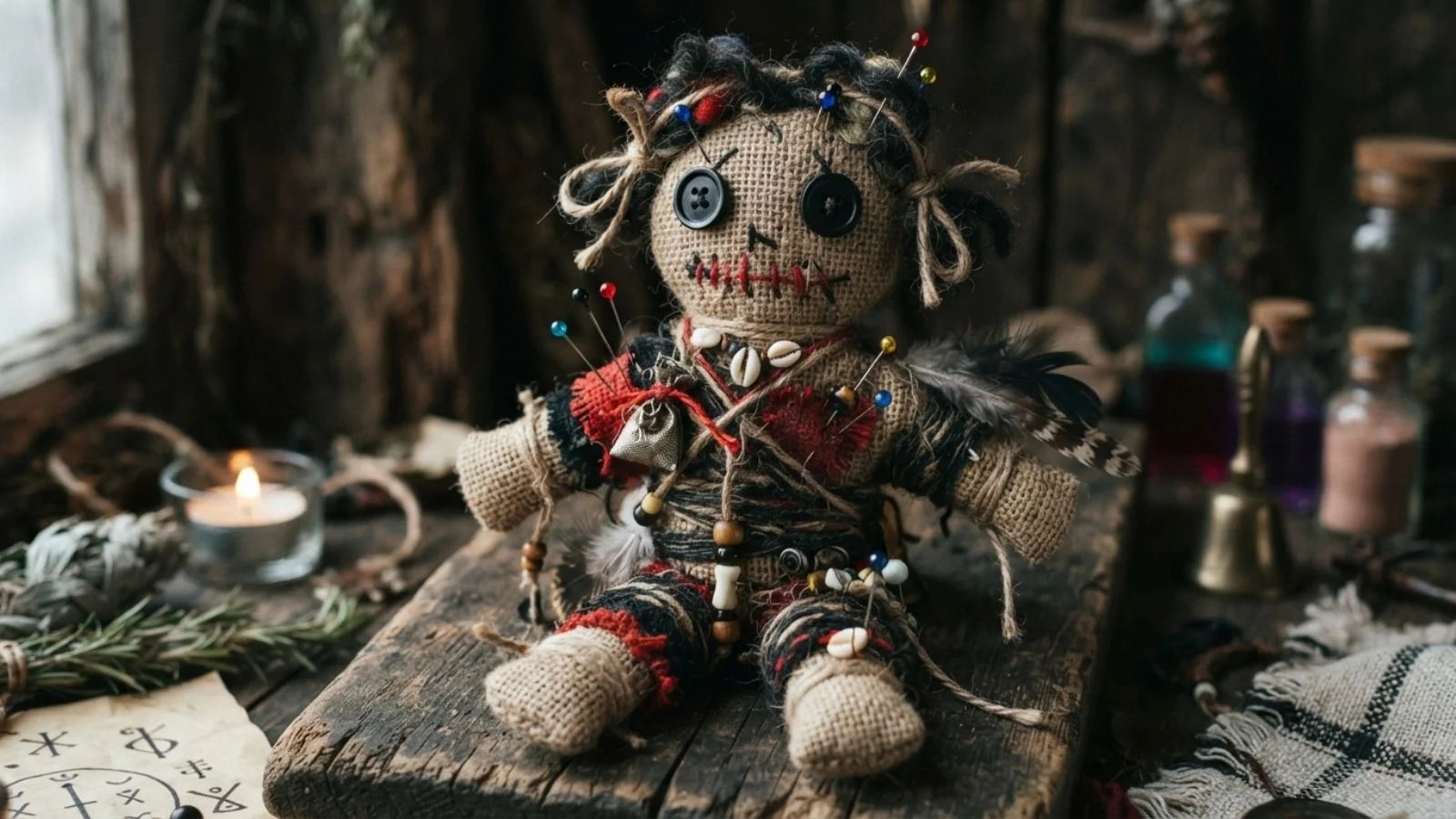
Few objects capture the imagination quite like the voodoo doll thanks to decades of movies and television most people picture a pin-stuck figure used to inflict pain on an enemy from afar. But the real story is far richer and far more misunderstood.
The popular “voodoo doll” image bears little resemblance to authentic Haitian Vodou or West African spiritual traditions and is instead a blend of European folk-magic poppets and Hollywood dramatization.
In this guide you’ll learn how to make your own voodoo-style doll as a fun symbolic craft project whether for Halloween decor, a folklore-inspired art piece or a personal intention doll.
We’ll walk through both a classic sewn version and a quick no-sew alternative to cover the materials you’ll need and explore the meaning behind common design choices.
What Is a Voodoo Doll?
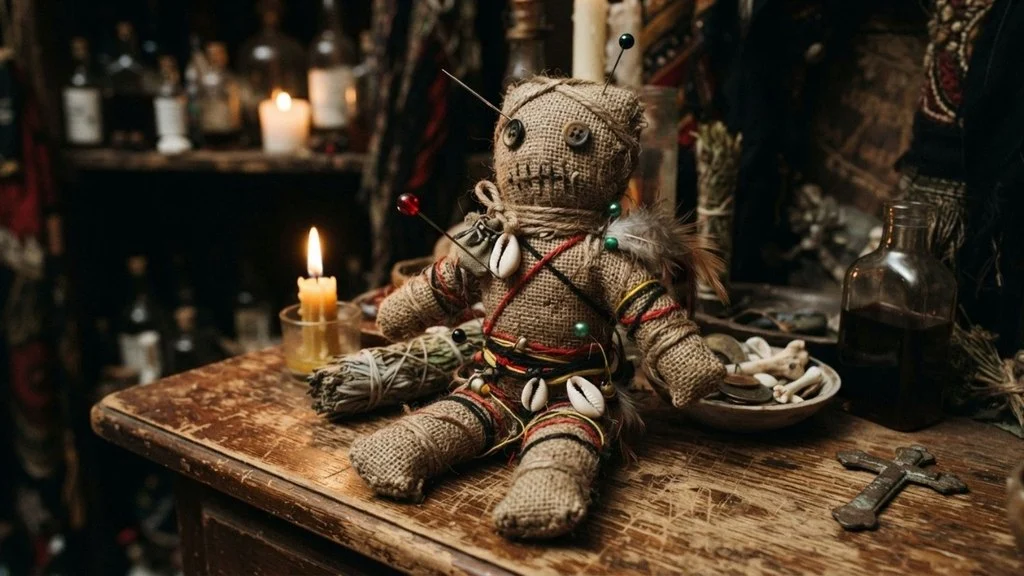
The term “voodoo doll” is one of the most misunderstood phrases in popular culture. Most people imagine a small cloth figure stuck with pins to curse an enemy, an image born almost entirely from horror movies not from any actual religious practice. In reality dolls used for magical or spiritual purposes have a much older and more varied history than Hollywood suggests.
The dolls most people picture actually trace back more closely to European “poppet magic” a folk practice found in English and Scottish traditions where a small figure was crafted to represent a person for healing protection or influence not necessarily harm.
Over time these two very different traditions West African-derived Vodou and European poppet magic became blended and distorted in American pop culture especially through New Orleans tourism and mid-20th-century films.
For the purposes of this guide we’re focusing on the doll as a craft and folk-art project, something you can make for Halloween decorations, a personalized keepsake or a fun intention-setting activity.
History and Cultural Background
West African and Haitian Vodou developed from the spiritual practices of West African peoples particularly the Fon and Ewe of present-day Benin and Togo who were brought to Haiti during the transatlantic slave trade. Vodou is a rich structured religion involving spirits called lwa ceremonies, drumming and ancestral veneration. Dolls pierced with pins are not a traditional feature of Vodou ritual practice.
European poppet magic tells a different story. In English Scottish and broader European folk-magic traditions dating back centuries small figures called “poppets” were crafted from cloth wax or clay to represent a specific person.
These two traditions collided in 19th and 20th-century Louisiana where Haitian immigrants brought Vodou practices into contact with European settlers and their poppet folklore. Journalists, tourists and later filmmakers combined the visual drama of both.
Materials Needed
Before you start gathering your supplies. Most of these are inexpensive and easy to find at a craft store or around the house.
Fabric
Choose a sturdy easy-to-sew material. Burlap gives a rustic traditional look while cotton or felt is easier for beginners to handle and stitch cleanly.
Stuffing
Cotton batting is the classic choice but many crafters use dried herbs rice or straw for a more textured folk-art feel. Herbs also let you incorporate symbolic meaning (more on that in Section 7).
Thread and Needle
A basic sewing needle and thread in a color matching or contrasting with your fabric. Embroidery floss works well for visible stitching or decorative details.
Scissors
Sharp fabric scissors make cutting clean matching body pieces much easier.
Pins
Straight pins are useful for holding fabric pieces together while sewing and decorative pins can be added afterward for the classic aesthetic look.
Personalization Items (Optional)
A small photo, a scrap of clothing, a lock of hair or a name written on paper are traditional ways crafters personalize a doll often folded and tucked inside before stuffing.
Decorative Supplies
Buttons or embroidered X’s for eyes yarn for hair fabric scraps for tiny clothing and fabric paint or markers for facial features.
For the No-Sew Version
Clothespins wooden dowels corn husks or twine work well if you’d rather skip sewing entirely.
Step-by-Step: Basic Sewn Doll
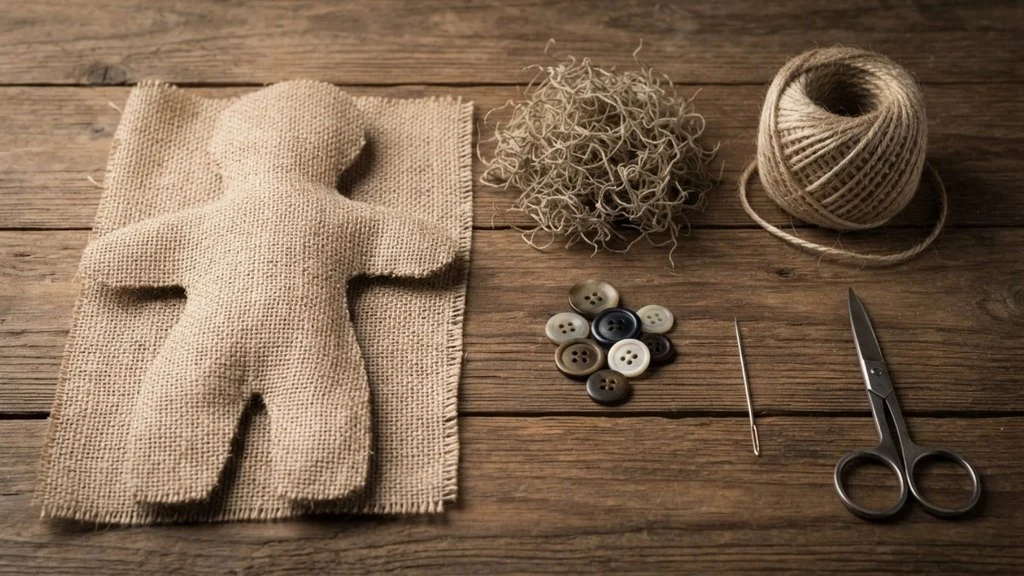
Follow these steps to create a classic cloth voodoo-style doll.
Step 1: Cut the Body Shape
Fold your fabric in half and draw a simple human silhouette head, torso arms and legs about 8-12 inches tall. Cut through both layers at once so you get two matching pieces.
Step 2: Pin and Sew the Edges
Place the two fabric pieces together with the “good” sides facing inward. Pin around the edges then sew a seam about ¼ inch from the edge leaving a 2-inch gap along one side (usually the bottom or a leg) for turning and stuffing.
Step 3: Turn Right-Side Out
Carefully flip the doll through the gap so the seams are hidden on the inside. Use a blunt pencil or chopstick to gently push out the arms and legs.
Step 4: Add Your Stuffing
Fill the doll firmly with cotton batting herbs or rice. If you’re personalizing it, tuck a small photo name paper or fabric scrap inside now nestled into the stuffing.
Alternative Method: No-Sew Doll
If sewing isn’t your thing or you want a faster project for kids there are several no-sew ways to make a voodoo-style doll using materials you may already have at home.
Clothespin Doll
Wooden clothespins make a quick sturdy base. Wrap the “body” with strips of fabric or yarn securing each layer with a small dab of glue or a tight knot instead of stitches. Add a fabric scrap as a skirt or cloak and draw a face directly onto the wooden head with a marker.
Corn Husk Doll
A traditional folk-craft method uses dried corn husks which are soaked briefly to make them pliable then folded and tied with twine to form a head, arms and body. This method has deep roots in early American folk traditions and gives a rustic natural appearance.
Stick and Yarn Doll
Cross two small sticks or dowels to form a body and arms then wrap the entire frame tightly with yarn or fabric strips building up a “body” shape as you go. Tie off the ends securely and add a yarn or fabric head on top.
Wrapped Fabric Doll
Simply bundle stuffing (cotton herbs or rice) inside a fabric square then gather and tie the corners with string to form a head and a rounded body no cutting or sewing required.
Symbolic Elements & Personalization
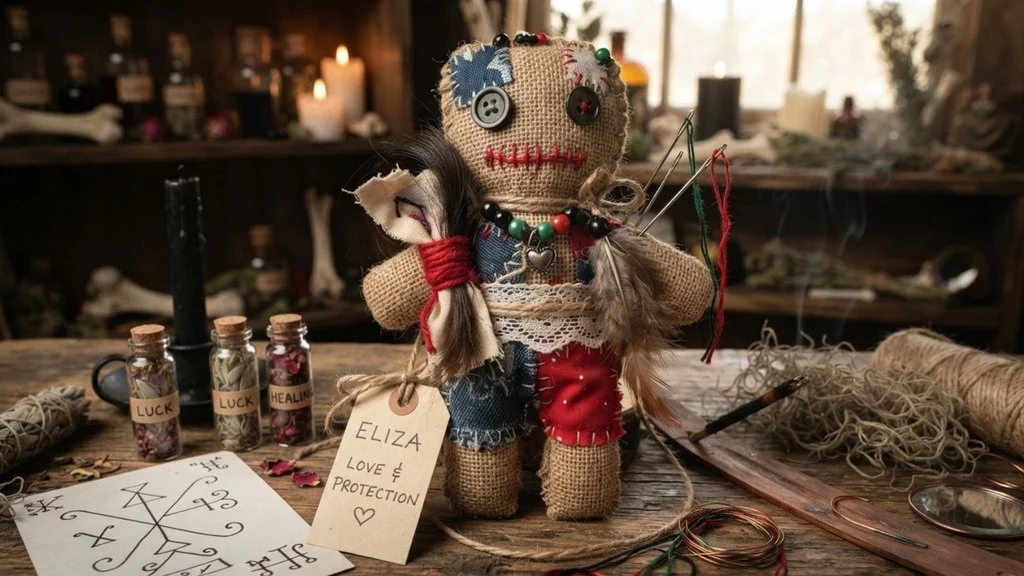
Part of what makes a voodoo-style doll feel meaningful is the symbolism woven into its materials and design. While these associations come from folk-magic traditions rather than formal religious doctrine they’re a fun way to add intention and personality to your craft.
Color Choices
Many folk traditions assign meaning to color: red is often linked to passion or protection black to banishing or warding off negativity white to purity or new beginnings green to prosperity or healing and purple to spiritual insight. Choosing fabric or thread based on these associations can give your doll a personal theme.
Herbs and Their Meanings
If you’re using herbs as stuffing, consider their traditional folk associations: lavender for calm and protection, rosemary for remembrance and cleansing chamomile for peace and rose petals for love or emotional healing. Mixing a small herb sachet into the stuffing adds both scent and symbolism.
Names and Written Intentions
A common personalization technique is writing a name wish or intention on a small slip of paper and tucking it inside the doll before closing it up. Some crafters fold the paper toward themselves for self-focused intentions or away from themselves for outward-directed ones.
Personal Items
Adding a small fabric scrap from an old piece of clothing, a photo or a lock of hair is a traditional way to personalize a doll symbolically connecting it to a specific person or purpose.
Common Uses in Folklore/Pop Culture
Voodoo-style dolls show up in a variety of contexts ranging from lighthearted craft projects to more symbolic folk-magic practices. Understanding these different uses helps clarify what the doll actually represents in each setting.
Protection Dolls
In folk-magic traditions dolls are sometimes crafted and placed near a doorway or bedside as a symbolic guardian meant to ward off negative energy or bad luck. These are typically decorated with protective herbs like rosemary or sage tucked into the stuffing.
Wish or Intention Dolls
Rather than being used to harm anyone, many dolls are made as a focus for personal goals: love , prosperity , healing or confidence. The act of crafting the doll and writing an intention on paper is treated as a small ritual of mindfulness rather than anything supernatural.
Decorative and Halloween Use
By far the most common modern use is purely aesthetic. Voodoo-style dolls are popular Halloween decorations, gothic-themed home décor or novelty gifts valued for their spooky folkloric look rather than any functional purpose.
Pop Culture and Media
Movies, TV shows and novels have cemented the “curse doll” trope often exaggerating pin-sticking rituals for dramatic effect. This portrayal has shaped public perception far more than any real religious practice.
Distinguishing Craft from Ritual
It’s worth reiterating that the dolls covered in this guide are a craft and folklore-inspired project not an authentic religious object tied to Haitian Vodou or any specific spiritual practice.
Tips for Beginners
If this is your first time making a voodoo-style doll, a few practical tips can help the process go smoothly and give you a better-looking final result.
Start with Simple Fabric
Cotton or felt is much easier to cut and sew than burlap especially if you’re new to hand-sewing. Save the rustic burlap look for once you’re comfortable with the basic technique.
Keep the Body Shape Simple
Don’t worry about intricate details on your first attempt. A basic silhouette with a rounded head, short arms and legs is easier to sew cleanly and still looks great once stuffed and decorated.
Stuff Firmly but Evenly
Push stuffing into the arms and legs first using a blunt tool like a chopstick then fill the body. This prevents lumpy or lopsided results.
Source Supplies Affordably
Craft stores, fabric remnant bins and dollar stores are great places to find fabric stuffing buttons and yarn without overspending on a first project.
Practice Your Stitch
A simple whipstitch or running stitch is all you need; there’s no requirement for advanced sewing skills. Practicing on a scrap piece of fabric first can build confidence.
Supervise Kids with Needles and Pins
If children are helping, consider using the no-sew methods from Section 6 or have an adult handle the needle and pin work while kids assist with stuffing and decorating.
FAQs
Are voodoo dolls real and can they actually hurt someone?
No. The dolls covered in this guide are craft projects made from fabric and stuffing they have no supernatural power. The idea that pins in a doll can cause real harm is a myth popularized by movies and folklore, not a documented phenomenon.
Is this the same as Haitian Vodou religious practice?
No. Haitian Vodou is a legitimate structured religion with its own rituals, spirits (lwa) and ceremonies that don’t traditionally center on pin-covered dolls. The craft doll described here comes primarily from European poppet-magic traditions blended with pop-culture imagery not authentic Vodou religious objects.
What’s the difference between a voodoo doll and a poppet?
Historically “poppet” is the more accurate term for a cloth or wax figure used in European folk magic for healing protection or influence. The term “voodoo doll” became popularized later largely through American media often incorrectly linking the craft to Haitian Vodou.
Can kids make these as a craft project?
Yes especially using the no-sew methods in Section 6 like clothespin or wrapped-fabric dolls. For sewn versions adult supervision is recommended when handling needles and pins.
Do I need to use herbs or personal items?
No, these are entirely optional. You can make a simple decorative doll with just fabric and stuffing or add symbolic elements like herbs names or photos if you want a more personalized project.
Where can I buy supplies?
Most craft stores, fabric shops and even dollar stores carry everything needed fabric stuffing thread and decorative items.
Conclusion
Making a voodoo-style doll is a rewarding craft project that blends hands-on creativity with a fascinating slice of folklore history.
As we’ve explored throughout this guide the pin-covered “curse doll” most people picture owes far more to Hollywood dramatization and European poppet-magic traditions than to authentic Haitian Vodou which is a legitimate religion with its own distinct practices and beliefs.
Whether you chose the classic sewn method or one of the no-sew alternatives like a clothespin or corn husk doll you now have the skills to create your own version simple or elaborate purely decorative or personally.
Herbs colours or written intentions can give your doll extra meaning while keeping things simple with just fabric and stuffing works just as well for a fun Halloween decoration or novelty craft.