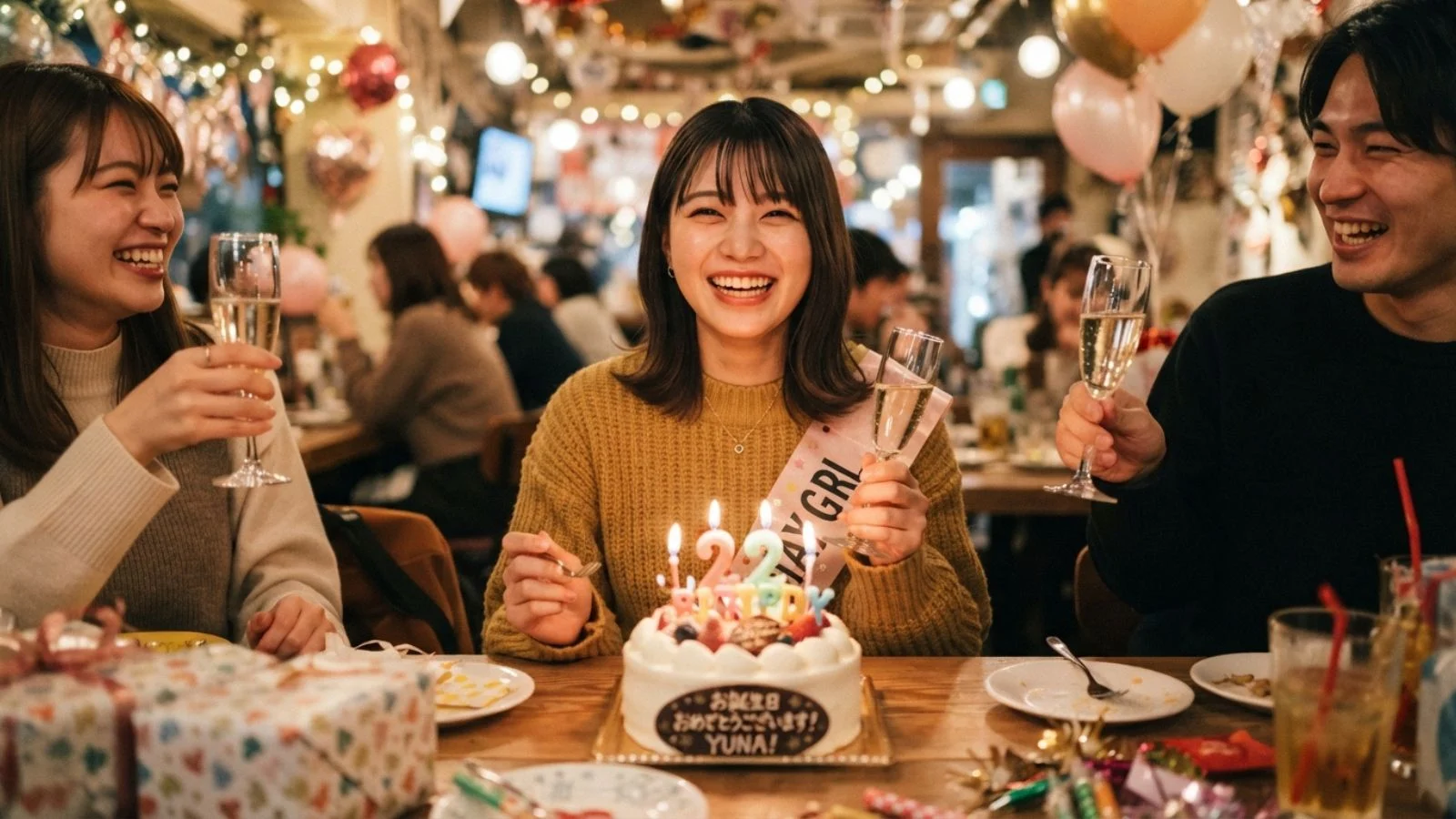
Birthdays are a universal reason to celebrate but the way we express that joy shifts beautifully from culture to culture.
In Japan, wishing someone a happy birthday carries its own linguistic charm, one rooted less in the word “happy” and more in the idea of “congratulations.”
If you’re learning Japanese, dating someone from Japan working with Japanese colleagues or simply wanting to surprise a friend with a thoughtful message knowing how to say “Happy Birthday” correctly (and appropriately) can make a real impression.
But there’s more to it than memorizing one phrase. Japanese is a language built around social context and the words you choose can shift depending on who you’re speaking to a close friend, a coworker or someone older and more senior than you.
This guide breaks down every version of the phrase, the culture behind it and exactly when to use each one.
The Core Phrase: お誕生日おめでとう (Otanjoubi Omedetou)
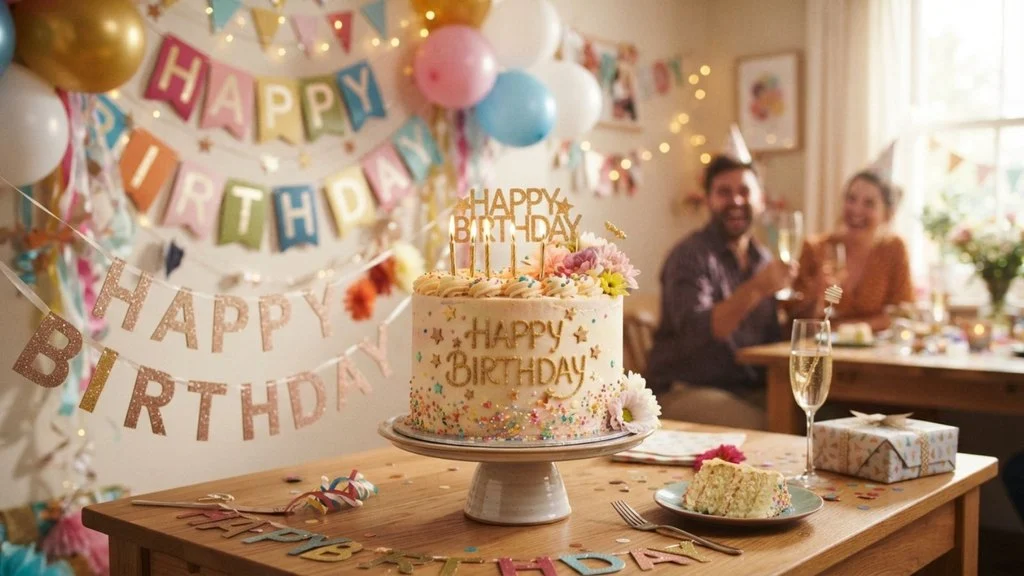
The standard way to say “Happy Birthday” in Japanese is お誕生日おめでとう (Otanjoubi omedetou). It’s the phrase you’ll hear most often whether at a family gathering in a text message or written inside a card.
Breaking it down piece by piece helps make sense of the grammar:
- お (o) an honorific prefix added to certain nouns to make them sound more polite or refined. You’ll see this same prefix in other everyday words like お水 (water) or お茶 (tea).
- 誕生日 (tanjoubi) the word for “birthday” combining characters that roughly mean “birth” and “life/day.”
- おめでとう (omedetou) “congratulations.”
Put together the phrase literally translates to something closer to “Congratulations on your birthday” rather than a direct “Happy birthday.” This is an important distinction: English frames birthdays around a feeling (“happy”) while Japanese frames them around an achievement or milestone worth celebrating (“congratulations”).
This isn’t unusual in Japanese; the same congratulatory structure shows up in phrases for New Year’s graduations and other milestone celebrations. Once you recognize the pattern it becomes much easier to understand why Japanese greetings are built the way they are.
Understanding this root phrase is the foundation for everything else in this guide since every variation casual, formal or affectionate builds directly off of otanjoubi omedetou.
Politeness Levels (Keigo) The Core of Japanese Social Nuance
Japanese is a language deeply shaped by social hierarchy and few things illustrate that better than how many ways there are to say something as simple as “Happy Birthday.” Choosing the right level of politeness shows respect and cultural awareness, get it wrong and even a kind gesture can feel slightly off.
Casual form: 誕生日おめでとう (Tanjoubi omedetou)
Drop the honorific “o” and you get the casual version reserved for close friends, siblings , classmates or anyone roughly your own age or younger. It feels relaxed and warm like saying “Happy birthday!” to a buddy.
Standard polite form: お誕生日おめでとう (Otanjoubi omedetou)
This is the safe everyday default polite enough for acquaintances, extended family or people you don’t know especially well without sounding overly formal.
Formal/respectful form: お誕生日おめでとうございます (Otanjoubi omedetou gozaimasu)
Adding ございます (gozaimasu) elevates the phrase to full politeness. Use this with bosses, teachers , elders , clients or anyone deserving of formal respect.
Casual text-speak: 誕生日おめ (Tanjoubi ome)
Among younger speakers especially over text or social media the phrase gets shortened even further, similar to how English speakers might text “happy bday!” instead of spelling it out.
Pronunciation Deep Dive
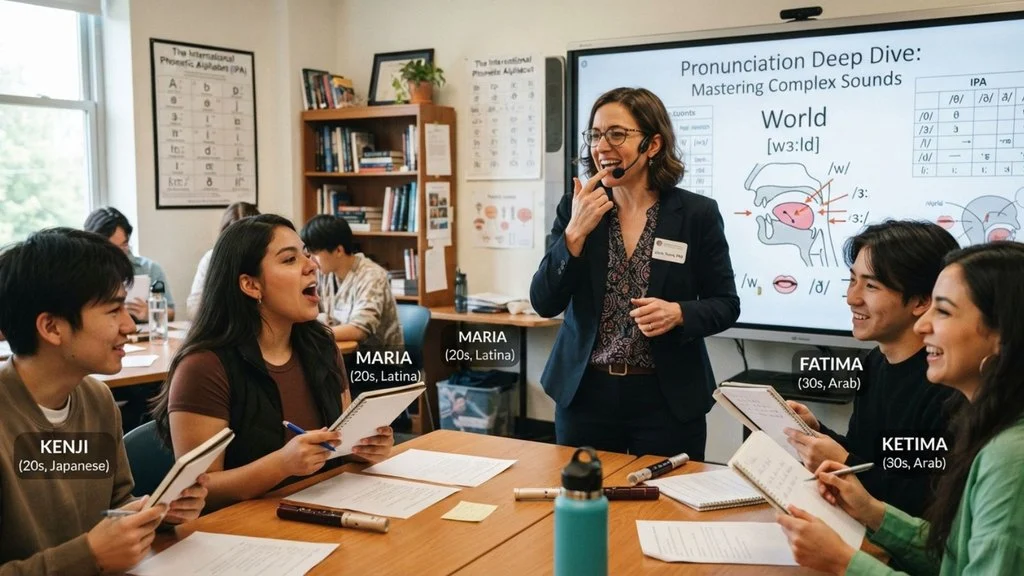
Japanese pronunciation is refreshingly consistent; unlike English, each vowel sound stays the same no matter where it appears in a word. Once you learn the five core vowel sounds you can pronounce almost anything.
- A like “ah” in “father”
- I like “ee” in “see”
- U like “oo” in “food” but shorter and softer
- E like “eh” in “bed”
- O like “oh” in “go”
Applying this to our phrase Otanjoubi omedetou breaks down as:
oh-tahn-joh-bee oh-meh-deh-toh
A few notes to sharpen your pronunciation:
- Tanjoubi has a long “o” sound (じょう) so hold it slightly longer than a typical “jo” it’s “joh-oo” not just “jo.”
- The final u in omedetou is often devoiced meaning it’s barely pronounced if at all. Native speakers usually say something closer to “omedeto” rather than fully sounding out “omedeto.”
- Stress in Japanese is much flatter than in English. Avoid emphasizing any single syllable the way you might in English words. Each syllable gets roughly equal weight.
Common mistakes English speakers make include over-pronouncing the final “u” rushing through the long vowel in “joubi” or adding stress patterns borrowed from English. Slowing down and keeping each syllable even will get you very close to a natural-sounding delivery.
With the sounds down you’re ready to actually write the phrase which is where hiragana and kanji come in.
Writing Systems: Kanji vs. Hiragana
Japanese uses three writing systems together: kanji hiragana and katakana and “Happy Birthday” gives us a great example of how kanji and hiragana work side by side.
The standard written form お誕生日おめでとう mixes both:
- 誕生日 is written in kanji (Chinese-derived characters) each carrying its own meaning: 誕 relates to “birth” 生 means “life” or “born” and 日 means “day.”
- おめでとう is written entirely in hiragana Japan’s phonetic script used for grammatical elements and native words without a common kanji form.
For beginners children or anyone still learning kanji the entire phrase can be written purely in hiragana instead:
おたんじょうびおめでとう
(o-tan-jou-bi-o-me-de-tou)
This hiragana-only version is perfectly understandable and commonly seen on birthday cards designed for kids or in casual informal writing. Native adult speakers however typically default to the kanji form for 誕生日 since it’s a common everyday word learned early in elementary school.
If you’re just starting to learn Japanese there’s no shame in writing the hiragana version. It’s 100% correct and widely used. As you become more comfortable recognizing kanji switching to 誕生日 will feel natural and is generally seen as the more polished standard way to write it in cards messages and formal contexts.
Adding Someone’s Name or Age
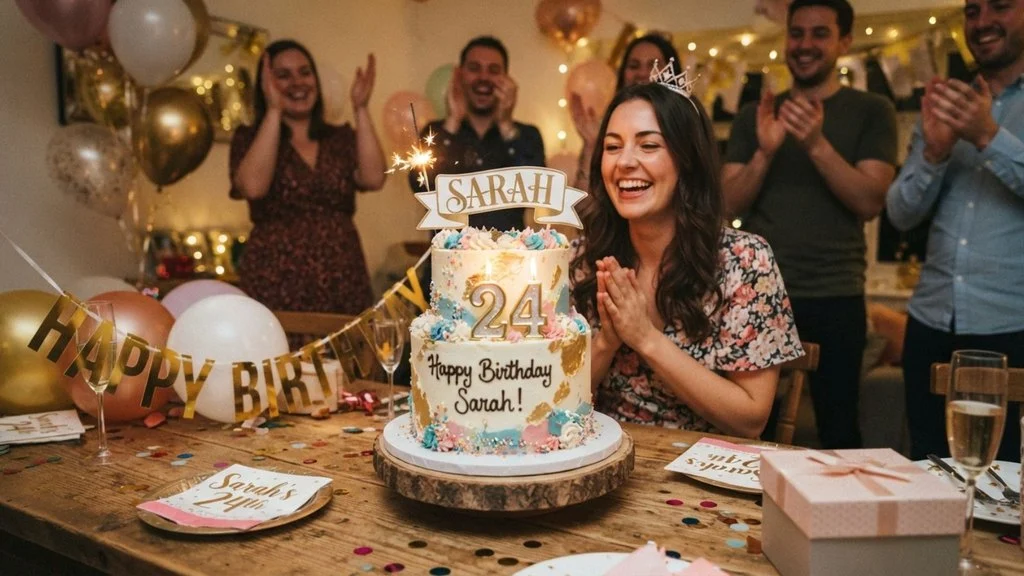
Once you’ve got the base phrase down, personalizing it with a name or age makes your birthday wish feel more specific and heartfelt.
Adding a name
To include someone’s name simply place it before the phrase followed by an honorific like さん (san):
[Name]さん、お誕生日おめでとう
[Name]-san otanjoubi omedetou
For example: 田中さん、お誕生日おめでとう (Tanaka-san otanjoubi omedetou) “Happy birthday Tanaka.”
For close friends or family you might drop さん entirely or swap in a more casual honorific like ちゃん (chan often used for women children or close friends) or くん (kun often used for men or boys):
さくらちゃん、誕生日おめでとう!
(Sakura-chan tanjoubi omedetou!)
Adding an age
To congratulate someone on a specific age use this pattern:
[age]歳のお誕生日おめでとう
[age]-sai no otanjoubi omedetou
For example “Happy 30th birthday” becomes: 30歳のお誕生日おめでとう (Sanjussai no otanjoubi omedetou).
A note on 歳 vs. 才
Both 歳 and 才 are used as the counter word for age and both are pronounced “sai.” 歳 is the more formal standard version seen in official writing while 才 is a simplified variant sometimes used in casual writing or when space is limited (like on birthday cakes or graphics). Either is acceptable but 歳 is generally preferred in polished writing.
Extended & Warm Variations
While the core phrase works beautifully on its own, adding a short follow-up sentiment makes your birthday message feel more personal and heartfelt especially for close friends, family or partners.
Wishing a wonderful year ahead
素敵な一年になりますように
(Suteki na ichinen ni narimasu youni)
“I hope it becomes a wonderful year.” This is a lovely versatile addition that works in cards texts or spoken greetings and pairs naturally after the main birthday phrase.
Expressing affection
For someone you’re close to a partner best friend or sibling you can add:
大好きだよ
(Daisuki da yo)
“I really like/love you.” This isn’t limited to romantic relationships; it’s commonly used platonically among close friends and family in Japan similar to how English speakers might casually say “love you” to a sibling or best friend.
Wishing happiness and health
幸せを祈っています
(Shiawase o inotte imasu) “I’m wishing you happiness.”
健康でありますように
(Kenkou de arimasu youni) “I hope you stay healthy.” This phrase is especially common when writing to older relatives.
Combining phrases naturally
A full warm message might read:
誕生日おめでとう!素敵な一年になりますように。
(Tanjoubi omedetou! Suteki na ichinen ni narimasu youni.)
“Happy birthday! I hope you have a wonderful year ahead.”
The key is keeping combinations short and natural Japanese birthday messages tend to be concise rather than long flowery paragraphs.
Full Phrase Reference Table
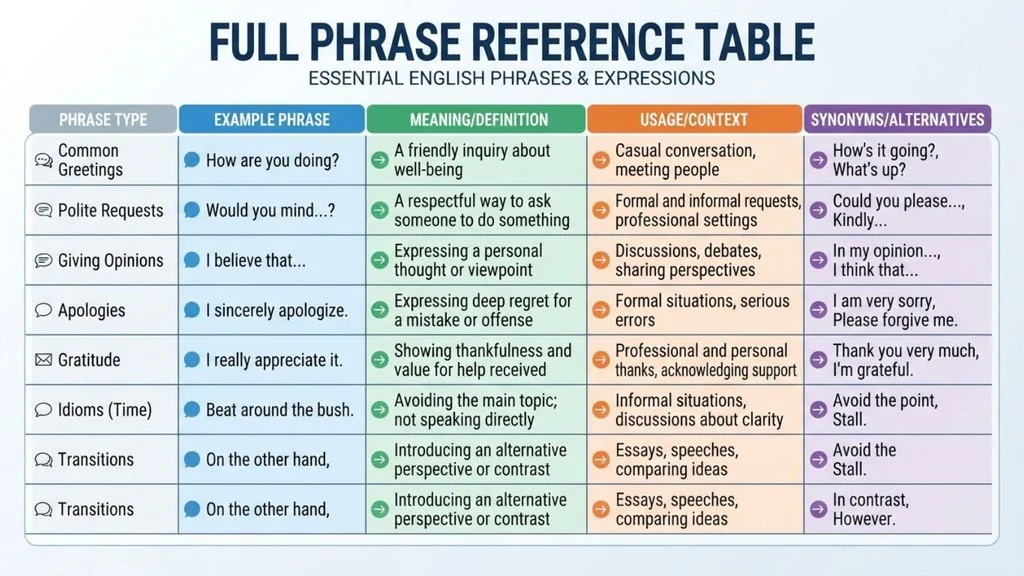
Here’s a consolidated reference for every phrase covered so far organized by formality and context so you can quickly find the right words for any situation.
| English | Japanese | Romaji | Formality | Best Used For |
| Happy Birthday (casual) | 誕生日おめでとう | Tanjoubi omedetou | Casual | Friends siblings classmates |
| Happy Birthday (standard) | お誕生日おめでとう | Otanjoubi omedetou | Polite/Neutral | Acquaintances general use |
| Happy Birthday (formal) | お誕生日おめでとうございます | Otanjoubi omedetou gozaimasu | Formal | Bosses teachers elders clients |
| Happy bday (text-speak) | 誕生日おめ | Tanjoubi ome | Very casual | Texting social media |
| Happy [age]th Birthday | [age]歳のお誕生日おめでとう | [age]-sai no otanjoubi omedetou | Polite | Milestone birthdays |
| I hope it’s a wonderful year | 素敵な一年になりますように | Suteki na ichinen ni narimasu youni | Neutral/Warm | Cards texts speeches |
| I love/really like you | 大好きだよ | Daisuki da yo | Casual/Affectionate | Close friends partners family |
| Wishing you happiness | 幸せを祈っています | Shiawase o inotte imasu | Polite/Warm | Cards formal messages |
| Wishing you good health | 健康でありますように | Kenkou de arimasu youni | Polite/Warm | Older relatives |
| Let’s celebrate! | お祝いしましょう! | Oiwai shimashou! | Casual | Party invitations group chats |
Keep this table bookmarked as a quick-glance cheat sheet whether you’re texting a friend writing a formal card or prepping a toast you’ll have the right phrase ready without second-guessing the tone.
Regional/Dialect Variations
Japanese birthday greetings are largely standardized nationwide since standard Japanese (based on Tokyo/Kanto speech) is taught in schools and used in media across the country. That said, a few regional flavors are worth knowing.
Kansai dialect (Osaka Kyoto Kobe area)
In the Kansai region you might hear a distinct twist: お誕生日おめでとうやで (Otanjoubi omedetou yade) which swaps the standard ending for the characteristically Kansai “yade” giving it a warmer more familiar regional flavor. You may also encounter おめでとうさん (omedetousan) as a Kansai-flavored way of saying “congratulations.” TalkpalSuki Desu
Okinawa
Okinawan (Ryukyuan) has its own distinct language roots and birthday greetings reflect that. People say “うまりびーかりゆしやいびーん” (Umari bii kariyushi yaibiin) where “umari bii” means birthday “kariyushi” means auspicious or joyous and “yaibiin” is a polite sentence ending. This is a great example of how Okinawan differs meaningfully from mainland Japanese rather than being just a regional accent. FUN! JAPAN
Everywhere else
Outside of Okinawa most regions of Japan don’t have a distinctly different dialectal version of “Otanjoubi Omedetou” ; the standard phrase works nationwide, making it a safe universal choice for travelers or learners. FUN! JAPAN
A note on generational variation
Beyond geography age plays a role too: older generations tend to be more formal across the board often using the full “otanjoubi omedetou gozaimasu” even with family while younger people especially teenagers often shorten greetings drastically in texts.
Cultural Context: Birthdays in Japan
To fully appreciate Japanese birthday phrases it helps to understand how differently birthdays have been treated in Japan compared to the West.
The traditional system: Everyone ages together
Historically Japan followed a system called kazoedoshi (“counted years”) where individual birthdays weren’t celebrated at all. Instead everyone’s age increased by one collectively on New Year’s Day regardless of their actual birth date. A baby born in December would already be considered “two” by the following January under this system. Individual birthday celebrations simply weren’t part of the culture.
Western influence after World War II
This changed significantly after World War II when Western customs, birthday cakes, candles , parties , gifts and even singing “Happy Birthday to You” in English became increasingly popular particularly among younger generations and in urban areas. Today individual birthday celebrations are the norm across Japan especially for children and in family settings.
Modern celebrations
Contemporary Japanese birthdays often include a cake with candles, a family dinner, small gifts and sometimes a gathering with close friends. Unlike some Western cultures where large birthday parties are common at every age, adult birthdays in Japan tend to be quieter and more intimate: a dinner out or a small gathering rather than a big blowout event.
Milestone birthdays: Seijin Shiki
One major exception is turning 20 marked by Seijin Shiki (Coming-of-Age Day) a nationwide celebration each January honoring young adults who’ve reached legal adulthood complete with formal kimono ceremonies and community events.
Practical Usage Scenarios

Knowing the phrases is one thing, knowing exactly when and how to use them is what makes your Japanese sound natural. Here’s how to apply everything in real situations.
11.1 Writing a birthday card
Cards call for a slightly more complete message. A safe warm option:
お誕生日おめでとうございます。素敵な一年になりますように。
(Otanjoubi omedetou gozaimasu. Suteki na ichinen ni narimasu youni.)
“Happy Birthday. I hope you have a wonderful year ahead.”
11.2 Texting a friend
Keep it short and casual Japanese texting culture favors brevity:
誕生日おめでとう🎉
(Tanjoubi omedetou🎉)
11.3 Speaking it aloud at a party
When saying it out loud during a toast or celebration the casual form works well among friends:
誕生日おめでとう!乾杯!
(Tanjoubi omedetou! Kanpai!) “Happy birthday! Cheers!”
11.4 Professional context
For a coworker, boss or client, formality matters. A safe workplace message:
お誕生日おめでとうございます。今年も素晴らしい一年になりますように。
(Otanjoubi omedetou gozaimasu. Kotoshi mo subarashii ichinen ni narimasu youni.)
“Happy birthday. I hope this year is a wonderful one for you as well.”
11.5 Social media captions
Instagram or LINE posts often mix casual Japanese with emojis or English:
Happy Birthday🎂 誕生日おめでとう!これからもよろしくね
(Tanjoubi omedetou! Korekara mo yoroshiku ne) “Happy birthday! Looking forward to more good times together.”
Common Mistakes to Avoid
Even with the phrases memorized, a few common missteps can make your Japanese sound awkward or unintentionally rude. Here’s what to watch for.
1. Using casual form with someone who deserves respect
Saying 誕生日おめでとう (tanjoubi omedetou) to your boss a teacher or an elder can come across as overly familiar or even disrespectful. When in doubt about someone’s status relative to you default to the formal お誕生日おめでとうございます.
2. Mixing up おめでとう vs. おめでとうございます
These aren’t interchangeable. Dropping ございます in a formal setting (like a workplace email) can seem careless while adding it unnecessarily with close friends can feel stiff or oddly distant. Match the ending to the relationship not just habit.
3. Incorrect counter usage with age
When stating someone’s age remember the counter word 歳 (or 才) must follow the number you can’t simply say the number alone. Also watch for irregular readings: 20歳 is read hatachi not the expected nijussai since it’s a special traditional term for turning 20.
4. Literal word-for-word translation attempts
Directly translating English birthday phrases (like “hope all your dreams come true” or elaborate American-style card sentiments) can sound unnatural or overly dramatic in Japanese. Japanese birthday messages tend to be shorter, simpler and less flowery. Trust the established phrases rather than translating English sentiment word-for-word.
5. Forgetting the honorific with names
Attaching a name without さん ちゃん or くん can sound blunt or impolite especially with people you’re not extremely close to.
Bonus: Related Phrases
Once you’ve mastered birthday greetings you’ll notice the same “omedetou” pattern shows up across many other Japanese celebrations. Here are a few related phrases worth knowing.
Happy New Year
明けましておめでとうございます
(Akemashite omedetou gozaimasu)
This is arguably Japan’s most important seasonal greeting used specifically for New Year’s, a holiday that as mentioned earlier historically doubled as everyone’s “collective birthday” under the old kazoedoshi system. The structural similarity to birthday phrasing isn’t a coincidence; both center on the same “congratulations” framework.
General congratulations
おめでとう (omedetou) / おめでとうございます (omedetou gozaimasu)
This root phrase extends far beyond birthdays. You’ll hear it for graduations weddings job promotions passing an exam or any personal achievement:
- 卒業おめでとう (sotsugyou omedetou) Congratulations on graduating
- ご結婚おめでとうございます (Go-kekkon omedetou gozaimasu) Congratulations on your marriage
- 合格おめでとう (goukaku omedetou) Congratulations on passing (an exam)
“Many happy returns” equivalent
Japanese doesn’t have a direct equivalent to the English “many happy returns” but a close sentiment is expressed through:
来年もよろしくお願いします
(Rainen mo yoroshiku onegaishimasu)
Loosely “I look forward to more good times next year too” often added after birthday or New Year’s wishes to imply continued goodwill.
Recognizing this shared “omedetou” foundation makes it much easier to expand your Japanese vocabulary for celebrations beyond just birthdays.
Quick-Reference Cheat Sheet
For anyone who just wants the essentials without scrolling back through the full guide here are the phrases you actually need to know.
The only 4 phrases you really need:
| Situation | Phrase | Romaji |
| Close friends/family | 誕生日おめでとう | Tanjoubi omedetou |
| General/everyday use | お誕生日おめでとう | Otanjoubi omedetou |
| Boss teacher elders | お誕生日おめでとうございます | Otanjoubi omedetou gozaimasu |
| Texting/social media | 誕生日おめ🎉 | Tanjoubi ome |
One rule of thumb: When unsure add ございます (gozaimasu). Being slightly too formal is always safer than being too casual with someone who deserves respect.
One phrase to sound extra thoughtful:
Add this after any of the above:
素敵な一年になりますように
(Suteki na ichinen ni narimasu youni) “I hope it’s a wonderful year.”
One pronunciation tip to remember:
The final “u” in omedetou is often barely pronounced as “omedeto” , not a fully sounded-out “omedetoo.”
One cultural note to keep in mind:
Japanese birthday messages are meant to be short and sincere, not long or elaborate. A brief well-chosen phrase said with the right tone matters more than an elaborate message.
Conclusion
Learning how to say “Happy Birthday” in Japanese is a small effort with a surprisingly big payoff.
What starts as a simple phrase お誕生日おめでとう (Otanjoubi omedetou) opens a window into much bigger ideas:
Japan’s layered system of politeness the cultural weight placed on relationships and respect and even the historical shift from collective New Year’s aging to the individualized birthday celebrations common today.
The core takeaway is this: context matters more than vocabulary if you reach for the casual 誕生日おめでとう the everyday-safe お誕生日おめでとう or the fully respectful お誕生日おめでとうございます choosing the right form for the right relationship is what makes your Japanese sound natural and considerate.
ayered system of politeness the cultural weight placed on relationships and respect and even the historical shift from collective New Year’s aging to the individualized birthday celebrations common today.