There’s something undeniably appealing about sun-kissed skin; it signals health, vacation, and ease but chase that golden glow the wrong way, and you’ll trade a few hours of sunbathing for days of peeling, pain, and long-term skin damage.
The good news? Tanning and burning aren’t the same process, and understanding the difference is the key to getting one without the other.
Contrary to popular belief, a “base tan” doesn’t protect you from burning, it’s actually a sign your skin has already sustained UV damage.
Real sun safety isn’t about avoiding color altogether; it’s about working with your skin’s natural limits instead of against them.
In this guide, we’ll break down exactly how tanning works at a cellular level, how to time and pace your sun exposure, which products actually help, and how to care for your skin afterward so you can enjoy that glow without paying for it later.
Understanding Skin & Sun Basics
To tan without burning, you first need to understand what’s actually happening on your skin when you step into the sun. Sunlight contains two types of ultraviolet radiation that matter here: UVA and UVB. UVA rays penetrate deep into the skin and are primarily responsible for tanning and premature aging, while UVB rays are shorter and more intense; they’re the main cause of sunburn and play a bigger role in skin cancer risk. Most sun exposure involves a mix of both.
When UV rays hit your skin, cells called melanocytes respond by producing more melanin, the pigment responsible for skin color. This is your body’s natural defense mechanism, essentially a built-in sunscreen that darkens your skin to absorb and deflect further UV damage. A tan, in other words, is evidence that your skin has already been stressed by radiation, even if it looks harmless.
Not everyone tans or burns at the same rate. This comes down to your Fitzpatrick skin type, a classification system ranging from Type I (very fair skin that burns easily and rarely tans) to Type VI (deeply pigmented skin that rarely burns). Knowing your type is one of the most useful things you can do before sunbathing, since it directly determines how long you can safely stay in the sun and how gradually you should build exposure.
Why Sunburn Happens
Sunburn isn’t just “too much sun” , it’s a specific biological response that kicks in once UV exposure exceeds what your skin’s melanin can handle. Think of melanin production as a defense system with a limit. Once UVB radiation overwhelms that limit, it starts damaging the DNA inside skin cells. Your body responds with inflammation, increased blood flow, redness, heat, and swelling which is what you experience as a burn. In more severe cases, damaged cells die off entirely, leading to peeling a few days later.
This is why sunburn often shows up hours after exposure rather than immediately. The redness and pain typically peak 12 to 24 hours after you’ve left the sun, which makes it easy to underestimate how much exposure you’ve actually had while it’s happening.
How quickly you burn depends heavily on your skin type. Someone with very fair skin (Fitzpatrick Type I) might start burning in as little as 10–15 minutes of midday sun, while someone with deeply pigmented skin (Type VI) may tolerate several hours before any damage occurs. Other factors such as altitude, time of day, cloud cover, and reflective surfaces like water or sand can intensify UV exposure even when it doesn’t feel that strong.
The key takeaway: by the time your skin looks pink, damage has already started. Learning to anticipate your limit rather than reacting to visible signs is central to tanning safely.
Prepping Your Skin Before Sun Exposure
How you prepare your skin in the days before sun exposure can make a real difference in how evenly you tan and how well your skin holds up. A little groundwork goes a long way toward avoiding blotchy patches, dry patches, and unnecessary sensitivity.
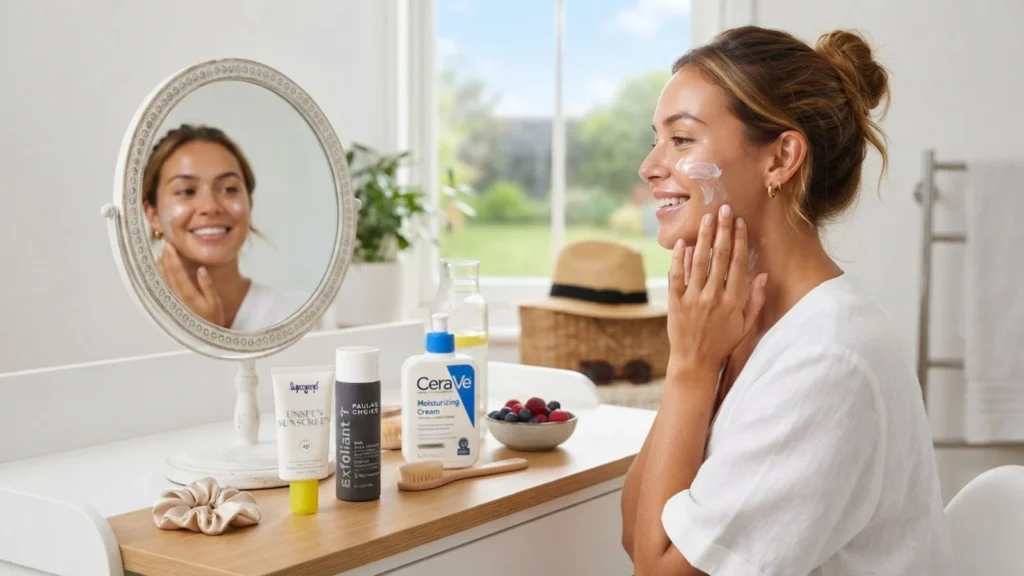
Start with exfoliation. Dead skin cells sitting on the surface can cause uneven tanning, since they slough off unevenly and take pigment with them. Gently exfoliating with a scrub or a soft brush a day or two before sun exposure removes this buildup, giving you a smoother, more uniform base. Avoid exfoliating on the same day you plan to tan, though it can leave skin more sensitive to UV rays.
Hydration matters just as much, both from the outside and within. Well-moisturized skin tans more evenly and is more resilient against dryness and peeling. Apply a lightweight, non-greasy moisturizer in the days leading up to sun exposure, and keep drinking water dehydrated skin is more prone to damage and slower to repair itself.
Finally, resist the urge to go all-in on day one. Building tolerance gradually starting with shorter sessions and slowly increasing exposure time over several days allows your skin to adapt and produce melanin progressively, rather than overwhelming it in a single long session. This approach is far more effective at producing a lasting tan without triggering a burn.
The Right Way to Sunbathe
Timing is one of the most overlooked factors in safe tanning. UV rays are strongest between 10 a.m. and 4 p.m., when the sun sits highest in the sky. Sunbathing outside this window early morning or late afternoon still allows melanin production but significantly lowers your risk of burning, since UVB intensity drops sharply as the sun’s angle changes.
Session length should be guided by your skin type, not by how good the sun feels. Fair-skinned individuals may need to cap initial sessions at 10–15 minutes, while those with deeper pigmentation can typically tolerate 30–45 minutes early on. Regardless of type, it’s best to start conservatively and extend gradually over several days rather than trying to “catch up” in one go.
Positioning matters too. Turning every 15–20 minutes ensures UV exposure is distributed evenly across your body, preventing the blotchy, uneven tan that comes from lying in one position too long. Pay particular attention to areas that catch more direct light, like shoulders, the bridge of the nose, and the tops of feet.
Building in shade breaks even just 10 minutes every half hour gives your skin a chance to cool down and reduces cumulative UV load without stopping the tanning process altogether. This rhythm of expose, turn, and rest is far more effective at producing an even, burn-free tan than one long, uninterrupted session.
Sunscreen: Your Non-Negotiable Tool
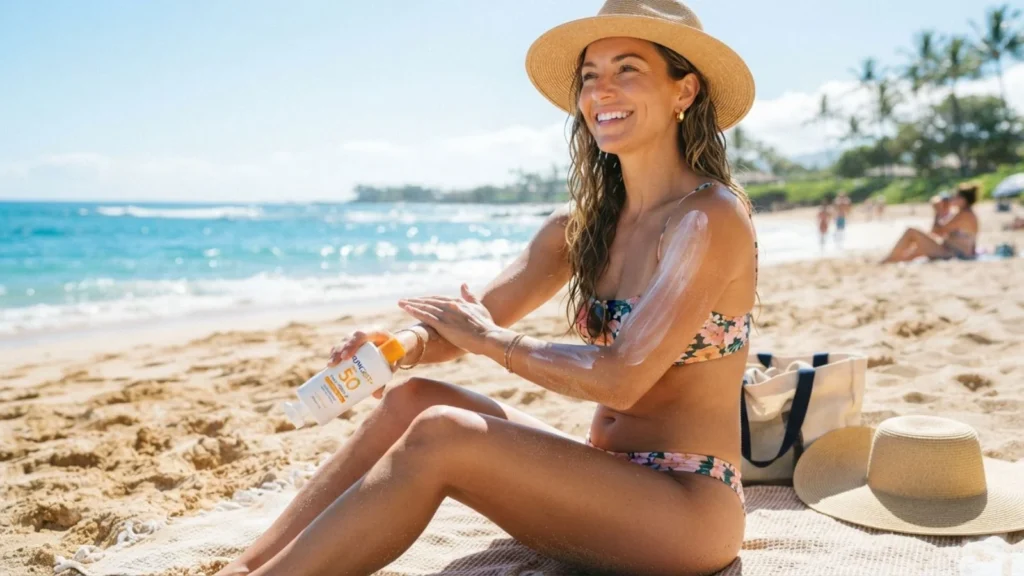
One of the biggest myths about tanning is that sunscreen prevents it. In reality, sunscreen doesn’t block tanning, it blocks burning. Even high-SPF sunscreens allow some UV rays through, which is enough to trigger gradual melanin production while protecting your skin’s DNA from the damage that causes burns and long-term harm. Skipping sunscreen doesn’t get you a darker tan faster; it just gets you burned faster.
Understanding SPF helps clarify this. SPF measures protection against UVB rays, specifically the ones responsible for burning. An SPF 30 sunscreen blocks about 97% of UVB rays, while SPF 50 blocks around 98%. The difference is small, but consistency matters more than the number itself. Look for “broad-spectrum” on the label, which means the sunscreen also protects against UVA rays, the ones linked to premature aging and deeper skin damage that SPF alone doesn’t measure.
Reapplication is where most people fall short. Sunscreen breaks down with time, sweat, and water, so it needs to be reapplied every two hours more often if you’re swimming or sweating heavily, even with “water-resistant” formulas.
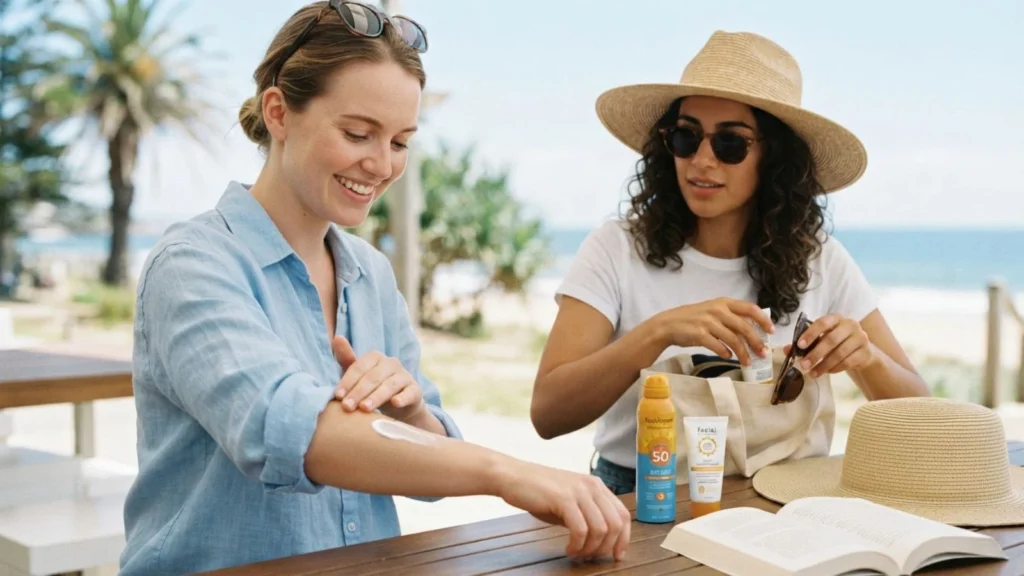
For tanning specifically, mineral sunscreens (zinc oxide or titanium dioxide) sit on top of the skin and reflect UV rays, while chemical sunscreens absorb into the skin and convert UV into heat. Both work well; the right choice often comes down to skin sensitivity and personal preference rather than tanning performance.
Diet & Supplements That Support Tanning
What you eat in the weeks before sun exposure can genuinely influence how your skin responds to UV rays though it’s a support system, not a substitute for sunscreen or sensible timing.
Beta-carotene, the pigment that gives carrots, sweet potatoes, and pumpkins their orange color, converts into vitamin A in the body and has been linked to modestly improved skin resilience against UV stress. Lycopene, found in tomatoes and watermelon, is another antioxidant compound studied for its role in reducing UV-related skin damage. Neither will prevent a burn on its own, but a diet rich in these compounds may help your skin handle sun exposure a little better over time.
More broadly, antioxidant-rich foods such as berries, leafy greens, nuts, and green tea help combat the oxidative stress UV rays cause at a cellular level. This won’t stop a burn from forming, but it may support faster, healthier skin recovery afterward.
Hydration deserves a mention here too, since it ties diet and skin resilience together. Skin that’s well-hydrated from the inside is more elastic and better equipped to handle heat and UV stress without drying out or peeling.
As for supplements, the evidence is mixed. Some polypodium leucotomos extract studies show modest UV-protective effects, but most “tanning pills” and beta-carotene supplements on the market lack strong clinical backing and shouldn’t replace sunscreen or safe sun practices.
Tools & Products That Help
Beyond sunscreen, a handful of products can support a safer, more even tan when used correctly though it’s worth understanding what they actually do before adding them to your routine.
Tanning oils and accelerators work by intensifying the effect of UV rays on the skin, often through ingredients like tyrosine, which is thought to support melanin production. The catch is that many tanning oils offer little to no SPF, meaning they speed up tanning and burning simultaneously. If you use one, look for a formula that includes at least SPF 15–30, and treat “accelerate” claims with some skepticism; the research behind them is limited.
After-sun products serve a different purpose: recovery rather than color. Formulas containing aloe vera, hyaluronic acid, or panthenol help replenish moisture and calm inflammation after time in the sun, reducing the chances of peeling and helping your tan last longer without looking patchy as skin dries out.
SPF-infused tanning lotions attempt to bridge both goals offering some UV protection while still allowing gradual color development. These can be a reasonable middle ground for people who want a tan without going sunscreen-free, though they typically carry lower SPF ratings than dedicated sunscreens and shouldn’t be relied on for extended exposure.
As with most tanning products, the safest approach is to treat these as supporting tools alongside sunscreen and smart timing, not replacements for either.
Tanning Alternatives (Zero-Burn Options)
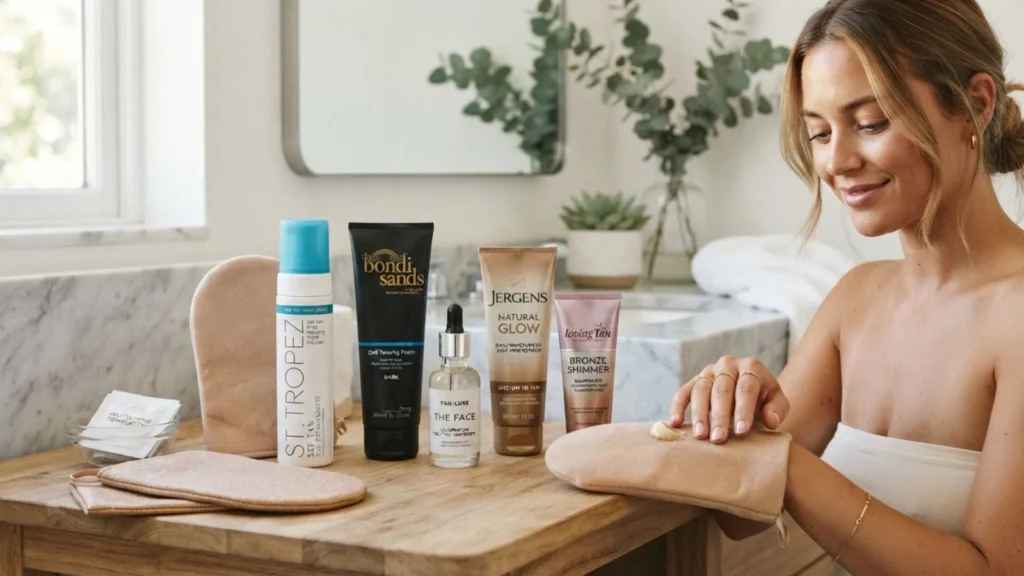
If the goal is color without any UV risk at all, self-tanners, spray tans, and bronzers offer a way to get there without spending time in the sun. These options have improved significantly in recent years, making natural-looking results far more accessible than they once were.
Self-tanners and gradual tanning lotions work by using DHA (dihydroxyacetone), a compound that reacts with amino acids in the skin’s surface layer to produce a temporary brown pigment. Unlike sun exposure, this process causes no UV damage. Gradual formulas build color over several days of application, which tends to look more natural and is easier to control than one-time intense self-tanners, especially for beginners.
Spray tans offer a faster route to full-body color, typically applied by a professional or in a salon booth. Because the color develops within hours and fades evenly over about a week, spray tans are a popular choice for events or vacations where a controlled, predictable result matters more than a long-lasting tan.
Bronzers, by contrast, sit on top of the skin rather than reacting with it, offering an instant, temporary wash of color that washes off with soap and water. They’re ideal for one-off occasions or layering with a base tan for extra depth, though they don’t last through swimming or heavy sweating.
Combined, these alternatives make it entirely possible to maintain a tanned appearance year-round without ever risking a burn.
After-Sun Care
What you do in the hours after sun exposure plays a big role in how your skin recovers and how long your tan actually lasts. Even a well-managed tanning session puts some stress on the skin, so a proper after-sun routine helps lock in color while minimizing dryness and irritation.
Start by cooling the skin down. A lukewarm, not hot shower helps soothe heat trapped in the skin without stripping away natural oils. Hot water can worsen dryness and cause a fresh tan to fade faster by accelerating skin cell turnover.
Aloe vera is one of the most effective after-sun ingredients available, thanks to its anti-inflammatory and hydrating properties. Applying it generously after sun exposure helps calm any redness and supports the skin’s natural repair process, whether or not you actually burned.
Hydration should continue from the inside out as well. Drinking water after a day in the sun replenishes fluid lost through heat exposure and supports skin elasticity, which helps prevent the peeling that so often signals lost color.
It’s also worth knowing the signs that you’ve overdone it despite your best efforts: tightness, warmth radiating from the skin, or redness that appears within a few hours. If this happens, cool compresses, hydrating lotion, and staying out of the sun for a few days are the best course of action. Catching it early can prevent peeling and preserve more of the tan underneath.
Long-Term Skin Health
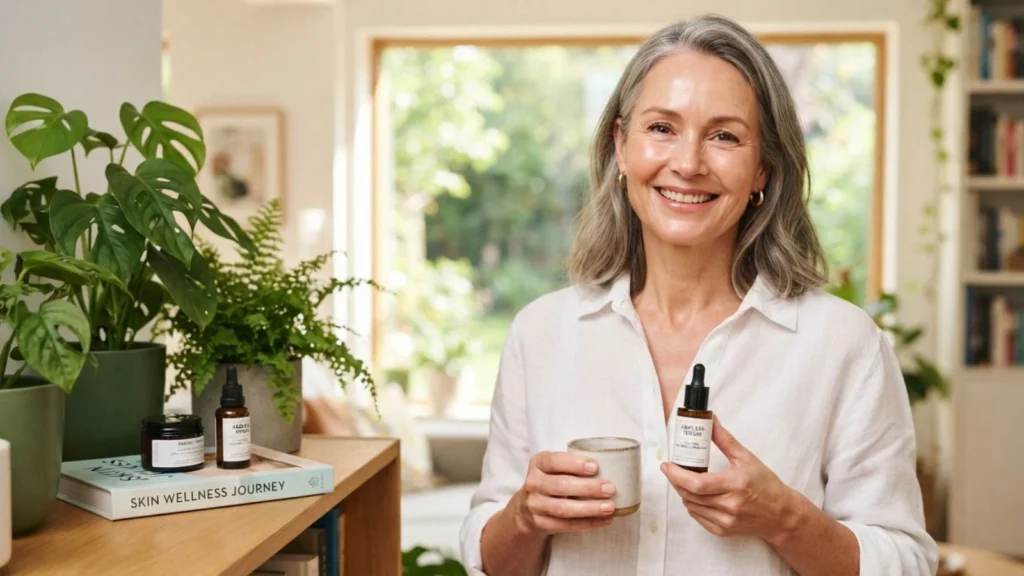
Even when done carefully, sun exposure has a cumulative effect on skin over time which is why thinking beyond a single tanning session matters. Every bit of UV exposure, whether it results in a burn or not, contributes to what dermatologists call photoaging: the breakdown of collagen and elastin that leads to fine lines, wrinkles, and loss of skin elasticity years down the road. Unlike a tan, which fades within weeks, this kind of damage builds up permanently.
UV exposure is also the leading environmental risk factor for skin cancer, including melanoma, the most serious form. This risk isn’t limited to burns repeated unprotected exposure, even without visible damage, increases the likelihood of DNA changes in skin cells over time. Regular skin checks and awareness of new or changing moles are worthwhile habits for anyone who spends significant time in the sun, tanned skin or not.
None of this means avoiding the sun altogether. It means treating a tan as something to manage thoughtfully rather than chase aggressively. Wearing sunscreen even on days when a tan isn’t the priority, limiting peak-hour exposure, and giving skin recovery time between sessions all help balance the short-term appeal of color with the long-term health of your skin.
Ultimately, the healthiest tan is one built gradually, protected consistently, and paired with genuine attention to how your skin is responding, not just how it looks in the mirror that day.
Conclusion
Getting a tan without burning isn’t about luck or having “good” skin, it’s about working with your body’s natural processes instead of rushing past them.
Melanin production takes time, and every shortcut that skips sunscreen, ignores timing, or pushes past your skin’s limit trades a temporary glow for damage that lasts far longer than the tan itself.
The strategies in this guide all point toward the same principle: gradual, protected, informed exposure beats intensity every time.
Knowing your skin type sets realistic expectations. Timing your sessions around peak UV hours reduces unnecessary risk. Sunscreen doesn’t cancel out tanning, it simply lets you tan without paying for it in pain and peeling.
And prepping your skin beforehand, caring for it afterward, and giving it recovery time in between all add up to a tan that looks better and lasts longer.