Prawns and shrimp are both small crustaceans with ten legs, and the words are often used interchangeably.
In the United States, “shrimp” is the common name for nearly all of these animals. “Prawn” usually refers to larger species, and the term is more common in the UK, Australia, and other countries.
The biggest practical difference is size and body shape, not a difference in kind.
Key Takeaways
- Prawns and shrimp belong to the same broad group of crustaceans, called decapods.
- In the US, nearly every product labeled shrimp in a store or on a menu is what many other countries call prawns.
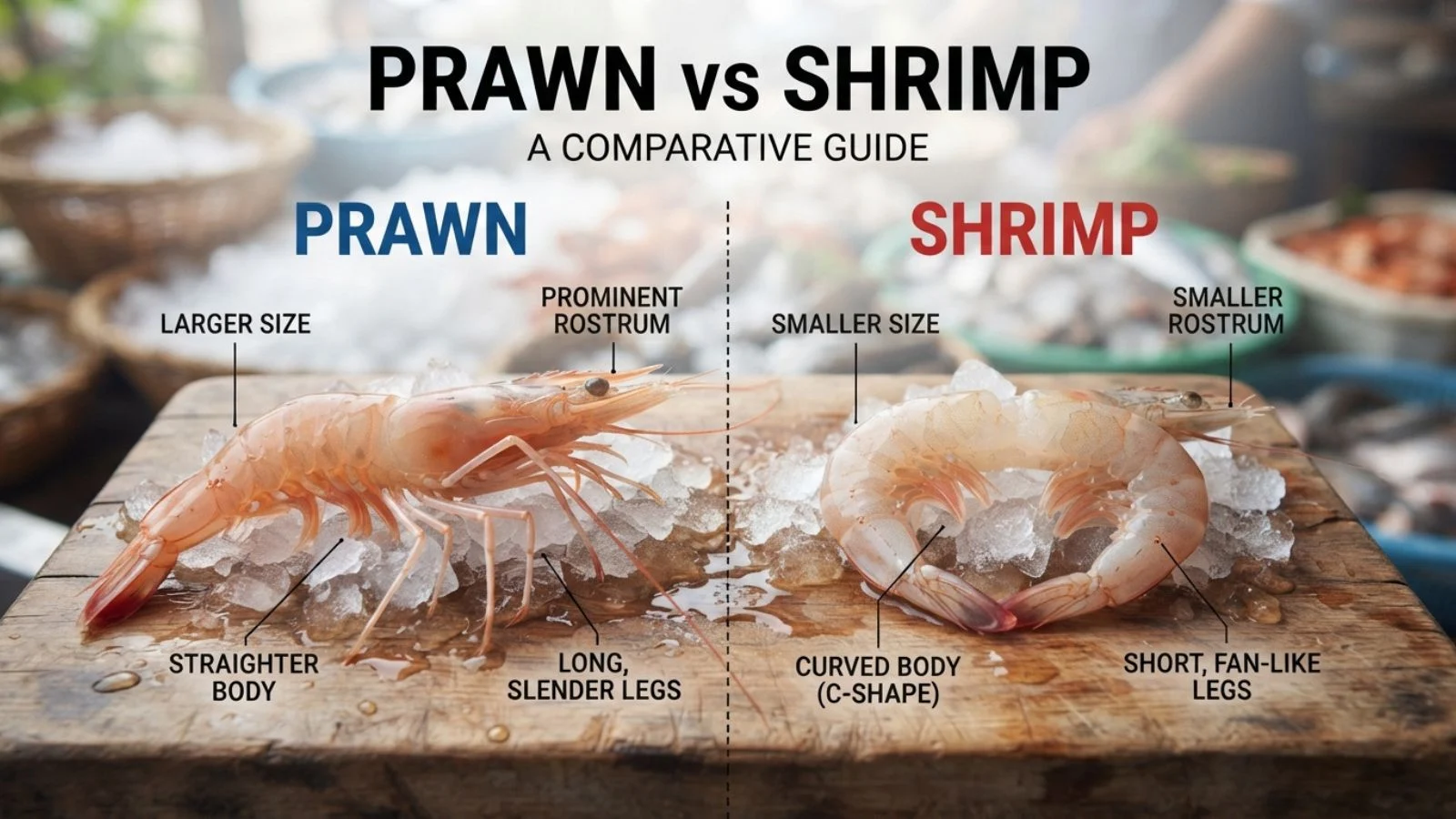
- Prawns tend to be larger, with a thicker body and longer legs.
- Taste and texture are similar, though prawns can feel a bit firmer and sweeter.
- In most recipes, you can swap one for the other without changing the result much.
What Is the Difference Between Prawns and Shrimp?
The short answer is that there is no strict scientific line between them. Both belong to the order Decapoda, which means “ten-footed,” and both have a segmented shell, a tail fan, and feathery gills. Biologists sort them into different suborders and families, but those groupings do not match the everyday words people use.
Are Prawns and Shrimp the Same Animal?
Not exactly, but they are close relatives. Some species that people call prawns are in the same suborder as shrimp, and the names mostly reflect local habits. Many common “prawns,” such as the giant tiger prawn, belong to the same family as many shrimp species. Because of this overlap, a single animal can be called a prawn in one country and a shrimp in another.
Size and Body Shape
Prawns are generally bigger. They often have longer legs, a thicker body, and a more pronounced beak, or rostrum. Shrimp tend to be smaller and more slender. Sizes vary widely, though, so the rule works better as a guide than a fact. When you look at a bag of frozen seafood, the count per pound on the label tells you more than the name does.
Why Americans Usually Say “Shrimp”
In American English, “shrimp” is the default word. Grocery stores, restaurants, and seafood guides use it for almost every product, including large ones. “Prawn” appears mostly on menus that are influenced by British or Australian cooking, or on packages from imported seafood. If you order “prawns” at a typical US restaurant, you will probably get the same kind of dish you would get with shrimp.
Taste and Texture Differences
Many people describe prawns as slightly sweeter and firmer. Shrimp can be more tender and delicate, especially when they are small. These differences depend more on freshness, species, and how they were cooked than on the name. A fresh, well-handled shrimp will taste better than an old prawn, so buy based on quality first.
How to Cook Prawns vs. Shrimp
Both cook in just a few minutes, so the most common mistake is overcooking. Look for the visual cue: the flesh turns opaque and curls into a loose C shape. A tight O shape usually means they have gone too far.
Larger prawns hold up well to grilling, roasting, or skewering because their size gives you more room for error. Smaller shrimp are better for sautéing, stir-frying, or adding to pasta and soups. Remove the dark vein along the back if it bothers you, though it is safe to eat and only affects texture and appearance.
Can You Substitute One for the Other?
Yes, in most cases. If a recipe calls for shrimp and you have prawns, use them the same way and adjust the cooking time slightly for size. The only real exception is when a dish depends on a specific size, such as a shrimp cocktail that calls for jumbo pieces. In that case, choose by count per pound rather than by name.
Which Is Healthier and Cheaper?
Nutritionally, the two are very similar. Both are low in fat and calories and provide protein, along with minerals like selenium and iodine. Price depends on the market and species, not the name. Smaller shrimp are often cheaper per pound, while larger prawns usually cost more. Frozen versions are often just as good as fresh and can be a better value.
Frequently Asked Questions
Are prawns and shrimp the same thing?
They are closely related and often treated as the same food. The main difference is naming, which depends on the region. Prawns are usually larger, but there is no strict scientific boundary separating the two.
Are prawns bigger than shrimp?
Usually, yes. Prawns tend to have a larger body and longer legs. However, many products labeled shrimp in the US are large, so size alone is not a reliable guide.
Do prawns taste better than shrimp?
Some people find prawns slightly sweeter and firmer. Taste depends more on freshness and how the seafood is cooked than on the name.
Can I use prawns in a shrimp recipe?
Yes. Use the same amount and adjust the cooking time for size. Keep the recipe’s count-per-pound requirement in mind if size matters for the dish.
Final Thoughts
For most cooks in the US, prawns and shrimp are interchangeable. Focus on size, freshness, and the recipe’s needs rather than the name on the package.
Choose larger prawns for grilling and smaller shrimp for quick sautéed dishes, and you will get good results either way.