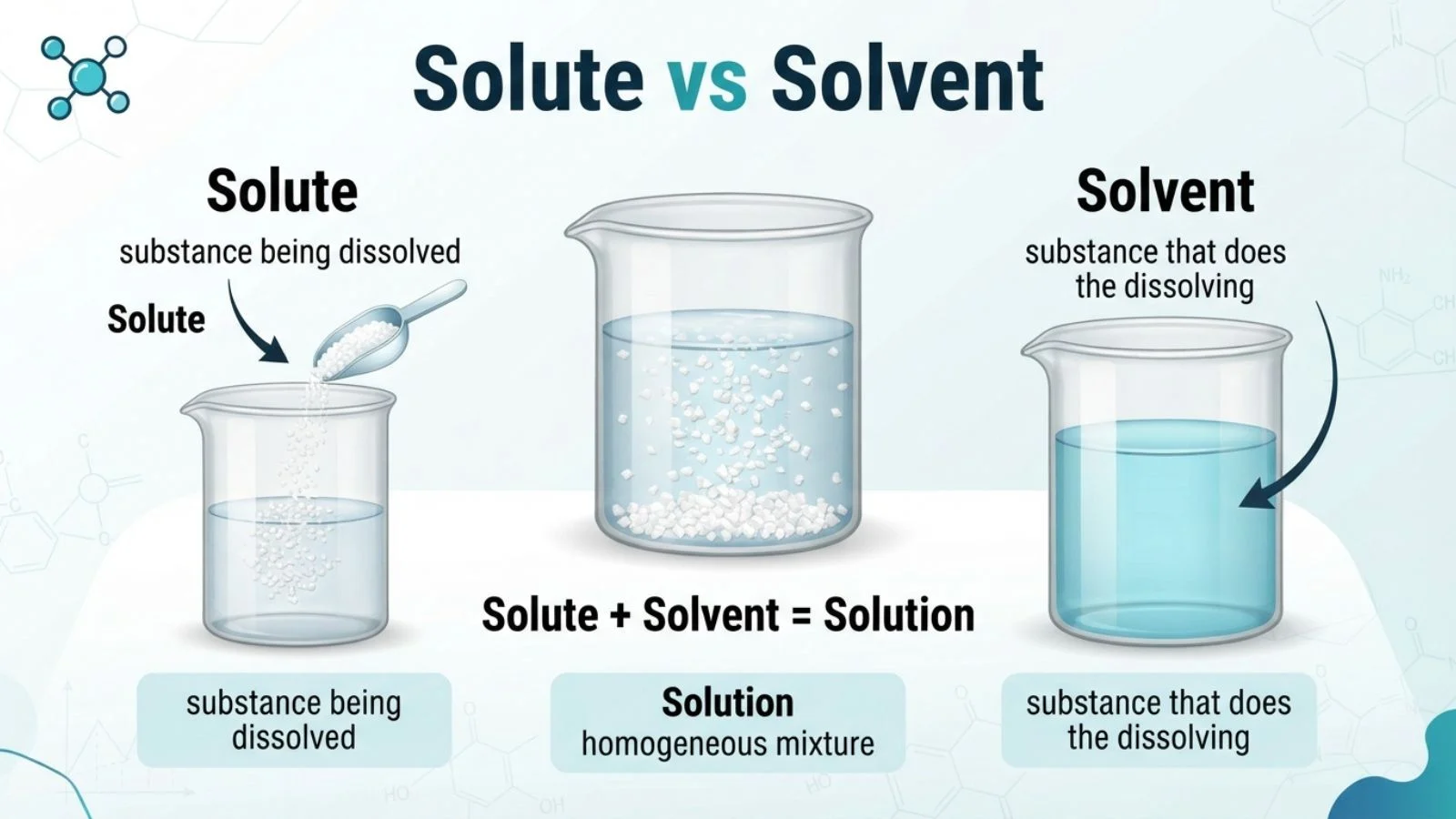
A solute is the substance that gets dissolved in a solution, while a solvent is the substance that does the dissolving.
In salt water, salt is the solute and water is the solvent. The solvent is usually the component present in the greater amount.
Key Takeaways
- A solute is the substance that dissolves.
- A solvent is the substance that dissolves the solute.
- Together, a solute and a solvent form a solution.
- The solvent is usually the part present in the larger quantity.
- Water is the most common solvent, which is why it is often called the “universal solvent.”
What Is a Solute?
A solute is the substance that dissolves into another substance. It can be a solid, a liquid, or a gas. When you stir sugar into tea, the sugar is the solute because it disappears into the liquid.
Solutes are usually the smaller or less abundant part of a mixture. They break apart into individual particles, such as molecules or ions, and spread evenly through the solvent.
What Is a Solvent?
A solvent is the substance that does the dissolving. It takes in the solute and spreads its particles throughout the mixture. Solvents can also be solids, liquids, or gases, although liquid solvents are the most familiar.
Water is the best-known solvent. Many other liquids, such as alcohol, acetone, and mineral spirits, also serve as solvents for different materials.
Solute vs Solvent: Key Differences
The two terms describe roles within the same mixture. The table below shows how they compare.
| Feature | Solute | Solvent |
| Role | Gets dissolved | Does the dissolving |
| Usual amount | Smaller | Larger |
| Example in salt water | Salt | Water |
| Example in coffee | Coffee grounds’ soluble compounds | Water |
How to Identify the Solute and Solvent in a Solution
Start by asking which substance is dissolving. Next, check the amounts. The substance present in the larger quantity is usually the solvent.
Here is a simple way to check:
- Look at the physical state. If the mixture has a solid dissolved in a liquid, the liquid is usually the solvent.
- Compare the amounts. A teaspoon of sugar in a cup of water means water is the solvent.
- Consider the context. In a chemistry problem, the question may name the solvent directly.
Examples of Solutes and Solvents
Seeing real examples makes the difference clearer:
- Salt water: salt is the solute, water is the solvent.
- Sugar syrup: sugar is the solute, water is the solvent.
- Soda: carbon dioxide gas is the solute, water is the solvent.
- Brass: zinc is the solute, copper is the solvent.
- Air: oxygen is a solute in the nitrogen solvent, though nitrogen is the main component.
Can a Solution Have More Than One Solution?
Yes. A solution can contain several solutes dissolved in one solvent. Seawater is a good example. It contains many dissolved salts, such as sodium chloride and magnesium compounds, all dissolved in water. The solvent is still the same, but the solutes are multiple.
Frequently Asked Questions
What is the difference between a solute and a solvent?
A solute is the substance that dissolves, and a solvent is the substance that does the dissolving. Together they form a solution. In a simple mixture like salt water, the salt is the solute and the water is the solvent.
Can a solute be a liquid?
Yes. If you mix two liquids that dissolve in each other, such as alcohol and water, either one can act as the solute depending on which is present in smaller amounts.
What is the most common solvent?
Water is the most common solvent in daily life and in nature. It dissolves many substances, which is why it plays such a large role in biology and chemistry.
Is water always the solvent?
No. Water is common, but not always the solvent. Solvents like alcohol, acetone, and oils are used for other materials.
Conclusion
Understanding solute and solvent is the foundation of chemistry. A solute is the substance that gets dissolved, while a solvent is the substance that does the dissolving.
Together, they form a solution. Usually, the solvent is the component present in the greater amount in a mixture.
If you remember this simple difference, you can easily identify solutions such as salt water, sugar syrup, or any other solution.