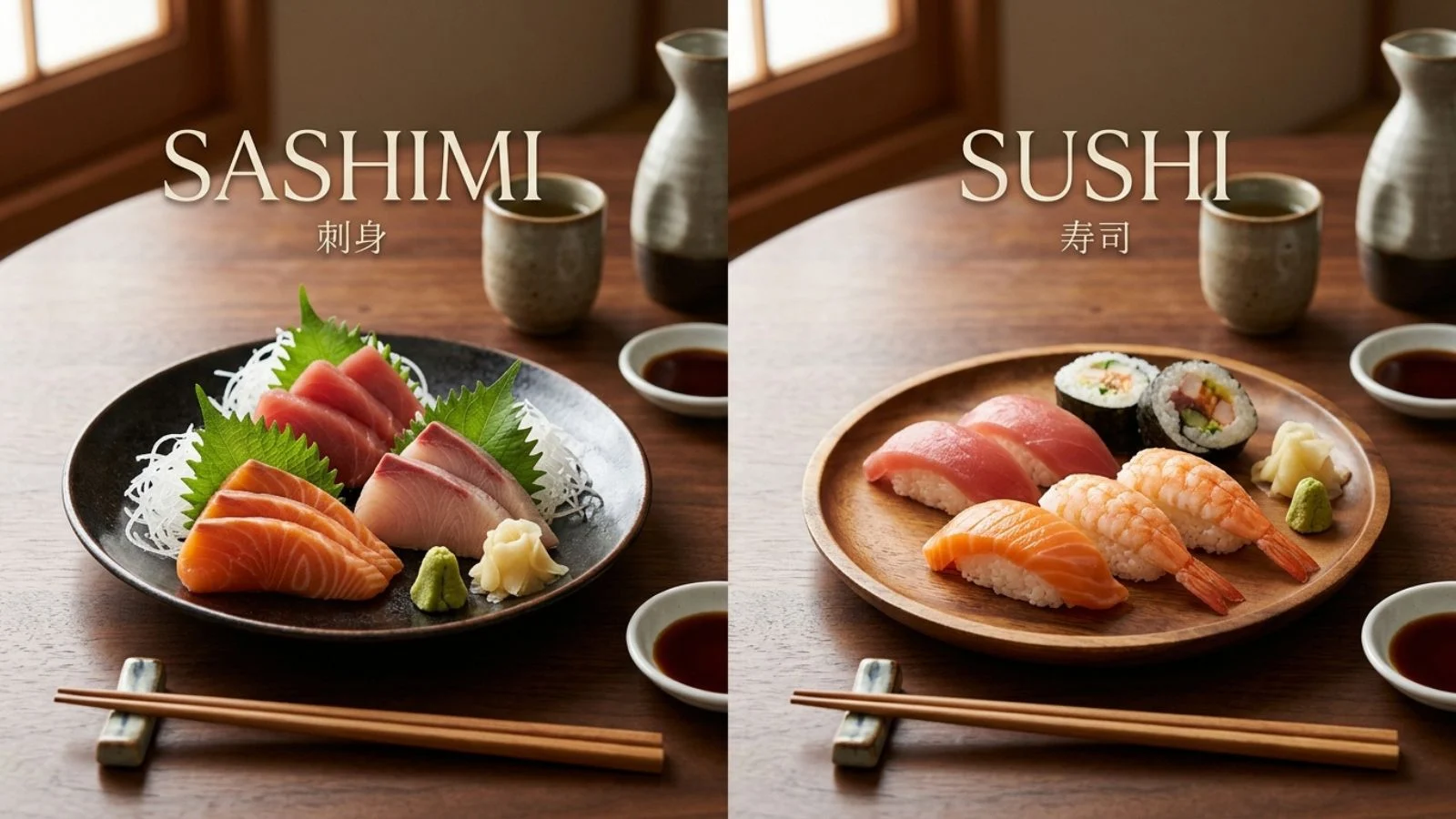
Sashimi is thinly sliced raw fish or seafood served without rice. Sushi is a dish built around vinegared rice, and it may or may not include raw fish.
The main difference is that sashimi is about the fish, while sushi is about the rice.
Many sushi dishes contain fish, but some are made with cooked seafood, vegetables, or eggs.
Key Takeaways
- Sashimi is sliced raw fish served without rice.
- Sushi is vinegared rice combined with fish, seafood, or vegetables.
- Sashimi is usually lower in carbohydrates than sushi.
- Sushi is the broader category, and sashimi is one style of Japanese food.
- Both can be part of a balanced meal if you choose fresh, reputable options.
What Is Sushi?
Sushi is a Japanese dish built on seasoned rice. The rice is mixed with rice vinegar, sugar, and salt, which gives it a slightly tangy flavor. The rice is then combined with fish, seafood, vegetables, or egg.
Many people in the United States think sushi always means raw fish. That is a common misunderstanding. Raw fish is a popular topping, but sushi can also include cooked shrimp, avocado, cucumber, or tamagoyaki, a sweet rolled omelet.
Why rice defines sushi
If a dish has vinegared rice as its base, it is sushi. Nigiri places a slice of fish over a small mound of rice. Maki rolls wrap rice and fillings in seaweed, called nori. In both cases, the rice is the foundation.
What Is Sashimi?
Sashimi is thin slices of fresh, raw fish or seafood. It is served on its own, without rice. The cut is usually made against the grain of the flesh, which gives a clean texture and lets the natural flavor come through.
Common sashimi choices include tuna, salmon, yellowtail, and octopus. Chefs often serve it with soy sauce, wasabi, and sometimes shredded daikon radish.
How sashimi is served
Sashimi usually arrives arranged on a plate or wooden board. It may be garnished with shiso leaves or thin strips of cucumber. Because there is no rice to fill you up, sashimi is often ordered as a lighter course or as a main dish by people who want protein without carbohydrates.
Key Differences at a Glance
| Feature | Sashimi | Sushi |
| Main ingredient | Sliced raw fish or seafood | Vinegared rice |
| Rice | None | Required |
| Raw fish | Always raw (usually) | Optional |
| Typical carbs | Low | Moderate to high |
| Common forms | Plated slices | Nigiri, maki, hand rolls |
Is Sashimi Healthier Than Sushi?
Sashimi is often the lower-carbohydrate choice because it leaves out the rice. Fish provides protein, and fatty fish like salmon and tuna contain omega-3 fatty acids. Sushi is not unhealthy, but the rice adds calories and carbohydrates, and rolls with tempura, cream cheese, or heavy sauces can add more fat.
Calorie counts vary a lot by restaurant and by the specific roll. Sashimi is generally the simpler option for someone watching carbohydrates, while a plain nigiri or a roll with fresh fish and vegetables can fit a balanced diet.
Which Should You Order?
Your choice depends on what you want from the meal.
For beginners
If you are new to Japanese food, sushi rolls can be a gentle introduction. The rice and added vegetables soften the flavor of the fish. Try a California roll or a tuna roll before moving on to plain sashimi.
For low-carb eaters
If you are limiting carbohydrates, order sashimi and skip the rice. Pair it with a side of edamame or a seaweed salad for variety.
Frequently Asked Questions
Is sashimi the same as sushi?
No. Sashimi is sliced raw fish served without rice. Sushi is a rice-based dish that can include fish, seafood, vegetables, or egg. Sashimi is sometimes eaten as part of a sushi meal, but the two are not the same.
Does sashimi come with rice?
Usually not. Traditional sashimi is served without rice. Some restaurants offer a sashimi set that includes a small side of rice, so check the menu if you want it.
Is sushi always raw fish?
No. Many sushi dishes use cooked seafood, such as shrimp or eel, or no fish at all. Vegetable rolls are a common example.
Which is better for weight loss?
Sashimi tends to be lower in calories and carbohydrates, so it is often the better choice for weight management. However, the best option depends on your overall diet and portion sizes.
Is raw fish safe to eat?
Reputable restaurants use fish that is handled and frozen to reduce the risk of parasites. If you are pregnant, immunocompromised, or have concerns, ask your doctor before eating raw fish.
Conclusion
Sashimi and sushi are related but different. Sashimi is the fish, served on its own. Sushi is rice, combined with fish or other ingredients. If you want a lighter, lower-carb meal, sashimi is a strong choice.
If you want variety and a familiar base, sushi offers more options. Either way, choosing a trusted restaurant and fresh fish makes the biggest difference.