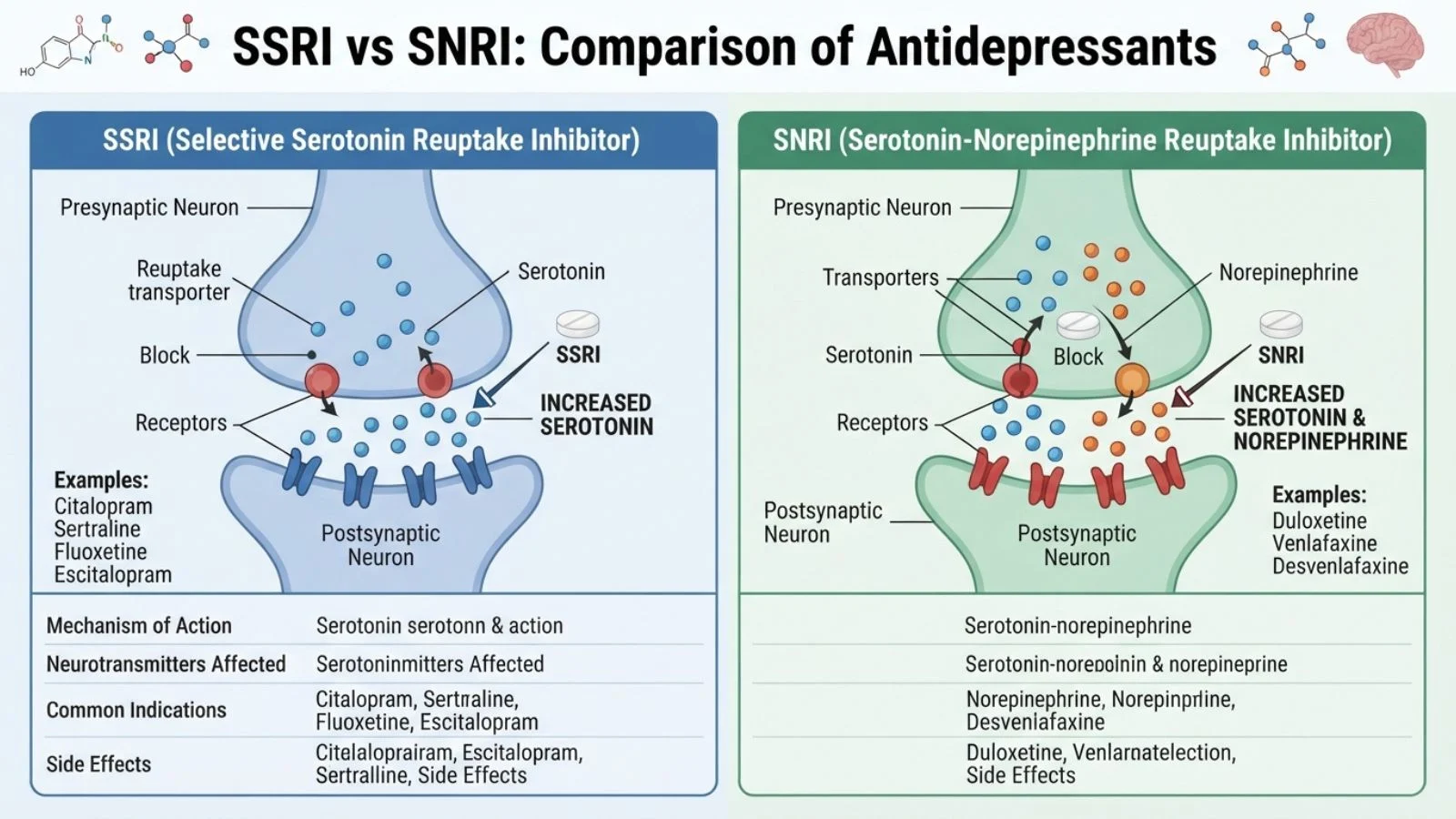
SSRIs (selective serotonin reuptake inhibitors) raise serotonin levels in the brain and are typically the first medication tried for depression and anxiety.
SNRIs (serotonin-norepinephrine reuptake inhibitors) raise both serotonin and norepinephrine.
Which can help more with low energy, focus, or chronic pain, but may cause more side effects like increased blood pressure.
Key Takeaways
- SSRIs affect only serotonin; SNRIs affect both serotonin and norepinephrine.
- SSRIs are usually tried first because they tend to be gentler and just as effective for most people.
- SNRIs are often chosen when depression comes with fatigue, pain, or low motivation.
- Both classes share side effects like nausea and sexual dysfunction, but SNRIs are more likely to raise blood pressure.
- Neither drug class is “stronger” ; the right choice depends on your symptoms and health history.
What Is an SSRI?
SSRI stands for selective serotonin reuptake inhibitor. Serotonin is a brain chemical that helps regulate mood, sleep, and anxiety. Normally, your brain reabsorbs serotonin after it sends a signal. An SSRI slows that reabsorption down, so more serotonin stays available in the brain.
SSRIs are usually the first medication doctors try for depression and anxiety disorders. They’ve been used for decades, and their side effects are generally predictable and manageable.
Common SSRIs include:
- Fluoxetine (Prozac)
- Sertraline (Zoloft)
- Escitalopram (Lexapro)
- Citalopram (Celexa)
- Paroxetine (Paxil)
- Fluvoxamine (Luvox)
What Is an SNRI?
SNRI stands for serotonin-norepinephrine reuptake inhibitor. Like SSRIs, SNRIs slow the reabsorption of serotonin. But they also slow the reabsorption of norepinephrine, a chemical tied to alertness, energy, and the body’s stress response.
Because norepinephrine affects things like heart rate and blood pressure, SNRIs can feel more “activating” than SSRIs. That extra effect is part of why they’re sometimes used for depression that comes with low energy, or for certain chronic pain conditions.
Common SNRIs include:
- Venlafaxine (Effexor)
- Duloxetine (Cymbalta)
- Desvenlafaxine (Pristiq)
- Levomilnacipran (Fetzima)
- Milnacipran (Savella)
SSRI vs SNRI: The Core Difference
The simplest way to think about it: SSRIs work on one brain chemical, SNRIs work on two.
That one difference explains most of what separates the two classes, why SNRIs are sometimes used for pain conditions SSRIs aren’t approved for, and why SNRIs carry a slightly higher risk of blood pressure changes.
Quick Comparison Table
| SSRI | SNRI | |
| Neurotransmitters affected | Serotonin only | Serotonin and norepinephrine |
| Typical first choice? | Yes, usually first-line | Often second choice, or first choice for specific symptoms |
| Good for pure anxiety/depression | Yes | Yes |
| Good for pain or fatigue with depression | Less so | Often more helpful |
| Blood pressure risk | Low | Higher, especially at higher doses |
| Common examples | Prozac, Zoloft, Lexapro | Effexor, Cymbalta, Pristiq |
Side Effects: SSRI vs SNRI
Both drug classes share a lot of overlap in side effects, especially in the first few weeks of treatment. These are common to both:
- Nausea
- Headache
- Trouble sleeping or drowsiness
- Dry mouth
- Sexual side effects (lower libido, difficulty with orgasm)
- Dizziness
Side Effects More Common With SNRIs
Because SNRIs also raise norepinephrine, they’re somewhat more likely to cause:
- Increased heart rate
- Elevated blood pressure, particularly at higher doses
- Increased sweating
- More noticeable energy or jitteriness, especially early on
If you have uncontrolled high blood pressure or certain heart conditions, your doctor will likely monitor you more closely on an SNRI, or may lean toward an SSRI instead.
Both classes carry a rare but serious risk of serotonin syndrome, especially if combined with other serotonin-affecting drugs or supplements. Warning signs include agitation, rapid heartbeat, high fever, and muscle twitching that needs immediate medical attention.
Which Is Better for Depression?
Neither is universally “better.” Research generally shows SSRIs and SNRIs work about equally well for most people with depression. Doctors often start with an SSRI first because it tends to be gentler and just as effective for the majority of patients.
An SNRI may be considered first, or tried next, when depression includes:
- Persistent fatigue or low motivation
- Difficulty concentrating
- Chronic physical pain alongside mood symptoms
Which Is Better for Anxiety?
SSRIs are typically the preferred first option for generalized anxiety disorder, social anxiety, and panic disorder. They tend to be better tolerated for long-term anxiety treatment.
SNRIs are also effective for anxiety and are FDA-approved for several anxiety disorders, but their more activating effect can occasionally feel uncomfortable for someone with high anxiety, at least in the first few weeks.
SNRIs for Chronic Pain and Fatigue
This is where SNRIs separate themselves. Because norepinephrine plays a role in how the body processes pain signals, certain SNRIs are FDA-approved for conditions beyond depression and anxiety, including:
- Diabetic nerve pain (duloxetine)
- Fibromyalgia (duloxetine, milnacipran)
- Chronic musculoskeletal pain (duloxetine)
SSRIs don’t have this same pain-relief profile, which is one of the clearest practical differences between the two classes.
Common SSRI and SNRI Medications
| SSRI (Generic/Brand) | SNRI (Generic/Brand) |
| Fluoxetine (Prozac) | Venlafaxine (Effexor) |
| Sertraline (Zoloft) | Duloxetine (Cymbalta) |
| Escitalopram (Lexapro) | Desvenlafaxine (Pristiq) |
| Citalopram (Celexa) | Levomilnacipran (Fetzima) |
| Paroxetine (Paxil) | Milnacipran (Savella) |
| Fluvoxamine (Luvox) |
Switching Between an SSRI and an SNRI
It’s common for a doctor to switch a patient from an SSRI to an SNRI (or the reverse) if the first medication doesn’t control symptoms well enough, or if side effects are too bothersome. This switch should always be done under medical supervision stopping either medication abruptly can cause discontinuation symptoms like dizziness, flu-like feelings, or “brain zaps.” Doctors typically taper the dose down gradually, sometimes overlapping with the new medication, to minimize this.
FAQs
Is an SNRI stronger than an SSRI?
Not necessarily. “Stronger” depends on the person and symptoms, not the drug class. SNRIs aren’t more effective across the board; they simply act on an additional brain chemical, which can help certain symptoms like pain or fatigue more than an SSRI would.
Which has fewer side effects, SSRI or SNRI?
SSRIs are generally considered to have a milder, more predictable side effect profile, which is why they’re usually tried first. SNRIs carry a higher chance of blood pressure or heart rate changes.
Can SSRIs and SNRIs be taken together?
This is rarely done and only under close medical supervision, since combining them raises the risk of serotonin syndrome. Doctors typically choose one class at a time.
Do SSRIs or SNRIs cause more weight gain?
Weight changes vary by specific medication rather than by class. Some SSRIs (like paroxetine) are more linked to weight gain, while some SNRIs are weight-neutral or associated with modest weight loss, especially early in treatment.
How long do SSRIs and SNRIs take to work?
Both typically take four to six weeks to show their full effect, though some improvement in sleep or energy may appear sooner.
The Bottom Line
SSRIs and SNRIs both treat depression and anxiety effectively, and the difference comes down to one extra brain chemical.
SSRIs are usually the first option because they’re well-tolerated and effective for most people.
SNRIs become the better fit when depression includes fatigue or chronic pain, since the norepinephrine effect offers something SSRIs don’t.
The right choice isn’t about one being stronger, it’s about which one matches your specific symptoms, and that decision is best made with your prescriber.